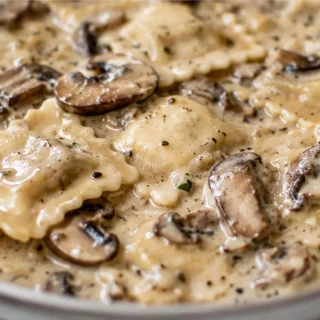
Creamy Mushroom Ravioli Sauce
Mushroom ravioli: Craft a rich, creamy sauce for your favorite ravioli featuring browned mushrooms, aromatic herbs, and a hint of white wine. Perfect for an elevated weeknight meal.
Ingredients
- 1 ¼ cups half and half
- ¾ cup chicken broth
- 1 teaspoon Worcestershire sauce
- 1 teaspoon dried parsley
- ½ teaspoon dried basil
- ½ teaspoon mustard powder
- ¼ teaspoon dried thyme
- ¼ teaspoon ground sage
- 12 oz sliced, cleaned, and dried mushrooms
- 1-2 tablespoons olive oil
- ½ cup dry white wine
- 2 tablespoons unsalted butter
- 2 cloves garlic, minced
- 2 tablespoons all-purpose flour
- ½ cup grated Asiago cheese
- ½ cup grated Parmesan cheese
- Fresh parsley, for garnish
- 1 package (about 20 oz.) ravioli
Instructions
- Combine half and half, chicken broth, Worcestershire sauce, dried parsley, dried basil, mustard powder, dried thyme, and ground sage in a measuring cup. Set aside. Prepare all other ingredients.
- Heat olive oil in a 12-inch skillet over medium-high heat. Add half of the mushrooms and brown for 3-4 minutes per side, undisturbed. Remove and set aside. Repeat with remaining mushrooms.
- Add dry white wine to the same skillet and deglaze, scraping up any browned bits. Reduce by half, about 4 minutes.
- Melt butter in the skillet, then add minced garlic and cook for 2 minutes. Stir in flour and cook for 1-2 minutes, stirring continuously.
- Gradually whisk in the sauce mixture from step 1. Bring to a gentle boil, then reduce to a simmer.
- Cook ravioli according to package instructions while the sauce simmers. Drain once cooked.
- Reduce heat to low. Stir in Asiago and Parmesan cheese until melted, then add the browned mushrooms back to the sauce.
- Serve the cooked ravioli with the creamy mushroom sauce, garnished with fresh parsley.
Notes
Nutrition information is an estimate, calculated automatically. Values vary with brands, substitutions and portion sizes.