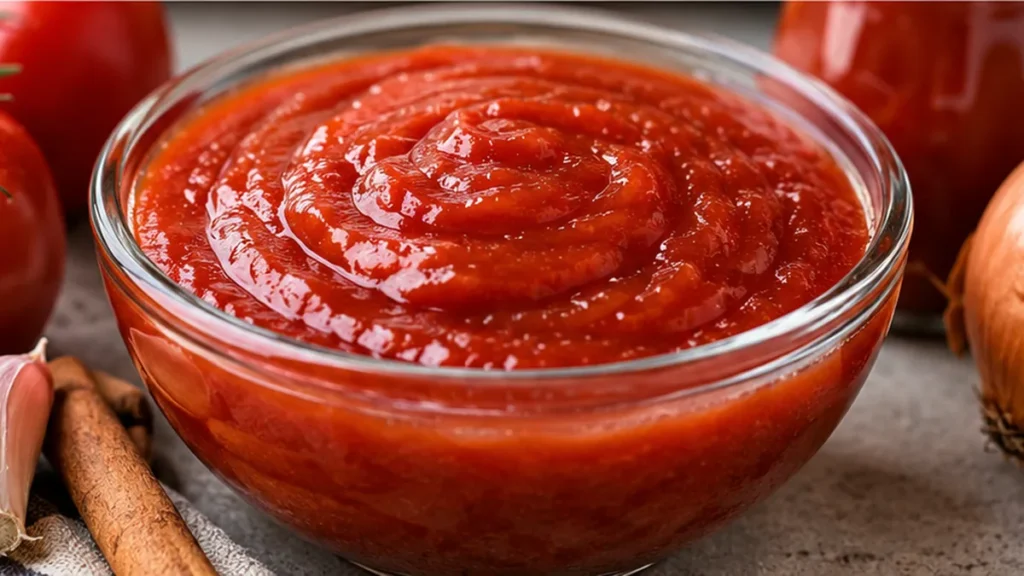
The secret to truly delicious homemade ketchup lies in the slow reduction of fresh tomatoes, concentrating their natural sweetness and tang. This recipe delivers a rich, flavorful condiment, far superior to anything from a bottle. It’s a fantastic way to utilize a bounty of fresh Roma tomatoes, transforming them into a versatile kitchen staple. Making homemade ketchup allows you to control the ingredients, avoiding high-fructose corn syrup and artificial preservatives. The process is straightforward, yielding a deep, complex flavor that complements everything from burgers to fries. This homemade ketchup is perfect for anyone looking to add a touch of gourmet to their everyday meals.
Key takeaways
- Use fresh, ripe tomatoes for the best flavor.
- Balance sweetness and acidity for a well-rounded ketchup.
- Simmering helps achieve the desired thickness and depth of flavor.
- Infuse spices during cooking for a more complex taste.
Ingredients for homemade ketchup
- 1 kg Roma Tomato (roughly chopped)
- 50 grams Onion (roughly chopped)
- 6 Cloves Garlic
- 3 Whole Cloves
- 1 Bay Leaf
- 1 inch Cinnamon Stick
- ¼ Cup Water
- 2 Tablespoons Sugar
- 2 Tablespoons Vinegar
- ¾ Teaspoon Salt
How to make homemade ketchup
- Add tomato, onion, garlic, cloves, bay leaf, cinnamon stick, and water to a pressure cooker. Cook on medium-high heat for 10-12 minutes after the first whistle. Let the pressure release naturally.
- Remove the lid. Discard the whole spices (cloves, bay leaf, and cinnamon stick). Let it cool, then transfer to a blender and grind to a smooth paste.
- Pass the mixture through a fine-mesh sieve into a heavy-bottomed pan to remove any solids.
- Place the pan over low heat and gently simmer the mixture, stirring frequently for 20-30 minutes, until it thickens to your desired consistency. Scrape the sides and bottom to prevent sticking.
- Add sugar, vinegar, and salt. Mix thoroughly and continue to simmer for another 5 minutes, allowing the flavors to meld. Turn off the heat and let it cool completely.
- Once cooled, transfer the homemade ketchup to a sterilized bottle or jar and refrigerate for up to 2-3 weeks.
The technique that makes it
Creating homemade ketchup involves a careful balance of cooking techniques and ingredient interactions. The key to achieving a rich, flavorful ketchup lies in the Maillard reaction, which occurs when sugars and amino acids in the tomatoes and onions are heated. This reaction enhances the depth of flavor, transforming the raw ingredients into a complex sauce. Cooking the chopped tomatoes, onions, and garlic together allows their natural sugars to caramelize, adding sweetness and richness. Additionally, simmering the mixture helps to break down the tomatoes, resulting in a smoother texture. The incorporation of spices like cloves, bay leaf, and cinnamon during cooking infuses the ketchup with aromatic flavors, while the addition of vinegar at the end brightens the overall taste, balancing the sweetness.
Troubleshooting
- Too sweet: If your ketchup is overly sweet, add a bit more vinegar or a pinch of salt to balance the flavors.
- Too thin: If the ketchup is too runny, continue to simmer it uncovered to allow excess water to evaporate, thickening the sauce.
- Too acidic: If the ketchup tastes too acidic, incorporate a small amount of sugar gradually until the flavor is balanced.
- Texture issues: If the ketchup is too chunky, blend it again after cooking to achieve a smoother consistency.
Substitutions
- Roma tomatoes: Substitute with any ripe, juicy tomato variety like San Marzano or beefsteak for a similar flavor profile.
- White sugar: Brown sugar can be used instead for a deeper, molasses-like sweetness.
- Apple cider vinegar: Red wine vinegar can replace it for a different tang and complexity.
- Fresh garlic: Garlic powder can be a substitute in a pinch, using about 1/8 teaspoon for each clove.
Pro tips
- For the best flavor, use ripe, firm Roma tomatoes; their lower water content and rich flavor are ideal for homemade ketchup.
- Don’t rush the reduction process in Step 4. Slow simmering is key to achieving a thick, concentrated ketchup with deep flavor.
- Adding the sugar and vinegar towards the end of the reduction helps to preserve their distinct notes, balancing the concentrated tomato flavor.
- Store your homemade ketchup in sterilized jars or bottles in the refrigerator for up to 3-4 weeks. For longer storage, you can freeze it in airtight containers for up to 3 months.
Enjoy the rich, authentic taste of your homemade tomato ketchup. It’s a versatile condiment that will improve your meals and impress your family and friends. Experiment with a pinch of cayenne for a spicy kick!
Frequently asked questions
Can I use canned tomatoes instead of fresh?
Yes, you can use canned tomatoes, preferably whole or crushed. However, the flavor may differ slightly as fresh tomatoes offer a brighter taste. Adjust the cooking time as canned tomatoes may require less time to break down.
How long can I store homemade ketchup?
Homemade ketchup can be stored in the refrigerator for up to three weeks. For longer storage, consider canning it in sterilized jars, which can extend its shelf life for several months.
Can I make this ketchup without sugar?
While sugar helps balance the acidity of the tomatoes and enhances flavor, you can reduce or eliminate it. Consider using natural sweeteners like honey or agave syrup, or simply rely on the natural sweetness of ripe tomatoes.
What can I use this ketchup on?
This homemade ketchup is versatile and can be used as a condiment for burgers, fries, or hot dogs. It also works well as a base for barbecue sauce or in recipes that call for tomato sauce.