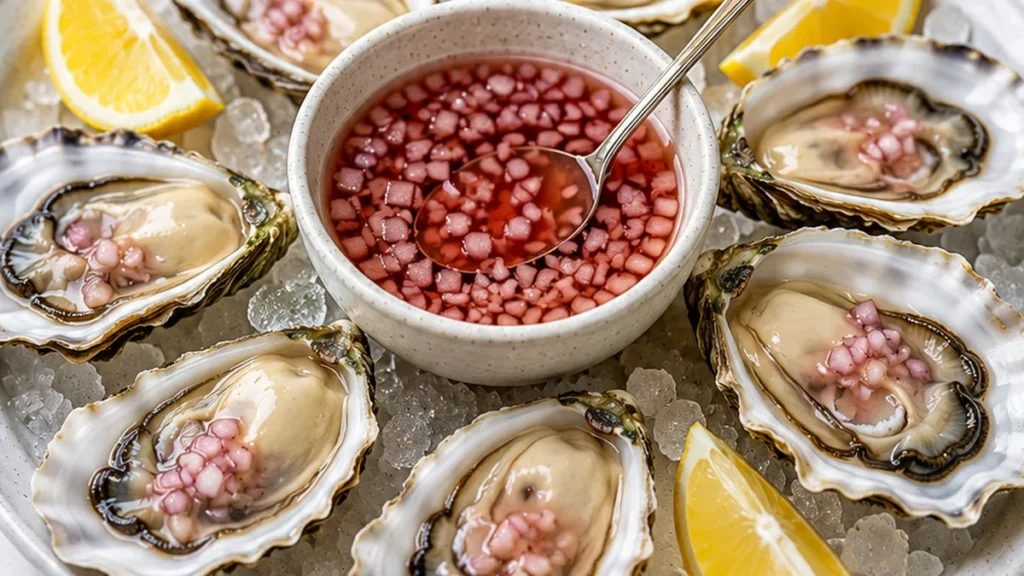
This mignonette sauce is an absolute a real upgrade for anyone who loves fresh oysters. Simple to prepare yet profoundly impactful on flavor, it transforms a raw oyster into a gourmet delight. The balance of sharp acidity and subtle onion notes in this mignonette sauce perfectly complements the briny sweetness of oysters, creating a harmonious bite. A good mignonette sauce is essential for seafood, offering a refreshing counterpoint to rich shellfish.
Key takeaways
- Finely minced shallots are key for texture and flavor melding.
- Use good quality red wine vinegar for the best acidic base.
- Freshly cracked black pepper provides essential pungent contrast.
- Allowing the sauce to rest lets flavors meld and mellow.
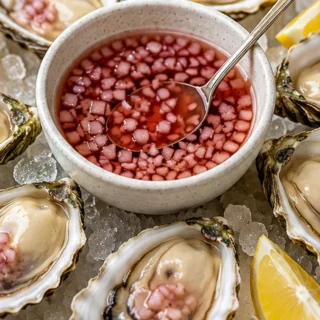
Zesty Mignonette Sauce for Oysters
Ingredients
- 2 1/2 tbsp eschalot (US: shallot), finely minced
- 3 tbsp red wine vinegar, preferably a good quality one
- 12-24 oysters
- Black pepper, sprinkle yourself
- 1/2 tsp for small oysters
- 3/4 tsp for large oysters
Instructions
- In a small bowl, combine the 2 1/2 tbsp of finely minced shallot and 3 tbsp of red wine vinegar.
- Stir well to ensure the shallot is fully submerged in the vinegar. Let the mixture meld for at least 2 hours at room temperature.
- Before serving, give the mignonette a final stir. Transfer it into a small serving dish with a small spoon.
- Serve the mignonette alongside freshly shucked oysters, allowing guests to add about 1/2 tsp for small oysters or 3/4 tsp for larger ones, adjusting to personal preference.
Notes
The technique that makes it
What makes a classic mignonette sauce work is its simplicity and the delicate balance of acidity and aromatics. The key is the finely minced shallot. Minced means cut into very small pieces, aiming for a texture that is almost paste-like but still retains some individual particle definition. This ensures that the shallot distributes evenly throughout the vinegar without overwhelming the palate. The red wine vinegar provides the sharp, tangy base that cuts through the briny richness of the oysters. Its acidity also slightly ‘cooks’ the shallots, mellowing their raw bite and allowing their subtle sweetness to emerge. The black pepper is crucial for adding a pungent counterpoint. Freshly cracked pepper is highly recommended as pre-ground pepper loses its volatile aromatic compounds quickly. The amount of pepper is subjective, hence the ‘sprinkle yourself’ instruction, but it should be assertive enough to create a noticeable warmth and spice that complements, rather than competes with, the oyster’s flavor.
Troubleshooting
- Problem: Sauce is too vinegary. Fix: Allow the sauce to sit for 10-15 minutes. The shallots will absorb some of the vinegar, and the flavors will meld, mellowing the sharpness. You can also add a tiny pinch of sugar, but this deviates from the classic profile.
- Problem: Shallots are too strong or raw-tasting. Fix: Ensure the shallots are minced extremely finely. If they are still too pungent, let the sauce sit longer, or consider a very brief, gentle rinse of the minced shallots under cold water before adding them to the vinegar (pat dry thoroughly).
- Problem: Sauce is bland. Fix: This usually means not enough pepper or the vinegar quality is too mild. Ensure you are using freshly cracked black pepper and consider a higher quality, more robust red wine vinegar.
- Problem: Sauce is watery. Fix: This is unlikely with these ingredients unless the shallots were not minced finely enough and released excess moisture. Ensure your shallots are as finely minced as possible.
Substitutions
- Shallots: Finely minced red onion can be used, but it will impart a stronger, sharper onion flavor and a less refined texture. The color will also be different.
- Red Wine Vinegar: White wine vinegar or champagne vinegar can be substituted. They offer a slightly different acidity profile – white wine vinegar is often sharper, while champagne vinegar is milder and fruitier. Avoid balsamic vinegar as its strong flavor and color will dominate.
- Black Pepper: A pinch of finely minced chives or a tiny amount of finely minced green chili (like serrano, seeds removed) can add a different kind of fresh bite, but they will change the classic flavor profile significantly.
- Serving: While traditionally served with raw oysters, a mignonette can also be a delightful accompaniment to cooked shrimp or scallops, offering a bright contrast.
Pro tips
- For the best flavor, allow the mignonette sauce to meld for at least 2 hours, or even overnight, in the refrigerator.
- When shucking oysters, ensure you keep them level to retain their natural liquor, which is crucial for flavor.
- If you’re new to shucking, always use an oyster knife and a thick towel to protect your hands. Aim for an internal temperature of 40°F (4°C) or below for safe serving.
This simple mignonette sauce will undoubtedly improve your oyster serving to new heights. Experiment with different vinegars or a touch of finely chopped herbs for your own twist. Enjoy your perfectly paired oysters!
More from BBQ, Wing & Hot Sauces →
Frequently asked questions
What is the purpose of the shallots in mignonette?
The finely minced shallots provide a subtle aromatic sweetness and a delicate textural element that balances the sharp acidity of the vinegar. They mellow as they sit, integrating their flavor without overpowering the briny oysters.
Can I make mignonette sauce ahead of time?
Yes, you can make it a few hours ahead. Letting it sit allows the flavors to meld and the shallots to soften slightly. Avoid making it more than a day in advance, as the shallots may become too soft or the vinegar too dull.
What kind of oysters are best for mignonette?
Mignonette is excellent with most raw oysters, particularly those with a strong briny flavor. The sauce’s acidity cuts through the richness, cleansing the palate. It’s particularly good with larger, meatier oysters.
Is there a difference between using red wine vinegar and other vinegars?
Yes, red wine vinegar offers a specific fruity tang and color that complements the shallots and pepper. While other vinegars like white wine vinegar can work, they will alter the final flavor profile and appearance of the sauce.