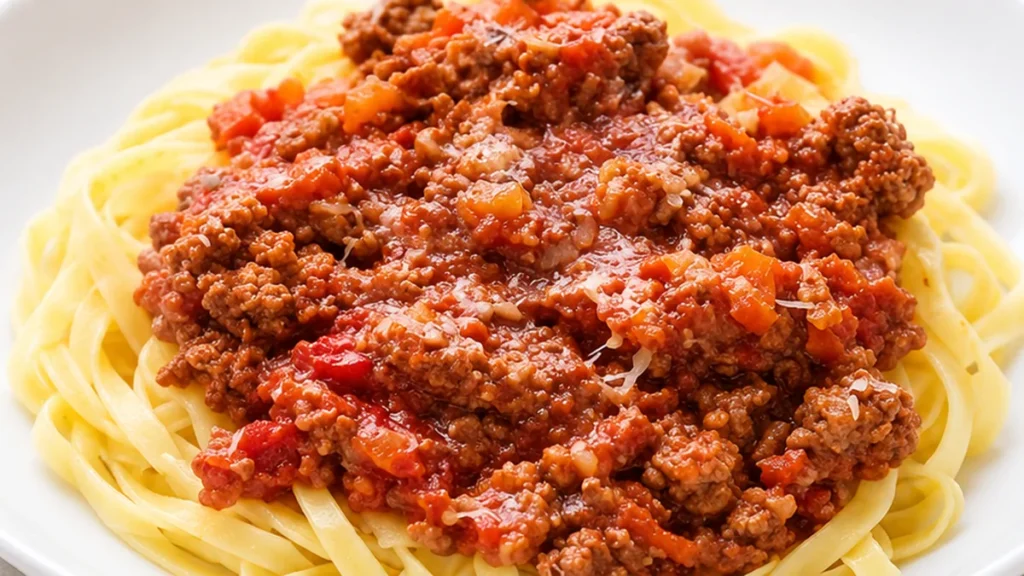
This is the best bolognese sauce recipe with olive oil, designed for home cooks. It combines simple ingredients for a rich, hearty sauce.
Key takeaways
- Using high-quality olive oil enhances flavor and texture.
- Each ingredient contributes to a complex flavor profile.
- Avoid common mistakes by paying attention to cooking times and seasoning.
- Long cooking times are essential for flavor development in Bolognese sauce.
The BEST Bolognese Sauce Recipe
Ingredients
- 2 tablespoons olive oil, divided
- 1 1/4 pounds ground beef
- 1 1/4 pounds ground pork
- Kosher salt and freshly ground pepper, to taste
- 4 ounces pancetta or bacon, sliced
- 1 yellow onion, finely diced
- 2 carrots, peeled and finely diced
- 1 celery stalk, finely diced
- 5 garlic cloves, minced
- 1/3 cup (3 oz) tomato paste
Instructions
- Heat olive oil in a large Dutch oven over medium-high heat. Add ground beef, ground pork, salt, and pepper. Cook until browned, about 10-12 minutes. Transfer meat to a paper towel-lined plate. Add pancetta/bacon to the pot and cook until crisp, 5-7 minutes. Transfer to the same plate.
- Reduce heat to medium, add remaining olive oil. Add diced onion, carrots, and celery. Cook until soft and translucent, about 8 minutes. Add minced garlic and cook until fragrant, about 1 minute. Stir in tomato paste and cook for 2 minutes.
- Stir in milk, tomatoes, bay leaves, thyme, and cheese rind (if using). Combine well. Return the cooked meats to the pot. Season with salt and pepper.
- Bring sauce to a simmer, then partially cover and reduce heat to medium-low. Cook until thickened, about 1.5 to 2 hours, stirring occasionally.
- Remove and discard bay leaves, thyme, and cheese rind.
- Season to taste with more salt and pepper if needed. Serve hot over your favorite pasta, with grated cheese.
The Importance of Olive Oil in Bolognese Sauce
Using high-quality olive oil in your Bolognese sauce is crucial for enhancing flavor and texture. Olive oil not only adds richness but also helps in sautéing the vegetables, allowing them to soften and release their natural sugars, which contributes to the sauce’s depth. Aim for extra virgin olive oil, which has a lower acidity and more robust flavor, enhancing the overall taste profile of the dish.
Understanding the Role of Ingredients
Each ingredient in a Bolognese sauce plays a significant role in achieving the perfect balance of flavors. The combination of minced meat, tomatoes, and aromatics creates a complex flavor profile. For instance, using a mix of beef and pork can provide a richer taste due to the fat content and different flavor notes. Additionally, the acidity of the tomatoes balances the richness of the meat, creating a harmonious sauce.
Common Mistakes and How to Fix Them
- Too Watery Sauce: If your sauce turns out too watery, it may be due to insufficient cooking time. Allow the sauce to simmer longer to reduce excess liquid and concentrate the flavors.
- Overcooked Vegetables: If the vegetables are mushy, they were likely cooked at too high a temperature or for too long. Sauté them gently until just softened for better texture.
- Flavorless Sauce: A lack of seasoning can lead to a bland sauce. Ensure you season with salt and pepper throughout the cooking process, and consider adding herbs like bay leaves or thyme for additional flavor.
Ingredient Swaps and Their Impact
- Meat Alternatives: Using ground turkey or chicken instead of beef can result in a lighter sauce, but may lack the richness of traditional Bolognese.
- Wine Substitutions: If you don’t have red wine, a splash of balsamic vinegar can add acidity, though the flavor will differ slightly.
- Tomato Variations: Fresh tomatoes can be used instead of canned for a brighter flavor, but require longer cooking times to break down.
Unique Characteristics of Bolognese Sauce
One defining characteristic of authentic Bolognese sauce is its long cooking time. Unlike many sauces that can be prepared quickly, Bolognese benefits from slow cooking, allowing the flavors to meld and develop complexity. This technique is relatively unique to this dish, as most sauces do not require such an extensive simmering period.
How to Properly Store and Reheat Bolognese Sauce
Storing Bolognese sauce correctly is crucial for maintaining its flavor and texture. To store leftovers, allow the sauce to cool completely before transferring it to an airtight container. It can be refrigerated for up to 3-4 days. For longer storage, consider freezing the sauce. Freeze it in portions using freezer bags or containers, ensuring to leave some space for expansion. When reheating, do so slowly over low heat to prevent the sauce from separating. Adding a splash of water or broth can help restore its original consistency.
Scaling the Recipe for Large Gatherings
Scaling the Bolognese sauce recipe is straightforward, but attention to detail is essential. When doubling or tripling the recipe, maintain the same ratios of ingredients to ensure consistent flavor. However, be mindful that cooking times may vary; larger batches may require additional simmering time to develop flavor. Use a large pot to prevent overcrowding, which can lead to uneven cooking. Taste frequently as you scale up, adjusting seasoning as necessary to maintain balance.
Choosing the Right Equipment for Cooking Bolognese Sauce
The equipment used can significantly impact the final outcome of your Bolognese sauce. A heavy-bottomed pot or Dutch oven is ideal as it distributes heat evenly and prevents scorching. Avoid non-stick pans, as they do not allow for the browning of meat, which is essential for flavor development. Using a wooden spoon for stirring is recommended to avoid scratching your cookware and to ensure even cooking. If possible, use a food processor to finely chop vegetables for a smoother texture, but be careful not to over-process them.
How Ingredient Quality Affects Bolognese Sauce
The quality of ingredients in Bolognese sauce directly influences its taste and overall quality. Fresh, high-quality meat will yield a richer flavor, while canned tomatoes should be San Marzano for the best results. Seasonal vegetables can also enhance the sauce’s profile; for example, using fresh basil in summer adds brightness. Olive oil should be of high quality, as it not only contributes to the flavor but also enhances the sauce’s richness. When using dried herbs, ensure they are fresh for optimal flavor.
How to Make Bolognese Sauce Ahead of Time Without Compromising Flavor
Preparing Bolognese sauce in advance can enhance its flavors significantly. To do this effectively, cook the sauce as per the recipe, allowing it to simmer for at least two hours. Once cooked, let it cool to room temperature before transferring it to airtight containers. This method prevents moisture loss and retains the sauce’s rich flavor. When reheating, do so slowly over low heat, adding a splash of water or broth to maintain the desired consistency. The longer the sauce sits, the more the flavors meld, making it even more delicious the next day.
Adjusting Bolognese Sauce for Larger Gatherings
Scaling up your Bolognese sauce recipe requires careful attention to ingredient ratios and cooking times. When increasing the quantities, maintain the same proportions of meat, vegetables, and liquids to preserve the flavor profile. However, cooking times may need adjustment; larger batches require longer simmering to allow flavors to develop fully. For instance, while a standard batch may simmer for two hours, a double batch might need three hours. Be cautious not to overcrowd the cooking pot, as this can lead to uneven cooking. If necessary, divide the sauce into two pots to ensure even heat distribution.
Choosing the Right Serving Accompaniments for Bolognese Sauce
The right accompaniments can elevate your Bolognese sauce experience. Traditional pairings include tagliatelle or pappardelle, which hold the sauce well due to their width and texture. Additionally, consider serving with freshly grated Parmigiano-Reggiano for a rich, nutty flavor that complements the sauce’s depth. A simple green salad dressed with olive oil and lemon can provide a refreshing contrast. For a wine pairing, opt for a medium-bodied red, such as Chianti or Barbera, which enhances the dish’s savory notes. Experimenting with these pairings can transform your meal into a delightful culinary experience.
Understanding the Simmering Process for Optimal Flavor Development
The simmering phase of Bolognese sauce is crucial for developing its rich flavor profile. During this stage, the sauce should be kept at a low simmer, ideally between 85°C to 95°C (185°F to 203°F). This gentle cooking allows the flavors to meld without boiling, which can lead to a harsh taste. A simmering time of at least 1.5 to 2 hours is recommended to allow the meat to tenderize and the aromatics to infuse the sauce fully. Stir occasionally to prevent sticking and ensure even cooking. The longer you simmer, the more concentrated the flavors become, leading to a deeper, more complex sauce.
Adjusting Olive Oil Quantity for Different Textures and Flavors
Olive oil plays a pivotal role in Bolognese sauce, not just for flavor but also for texture. The quantity of olive oil can be adjusted based on the desired richness of the sauce. A traditional recipe might call for 60 ml (about 1/4 cup) of olive oil for a standard batch. However, if a silkier sauce is preferred, increasing the olive oil to 90 ml (about 1/3 cup) can enhance mouthfeel. Conversely, reducing it to 30 ml (about 2 tablespoons) can yield a lighter sauce, which may be preferable if serving over delicate pasta. Keep in mind that the quality of olive oil also impacts the final taste; a robust, high-quality extra virgin olive oil can impart a distinct flavor that elevates the entire dish.
Understanding the Impact of Simmering Time on Flavor Concentration
The simmering stage is critical in developing the rich, complex flavors characteristic of the best Bolognese sauce. Simmering allows the ingredients to meld together, enhancing the overall taste. For optimal results, a simmering time of at least 1.5 to 2 hours is recommended. This duration allows the meat to break down and the sauce to thicken, concentrating flavors. If simmered for less time, the sauce may taste watery and lack depth. Conversely, simmering for too long can lead to a dry texture. A good balance is to monitor the sauce’s consistency and adjust the simmering time accordingly, ensuring it remains moist yet concentrated.
Choosing the Right Olive Oil for Depth of Flavor
The choice of olive oil significantly influences the final taste of your Bolognese sauce. Extra virgin olive oil is preferred for its robust flavor, which can enhance the sauce’s richness. When selecting olive oil, consider its origin and processing method; oils from regions like Tuscany or Sicily often have a more pronounced flavor profile. Use a light hand when adding oil at the beginning of the cooking process, as it should complement rather than overpower the dish. A typical ratio is about 60-80 ml of olive oil for a standard batch of sauce. Experimenting with different types of olive oil can yield variations in flavor, allowing for a personalized touch to the classic recipe.
Pro tips
Pro tip: Best served immediately while hot!
Frequently asked questions
Can I use different types of meat in Bolognese sauce?
Yes, you can use a mix of meats such as beef, pork, and even lamb for different flavor profiles. Ground turkey or chicken can also be used for a lighter version, but they will alter the richness of the sauce.
How long should I cook my Bolognese sauce?
For the best flavor, cook your Bolognese sauce for at least 1.5 to 2 hours. This allows the ingredients to meld together and develop a rich taste. Longer cooking times can enhance the depth of flavor even further.
What type of tomatoes should I use?
Canned San Marzano tomatoes are highly recommended for their sweetness and low acidity. However, you can also use fresh tomatoes, but be prepared for longer cooking times to achieve the desired consistency.
Is it necessary to add wine to Bolognese sauce?
While wine adds depth and complexity, it is not strictly necessary. If you prefer not to use wine, you can substitute with broth or a splash of vinegar for acidity, though the flavor will differ slightly.
More from Italian & Pasta Sauces →