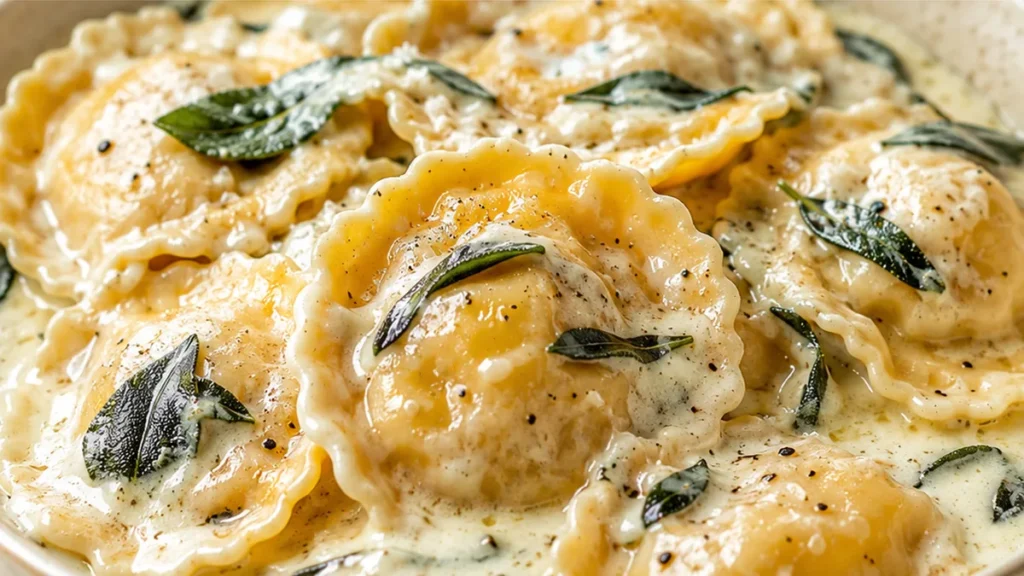
The secret to an unforgettable butternut ravioli dish lies in the sauce: a simple yet profound brown butter and sage concoction. This recipe transforms store-bought pasta into a gourmet experience, proving that complex flavors don’t require hours in the kitchen. Getting that nutty brown-butter aroma just right without burning it is a real upgrade. This butternut ravioli recipe is designed for those who crave rich, seasonal flavors without the fuss, ideal for busy weeknights or a relaxed weekend lunch. It’s a dish that highlights the sweetness of the squash with the savory depth of browned butter.
Key takeaways
- Achieving a creamy sauce requires careful emulsion of butter and cream.
- Control heat to prevent separation and enhance flavor extraction.
- Avoid overcooking ravioli for the best texture.
- Substitutions can alter flavor and texture but still yield delicious results.
Creamy Butternut Ravioli in 15 Min!
Ingredients
- 8-10 ounces butternut squash ravioli
- 1/2 cup (1 stick; 113g) unsalted butter (cubed)
- 15 fresh sage leaves
- 2 tablespoons (29ml) heavy cream
- 1/2 teaspoon kosher salt
- 1/4 teaspoon fresh cracked black pepper
- Grated pecorino or parmesan cheese for serving
Instructions
- Boil the ravioli according to package directions until al dente; do not rinse.
- Melt butter in a skillet over medium heat, stirring until frothy and brown bits form (4-5 minutes). Add sage leaves to fry, then remove sage with a slotted spoon.
- Return brown butter to medium-low heat, whisk in cream, and simmer for 1-2 minutes. Stir in salt and pepper, adjusting seasoning to taste.
- Add cooked ravioli to the sauce and toss to coat. Serve with grated cheese and crispy sage.
Video
Notes
The technique that makes it
Creating a creamy butternut ravioli sauce relies on the perfect emulsion of butter and cream. This technique ensures a rich, velvety texture that coats the ravioli without becoming greasy. Start by melting cubed unsalted butter over medium heat until it begins to foam. This process releases moisture and allows the sage leaves to infuse their flavor into the butter. The addition of heavy cream at the right moment helps to stabilize the emulsion, preventing separation. It’s essential to control the heat; too high can cause the butter to brown excessively, while too low may not allow for proper flavor extraction from the sage.
Troubleshooting
- Issue: Sauce is too greasy.
Fix: Reduce the heat while adding the cream slowly, whisking continuously to maintain the emulsion. - Issue: Ravioli is overcooked and mushy.
Fix: Cook ravioli in boiling salted water for just 3-4 minutes; they should float when done. - Issue: Lack of flavor in the sauce.
Fix: Sauté the sage leaves longer in the butter until they become crispy, enhancing their flavor before adding cream. - Issue: Sauce is too thick.
Fix: Add a splash of pasta cooking water or more cream to thin it out and achieve the desired consistency.
Substitutions
- Butternut squash ravioli: Use any filled pasta such as ricotta or mushroom ravioli for a different flavor profile.
- Unsalted butter: Substitute with olive oil for a lighter sauce, though it will alter the richness.
- Heavy cream: Use half-and-half for a lighter creaminess, but the sauce may be less rich.
- Pecorino or parmesan cheese: Grated nutritional yeast can be used for a dairy-free option, providing a cheesy flavor.
Pro tips
- Brown butter perfection: watch for the change in aroma, from sweet to nutty, and for the tiny golden-brown bits at the bottom of the pan. This is your cue to remove it from the heat.
- Don’t rinse your pasta! The starches on the ravioli help the sauce cling better, ensuring every bite is coated in that delicious flavor.
- Store leftover ravioli in an airtight container in the refrigerator for up to 3 days. Reheat gently on the stovetop with a splash of water or cream to revive the sauce.
This butternut ravioli with brown butter sage sauce is a testament to how simple ingredients can create extraordinary meals. Experiment with a sprinkle of toasted pecans for added crunch, or a touch of nutmeg in the sauce for extra warmth. Enjoy this comforting dish!
Frequently asked questions
Can I make the butternut ravioli from scratch?
Yes, making butternut ravioli from scratch is possible. Use a pasta dough recipe and fill it with a mixture of roasted butternut squash, ricotta, and spices. Ensure to seal the edges well to prevent filling from leaking during cooking.
How do I know when the ravioli is cooked?
Ravioli is typically done when they float to the surface of the boiling water, which usually takes about 3-4 minutes. Check one by cutting it open to ensure the filling is heated through.
Can I use frozen butternut squash ravioli?
Yes, frozen butternut squash ravioli can be used. Cook them directly from the freezer in boiling water, but they may require an additional minute or two compared to fresh ravioli.
What can I serve with butternut ravioli?
Butternut ravioli pairs well with a simple green salad, garlic bread, or roasted vegetables. A light white wine, such as Pinot Grigio, complements the dish nicely.
More from Italian & Pasta Sauces →