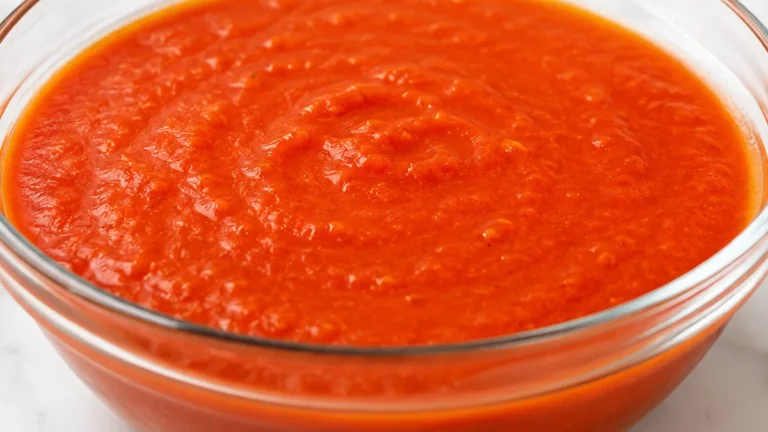
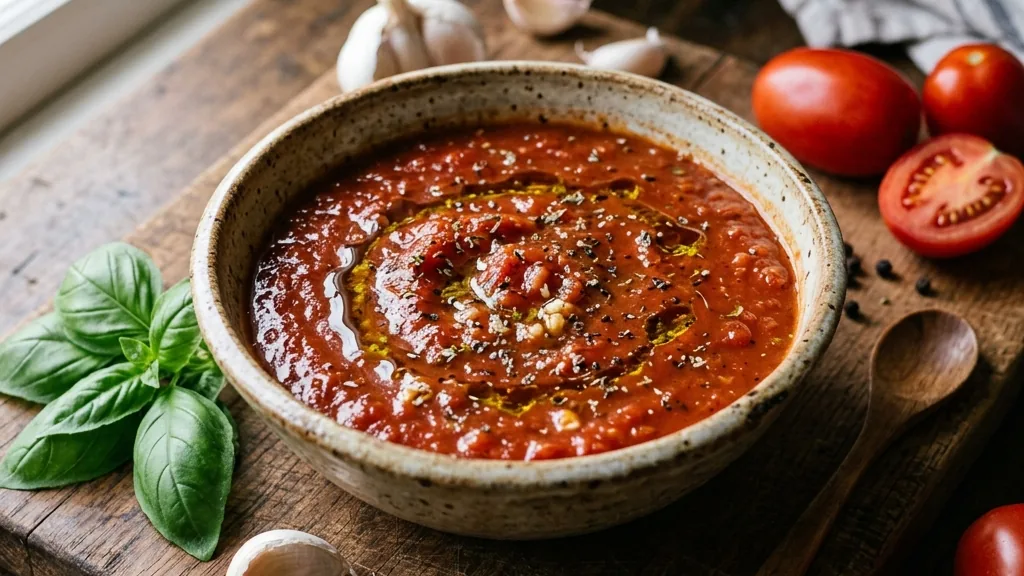
Homemade pizza sauce is one of those small upgrades that makes a huge difference, and the best part is that it takes about 5 minutes and no cooking at all. Unlike a simmered pasta sauce, classic pizza sauce is raw: you simply stir canned tomatoes and tomato paste together with garlic and oregano, then spread it on your dough, where it cooks in the oven as the pizza bakes. The result is a thick, bright, herby sauce that beats anything from a jar and keeps your crust crisp instead of soggy. Here is the easy recipe, the one ingredient that makes it thick, and how it differs from marinara.
Once you see how fast it comes together, you may never buy pizza sauce again.
Why Pizza Sauce Is Different From Pasta Sauce
People often reach for marinara when making pizza, but true pizza sauce is its own thing. The biggest difference is that pizza sauce is usually no-cook and thick, while marinara and other pasta sauces are simmered and looser. Pizza sauce relies on tomato paste for body so it does not water down your crust, and it leans heavily on oregano for that familiar pizzeria aroma. Marinara, by contrast, is cooked down with onion and garlic and tends to be more basil-forward.
Because pizza sauce bakes on the pie rather than being cooked first, keeping it raw preserves a fresh, vivid tomato flavor that holds up beautifully under the cheese.
Ingredients
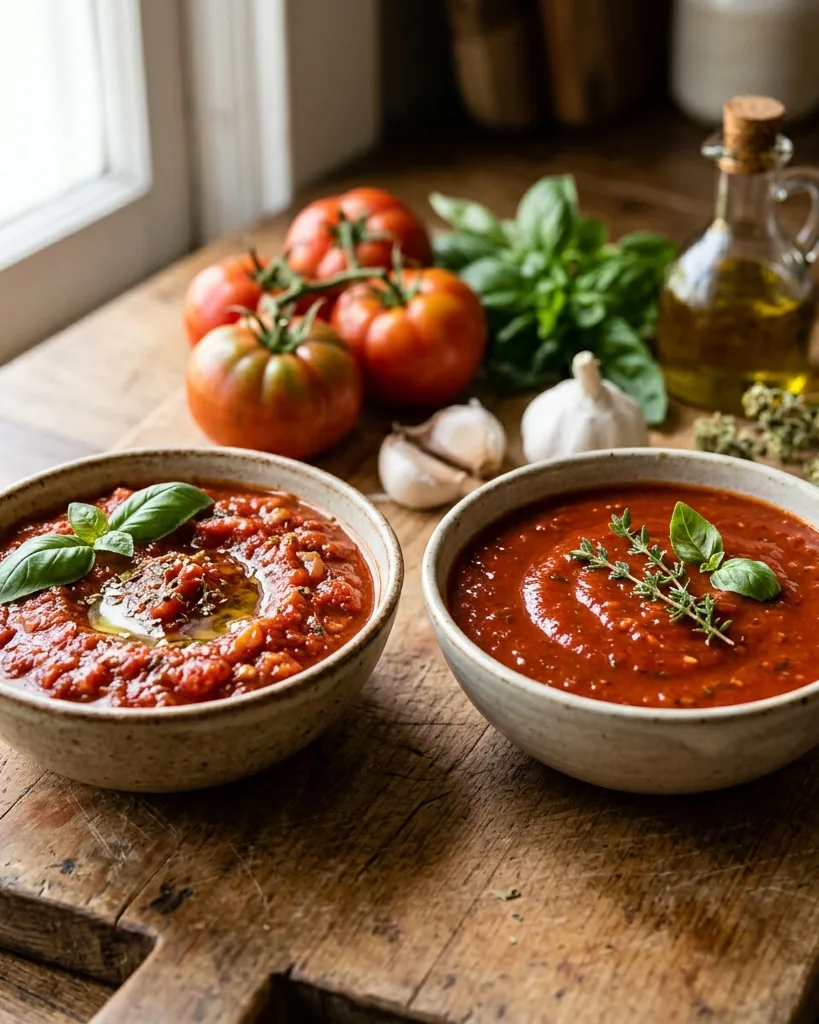
This makes about two cups of sauce, enough for two or three pizzas. Everything goes in one bowl.
- 1 can (15 oz) tomato sauce, or crushed San Marzano tomatoes
- 1 small can (6 oz) tomato paste, for thickness
- 1 to 2 cloves garlic, grated, or 1/2 teaspoon garlic powder
- 1 to 2 teaspoons dried oregano
- 1 teaspoon dried basil or Italian seasoning
- 1/2 teaspoon onion powder, plus salt and pepper to taste
- 1 teaspoon sugar, to balance the acidity
- Optional: 1 tablespoon olive oil and a pinch of red pepper flakes
How to Make Homemade Pizza Sauce
The method could not be simpler, which is the whole appeal.
- Combine the tomatoes: In a medium bowl, stir the tomato sauce and tomato paste together until smooth.
- Add the seasonings: Mix in the garlic, oregano, basil, onion powder, sugar, salt, and pepper, along with the olive oil and red pepper flakes if using.
- Stir until even: Whisk everything together until the herbs are evenly distributed and the sauce is uniform.
- Rest if you can: Let the sauce sit for 15 to 30 minutes so the dried herbs hydrate and the flavors meld. This step is optional but worth it.
That is it. Spread it on your dough and build your pizza; the sauce finishes cooking in the heat of the oven.
The Secret to Thick, Non-Soggy Sauce
If there is one tip that matters most, it is to use tomato paste. Paste is concentrated tomato with most of the water cooked out, so it thickens it dramatically without any simmering. A thick layer sits on top of the dough instead of soaking into it, which is the difference between a crisp, structured slice and a wet, droopy one. Skipping the paste, or using only thin tomato sauce, is the number-one reason homemade pizza turns out soggy. If it still seems loose, stir in another spoonful of paste until it holds its shape on a spoon.
Pizza Sauce Versus Marinara at a Glance
| Feature | Pizza sauce | Marinara / pasta sauce |
|---|---|---|
| Cooking | No-cook; bakes on the pizza | Simmered on the stove |
| Texture | Thick, thanks to tomato paste | Looser and more pourable |
| Signature herb | Oregano | Basil |
| Best use | Spread thin on dough | Tossed with pasta |
In a pinch you can use marinara on a pizza, but draining off some liquid and adding a little tomato paste will bring it closer to a proper pizza base. For comparison, see our guides to how to make marinara sauce and homemade tomato sauce, both of which are cooked sauces better suited to pasta.
A Fresh-Tomato Version
When ripe tomatoes are in season, you can make a bright fresh version. Blend or finely chop a few ripe tomatoes, then stir in grated garlic, oregano, salt, and a little olive oil. Because fresh tomatoes are watery, add a spoonful or two of tomato paste to thicken it and strain off any excess liquid so it does not make the pizza soggy. The flavor is fresh and summery, and since it stays raw, the tomato taste really shines. This version is best used the same day for peak freshness.
How Much Sauce Per Pizza
A common mistake is drowning the dough, which makes the pizza heavy and wet. A little goes a long way: aim for about a quarter to a third of a cup for a 12-inch pizza, spread in a thin, even layer and leaving a border for the crust. The cheese and toppings add moisture too, so a restrained hand with it keeps everything in balance. If you like a saucier pizza, add a bit more, but spread it thin rather than piling it on. This is also why one batch stretches across several pizzas.
Tips for the Best Pizza Sauce
- Use tomato paste for a thick sauce that keeps the crust crisp.
- Start with good tomatoes. Since the sauce is raw, the quality of your canned tomatoes shines through; San Marzano are a favorite.
- Add a little sugar to balance the natural acidity of the tomatoes, then taste and adjust.
- Let it rest so the dried herbs soften and the flavors come together.
- Spread it thin to avoid a soggy pizza, especially with fresh-tomato versions.
Storing and Freezing
This recipe is great to make ahead. Keep it in an airtight container in the refrigerator for up to 7 days, which makes it easy to prep on a weekend for pizza nights during the week. For longer storage, freeze it in small portions, such as an ice cube tray or small containers, for up to three months, then thaw what you need in the fridge.
Freezing in pizza-sized portions is especially handy, since you can pull out exactly enough for one pie. Because it is uncooked, keep canned tomatoes within their date and refrigerate any opened cans or leftover sauce promptly, in line with USDA food-safety basics. The FoodSafety.gov cold storage charts are a useful reference for how long opened tomato products keep. Having a batch ready means homemade pizza is never more than a few minutes of assembly away.
Choosing the Best Tomatoes
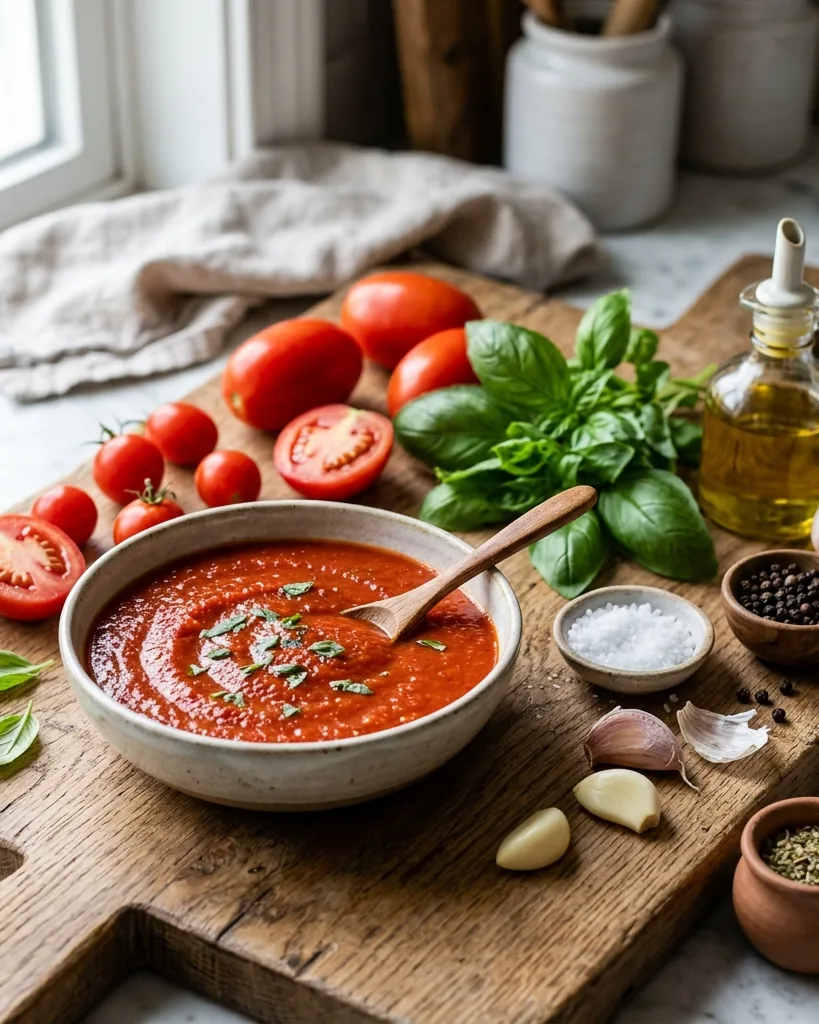
Because this recipe is raw, the tomatoes you choose carry the flavor, so quality matters more than usual. Canned San Marzano tomatoes are the gold standard, prized for their sweetness, low acidity, and rich flavor, and they make a noticeable difference in a no-cook recipe. If you cannot find them, a good-quality canned crushed tomato or plain tomato puree works well too.
Look for cans with a short ingredient list, ideally just tomatoes and maybe salt, and avoid versions with added herbs or flavorings so you control the seasoning yourself. Whole peeled tomatoes that you crush by hand give a slightly chunkier, more rustic texture, while puree gives a smooth result. Whichever you pick, the better the tomato, the better your pizza, since there is no long cooking to mask any shortcomings.
Flavor Variations to Try
Once you have the basic method down, it is easy to tailor the flavor to the style of pizza you love:
- Classic Neapolitan: Keep it minimal, with just crushed San Marzano tomatoes, a little salt, and a drizzle of olive oil, letting the tomato shine.
- New York style: Lean into oregano, garlic, and a pinch of sugar for the familiar pizzeria taste.
- Spicy: Add extra red pepper flakes or a little Calabrian chili paste for heat.
- Garlic lovers: Double the fresh garlic and add a touch of garlic powder for depth.
- Herb-forward: Stir in fresh basil or a spoonful of pesto just before spreading for a greener, brighter profile.
Each variation starts from the same simple base, so you can experiment freely without any extra effort. Keep notes on your favorite combination so you can repeat it on the next pizza night.
Common Mistakes to Avoid
A few easy missteps can keep a homemade pie from reaching its potential. Steer clear of these:
- Skipping the tomato paste: Without it, the topping is too thin and the crust turns soggy.
- Using too much: A thick, even, thin layer beats a heavy pile that weighs down the dough.
- Forgetting the sugar: A small pinch balances the acidity of canned tomatoes and rounds out the flavor.
- Over-seasoning: Start with less salt, since canned tomatoes and cheese both add saltiness.
- Using watery fresh tomatoes: Always strain and thicken a fresh version so it does not soak the crust.
Avoid these and you are most of the way to a pizzeria-quality pie at home. The whole point of making it yourself is control, and these small habits put that control in your hands.
Using It Beyond Pizza
This quick tomato base is not just for pizza. Spread it on flatbreads, English muffins, or bagels for fast mini pizzas, use it as a dip for breadsticks and mozzarella sticks, or spoon it into a calzone or stromboli. It also works as a base layer for baked dishes like eggplant Parmesan, where its thick, concentrated flavor holds up well. Because it keeps for a week in the fridge, a single batch can quietly improve several meals, which is one more reason to make your own rather than buying a jar you will only half use.
Frequently Asked Questions
Do you have to cook homemade pizza sauce?
No. Classic pizza sauce is a no-cook sauce; you simply stir the ingredients together and spread it raw on the dough, where it cooks as the pizza bakes. This keeps the tomato flavor fresh and bright and saves you a step. Cooking it first is optional and is what turns it into more of a pasta-style sauce.
What is the difference between pizza sauce and marinara?
Pizza sauce is typically raw and thick, made with tomato paste and leaning on oregano, and it is spread thin on dough. Marinara is a cooked, looser, more basil-forward sauce meant for tossing with pasta. You can use marinara on pizza in a pinch, but thicken it with paste and drain excess liquid first to avoid a soggy crust.
Why is my pizza sauce too runny?
A runny sauce usually means not enough tomato paste or too much liquid from the tomatoes. Stir in another spoonful or two of paste until the sauce holds its shape on a spoon, and if you used fresh tomatoes, strain off the excess water. A thick sauce is the key to a crisp, non-soggy pizza.
How long does homemade pizza sauce last?
Stored in an airtight container in the refrigerator, it keeps for up to 7 days. You can also freeze it in small portions for up to three months and thaw it in the fridge before using. Because the sauce is uncooked, refrigerate it promptly and do not leave it at room temperature for long.
Can I make pizza sauce from fresh tomatoes?
Yes. Blend or finely chop ripe tomatoes, stir in garlic, oregano, salt, and olive oil, and add a spoonful of tomato paste to thicken. Strain off excess liquid so the sauce is not watery. Fresh-tomato pizza sauce tastes bright and summery and is best used the same day it is made.
How much pizza sauce does this recipe make?
One batch made with a 15-ounce can of tomato sauce and a 6-ounce can of paste yields about two cups, which is enough for two or three 12-inch pizzas. Since you spread it thin, a little goes a long way, so the recipe is easy to make ahead and portion out across several pizza nights.
What tomatoes are best for pizza sauce?
Canned San Marzano tomatoes are the classic choice for their sweetness and low acidity, and they shine in a no-cook recipe where the raw tomato flavor leads. Good-quality crushed tomatoes or tomato puree also work well. Choose cans with a short ingredient list and no added herbs so you can season the sauce yourself.
Can I use this sauce right away?
Yes, you can spread it on dough immediately after mixing. That said, letting it rest for 15 to 30 minutes lets the dried herbs hydrate and the flavors meld, which improves the taste. If you are in a hurry, use it right away; if you have time, a short rest makes it even better.
Is homemade pizza sauce healthier than store-bought?
It can be. Making it yourself lets you control the salt and skip the added sugars, preservatives, and oils found in many jarred versions. With just tomatoes, garlic, herbs, and a pinch of sugar, the homemade version is simple and wholesome. You also avoid the larger amounts of sodium that some commercial sauces contain, since you season it to your own taste.
Can I make it thicker or thinner?
Easily. For a thicker sauce, add more tomato paste a spoonful at a time until it holds its shape. For a thinner sauce, stir in a little water, tomato sauce, or olive oil. A thick consistency is best for keeping the crust crisp, so lean toward thicker rather than thinner, especially if you tend to use a generous amount.
Serving Suggestions
This sauce is the foundation of a great pizza, but the way you build the rest of the pie matters too. Spread the sauce thin, add a moderate amount of low-moisture mozzarella so the cheese melts without flooding the crust, and do not overload the toppings. Bake the pizza on a preheated stone or steel at a high temperature for the crispest base. Beyond pizza, set out a warm bowl of the sauce with breadsticks or garlic knots for dipping, and your guests will happily finish every last spoonful. Simple, fresh, and made in minutes, this is the kind of recipe that quietly elevates an ordinary pizza night into something people ask you to make again.
The Bottom Line
Homemade pizza sauce is proof that the best upgrades are often the simplest. In about 5 minutes, with no cooking, you can stir together canned tomatoes, tomato paste, garlic, and oregano into a thick, bright sauce that bakes right on the pizza and keeps the crust crisp. Use tomato paste for body, good tomatoes for flavor, a pinch of sugar to balance the acidity, and a thin, even spread on the dough. Make a batch ahead, store it for the week or freeze it in portions, and homemade pizza night becomes faster and far tastier than anything from a jar. Once you taste the difference, the five minutes it takes will feel like the easiest upgrade you have ever made to pizza night.