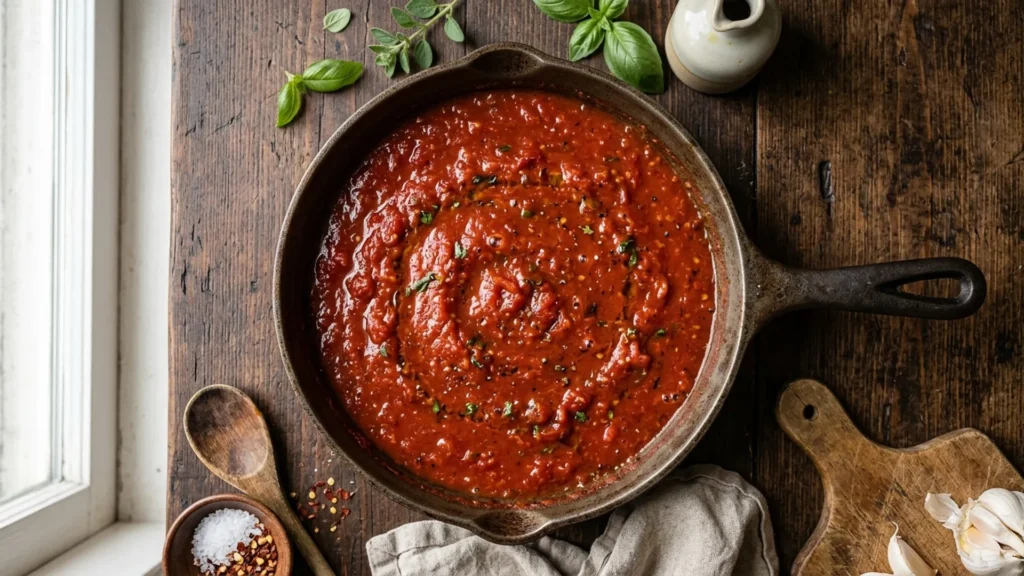
Homemade tomato sauce is one of the most useful things you can learn to cook, because it is the base for pasta, pizza, braises, soups, and dozens of weeknight dinners, and it takes only a handful of ingredients to make it taste far better than any jar. At its simplest, a great tomato sauce is good tomatoes, fat, an aromatic or two, salt, and time on low heat. You can build it from peak-season fresh tomatoes in late summer or from a can of quality whole tomatoes any month of the year, and both routes give a bright, savory, deeply tomatoey sauce once you understand the technique. This guide shows you both methods, the ratios that work, how to pick the right tomatoes, the famous three-ingredient butter-and-onion approach, how to fix common problems like a sauce that is too acidic or too thin, and how to store and scale it.
By the end you will have a reliable master recipe you can riff on forever, plus the troubleshooting know-how to rescue a batch that is not quite right. The goal is not one rigid recipe but the understanding that lets you make tomato sauce taste exactly the way you want it.
Fresh vs Canned Tomatoes: Which to Use
The single biggest factor in your sauce is the tomatoes, and the honest answer is that good canned tomatoes beat mediocre fresh ones almost every time. Here is how to choose.
| Type | Best when | Notes |
|---|---|---|
| Fresh plum or Roma | Peak summer ripeness | Meaty, low seeds; needs peeling |
| Fresh San Marzano | In season, if you can find them | Sweet, balanced, ideal for sauce |
| Canned whole peeled | Any time of year | Reliable, picked ripe; gold standard for sauce |
| Canned crushed | When you want a fast, smooth sauce | Less control over texture |
For fresh, choose plum or Roma types at full ripeness, since they are meaty with fewer seeds; avoid cherry tomatoes, which are seedy and fiddly to peel. For canned, whole peeled tomatoes give you the most control, and San Marzano-style tomatoes are the reference point for their sweet, low-acid balance. A good rule: use fresh tomatoes only when they are genuinely in season and taste sweet raw; the rest of the year, reach for a quality can.
The Master Recipe With Canned Tomatoes
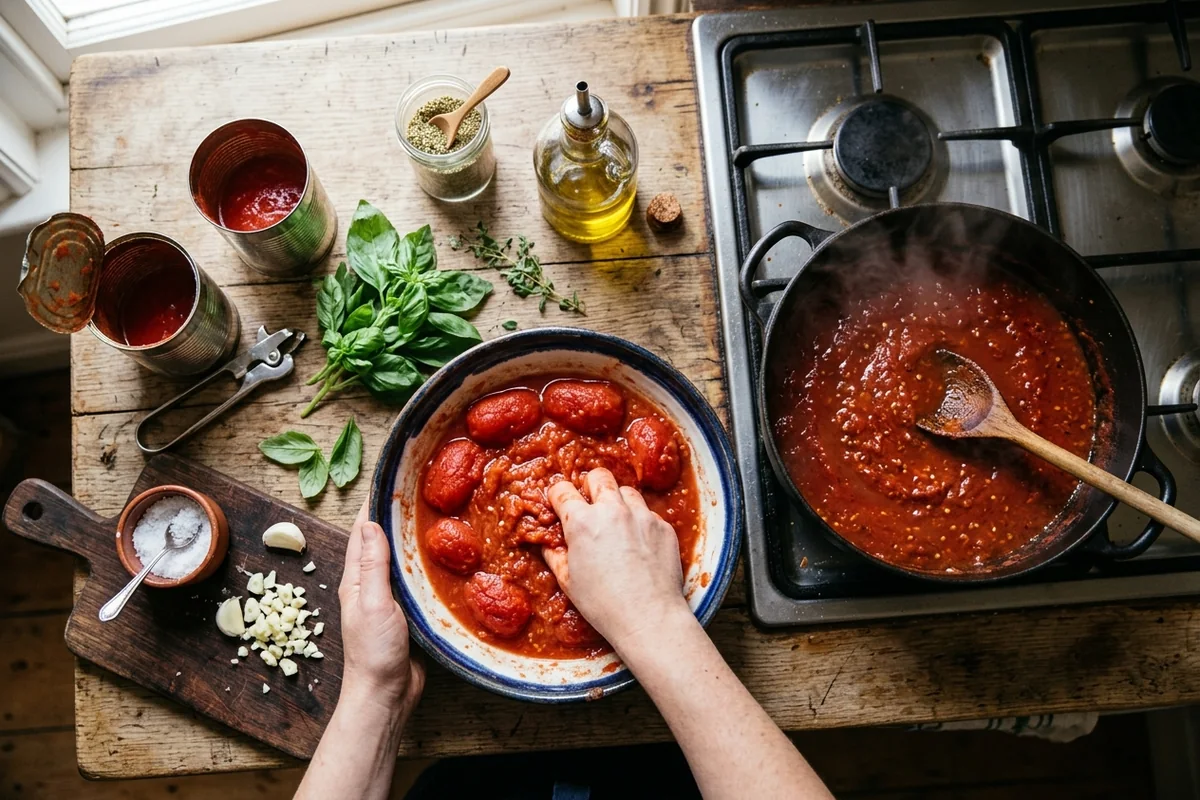
This is the everyday version, ready in about half an hour, and it makes roughly one quart.
- 1 (28-ounce) can whole peeled tomatoes
- 3 tablespoons olive oil
- 1 small onion, finely chopped (about 1 cup)
- 3 cloves garlic, minced
- 1/2 teaspoon salt, plus more to taste
- A pinch of red pepper flakes (optional)
- A few fresh basil leaves or 1/2 teaspoon dried oregano
- A pinch of sugar, only if needed to balance acidity
Warm the oil over medium-low heat, add the onion and a pinch of salt, and cook gently until soft and translucent, about eight to ten minutes; do not rush this, because soft sweet onions are the flavor base. Add the garlic and pepper flakes and cook one more minute until fragrant. Pour in the tomatoes, crushing them by hand or snipping them in the pot with scissors, add the salt, and bring to a gentle simmer. Cook uncovered for fifteen to twenty-five minutes, stirring occasionally, until it thickens and the raw tomato edge softens. Stir in basil at the end, taste, and adjust salt and, only if the sauce tastes sharp, a small pinch of sugar. For a smooth sauce, blend it; for a rustic one, leave it chunky.
The Fresh Tomato Method
When tomatoes are in season, a fresh sauce has a brightness canned cannot match, and the only extra step is peeling. To peel, cut a small X in the bottom of each tomato, drop them into boiling water for thirty to sixty seconds until the skins loosen, then transfer to ice water; the skins slip right off. Quarter the peeled tomatoes, squeeze out and discard the watery seed pockets if you want a less watery sauce, and chop. From there the method mirrors the canned version: soften onion and garlic in olive oil, add the chopped tomatoes, salt, and herbs, and simmer.
Short simmer vs long simmer
Cooking time changes the character of the sauce. A short simmer of about thirty minutes keeps the fresh, bright tomato flavor and a looser texture, which is lovely tossed with summer pasta. A longer simmer of sixty to ninety minutes thickens the sauce and develops a deeper, sweeter, more cooked flavor that clings to noodles and stands up in a baked dish. Neither is wrong; choose based on whether you want fresh and bright or rich and concentrated. Stir more often as the sauce thickens to keep it from catching on the bottom.
The Three-Ingredient Butter and Onion Sauce
There is a famous, almost absurdly simple tomato sauce that proves how little you need when the technique is right. Combine a 28-ounce can of whole tomatoes, five tablespoons of butter, and one peeled onion cut in half, with a good pinch of salt, in a pot. Simmer gently, uncovered, for about forty-five minutes, stirring now and then and crushing the tomatoes against the side of the pot as they soften. Remove and discard the onion halves at the end. The result is a silky, sweet, rounded sauce with a clean tomato flavor and a luxurious texture from the butter, with no garlic and no herbs at all. It is the best demonstration that great tomato sauce is mostly about good tomatoes and patient low heat. Keep this one in your back pocket for nights when you want something special with almost no effort.
Building Flavor and Variations
Once you have the base, the sauce takes well to additions, and a few small moves cover most of what people want.
- Tomato paste: A tablespoon stirred into the onions and cooked for a minute deepens the color and adds savory richness.
- Herbs: Basil at the end keeps it fresh; oregano and a bay leaf during the simmer make it heartier.
- Heat: Red pepper flakes for a gentle kick, added with the garlic.
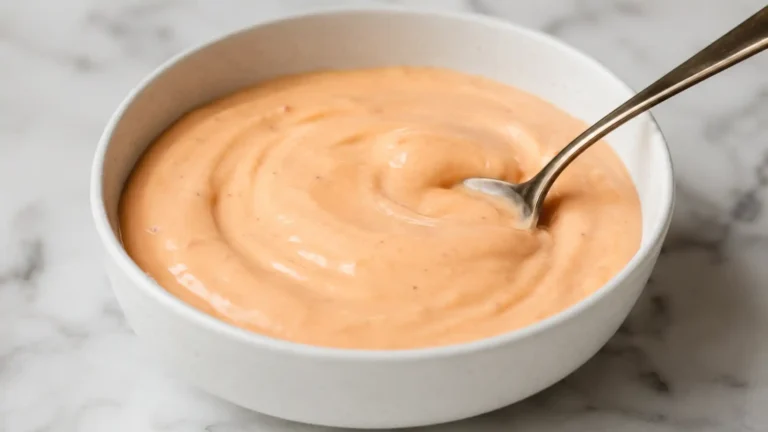
- Creamy: A splash of heavy cream at the end turns it into a pink, rounded sauce; this is the same move that gives a vodka-style sauce its body.
- Wine: A splash of white or red wine after the onions, simmered until the alcohol cooks off, adds depth.
If you want a creamy white counterpart to keep alongside this red sauce, the same patience-and-good-fat principle applies to a from-scratch creamy alfredo, which rounds out a pasta night nicely. And the habit of building a sauce from a few controlled ingredients is the same instinct behind a good oyster sauce substitute: know the role of each component and adjust to taste.
Troubleshooting Tomato Sauce
Most tomato sauce problems have quick fixes once you know the cause.
- Too acidic or sharp: Add a small pinch of sugar, a knob of butter, or a grated carrot simmered in; longer cooking also mellows acidity. Add sugar a pinch at a time and taste.
- Too thin or watery: Simmer longer uncovered to reduce, or stir in a spoonful of tomato paste. With fresh tomatoes, removing the seed pockets up front prevents this.
- Too thick: Loosen it with a little pasta cooking water, broth, or water until it coats a spoon the way you want.
- Bland or flat: It almost always needs salt; add it gradually and taste. A splash of acid like a few drops of vinegar can also wake it up.
- Bitter: Usually from scorched garlic or burnt sauce on the pot bottom; cook garlic gently and stir as it thickens.
Taste as you go, and remember that salt and a touch of fat are the two levers that fix the most problems. Test kitchens like America’s Test Kitchen and Bon Appetit make the same point: most tomato sauce fixes come down to seasoning and a little patience rather than a longer ingredient list.
How to Use Your Tomato Sauce
The reason this recipe earns a place in your regular rotation is how many directions it goes. A single pot of basic tomato sauce becomes a week of different meals, which is the practical case for making it rather than buying jars. Here are the most useful uses.
Pasta and pizza
The obvious one: toss it with cooked pasta, loosening with a little pasta water so it clings, and finish with grated cheese and a drizzle of olive oil. For pizza, use a thicker, slightly reduced version, or even raw blended sauce that cooks in the oven, spread thin so the crust stays crisp. A smooth, well-seasoned tomato sauce is the backbone of both.
Braising and simmering
Tomato sauce is a ready-made braising liquid. Nestle meatballs, chicken thighs, sausages, or chunks of eggplant into a simmering pot and let them cook through, taking on the tomato flavor while adding their own back to the sauce. This is how a plain sauce becomes a hearty main with almost no extra work.
Soups, eggs, and beans
Thin the sauce with broth for a quick tomato soup, crack eggs into a simmering skillet of it for a shakshuka-style breakfast, or stir in a can of drained beans for a fast, savory side. Once you have the sauce, these spin-offs take minutes, which is exactly why a big batch pays off.
Common Mistakes to Avoid
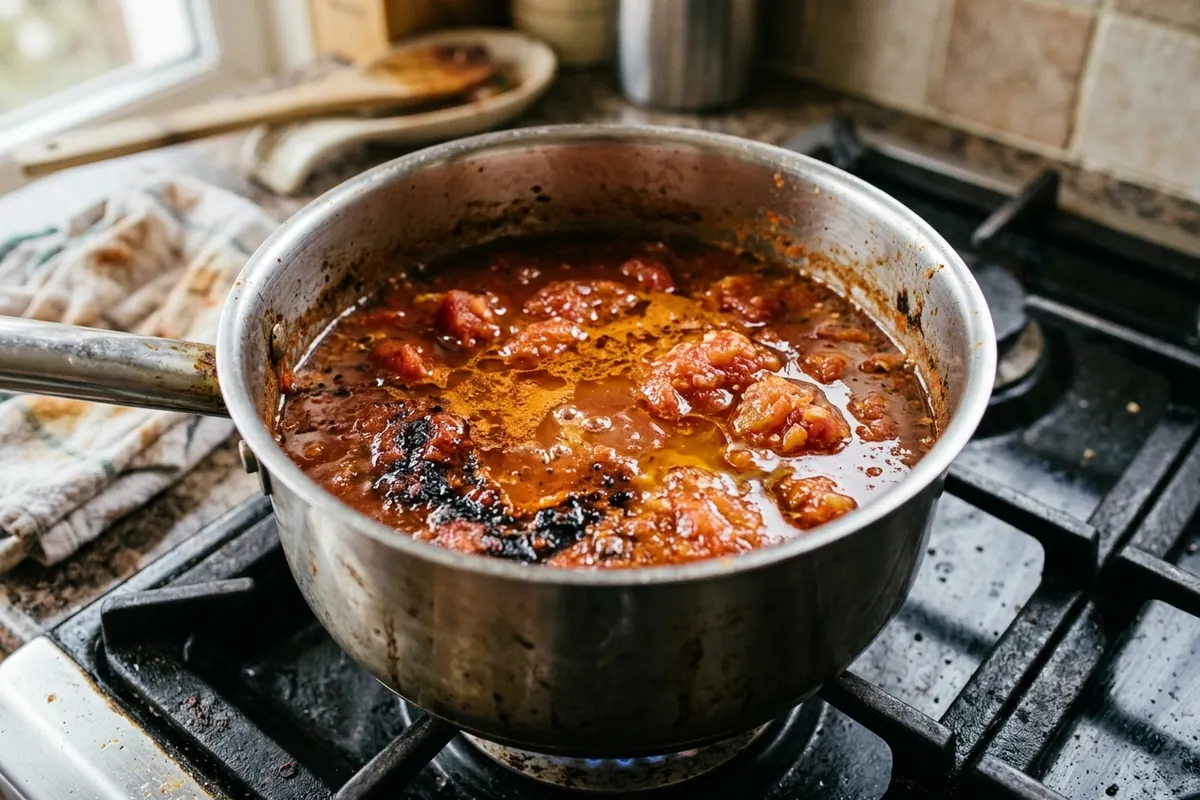
A few habits separate a flat, jarred-tasting sauce from a vivid homemade one, and they are easy to get right once you know them. The first mistake is rushing the onions; pale, undercooked onion leaves a raw, sharp note, so give it the full eight to ten minutes on gentle heat until soft and sweet. The second is burning the garlic, which turns bitter in seconds over high heat, so add it after the onions are soft and cook it just until fragrant. The third is under-salting; tomatoes need a fair amount of salt to taste like themselves, so season in stages and taste rather than serving it timid. The fourth is over-reducing a fresh-flavored sauce into something dull and jammy when you wanted bright; match your simmer time to the result you want. The fifth is reaching for sugar reflexively; only add it if the sauce actually tastes sharp after cooking, since good tomatoes and a proper simmer often need none. Avoid these five and even a simple sauce tastes like it came from a good kitchen.
Choosing the Best Canned Tomatoes
Since canned tomatoes carry most of the flavor in an off-season sauce, it is worth knowing what to look for on the shelf. Whole peeled tomatoes give you the most control, because you crush them yourself and can leave the sauce as chunky or smooth as you like, and they tend to be the best-quality fruit in the can. Crushed tomatoes are a convenient shortcut for a quick smooth sauce but give up some control over texture. Diced tomatoes hold their shape because of an added firming agent, which can leave stubborn little cubes in a sauce, so they are better for chunky stews than for a smooth sauce. Read the ingredient list and favor cans with just tomatoes and tomato juice or puree, ideally with a little salt and basil and not much else. The San Marzano name signals a sweet, balanced, low-acid style that is prized for sauce, though several other brands of quality plum tomatoes perform just as well, so taste a few and find one you trust. A reliable can in the pantry means a great tomato sauce is always thirty minutes away.
Homemade Tomato Sauce vs Spaghetti Sauce
People often use the terms interchangeably, but there is a useful distinction. A basic tomato sauce, like the master recipe here, is a versatile foundation: tomatoes, fat, aromatics, salt, and herbs, with nothing that ties it to one dish. A spaghetti sauce or marinara is usually that same base seasoned more assertively for pasta, often with more garlic, oregano, and sometimes meat. The advantage of making the plain version is flexibility: the same pot can sauce pasta tonight, top a pizza tomorrow, and braise meatballs the day after. When you want a dedicated pasta sauce, you simply season the base a little more boldly. This is why learning the foundational tomato sauce is the higher-leverage skill; it is one recipe that branches into many. For pasta pairings and shapes to serve it with, a network of pasta sauces ideas is a good next stop.
Storage, Freezing, and Scaling
Tomato sauce stores beautifully, which is why making a big batch is smart. In the refrigerator, it keeps in an airtight container for about four to five days. For longer storage, freeze it in airtight containers or freezer bags for up to three months; freezing in one or two-cup portions, or in a muffin tin then transferred to a bag, gives you ready-to-use amounts. Cool the sauce before refrigerating or freezing, leave a little headspace in containers since liquid expands when frozen, and label with the date. The recipe scales cleanly, so double or triple it when good tomatoes are cheap in season and stash the extra. Thaw frozen sauce overnight in the fridge or gently in a pan, adding a splash of water if it has thickened. A freezer stocked with homemade tomato sauce turns a weeknight dinner into a five-minute job, which is the real payoff of cooking a big pot.
Frequently Asked Questions
How do you make homemade tomato sauce?
Soften chopped onion and minced garlic in olive oil, add a 28-ounce can of crushed whole tomatoes and salt, then simmer fifteen to twenty-five minutes until thickened. Finish with basil, taste, and adjust salt and a pinch of sugar if it is too sharp. Blend for smooth or leave it chunky for rustic.
Are canned tomatoes good for tomato sauce?
Yes, and good canned whole peeled tomatoes often make better sauce than out-of-season fresh ones, because they are picked and packed at peak ripeness. San Marzano-style tomatoes are the reference point for their sweet, balanced, low-acid flavor. Use fresh tomatoes mainly when they are truly in season.
Why is my tomato sauce too acidic?
Tomatoes are naturally acidic, and some cans are sharper than others. Balance it with a small pinch of sugar, a knob of butter, or a grated carrot simmered into the sauce, and cook it a little longer, since a longer simmer mellows acidity. Add sugar gradually and taste as you go.
How long should I simmer tomato sauce?
A short simmer of about thirty minutes keeps a bright, fresh flavor and looser texture, while a longer simmer of sixty to ninety minutes thickens the sauce and deepens the flavor. Choose based on the result you want, and stir more often as the sauce thickens to keep it from scorching.
Can I freeze homemade tomato sauce?
Yes. Cool the sauce, then freeze it in airtight containers or bags for up to three months, ideally in one or two-cup portions for easy use. Leave a little headspace for expansion and label with the date. Thaw overnight in the fridge or gently in a pan, adding a splash of water if needed.
What is the difference between tomato sauce and spaghetti sauce?
Basic tomato sauce is a versatile foundation of tomatoes, fat, aromatics, salt, and herbs, usable for pasta, pizza, and braises. Spaghetti sauce or marinara is typically that base seasoned more boldly for pasta, often with extra garlic, oregano, and sometimes meat. The plain version is more flexible across dishes.
Bottom Line
Homemade tomato sauce rewards a little technique more than a long ingredient list: start with good tomatoes, whether peak-season fresh or a quality can, soften your aromatics in fat, season with salt, and give it time on low heat. Use the canned master recipe for everyday cooking, the fresh method when tomatoes are in season, and the three-ingredient butter-and-onion version when you want something silky with almost no effort. Fix acidity with a touch of sugar or butter, thin or reduce to the texture you like, and taste for salt at every step. Make a big batch, freeze it in portions, and you will always have the foundation for a fast, genuinely good meal.