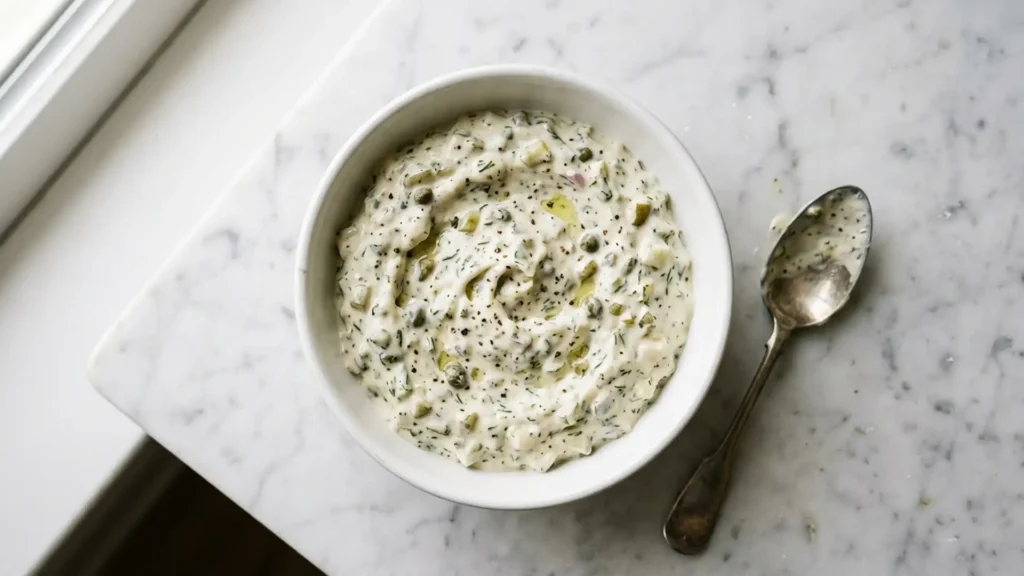
Homemade tartar sauce takes five minutes to stir together and turns a plate of fried fish from fine into something you actually look forward to. The gap between a from-scratch batch and the squeeze bottle from the store is not subtle. The jarred stuff leans sweet and one-note. A real batch is bright, briny, herbal, and has texture you can feel against the crunch of a fillet. This is one of the easiest cold sauces you will ever build, and once you understand the four jobs each ingredient does, you can fix any version that tastes flat or muddy without a recipe in front of you.
SauceGrove exists because condiments are the most underrated lever in home cooking. A great sauce rescues a mediocre piece of protein. A bad one ruins a great one. Tartar sauce is the perfect place to learn the logic, because it has only a handful of parts and every one of them is doing something specific. Here is how it comes together, step by step.
What Tartar Sauce Actually Is
At its core, tartar sauce is a cold emulsified sauce built on mayonnaise, seasoned with acid, brine, herbs, and aromatics. It belongs to the same family as remoulade and the various mayonnaise-based dressings, and it traces back to French sauce tartare, which was classically a mayonnaise enriched with chopped hard-boiled egg, capers, and herbs. The American version most of us grew up with simplified that into mayo plus pickles plus a squeeze of lemon, and somewhere along the way the jarred brands cranked up the sugar to make it shelf-stable and crowd-friendly.
Understanding the structure matters because it tells you what you can change and what you cannot. The mayonnaise is the body. Everything else is a seasoning agent suspended in that body. If your sauce is too thick, you thin it with a liquid seasoning. If it is too bland, you add brine or acid, not more mayo. If it is too sharp, you pull back the acid and let the fat round it out. Once you see the sauce as a base plus four categories of seasoning, you stop needing exact measurements.
The Four Jobs Every Ingredient Does
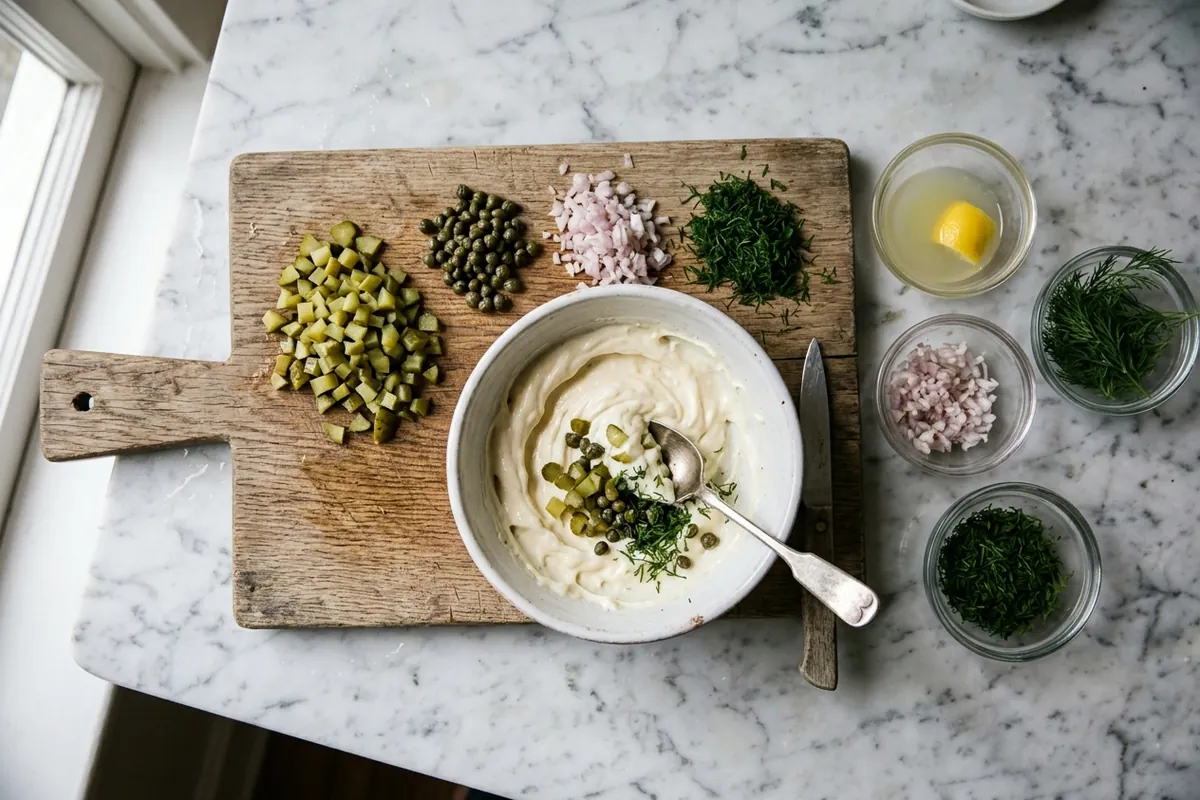
This sauce breaks down into four jobs: fat, acid, brine, and freshness. Get one from each category and you have a balanced sauce. Skip a category and you can taste the hole.
Fat (the base): Mayonnaise carries everything else and gives the sauce its cling. Use a real, full-fat mayo for the best texture. The fat coats your tongue and stretches the flavor of the other ingredients across the whole bite. Light mayo works but tastes thinner and a little hollow, so you will want to lean harder on the brine and herbs to compensate.
Acid (the lift): Fresh lemon juice is the standard, and it does two things. It cuts the richness of the mayo so the sauce does not feel heavy, and it brightens the whole thing so it tastes fresh rather than flat. A small amount of pickle brine adds acid too, with the bonus of vinegar tang. Acid is also why homemade sauce tastes more alive than the jar, where the lemon flavor has long since faded.
Brine (the savory backbone): Chopped dill pickles, capers, and a splash of their liquid bring salt, sourness, and that pop of savory funk that reads as classic tartar flavor. Capers in particular add a mustardy, almost floral sharpness that most home cooks skip and then wonder why their sauce tastes incomplete. Do not skip the capers if you have them.
Freshness (the top note): Fresh dill is the traditional herb, but chives, parsley, or a mix all work. Fresh herb is what separates a sauce that smells like a deli case from one that smells like a garden. A little grated shallot or a pinch of onion powder adds a gentle allium hum underneath.
My Working Recipe and Ratios
Here is the batch, scaled to about three-quarters of a cup, which is enough for four to six servings of fish.
- 1/2 cup full-fat mayonnaise
- 3 tablespoons finely chopped dill pickle (about one small pickle)
- 1 tablespoon capers, chopped
- 1 tablespoon fresh dill, chopped (or 1 teaspoon dried)
- 1 to 2 teaspoons fresh lemon juice
- 1 teaspoon pickle brine
- 1/2 teaspoon Dijon mustard
- 1 small shallot or 1 tablespoon grated onion (optional)
- Salt and fresh black pepper to taste
The method could not be simpler. Chop everything fine, stir it all together, taste, and adjust. The only real technique is in the chopping and the resting, both covered below. Notice the ratio: the mayo is roughly half the volume, and the chopped solids are the other half. That high ratio of pickle and capers to mayo is exactly why homemade beats the jar, where the solids are an afterthought.
Why You Must Chop Fine and Let It Rest
Two small steps decide whether your sauce is good or great. First, chop the pickles, capers, and herbs as fine as you can manage. Big chunks mean some bites are pure mayo and others are a wallop of pickle. Fine chopping distributes the flavor so every drag through the sauce delivers the full profile. It also lets the brine seep out of the cut surfaces and season the mayo itself.
Second, rest the sauce. After you mix it, cover it and put it in the fridge for at least 15 to 30 minutes before serving. This is not optional fussiness. During the rest, the salt and acid migrate out of the solids and into the mayo, the raw edge of the shallot softens, and the herbs bloom. A freshly stirred sauce tastes disjointed, like a list of ingredients. A rested one tastes like a sauce. If you have time, an hour is even better, and the flavor keeps improving for the first day.
Troubleshooting a Flat or Broken Sauce
Most tartar sauce problems fall into a few buckets, and each has a clear fix.
Tastes flat or boring: You are almost always short on salt and acid. Add a splash of pickle brine and a few more drops of lemon, then taste again. Salt is the single biggest lever for making a cold sauce taste finished.
Too sour or sharp: You overshot the acid or used too much caper brine. Stir in another spoonful of mayo to buffer it, or a tiny pinch of sugar to round the edges. A quarter teaspoon of sugar is plenty; you are balancing, not sweetening.
Too thick: Loosen it with pickle brine, lemon juice, or a teaspoon of water. Add liquid a little at a time so you do not overshoot into runny.
Too thin or weepy: This usually means you overmixed and broke some of the mayo emulsion, or your add-ins were watery. Stir in a little more mayo and stop stirring the moment it comes together. Drain your capers and pickles well before chopping next time.
Muddy or muddled flavor: Too many competing add-ins. Strip back to the four jobs and rebuild. You do not need olives, relish, and capers all at once.
Pickles, Relish, and Capers Compared
The brine component is where people get the most confused, so here is how the common choices behave. Whole dill pickles, chopped fine, give you the cleanest control because you decide the texture and you can taste the pickle before it goes in. Dill relish is a convenient shortcut, but most jarred relishes carry added sugar and a softer texture, which nudges the sauce sweeter and looser. Sweet pickles or bread-and-butter chips push the whole thing toward the jarred-sauce flavor profile, which some people love and some find cloying. Capers are not interchangeable with pickles; they bring a sharper, more savory note and a tighter pop, and the best sauces use both. If you only have one, whole dill pickles plus a little of their brine is the most reliable single choice.
It is worth saying a word about your mayonnaise, since it is half the sauce. A neutral, full-fat mayo gives the most reliable result. If you want to push the sauce toward something special, you can use a homemade mayonnaise, and the test cooks at America’s Test Kitchen have published a lot of careful work on how egg, oil, and acid balance in a stable emulsion, which is exactly the chemistry holding your tartar sauce together. The richer and more acidic your base mayo, the less lemon you will need to add later, so taste the mayo first and adjust from there.
Scaling the Sauce Up and Down
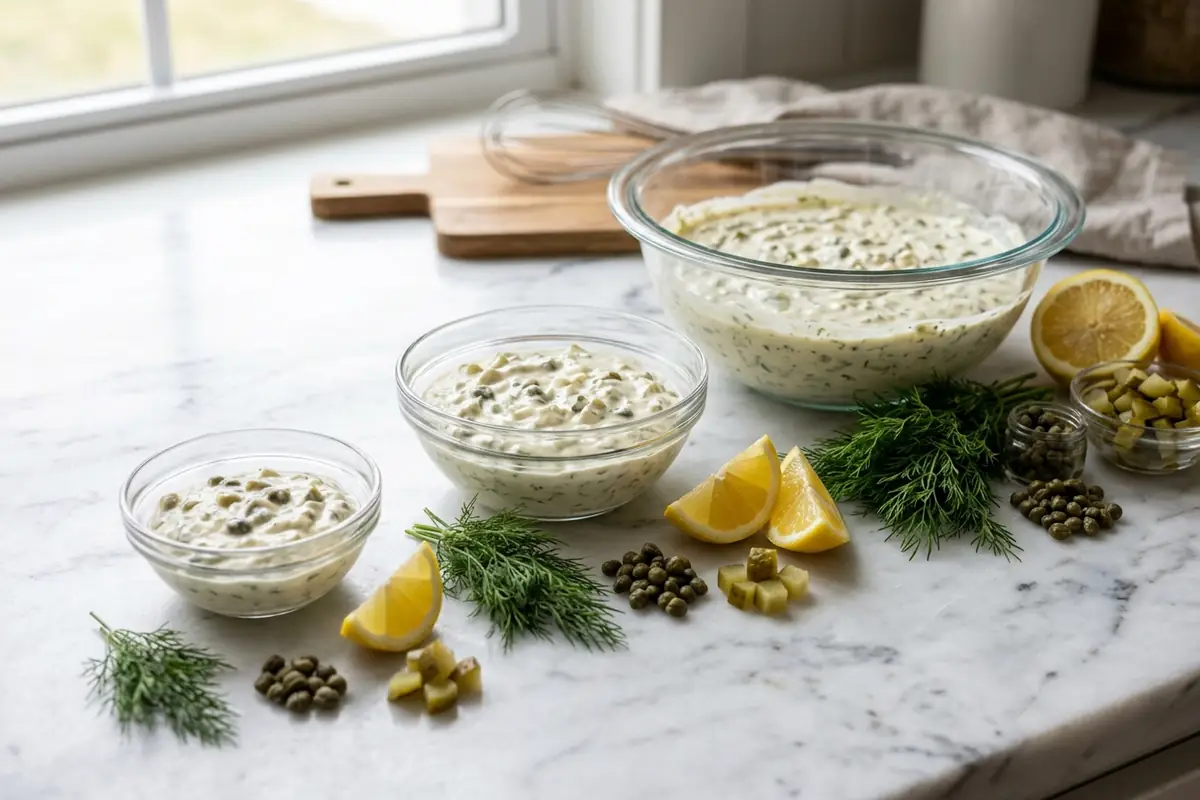
Because tartar sauce is built on ratios rather than fixed amounts, scaling is straightforward once you internalize the proportions. The working formula is roughly equal volumes of mayonnaise and chopped solids, with acid, brine, and mustard added by the teaspoon to taste. To make a single serving for one fillet, drop to two tablespoons of mayo, a tablespoon of chopped pickle, a few capers, and a squeeze of lemon. To make a party-sized batch for a fish fry, scale to two cups of mayo and adjust the solids and seasonings proportionally, but always season the larger batch in stages and taste as you go. Large batches need more salt than you expect because the volume of mayo dilutes the brine. The one thing that does not scale linearly is acid; start conservative on lemon in a big batch and add more after the rest, since it is far easier to brighten a dull sauce than to rescue a sour one.
Another scaling note: if you are making the sauce a day ahead for an event, hold back a little of the lemon and fresh herb and stir them in just before serving. The acid dulls and the herbs lose their snap over a long hold, so a small finishing addition keeps a make-ahead batch tasting freshly made. This trick works for most cold sauces and is the difference between a catering-flat dip and one that tastes like you stirred it that minute.
Variations Worth Knowing
Once the base is solid, you can steer it in several directions. For a remoulade-leaning version, add a teaspoon of whole-grain mustard, a dash of hot sauce, and a pinch of paprika or Cajun seasoning. For a brighter, lighter take, swap half the mayo for thick Greek yogurt, which adds tang and cuts the richness. For a more herbaceous profile, lean on a mix of dill, chives, and parsley. For extra crunch and color, fold in finely diced cornichons or a little grated fresh horseradish for heat. If you want a dairy-free or vegan sauce, a good vegan mayo behaves almost identically; just lean a touch harder on the lemon and salt since plant mayos can read slightly sweet.
Tartar sauce is not only for fish, either. It is excellent on a crab cake, a fried green tomato, a roast potato, or as the spread on a fish or even a roast beef sandwich. A small jar in the fridge during summer is handy for vegetables off the grill.
Storage and Make-Ahead Notes
Keep your sauce in an airtight container in the coldest part of the fridge. It holds well for about one to two weeks, though the bright lemon note is at its peak in the first three or four days and slowly fades after that. If it tastes a little dull on day five, a fresh squeeze of lemon and a pinch of salt wakes it right back up. Do not freeze tartar sauce. Mayonnaise emulsions break when frozen and thawed, and you will get a grainy, weepy mess. Always serve it cold; the contrast of a cool, tangy sauce against hot, crisp fried food is the entire point.
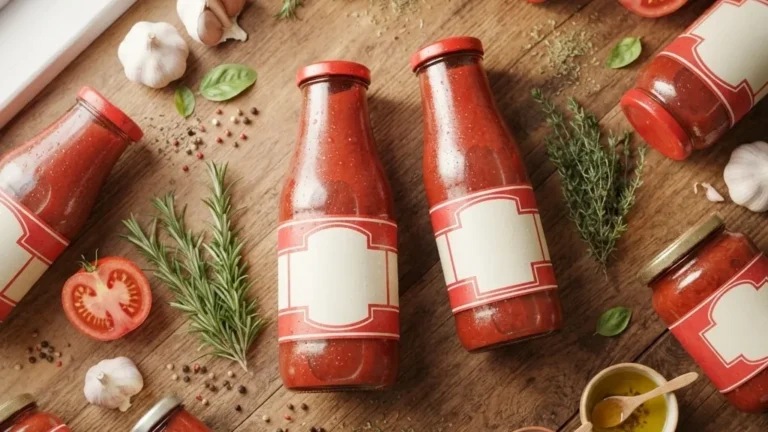
If you want to build out a whole condiment shelf at home, it is worth getting comfortable with a few base sauces. The homemade tomato sauce guide uses the same balance-the-elements logic from the hot-sauce side of the kitchen, and if you are curious how a different classic cold sauce comes together, the full walkthrough on how to make tartar sauce goes even deeper on technique. For dietary questions that come up with condiments, the guide on whether fish sauce is gluten free is a useful companion read.
Frequently Asked Questions
What is tartar sauce made of?
Tartar sauce is a cold sauce made from a mayonnaise base seasoned with chopped pickles, capers, fresh lemon juice, fresh herbs like dill, and often a little mustard and shallot. The mayo provides the body, while the pickles and capers add brine and crunch, the lemon adds acidity, and the herbs add freshness.
Can I make tartar sauce without pickles?
Yes. If you have no pickles, use capers plus a splash of any vinegar or pickle brine you can find, or finely chopped cornichons or even a few chopped green olives. The goal is to replace the salty, sour, crunchy element that the pickle normally provides. A pinch more salt and a little extra lemon will help fill the gap.
How long does homemade tartar sauce last?
Stored airtight in the fridge, homemade tartar sauce keeps for about one to two weeks. The fresh lemon flavor is brightest in the first three to four days. Refresh an older batch with a squeeze of lemon and a pinch of salt. Do not freeze it, because the mayonnaise will separate and turn grainy.
Why does my tartar sauce taste bland?
Bland tartar sauce is almost always under-seasoned on salt and acid. Add a splash of pickle brine and a few drops of fresh lemon juice, stir, and taste again. Letting the sauce rest in the fridge for at least 15 to 30 minutes also deepens the flavor as the seasonings spread through the mayo base.
Is tartar sauce the same as remoulade?
They are close cousins but not identical. Both start from a mayonnaise base with pickles or capers and herbs. Remoulade typically adds more mustard, sometimes paprika, hot sauce, or anchovy, and reads spicier and more complex. Tartar sauce is the cleaner, more lemon-and-dill forward version usually paired with fried fish.
Can I use Greek yogurt instead of mayonnaise?
You can swap up to half the mayonnaise for thick Greek yogurt to lighten the sauce and add tang. Going fully yogurt makes it noticeably more sour and less rich, so most cooks keep at least half mayo for body. If you go heavy on yogurt, ease back on the lemon since the yogurt already brings acidity.
The Takeaway
Homemade tartar sauce is the kind of small win that changes how you cook. It costs almost nothing, takes five minutes, and makes fried fish taste like it came from a place that cares. Remember the four jobs of fat, acid, brine, and freshness, chop your add-ins fine, and give the sauce a rest before you serve it. Once you can taste a batch and know exactly which lever to pull, you will never reach for the jar again. For more on building a confident hand with everyday sauces, the techniques here apply across most cold sauces, including cream-based dips that suit lighter vegan pasta nights.