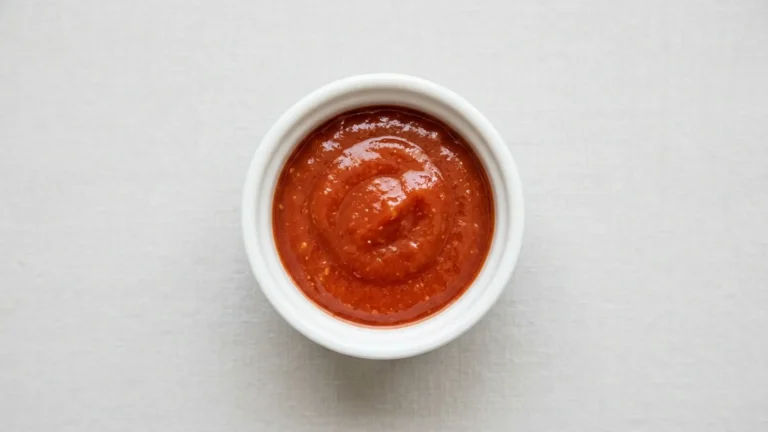
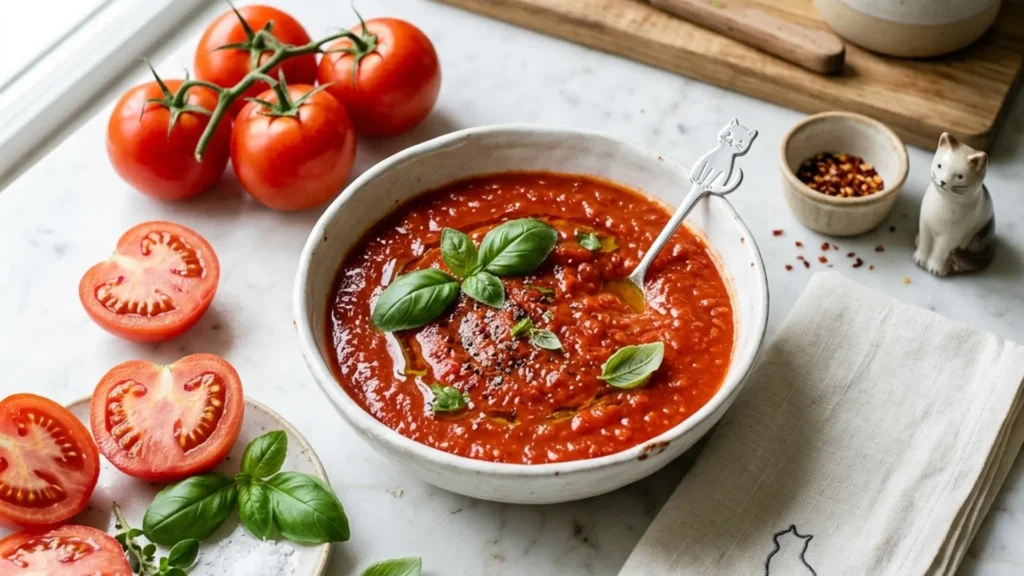
Can cats eat tomato sauce? No, cats should not eat tomato sauce, and the reason has almost nothing to do with the tomato itself. The trouble is everything we cook into a good sauce: garlic, onion, salt, and sometimes sugar. A plain lick off a clean spoon will usually pass without drama, but a saucer of garlicky marinara is a different story. Cats often treat the kitchen floor like a buffet, so this question comes up often.
Here is the short version up front, then the parts that actually matter when your cat is staring up at a red smear on the tile and you are trying to decide whether to call someone.
The Direct Answer, in Plain English
Ripe tomato flesh on its own is not toxic to cats. A tiny amount will not poison a healthy adult cat. But tomato sauce is not just tomato. It is tomato plus aromatics, and the two aromatics that show up in nearly every jar and pot, onion and garlic, are genuinely toxic to cats. They damage red blood cells and can cause a type of anemia. Cats are also obligate carnivores, which is a fancy way of saying their bodies are built to run on meat. They get nothing useful from a spoonful of sauce. So the honest answer is: not worth it, and in some cases worth a phone call to a vet.
Keep that frame in mind. The risk scales with two things: what is in the sauce, and how much your cat ate.
Why Tomato Sauce Is Riskier Than a Plain Tomato
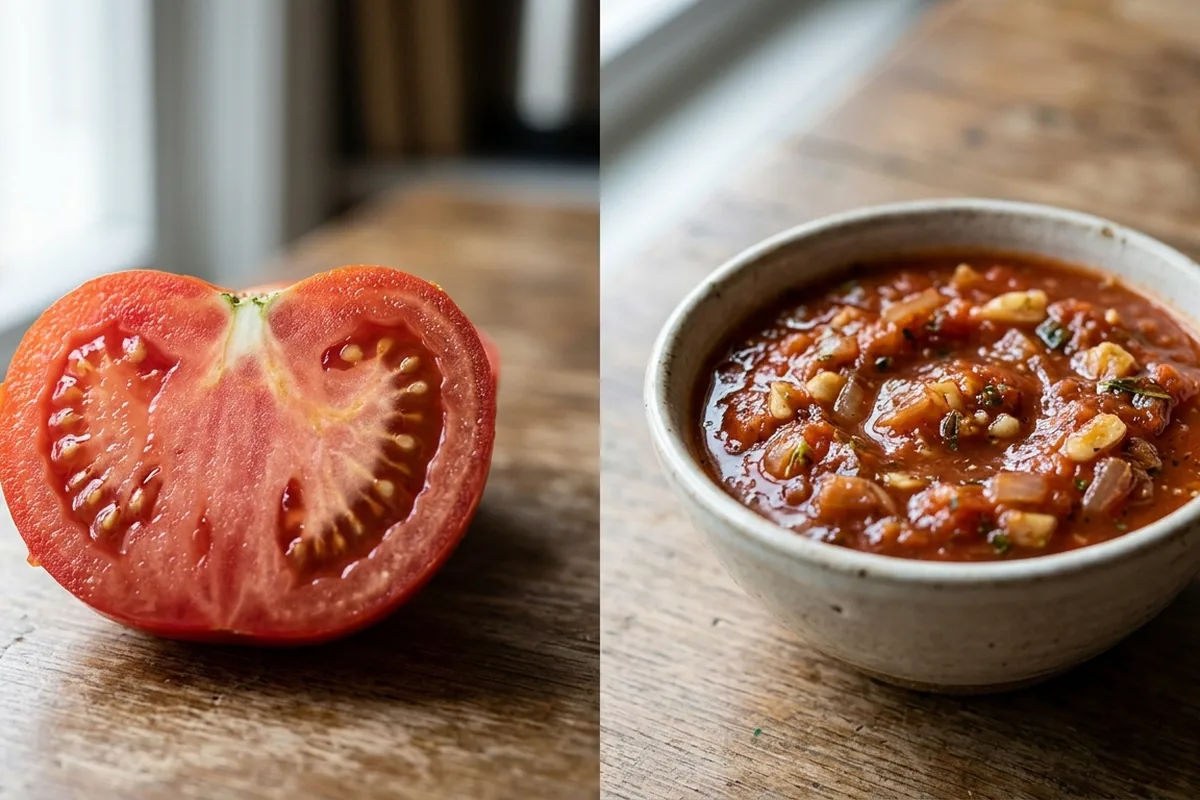
People hear that tomatoes are fine and assume sauce is fine too. It is a fair mistake. Here is the gap. A basic red sauce usually starts by sweating onion and garlic in olive oil before the tomatoes ever hit the pan. Those aromatics dissolve into the liquid. You cannot pick them out later. So even a smooth, seedless sauce that looks like pure tomato is carrying compounds from the allium family, the plant group that includes onion, garlic, shallot, leek, and chives.
The toxic agents in alliums are organosulfur compounds called thiosulfates. Cats cannot process them the way we do. As veterinary resources like PetMD explain, those compounds attack the cat’s red blood cells and can trigger Heinz body anemia, where the cells get damaged and break down. The damage is dose-dependent and can show up a few days later rather than right away, which is exactly why people get caught off guard.
Salt is the second issue. A cup of jarred pasta sauce can carry well over 1,000 mg of sodium. A cat’s whole daily sodium need is a fraction of that, on the order of 20 to 40 mg per day for a typical adult. Too much salt at once causes excessive thirst, vomiting, and in severe cases sodium ion poisoning. Then there is added sugar, which does nothing good for a carnivore, and the occasional sauce that hides xylitol or other sweeteners.
One more layer that gets ignored: fat and acid. A rich, oily sauce can upset a cat’s stomach all on its own, and the natural acidity of cooked tomato can sting an already sensitive gut. So even in the rare case where a sauce somehow contained no onion, garlic, or excess salt, you would still be feeding a carnivore something its digestive system was never designed to handle. The best sauces are loaded with aromatics by design. Good cooking and cat-safe rarely overlap. If you want to see just how much seasoning goes into a proper red sauce, the techniques covered by editors at Bon Appetit make it obvious that garlic, onion, and salt are the backbone of flavor, not optional extras.
The Green Parts Are a Separate Problem
If your cat nibbles your tomato plant rather than your sauce, that is a different hazard. The stems, leaves, and unripe green fruit contain solanine and tomatine, natural compounds that protect the plant. These can cause drooling, vomiting, loss of appetite, a slow heart rate, and dilated pupils. Ripe red fruit has very little of these, but the plant on your windowsill has plenty. Keep seedlings out of paw range.
How Much Is Actually Dangerous? The Numbers
This is where most articles wave their hands and say “a little is fine.” Something concrete is more useful, because a number lets you make a decision at 2 AM.
The commonly cited danger threshold for onion is roughly 5 grams of onion per kilogram of a cat’s body weight. Garlic is more concentrated, often estimated at around 5 times more potent gram for gram. Take a typical 10 pound cat, which is about 4.5 kilograms. That puts the onion concern point near 22 to 23 grams, a bit less than a quarter of a medium onion eaten in one sitting. That sounds like a lot, and a cat would rarely eat that much straight. The catch is that smaller, repeated exposures add up, and garlic reaches the danger zone much faster because of its potency.
Practical translation. A single lick of marinara that contains a trace of cooked garlic is very unlikely to cross any threshold. A cat that licks a bowl clean of a heavily seasoned sauce, or one that gets into sauce repeatedly over several days, is the scenario where it is time to stop guessing and call. Body weight matters enormously here. A 5 pound kitten hits a dangerous dose at half the amount a 10 pound adult would.
A Sauce-by-Sauce Risk Ranking
Not all red sauces are equal. The common ones are broken down below by how much onion, garlic, and salt they typically carry, since that is what drives the risk. None of these are a treat, but the danger is not uniform.
| Sauce | Onion/Garlic Load | Salt | Relative Risk |
|---|---|---|---|
| Plain crushed canned tomato (no seasoning) | None to trace | Low to moderate | Lowest |
| Marinara | Moderate (garlic, sometimes onion) | Moderate | Moderate |
| Jarred pasta sauce | High (onion and garlic powder) | High | High |
| Pizza sauce | High (concentrated garlic, oregano) | High | High |
| Vodka sauce | Moderate to high, plus cream and alcohol residue | Moderate | High |
| Ketchup | Onion and garlic powder, often | High plus heavy sugar | Moderate to high |
Notice the powders. Dehydrated onion and garlic powder are more concentrated than the fresh aromatic by weight, so a sauce that lists “onion powder, garlic powder” can be riskier per teaspoon than one made with a single fresh clove. That is one detail the big pet sites tend to skip. If you want to understand why jarred sauce and homemade differ so much in seasoning, the breakdown in our guide to tomato sauce versus paste shows how much salt and flavoring get built into commercial products.
Symptoms to Watch For After Your Cat Eats Tomato Sauce
Symptoms can be immediate or delayed. Allium poisoning in particular can take one to several days to show, because the red blood cell damage builds over time. Watch for these:
- Vomiting or diarrhea
- Drooling or excessive lip licking
- Loss of appetite
- Lethargy or weakness
- Pale or yellow-tinged gums
- Rapid breathing or panting
- Increased thirst and urination (a salt sign)
- Reddish or brown urine, which can signal red blood cell breakdown
Pale gums and brown urine are the two signs to take most seriously. They point toward the anemia pathway rather than a simple upset stomach. If you see either, that is not a wait-and-see situation.
What to Do Right Now: A Simple Decision Tree
Here is the protocol, the same one worth giving a friend who texts in a panic.
Step one: figure out what and how much. Was it plain tomato or a seasoned sauce? A single lick or a real serving? A small lick of mild sauce by a healthy adult cat usually means watch and relax.
Step two: check the sauce label or your recipe for onion, garlic, and salt. Heavy on those, or a large amount eaten, moves you toward calling.
Step three: if you are unsure, call. The ASPCA Animal Poison Control Center is reachable at (888) 426-4435, around the clock. A consultation fee may apply, but they will tell you whether your specific situation needs a vet visit. Your own vet or a nearby emergency clinic works too.
Step four: monitor for two to three days even if your cat seems fine. Because allium effects can lag, a cat that looks normal tonight can show symptoms by the weekend. Note appetite, energy, and litter box habits.
Do not try to make your cat vomit at home unless a professional tells you to. The wrong method can cause more harm than the sauce did.
Cooked Garlic and Onion Are Still Dangerous
A common myth is that cooking destroys the harmful compounds in onion and garlic. It does not. The thiosulfates that hurt a cat’s blood cells survive heat, simmering, roasting, drying, and powdering. A clove of garlic that has melted into a four-hour Sunday gravy is just as capable of causing damage as a raw one. In some ways the cooked version is worse, because it disperses evenly through the whole pot and tastes mild, so a cat will happily lap up sauce that carries a real dose without the bitter raw bite that might otherwise put it off.
Garlic powder and onion powder deserve their own warning. Dehydration concentrates them. By weight, a teaspoon of garlic powder can represent the equivalent of several fresh cloves. Many jarred sauces, dry seasoning blends, and bouillon-based sauces lean on these powders for cheap depth. So when you read a label and see “spices” or “natural flavors” near the top of the list, assume allium is present unless proven otherwise.
Some Cats Are at Higher Risk Than Others
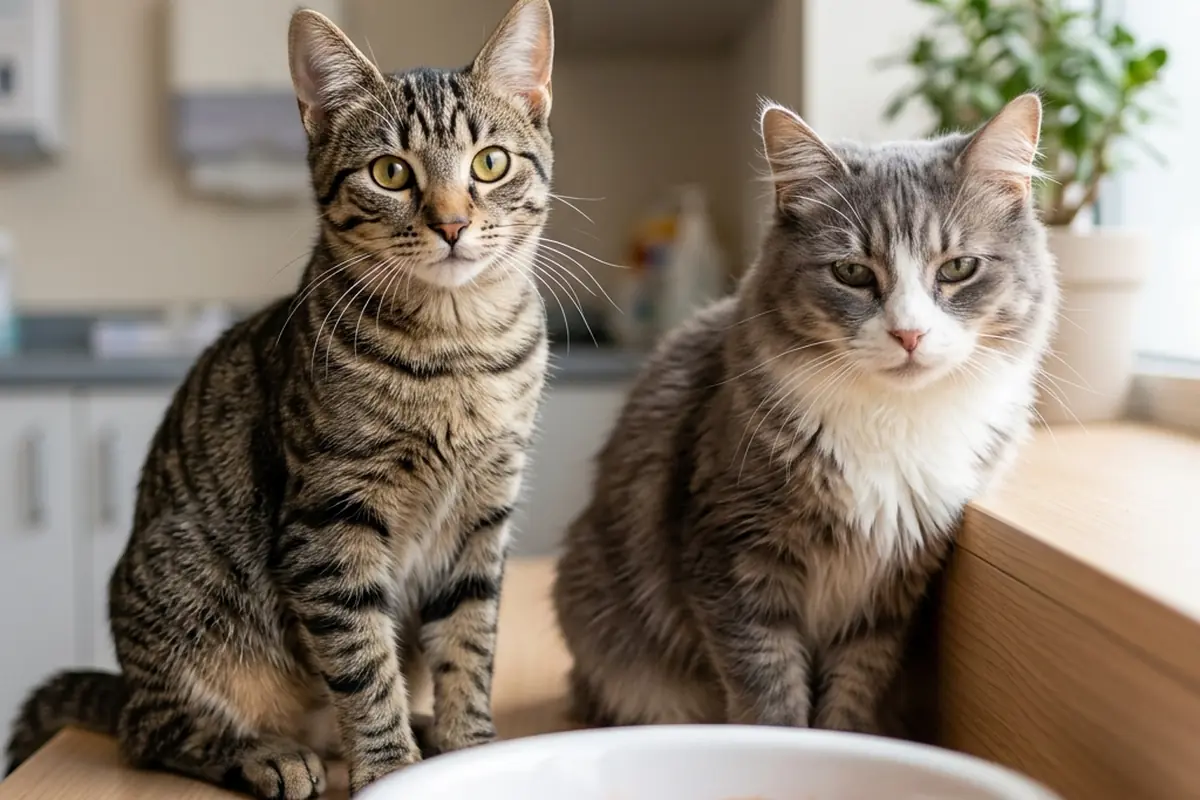
Risk is not the same for every cat, and this is where a single threshold number stops being enough. A few factors push a cat into a more fragile category.
Body weight is the big one. A 4 pound kitten and a 16 pound Maine Coon can eat the same teaspoon of sauce and land in completely different places on the danger curve. The smaller the cat, the smaller the safe margin. Kittens, seniors, and cats recovering from illness all have less reserve to absorb a hit to their red blood cells.
Existing anemia or kidney issues raise the stakes too. A cat that already runs low on healthy red blood cells has far less cushion if alliums knock out more of them. Cats with heart disease are more sensitive to sudden salt loads, so a salty sauce is riskier for them. If your cat has any chronic condition, treat even a small sauce exposure as a reason to call your vet rather than wait and watch. Pregnant cats are another group not to gamble with at all.
Why Cats Beg for Sauce in the First Place
Cats are not drawn to tomato sauce because they crave tomatoes. They cannot even taste sweetness, so the sugar in the sauce is invisible to them. What pulls them in is the fat and the meaty, savory note. A sauce simmered with meat, anchovy, or parmesan rind picks up glutamates, the same umami compounds that make broth and meat appealing to a carnivore. That is why a plain marinara might get a sniff and a pass, while a bolognese or a sauce cooked alongside sausage gets a cat genuinely interested.
Understanding the why helps you manage the behavior. If your cat targets meaty sauces, the fix is not to leave those bowls within reach and hope. The fix is to remove the temptation and offer the real thing, a bite of plain cooked meat, so the cat gets the savory payoff without the dangerous carrier.
Better Things to Give a Cat Who Loves Your Cooking
My cat is not interested in tomatoes. She is interested in being included. That is what the begging is really about. The better move is to redirect. Plain cooked chicken, turkey, or a flake of cooked salmon with no seasoning, no oil, no garlic, gives her the “I got people food” win without any of the risk. A few licks of plain pumpkin puree (not pie filling) is another safe option some cats enjoy. Keep portions to a small bite, since treats should stay under about 10 percent of daily calories.
If you cook a lot of sauce, the realistic move is management, not vigilance. Wipe spills immediately, keep simmering pots toward the back of the stove, and never leave a saucy plate at cat-nose level. When building a batch of red sauce from scratch, like the method in our marinara from scratch guide, keep the cat out of the kitchen entirely during the garlic-and-onion stage. It is easier than chasing a lick later.
The Bottom Line
Cats and tomato sauce are a poor match. The tomato is mostly harmless, but the garlic, onion, and salt that make sauce taste like anything are the real hazard, and the effects can be delayed by days. A stray lick of mild sauce rarely causes more than a gurgly stomach. A bowl of garlicky jarred sauce, or repeated nibbling, deserves a call to poison control and a couple of days of close watching. When in doubt, weigh the cat’s size against what it ate, lean toward caution, and feed a bite of plain cooked meat instead. Your sauce is for the people at the table.
FAQ
Can cats eat a small lick of tomato sauce?
A single small lick of mild tomato sauce by a healthy adult cat is unlikely to cause serious harm, though it may produce loose stool or gas. The concern rises sharply with heavily seasoned sauce, larger amounts, smaller cats, and repeated exposure over several days.
Is the garlic or the tomato the real danger?
The garlic and onion are the real danger. Ripe tomato flesh is not toxic to cats. Garlic, onion, and other alliums contain compounds that damage feline red blood cells and can cause anemia, and garlic is roughly five times more potent than onion by weight.
What if my cat ate jarred spaghetti sauce?
Jarred pasta sauce often carries concentrated onion powder, garlic powder, and high sodium, so it ranks higher risk than plain tomato. Check how much was eaten and your cat’s weight, watch for vomiting, pale gums, or lethargy, and call the ASPCA Animal Poison Control Center at (888) 426-4435 if you are unsure.
How long after eating tomato sauce would symptoms appear?
Salt-related signs like excessive thirst can appear within hours. Allium-related anemia is slower and may take one to three days to surface, which is why veterinarians advise monitoring a cat for two to three full days even when it seems fine right after.
Can kittens eat tomato sauce?
No. Kittens are far more vulnerable because of their low body weight. A dose that a 10 pound adult might tolerate can be dangerous for a 2 to 5 pound kitten, so keep all seasoned sauces away from them entirely.
Is plain canned tomato safe for cats?
Plain, unseasoned canned tomato with no onion, garlic, or added salt is the lowest-risk option, but it still offers a cat no real nutrition. A tiny taste is not poisonous, yet there is no benefit, so a bite of plain cooked meat is always the better choice.