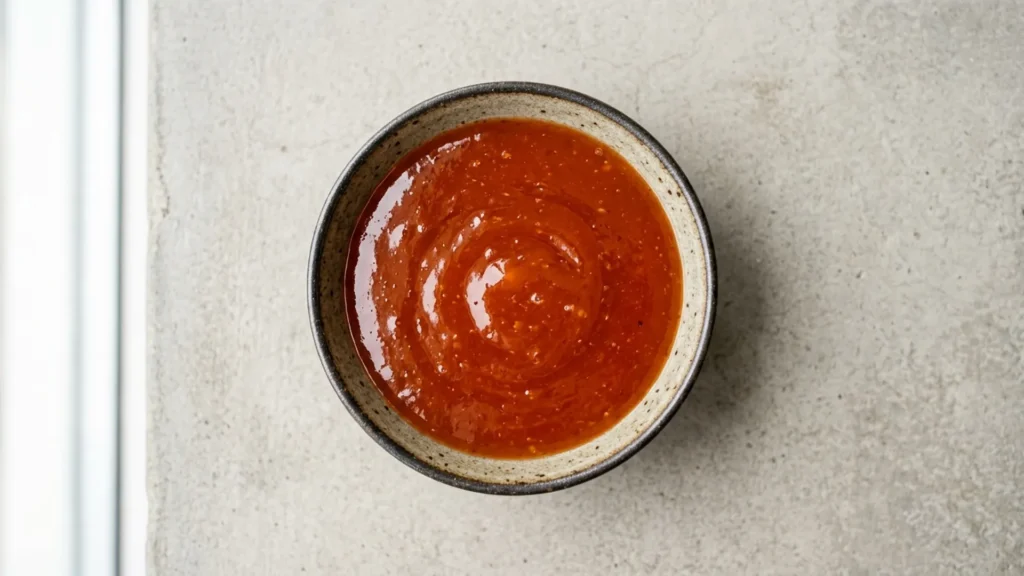
Is sweet and sour sauce gluten free? The careful answer is: not automatically, but it can be. Sweet and sour sauce is one of those condiments that looks innocent, mostly sugar, vinegar, and fruit, yet hides two reliable gluten traps that catch people off guard. The good news is that those traps are predictable, easy to learn, and easy to avoid once you know where to look. If you have celiac disease or a gluten sensitivity, you do not have to give up that bright, tangy glaze; you just have to shop and order a little smarter.
Sweet and sour is a perfect teaching example because its gluten risk comes from a couple of supporting ingredients rather than the sauce’s core. Once you understand which two ingredients to interrogate, you can scan a bottle in seconds, question a takeout menu with confidence, or whip up a fully gluten-free version at home in less time than it takes for delivery to arrive. All three are covered below.
The Short Answer, Then the Why
Classic sweet and sour sauce is built from sugar, vinegar, fruit (often pineapple), tomato or ketchup, and a thickener. None of those base ingredients contains gluten on its own. The risk does not live in the foundation; it lives in two specific add-ins that many recipes and commercial brands use. Get those two right and the sauce is gluten free. Get them wrong and it is not. That is the entire story, and everything below is just detail on those two culprits.
Culprit One: Soy Sauce
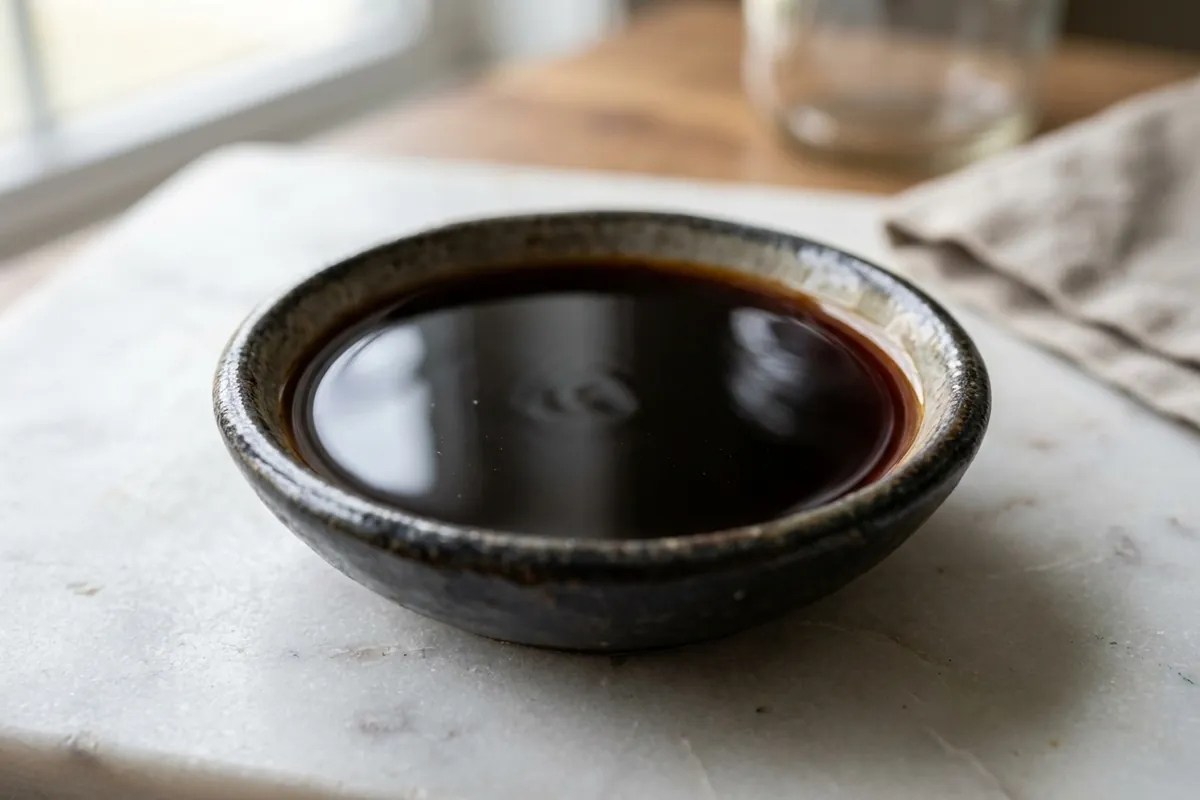
This is the big one. A lot of sweet and sour recipes, and most restaurant versions, add a splash of soy sauce for depth and saltiness. Conventional soy sauce is brewed with wheat, which makes it a clear gluten source. So the moment soy sauce enters a sweet and sour recipe, the whole sauce becomes off-limits unless that soy sauce was specifically a gluten-free type.
The fix is straightforward at home: swap in tamari labeled gluten free, or use coconut aminos, both of which deliver the savory note without wheat. If you want the full breakdown of which soy products are safe and why wheat ends up in the bottle, the guide to gluten free soy sauce covers it in depth. The key habit is to never assume a soy-based ingredient is safe just because soy itself is naturally gluten free; the wheat comes from the brewing process, not the bean.
Culprit Two: The Thickener
Sweet and sour sauce needs body, and that body comes from a thickener. Here is the fork in the road. If the recipe or product thickens with cornstarch, you are fine, because cornstarch is naturally gluten free. If it thickens with wheat flour, or with an unspecified “modified food starch” that turns out to be wheat-derived, the sauce carries gluten.
Most modern sweet and sour recipes use cornstarch, which is good news. But some older or budget commercial products still use wheat flour or a roux-style base. When a label just says “modified food starch” without naming the source, that ambiguity is your cue to check further; in the United States, wheat must be declared as an allergen, so a “contains wheat” line settles it. Cornstarch is the gold standard here, and it is the right choice whenever you want a glossy, clear thickening. If you ever need to adjust the consistency of any sauce safely, the cornstarch slurry method described in the guide to how to thicken a sauce works perfectly for a gluten-free sweet and sour.
A Third Thing to Watch: Hidden Add-Ins
Beyond the two main culprits, a few commercial sweet and sour sauces sneak in extras that can carry gluten. Oyster sauce is sometimes blended in for umami, and many oyster sauces contain wheat. Some bottled versions use barley malt or malt vinegar for sweetness or tang, and barley is a gluten grain (note that distilled vinegar, by contrast, is generally considered gluten free even when made from grain). And in a busy restaurant, cross-contact is a real concern: a shared fryer or a wheat-coated battered protein can transfer gluten into an otherwise safe sauce. If a sweet and sour dish arrives over breaded, deep-fried chicken, the breading and shared oil are as much a concern as the sauce itself.
| Ingredient in the sauce | Gluten risk | Safe swap |
|---|---|---|
| Sugar, vinegar, pineapple, tomato | None | No change needed |
| Regular soy sauce | High (brewed with wheat) | Gluten-free tamari or coconut aminos |
| Wheat flour thickener | High | Cornstarch |
| “Modified food starch” (source unstated) | Uncertain | Confirm source or choose cornstarch |
| Oyster sauce add-in | Often contains wheat | Gluten-free oyster sauce or omit |
| Malt vinegar / barley malt | High (barley) | Rice vinegar or cane sugar |
How to Read a Store-Bought Bottle
When you are standing in the aisle, run this quick sequence. First, look for a certified “gluten free” label or claim; in the US that claim is regulated and means under 20 parts per million, which is the safest signal you can get. Second, if there is no claim, scan the ingredients for soy sauce, wheat, flour, malt, and barley. Third, read the allergen statement at the bottom for a “contains wheat” warning. If the bottle carries a gluten-free claim, you are done. If it does not, the ingredient and allergen scan will almost always give you a clear yes or no within a few seconds.
It is worth knowing that food labeling rules exist precisely so you can do this. The framework around what counts as gluten free and how it must be declared is summarized well in the overview of the gluten-free diet, which is a solid primer if you are newly navigating this. Understanding why wheat shows up in fermented condiments also makes more sense once you read how traditional soy sauce is brewed.
Ordering Sweet and Sour at a Restaurant
Takeout is the trickiest setting because you cannot read a label. Be direct with the staff: ask whether the sweet and sour sauce is made with soy sauce and whether it is thickened with flour or cornstarch. Then ask the separate question that trips people up most: is the protein battered or breaded, and is it fried in a shared fryer? A sauce can be perfectly gluten free and still arrive on a wheat-battered piece of chicken cooked in oil shared with breaded items. For a true celiac, both the sauce and the cooking method have to clear. When in doubt, ask for the sauce on the side and pair it with a plainly cooked protein.
Naturally Gluten-Free Ingredients You Can Trust
It helps to flip the problem around and look at what is reliably safe, because once you know the green-light ingredients, building or choosing a gluten-free sweet and sour sauce gets easy. The sweet and tangy backbone is almost entirely in the clear. Granulated and brown sugar are gluten free. Honey is gluten free. Pineapple, pineapple juice, and most fruit elements are gluten free. Tomato paste and pure ketchup are gluten free. Rice vinegar, apple cider vinegar, and distilled white vinegar are gluten free. Cornstarch, the ideal thickener, is gluten free. Fresh garlic, ginger, and bell peppers are gluten free.
That long green list is the whole point: the sauce’s character comes from ingredients that carry no gluten risk at all. The danger is concentrated in just two or three optional add-ins. So rather than fearing the entire category, you can train your attention narrowly on the soy sauce, the thickener, and any oyster sauce or malt, and let everything else reassure you. A sauce that uses tamari instead of soy sauce and cornstarch instead of flour is gluten free by construction, no matter how complex the rest of the ingredient list looks.
This is also why homemade is so much easier than it sounds. You are not engineering some special allergen-free recipe; you are making an ordinary sweet and sour sauce and simply choosing the safe member of each pair at the two decision points. Everything else you would reach for is already fine.
The Easiest Fix: Make It at Home
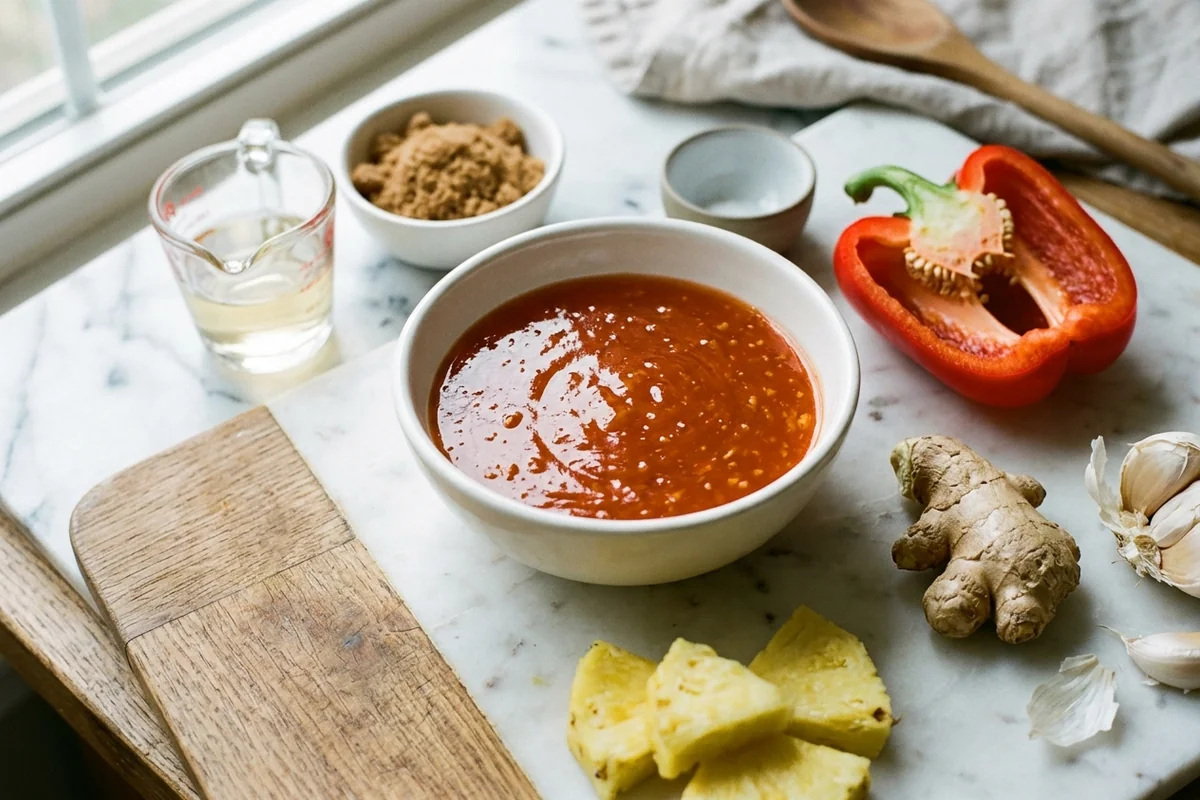
The most reliable gluten-free sweet and sour sauce is the one you control. The base is simple and forgiving. Combine pineapple juice, rice vinegar, a little ketchup or tomato paste for color, brown sugar for sweetness, and a splash of gluten-free tamari for depth. Bring it to a gentle simmer, then thicken with a cornstarch slurry (cornstarch whisked into a little cold water) until it turns glossy and coats a spoon. That is it: a bright, tangy, fully gluten-free sauce in about ten minutes, with every ingredient verified by you.
Once you have a safe version, it opens up a lot of meals. It is a natural glaze for the kind of crispy proteins people love, and it slots right into a weeknight rotation alongside other naturally safe mains, the sort you would find among gluten-free gluten-free dinners. Pour it over oven-crisped or air-fried chicken pieces, an approach that pairs beautifully with the techniques behind good air fryer chicken, and you have a takeout favorite rebuilt to fit your diet. The homemade route removes every ounce of guesswork, which is exactly what you want when gluten is not negotiable.
Brand Shopping: What “Gluten Free” on the Label Really Means
When you are choosing a bottled sweet and sour sauce, the most reliable thing you can do is favor products that carry an explicit gluten-free claim, because in the United States that claim is regulated. A food labeled gluten free must contain less than 20 parts per million of gluten, the threshold considered safe for the vast majority of people with celiac disease. That is a meaningfully stronger guarantee than simply reading an ingredient list and seeing no obvious wheat, because it accounts for cross-contact during manufacturing too.
If a product does not carry the claim, you are doing detective work, and detective work has limits. An ingredient list can tell you what was added on purpose, but it cannot tell you whether the sauce was made on shared equipment that also processes wheat-containing products. For a mild sensitivity that may be acceptable; for diagnosed celiac disease it is a real consideration. This is the practical reason celiac readers are better served by certified or clearly labeled products than by gambling on an unlabeled bottle that merely looks clean. The ingredient scan is your second line of defense, not your first.
It also helps to understand why this category is risky in the first place. Sweet and sour sauce sits in the broader family of Asian-style condiments, many of which lean on wheat-brewed soy sauce and wheat-thickened bases by tradition. Once you know that the cuisine’s backbone seasonings often contain wheat, you stop being surprised when a sauce that “should” be fine turns out not to be. The same vigilance you apply to soy sauce and oyster sauce applies here.
Cross-Contact: The Risk That Is Not on Any Label
For anyone with celiac disease, the sauce ingredients are only half the battle. Sweet and sour dishes are classically served over battered, deep-fried protein, and that batter is usually wheat flour. Even if the sauce itself is flawless, a wheat-coated piece of chicken makes the dish unsafe. Worse, restaurants typically fry many breaded items in the same oil, so even an unbreaded protein dropped into a shared fryer can pick up gluten. This is why a careful celiac has to think about the whole plate, not just the bottle of sauce.
The safest restaurant strategy is to ask three specific questions: is the sauce made with soy sauce or flour, is the protein battered or breaded, and is there a dedicated gluten-free fryer or pan. If the answers are reassuring, great. If the staff are unsure, the smart move is to order the sauce on the side and pair it with a protein you know was cooked plainly. At home, none of this is a worry, which is the strongest argument for the homemade version that follows.
Bottom Line
Sweet and sour sauce is not inherently gluten free, but the reasons are narrow and knowable. The two ingredients that decide it are the soy sauce (use gluten-free tamari) and the thickener (use cornstarch, not wheat flour). Watch for sneaky add-ins like oyster sauce and malt, read for a certified claim or a “contains wheat” line, and treat restaurant cross-contact as its own separate question. Better still, make it yourself, where ten minutes and a cornstarch slurry give you a sauce you can trust completely.
Coconut Aminos and Tamari: Knowing Your Soy Swaps
Because the soy sauce decision is the single biggest factor, it pays to understand your two main replacements so you can pick the right one. Tamari is a Japanese-style soy sauce traditionally brewed with little or no wheat, and the bottles specifically labeled gluten free are tested to confirm it. It tastes very close to regular soy sauce, deep and savory, which makes it the most seamless swap; if you want your sweet and sour to taste familiar, tamari is the choice. Just confirm the bottle actually says gluten free, since not all tamari is wheat-free by default.
Coconut aminos is a different product made from fermented coconut sap, naturally free of soy and gluten both. It is milder, a touch sweeter, and slightly less salty than soy sauce, so it suits people avoiding soy as well as gluten. In a sweet and sour sauce its gentle sweetness actually fits nicely, though you may want a hair less added sugar to compensate. Either swap gives you the savory note the sauce needs without the wheat, and which you reach for comes down to whether you also avoid soy and how close to the original flavor you want to land.
Frequently Asked Questions
Is sweet and sour sauce gluten free?
It can be, but it is not guaranteed. The base of sugar, vinegar, and fruit is naturally gluten free, but many recipes and brands add regular soy sauce (brewed with wheat) or thicken with wheat flour, both of which add gluten. Choose a version made with gluten-free tamari and cornstarch, or check for a certified gluten-free label.
What makes sweet and sour sauce contain gluten?
Two ingredients are usually responsible: conventional soy sauce, which is brewed with wheat, and a wheat-flour thickener. Less commonly, oyster sauce, barley malt, or malt vinegar add gluten. The core ingredients (sugar, vinegar, pineapple, tomato) do not.
Is restaurant sweet and sour sauce safe for celiacs?
Often not, for two reasons. The sauce may contain regular soy sauce or a flour thickener, and the dish is frequently served over battered, deep-fried protein cooked in a shared fryer. Ask whether the sauce uses soy sauce or flour, and whether the protein is breaded and fried in shared oil, before assuming it is safe.
How do I make gluten-free sweet and sour sauce at home?
Simmer pineapple juice, rice vinegar, a little ketchup or tomato paste, and brown sugar, add a splash of gluten-free tamari for depth, then thicken with a cornstarch slurry until glossy. Every ingredient is naturally gluten free, so the finished sauce is too, and it takes about ten minutes.