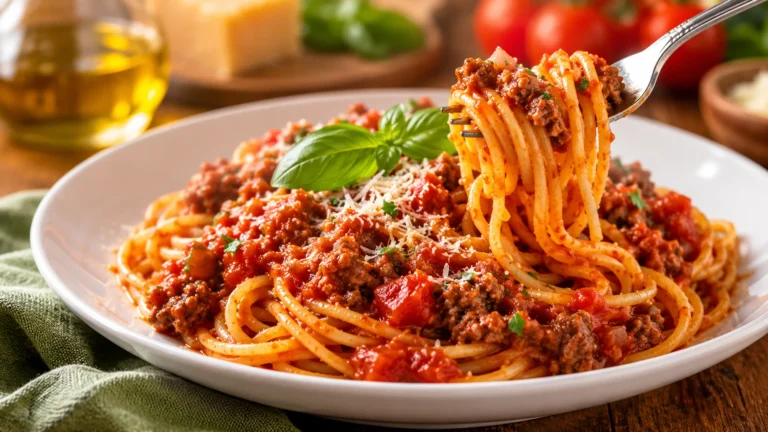
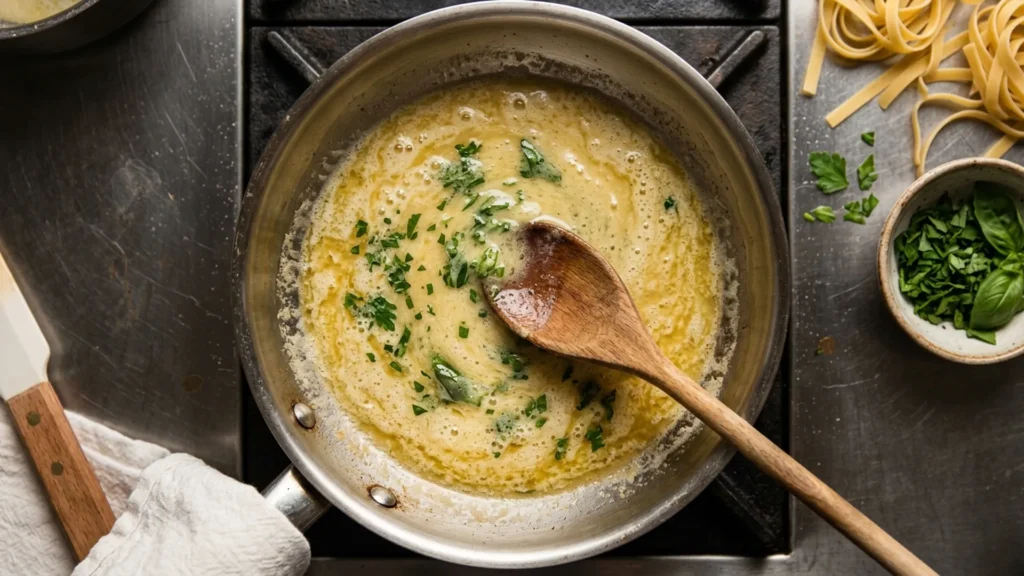
How to make a butter sauce for pasta comes down to one idea most home cooks miss: you are not melting butter, you are building an emulsion. The fastest real version takes about 5 minutes. Add roughly half a cup of starchy pasta water to a wide pan over low heat, whisk in 4 tablespoons of cold butter cut into pats one at a time, and shake the pan until the sauce turns glossy and creamy. That glossy coat is butter, water, and starch holding hands. Keep it gentle and it clings to every strand instead of pooling at the bottom of the bowl.
The emulsified butter sauce is a classic test of a cook’s instincts. It is unforgiving in a quiet way, with nothing to hide behind, just fat, water, and timing. It is the thing to reach for when the fridge is bare and dinner needs to happen now. The classic mistake at a dinner party is holding it warm on the stove while guests trickle in, where it can break into an oily puddle; make it last, with the pasta drained and waiting. Everything below follows from that: why it works, the exact ratios, and how to bring it back when it breaks.
Pick Your Butter Sauce in One Question
Before any cooking, answer one thing: do you want light and silky, or rich and nutty? That single fork decides your method. Light and silky means the emulsified version, cold butter whisked into starchy pasta water, ready in 5 minutes and the better choice for delicate strands and seafood. Rich and nutty means brown butter, cooked an extra 3 to 5 minutes until the milk solids toast, and it shines on filled pasta and fall vegetables. Everything else, garlic, lemon, miso, is just an add-in to one of those two bases. Most recipe pages bury this choice; naming it up front saves you from following the wrong method for the dish you want.
Why a Butter Sauce Is Really an Emulsion
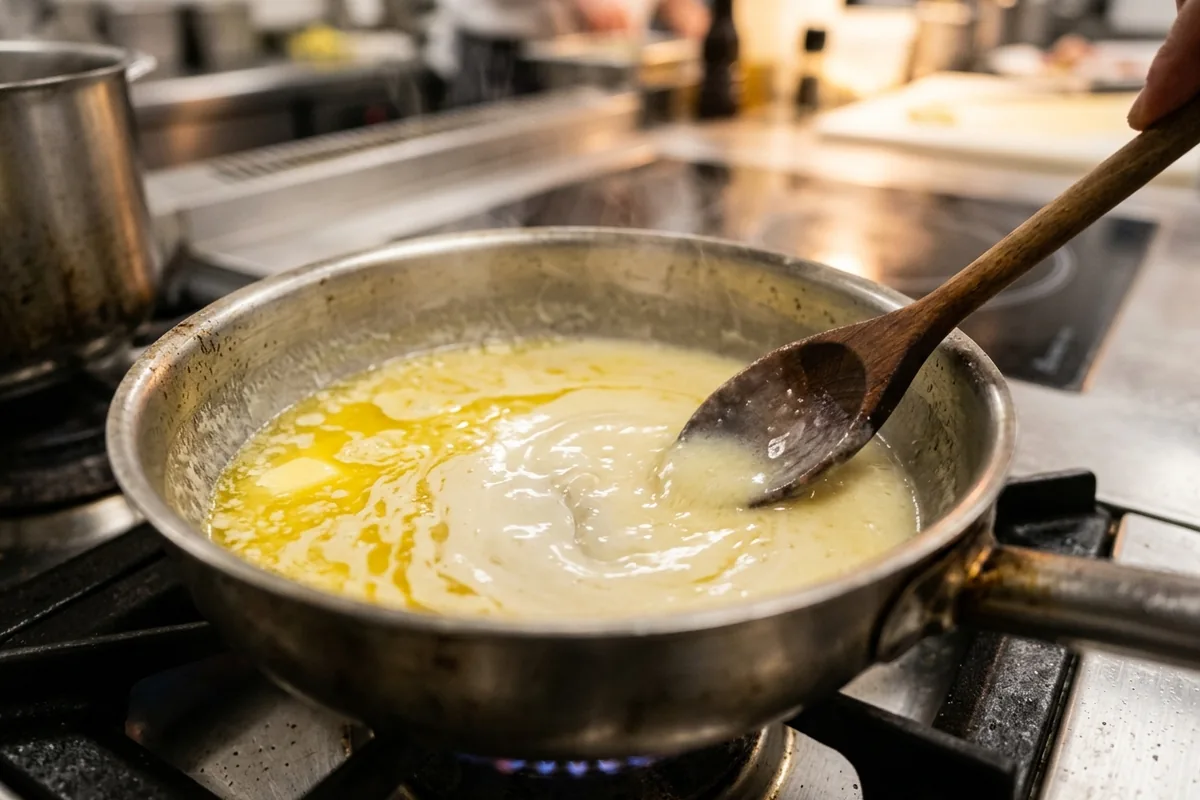
Butter is already an emulsion before you do anything to it. It is about 80 percent fat with the rest water and milk solids, all suspended together. When you melt butter straight in a hot pan, you break that suspension: the fat pulls away from the water and you get an oily puddle that slides off the noodles. A pasta butter sauce works by keeping the fat and water bound, and the secret binder is the starch in your pasta water.
Heat is the enemy here. Push the sauce much above 160 to 175 degrees Fahrenheit and the emulsion splits, the same failure mode you see in a broken hollandaise or a curdled beurre blanc. That is why every step below happens over low heat or off the burner entirely. You are coaxing, not cooking. The starch acts as an emulsifier, doing the job that egg yolk does in mayonnaise or that lecithin does in many commercial sauces. Once you internalize that the goal is a stable emulsion and not melted fat, every butter sauce you make gets better. The same principle drives cold emulsions like the one in the SauceGrove guide to homemade tartar sauce, where holding fat and water together is the entire job.
The Base Emulsified Butter Sauce, Step by Step
Here is the method, in US units, scaled for a pound of pasta serving four. The table below puts the exact ratios for every version side by side so you never have to guess.
| Sauce | Butter | Pasta water | Heat / time |
|---|---|---|---|
| Base emulsified | 4 tbsp cold | 1/2 cup | Low, 5 min |
| Garlic butter | 4 tbsp + 3 cloves | 1/3 cup | Low, 7 min |
| Brown butter | 4 tbsp | 2 to 3 tbsp | Medium, 3 to 5 min |
| Lemon butter | 4 tbsp cold | 1/2 cup + juice of 1/2 lemon | Low, 5 min |
Reserve a full cup of pasta water before you drain. You will not use all of it, but you want the cushion. Set a wide skillet over low heat and add half a cup of that starchy water. Let it warm but not boil. Now add 4 tablespoons of cold butter, cut into 4 pats, one pat at a time. After each pat, shake the pan in a back-and-forth motion or whisk gently until it disappears into the liquid. Do not crank the heat to speed it up. The sauce should look cloudy and thicken into something that coats a spoon.
When all the butter is in, the sauce should be glossy and slightly thickened, roughly the consistency of cream. Toss your just-drained pasta in directly and keep tossing for 30 to 60 seconds so the starch on the noodles tightens the sauce further. If it looks tight or claggy, add a tablespoon of reserved water. If it looks thin, let it bubble very gently for another 30 seconds. Finish with a fistful of grated parmesan off the heat and a crack of black pepper.
One detail that matters more than it should: shake the pan instead of stirring hard. The shaking motion keeps the emulsion moving without shearing it apart, which is the same logic behind finishing risotto. It feels fussy the first time and becomes second nature by the third.
A word on the pasta water itself, because this is where the whole thing lives or dies. The water has to be properly salted and properly starchy. Salt it at about 1 tablespoon per 4 quarts, and do not use so much water that the starch is diluted to nothing. Cook butter-sauce pasta in slightly less water than usual, maybe 3 quarts for a pound, specifically to get a cloudier, more starch-heavy liquid. That extra starch is free thickening power. Skip the rinse, always; rinsing strips the surface starch the sauce needs to grip.
Timing the pasta to the sauce is the other half. Pull the noodles about a minute before the box says they are done, because they finish cooking in the pan as they toss with the sauce. Those last 60 seconds in the skillet are where the noodle and the sauce actually become one dish instead of two things sharing a bowl. Keep the heat low while they finish so the emulsion never crosses that breaking threshold.
Brown Butter: The Same Sauce With a Nutty Twist
Brown butter sauce is the upgrade that makes people think you went to culinary school. It is butter cooked past melting until the milk solids toast and turn golden, which gives off a deep, nutty smell. Put 4 tablespoons of butter in a light-colored pan over medium heat and watch it. It will foam, then the foam will subside and you will see brown flecks form on the bottom, about 3 to 5 minutes in. The moment it smells like toasted hazelnuts, pull it off; it goes from nutty to burnt in seconds.
For a classic brown butter and sage sauce, drop 8 to 10 sage leaves into the foaming butter and let them crisp. Then add a few tablespoons of pasta water off the heat to loosen it into a sauce and toss with pasta, ideally a filled shape like ravioli or a short noodle. A squeeze of lemon at the end cuts the richness. This is a go-to when you want something that tastes special with almost no effort.
The pan color genuinely matters for brown butter. In a dark nonstick pan you cannot see the milk solids changing color, so you blow past the nutty stage into burnt before you smell it. Use a stainless or light-colored pan and watch the bottom. Another tell: the foam. Butter foams as the water boils off, and once that foaming quiets down, browning is seconds away. Trust your nose more than the clock here. Burnt butter is acrid and there is no rescue; you start over. Once you have it browned, you can swirl in a teaspoon of soy sauce for an even deeper savory note, which leans on the same glutamate logic the SauceGrove guide to a substitute for soy sauce gets into when it explains why that ingredient adds so much depth.
Variations Worth Keeping in Rotation
Once you own the base, the variations are just one add-in away. Here is the matrix.
| Variation | Add-in (per 4 tbsp butter) | When to add |
|---|---|---|
| Garlic butter | 3 cloves sliced, toasted | Before the water, low heat |
| Lemon butter | Juice of half a lemon | Off heat, at the end |
| Miso butter | 1 tsp white miso | Whisk into the water first |
| Anchovy butter | 2 fillets, mashed | Melt into butter early |
| Chile-garlic | 1/2 tsp red pepper flakes | With the garlic |
The miso and anchovy versions sound odd and taste incredible. Both add glutamate, the savory backbone, without making the sauce taste like fish or fermented soybeans. They just read as deep and rich. America’s Test Kitchen has written about this umami stacking trick in savory sauces, and it holds up at the home stove.
A note on which butter you use, because it changes the result more than people expect. European-style butter runs higher in fat, around 82 to 85 percent versus the 80 percent floor for standard American butter. That extra fat makes for a richer, more stable emulsion and a deeper brown butter. For an everyday weeknight sauce, standard butter is perfectly good. When the butter is the whole point, like a brown butter and sage over ravioli, the European stick is worth the extra dollar. Cultured butter adds a faint tang that plays especially well with lemon variations.
Fresh add-ins reward you here too. A handful of chopped parsley, basil torn at the last second, or chives stirred in off the heat lift the whole bowl. Toasted breadcrumbs, what Italians call pangrattato, scattered on top give a crunch that contrasts the silk of the sauce. None of this is required, but a butter sauce is a blank canvas, and a few finishing touches turn a plain bowl into something you would happily serve a guest.
When Your Butter Sauce Breaks: The Rescue Tree
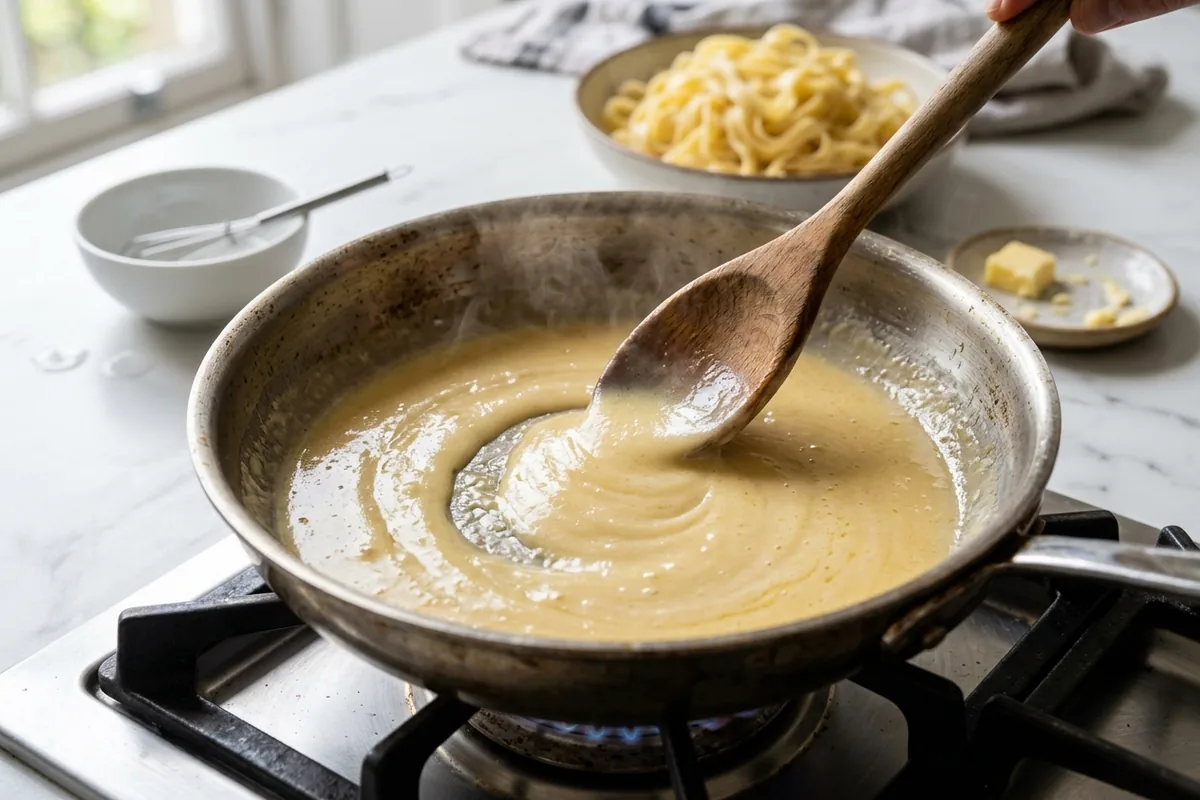
This is the section the recipe blogs skip, and it is the one you will actually need at 7 p.m. on a Tuesday. Most popular butter sauce guides give you a recipe and a single line, add more water if it looks tight, and leave you stranded when the sauce actually splits. A butter sauce fails in one of three distinct ways, and each has its own fix. Diagnose which one you have, then act.
It went greasy and oily, with fat pooling on top. The emulsion broke from too much heat. Pull the pan off the burner immediately, add a tablespoon of cold pasta water, and whisk hard. If that does not catch it, whisk in one more pat of cold butter off the heat; the cold fat helps re-form the suspension.
It separated into solids and liquid. Same cause, slightly worse. Take it off the heat, add 2 tablespoons of warm pasta water, and whisk vigorously to re-emulsify. Lower heat next time and add butter more slowly.
It is too thin and watery. You added too much pasta water or not enough butter. Let it reduce over low heat for 30 to 60 seconds, or whisk in another tablespoon of cold butter to build body. The cheese you add at the end will also tighten it. If it is still loose after the cheese, a final toss with the hot pasta usually drags it together as the noodles shed more starch.
The throughline is always the same: heat off, cold butter or warm water in, whisk. Once you have rescued a broken sauce two or three times, you stop being afraid of them. For deeper fixes on sauces that split for other reasons, the SauceGrove notes on rescuing a broken sauce cover roux-based and cream-based breaks too.
There is a prevention mindset worth adopting. Most breaks happen at two moments: when the cook rushes the butter in all at once, and when the pan sits over a flame that is too high. Both come from impatience. If you add butter one pat at a time and keep the burner on its lowest stable setting, you will rarely break a sauce in the first place. Keep a small bowl of cold cubed butter and a measuring cup of reserved water within arm’s reach before you start, so you are never scrambling. That little bit of setup is the difference between a calm five minutes and a frantic one.
It also helps to understand what a stable emulsion feels like so you can catch a break early. A good butter sauce looks opaque and slightly thickened, almost like a thin cream. The instant you see it turn translucent and slick, or notice fat shimmering separately on the surface, that is your early warning. Catch it there and a splash of cold water usually saves it. Wait until it has fully split and the rescue gets harder.
What to Toss It With
A butter sauce is a coat, not a cover, so it shines on dishes where you want the pasta and a few good ingredients to lead. Long strands like spaghetti and bucatini work beautifully because the glossy butter clings without weighing them down. Filled shapes like ravioli and tortellini love brown butter. And it makes a fast base for a protein-forward plate; spoon it over noodles and add seared shrimp or shredded rotisserie chicken. If you want pairing ideas, pastapeak.com keeps a solid run of chicken pasta dishes that take to a butter finish. For a richer cream alternative on nights you want more body, Cook’s Illustrated has a reliable alfredo method that starts from the same butter foundation.
If you would rather build a tomato-based sauce instead, the SauceGrove walkthrough on how to make marinara sauce uses a completely different technique, no emulsion required, and is worth bookmarking for the nights you have a little more time.
One more pairing thought. A butter sauce loves a hit of acid and a little crunch to balance its richness, so lemon zest, a few capers, or those toasted crumbs help when the dish would otherwise feel one-note. Vegetables work it hard: blanched peas, asparagus tips, or wilted spinach folded in at the end turn it into a full meal. The sauce is rich but light on its feet, which is exactly why it pairs with so much. Think of it as the little black dress of pasta sauces, dressed up or down depending on what else is in the fridge.
Storage and Reheating Without Breaking It
Emulsified butter sauce is a make-and-eat sauce, full stop. It is at its best the moment it leaves the pan, and it does not store gracefully because reheating pushes it past that breaking point. If you have leftovers tossed with pasta, refrigerate them up to 3 days in a sealed container and reheat gently: a low pan with a splash of water, tossing constantly, or short bursts in the microwave at half power with a spoon of water stirred in between. Expect it to look a little oilier than the first night; that is the emulsion partly breaking on reheat, and a hard toss with a teaspoon of water usually pulls it back.
Brown butter is the exception that stores well. Because it is not a water-based emulsion, you can make a batch, cool it, and keep it in the fridge for a week or freeze it for a couple of months. Rewarm it slowly and it is good as new. A small jar of brown butter in the fridge door is useful for exactly this reason; it turns a bowl of plain noodles into something worth sitting down for in under two minutes. Compound butters, butter mashed with garlic, herbs, or anchovy and chilled, freeze beautifully too and melt straight into hot pasta water for an instant sauce.
Frequently Asked Questions
How do you make a butter sauce for pasta without it getting greasy?
Keep the heat low, never above a gentle simmer, and add cold butter to warm starchy pasta water rather than melting butter alone. The starch in the pasta water binds the fat and water into a stable emulsion. If it starts to look greasy, pull it off the heat and whisk in a splash of cold water.
What is the ratio of butter to pasta water?
For a pound of pasta, start with 4 tablespoons of cold butter and about half a cup of starchy pasta water. Add the butter one pat at a time, and adjust with more water to thin or more butter to thicken until the sauce coats a spoon.
Why does my butter sauce separate?
It separates when it gets too hot, usually above roughly 160 to 175 degrees Fahrenheit, which splits the butterfat from the water. Cook over low heat and add butter gradually. To fix a separated sauce, take it off the burner and whisk in 2 tablespoons of warm pasta water.
Can I make a butter sauce for pasta ahead of time?
Emulsified butter sauce is best made fresh because it can break when reheated. If you must hold it, keep it warm off direct heat and whisk in a little pasta water before serving. Brown butter can be made ahead and gently rewarmed since it is not a water-based emulsion.
What is the difference between brown butter and emulsified butter sauce?
Emulsified butter sauce stays pale and creamy because the butterfat is suspended in starchy water. Brown butter is cooked past melting until the milk solids toast and turn golden, giving a nutty flavor. Brown butter is richer; the emulsified version is lighter and clings better.
Do I need to use unsalted butter?
Unsalted butter is better because it lets you control the seasoning, especially since pasta water and parmesan both add salt. If you only have salted butter, just hold back on adding extra salt and taste before finishing.
How much pasta water should I save for butter sauce?
Reserve a full cup before draining even though you will likely use only half. The extra gives you room to loosen the sauce, fix a tight or broken emulsion, and adjust the consistency right up to serving.