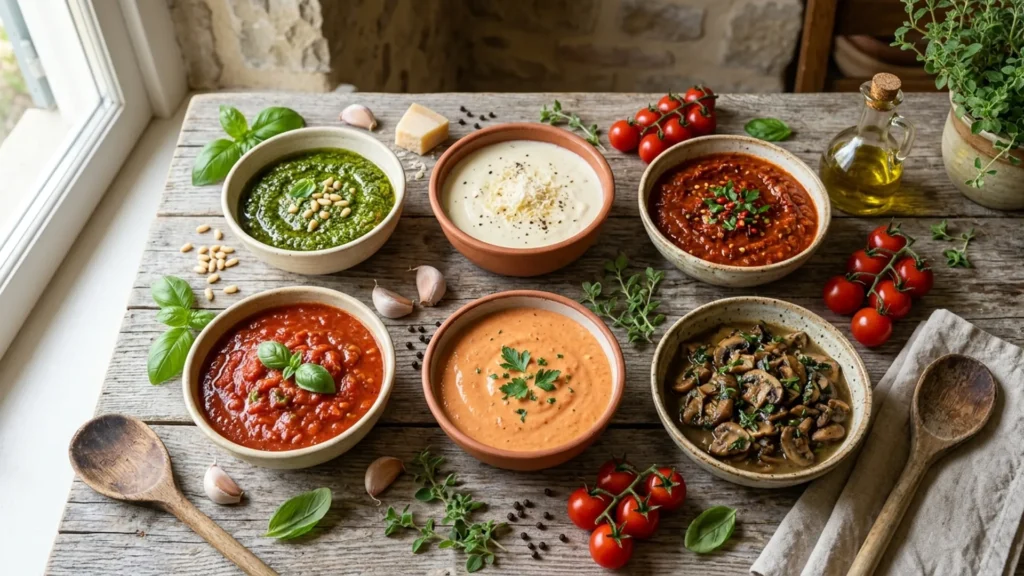
Homemade pasta sauces fall into five families, and once you can name the family you are in, the cooking gets simple. The five are tomato sauces, cream and dairy sauces, oil-and-garlic sauces, butter emulsion sauces, and raw or barely-cooked sauces like pesto. Pick the family by what is already in your kitchen and how many minutes you have, then follow that family’s one rule, and you will pull off a real sauce instead of a sad puddle.
The most common sauce question is not which recipe to use; it is why a sauce broke, thinned out, or went flat. Almost every time, the cook grabbed a recipe from a different family and tried to bend it. So this guide is built around the families first, the recipes second. Learn the map, and you stop needing a new recipe every night.
The Five Families of Pasta Sauce, and How to Choose
Here is the part the recipe roundups skip. They hand you 23 links and let you sort it out. You do not need 23 recipes. You need to know which of five buckets your dinner lands in.
Use this quick decision path. Got a can of tomatoes and 30 minutes? Tomato family. Got cream or a hunk of parmesan and 15 minutes? Dairy family. Got good olive oil, garlic, and barely 10 minutes? Oil-and-garlic. Got cold butter and the pasta water you are about to drain? Butter emulsion, the fastest of all. Got a bunch of basil going limp in the crisper? Raw family, no stove needed for the sauce itself.
| Family | Base | Time | The one rule |
|---|---|---|---|
| Tomato | Canned tomatoes | 30 to 45 min | Caramelize the paste before liquid |
| Cream and dairy | Cream, butter, cheese | 15 min | Low heat, finish off the burner |
| Oil and garlic | Olive oil, garlic | 10 min | Toast garlic low, never brown it hard |
| Butter emulsion | Butter, pasta water | 5 min | Starchy water plus cold butter, off heat |
| Raw and pesto | Herbs, nuts, oil | 10 min | Keep it cold, let the hot pasta warm it |
That table is the whole game. Everything below is detail.
Tomato Sauces: The Workhorse Family
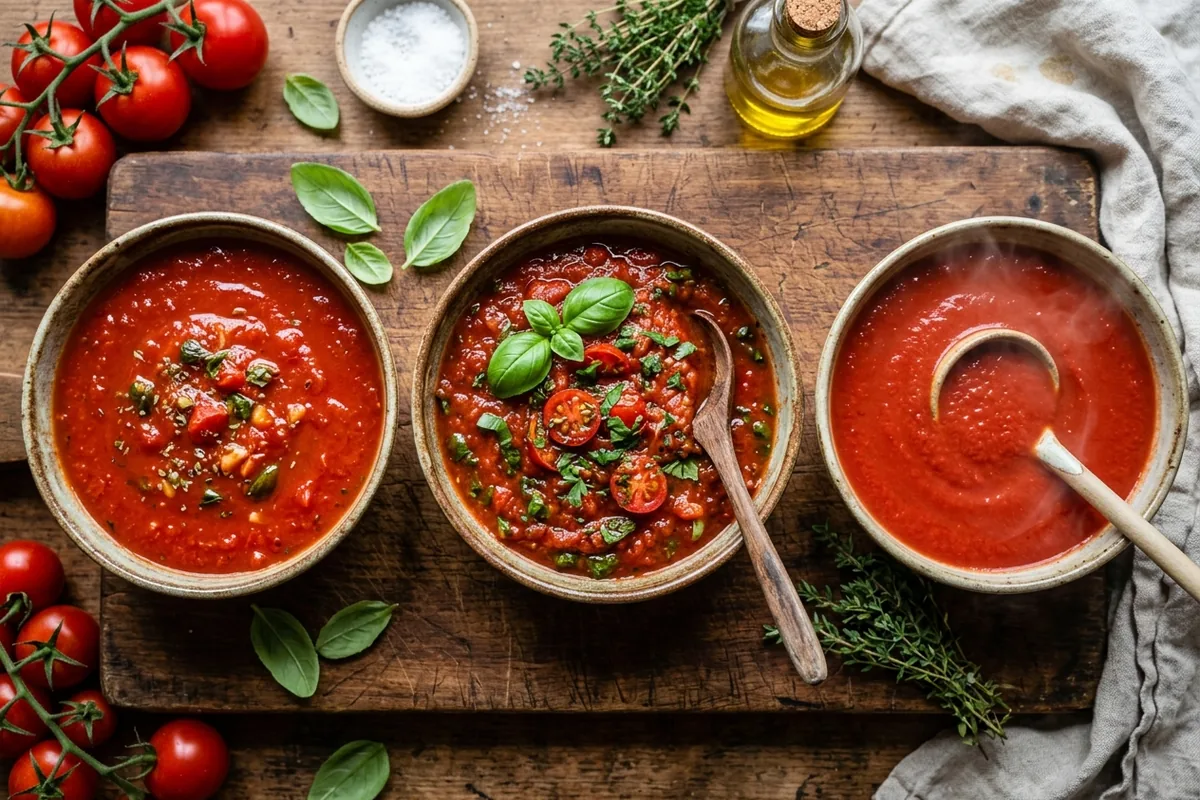
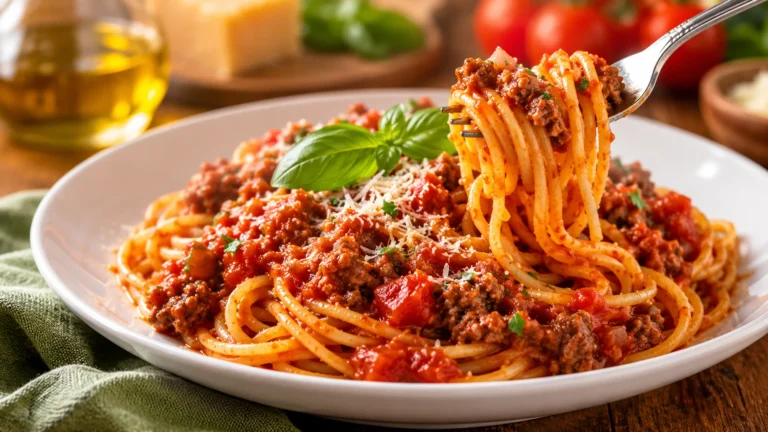
Tomato sauce is where most cooks start, and where most of them stall. The flat, watery red sauce comes from two mistakes: dumping all the liquid in at once, and not building any depth at the bottom of the pot. The fix is sequence.
Start with a good glug of olive oil, roughly a quarter cup for a sauce that feeds four. Soften your onion and garlic on medium until they go translucent, about 5 minutes. Now the move almost nobody outside a restaurant does: add 2 tablespoons of tomato paste and let it cook in the oil for 90 seconds until it darkens to a brick red and smells sweet. That caramelized paste is your flavor floor. Only then do you add the can of crushed or whole tomatoes.
Simmer 30 to 45 minutes and let it reduce by about a third. You want it to coat the back of a spoon, not pool around it. Salt at the end, taste, and if it is sharp, a teaspoon of sugar or a parmesan rind dropped in for the last 20 minutes will round it. If you want the textbook version of this build, the SauceGrove guide on how to make marinara sauce walks the marinara variant step by step, and the best meatball sauce breakdown shows how to take the same base toward a hearty Sunday gravy.
One opinion worth stating: whole canned tomatoes crushed by hand beat pre-crushed. The pre-crushed cans often add calcium chloride that keeps the pieces firm and stops them from melting down into a real sauce. Whole tomatoes break down the way you want.
The tomato family also branches further than people realize. Add a splash of cream at the end and you have vodka-style sauce. Add a soffritto of finely diced carrot and celery with the onion, plus ground meat and a little milk, and you are building toward a slow Bologna-style ragu that simmers for hours instead of minutes. Add olives, capers, and anchovy and you have puttanesca. They all share that same caramelized-paste foundation. Once you nail the base, you are four small moves away from a dozen named sauces, which is why the family matters more than the recipe.
A note on the tomatoes themselves. San Marzano style plum tomatoes run sweeter and less acidic than standard diced, which means you need less sugar to balance them. If your only option is a sharp, tinny can, that parmesan rind trick and a small pat of butter stirred in at the end will tame the acidity better than sugar alone. Butter rounds tomato acidity in a way sugar cannot, a trick worth keeping in your back pocket.
Cream and Dairy Sauces: Where the Breaking Happens
Cream sauces are fast, which is exactly why people scorch them. Dairy hates high heat. Push cream or cheese too hot and the fat separates from the water, and you get a greasy, grainy mess instead of a glossy coat.
For a basic cream sauce, melt 3 tablespoons butter, add a clove of minced garlic, then pour in 1 cup of heavy cream and let it come to a bare simmer. Reduce it for 4 to 5 minutes until it thickens enough to coat a spoon. Pull it off the heat before you add cheese. Parmesan or pecorino whisked in off the burner melts smooth; the same cheese added over a roaring flame seizes into clumps. For the full cheese-sauce playbook, the SauceGrove writeup on homemade tartar sauce covers the cold-emulsion logic that also explains why dairy sauces behave the way they do, since both live or die on holding fat and water together.
America’s Test Kitchen has tested this temperature point repeatedly, and the takeaway is clear: low and slow keeps the emulsion intact. If you only remember one thing about dairy sauces, remember to finish them off the heat.
Real alfredo, the kind they make in Rome, is not even a cream sauce. It is butter and parmesan emulsified with pasta water, which puts it closer to the butter family than the dairy family. The heavy-cream version most Americans grew up with is a different animal, richer and more forgiving but also more prone to breaking if you boil it. If you want a reliable weeknight cream sauce, hold the heat low and use a cup of cream to about four ounces of grated cheese, whisked in off the burner. That ratio coats a pound of pasta without going gluey.
The grainy-sauce rescue is worth memorizing because it saves dinner. The moment you see fat beading on the surface or the cheese clumping, kill the heat. Pull the pan to a cold burner, add 2 tablespoons of warm pasta water, and whisk hard. The starch in the water re-suspends the fat and pulls the sauce back into one smooth coat about three times out of four. The trick fails only if the cheese has fully scorched, in which case you start over. An alfredo held warm on a back burner tends to break, so make cream sauces last, with the pasta already drained and waiting.
Oil-and-Garlic and Butter Emulsion: The Speed Family
These two are the sauces for a Tuesday with ten minutes and no plan. Aglio e olio is just good olive oil, sliced garlic toasted slow until pale gold, a pinch of chile flake, and a ladle of pasta water swirled in to bind it. The whole thing is about 10 minutes and the only way to wreck it is to burn the garlic, which turns it bitter in seconds. Keep the heat at medium-low and pull the pan the moment the garlic smells nutty.
Butter emulsion is the fastest real sauce there is, and it leans on one ingredient most people pour down the drain: pasta water. That cloudy water is loaded with starch, and starch is the glue. Reserve a cup before you drain. To build the sauce, add roughly half a cup of starchy pasta water to a pan, drop in 3 tablespoons of cold butter cut into pats, and swirl over low heat until it turns into a creamy, glossy coat. Toss the pasta in and the emulsion clings to every strand.
The trick that matters most: pull the pasta out of the pot about 90 seconds before the box says it is done, then finish cooking it in the sauce with a splash of that starchy water. The pasta releases more starch into the pan and drinks up flavor at the same time. This is the single biggest difference between a sauce that sits next to the noodles and one that marries them.
For aglio e olio specifically, a reliable ratio is about a third of a cup of olive oil and four sliced garlic cloves per pound of pasta. That sounds like a lot of oil. It is supposed to be. The oil is the sauce, not a cooking medium, so it has to carry the dish. Toast the garlic in cold oil that heats up slowly rather than dropping it into already-hot oil; the gradual climb gives you even, gentle browning instead of a few scorched edges. Finish with chopped parsley and a fistful of grated cheese off the heat.
Butter emulsion scales to flavor easily too. Brown the butter first until it smells nutty and you have a brown-butter sauce that is excellent with sage and a little lemon. Whisk in a spoon of miso or anchovy paste and you have a savory umami bomb. The pasta-water-plus-cold-butter mechanic stays the same; you are just seasoning the fat before you emulsify it.
Raw and Pesto Sauces: No Stove Required
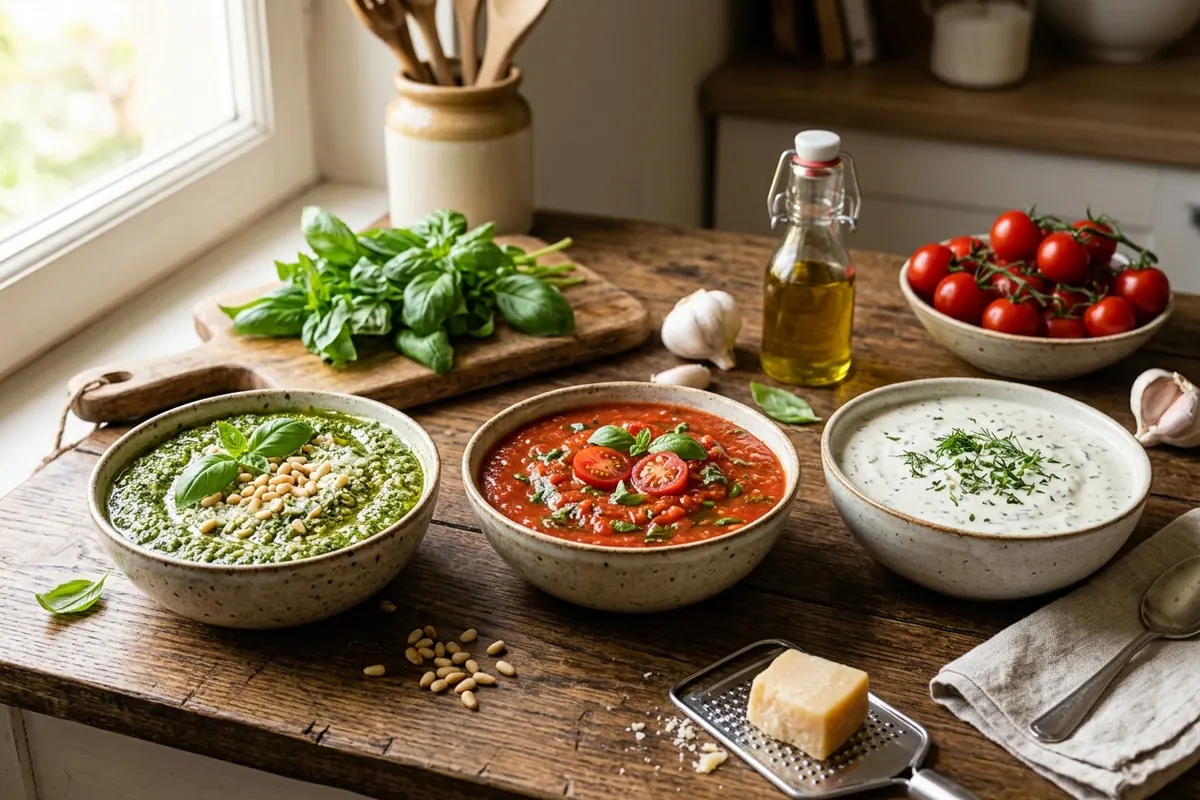
The raw family is the secret weapon for hot nights and tired cooks. Pesto, a crushed cherry tomato sauce, a lemon-and-ricotta toss; none of them touch a burner beyond the pasta pot. The rule here runs opposite to the cream family: keep the sauce cold and let the just-drained hot pasta warm it through. Heat pesto in a pan and the basil goes army-drab and the raw garlic turns acrid.
For pesto, the classic ratio is about 2 cups packed basil, a third of a cup of pine nuts or walnuts, a clove of garlic, half a cup of good olive oil, and a half cup of grated parmesan, blitzed just until combined. Toss it with hot pasta and a splash of, you guessed it, pasta water to loosen it into a sauce. Bon Appetit has a well-reviewed version of this balance if you want a second reference point on the nut-to-basil ratio.
Storage: Which Sauces Keep and Which Do Not
Here is a distinction the recipe sites blur. Not every sauce stores the same way, and freezing the wrong one wastes good food.
Tomato sauces are the champions of storage. They hold 3 to 4 days in the fridge and freeze beautifully for 4 to 6 months. Make a double batch and freeze it flat in bags. Oil-and-garlic and pesto keep about 5 days refrigerated; pesto freezes well if you press a thin layer of oil on top to block air. Cream and dairy sauces are the problem children. They separate and turn grainy when frozen, and even in the fridge they only hold a day or two before the texture suffers. Make dairy sauces to order. If you are meal-prepping, lean on the tomato and oil families and finish the cream sauces fresh.
A Few Building Blocks That Cross Every Family
Salt your pasta water like you mean it: about 1 tablespoon of salt per 4 quarts of water. This is your only chance to season the noodle itself from the inside. Underseason the water and no amount of sauce will fully rescue it. The old line about water tasting like the sea is roughly right, though the sea is a touch too aggressive; aim for pleasantly salty rather than briny.
Match the sauce to the shape, too. Long strands like spaghetti and linguine love oil and butter sauces that coat without clumping. Tube and ridged shapes like rigatoni and penne grab chunky tomato and meat sauces in their grooves. Delicate cream sauces cling best to flat ribbons like fettuccine. It is not a hard rule, but pairing shape to family is one of those small things that separates a thrown-together plate from one that feels intentional.
Reserve pasta water every single time, even for tomato sauce. A few tablespoons of starchy water loosen a sauce that tightened up and help it cling. And taste as you go. A sauce that tastes flat usually wants salt or acid, not more cooking. A squeeze of lemon or a splash of vinegar wakes up a dull cream or oil sauce. If your tomato sauce already broke or split on you, the SauceGrove notes on rescuing a separated sauce explain the off-heat whisk fix that brings most of them back.
If you want to take the same flavor logic into other dishes, pastapeak.com keeps a deep library of chicken pasta ideas that pair cleanly with every family above.
Frequently Asked Questions
What is the easiest homemade pasta sauce for a beginner?
Butter emulsion is the easiest by a wide margin. Reserve a cup of pasta water, add half a cup of it to a pan with 3 tablespoons of cold butter, swirl over low heat until glossy, and toss with pasta. It takes about 5 minutes and has only two ingredients beyond seasoning.
Why does my homemade pasta sauce taste flat?
Flat sauce is almost always underseasoned or underbuilt. For tomato sauce, make sure you caramelized the tomato paste before adding liquid and salted at the end. For any sauce, a pinch more salt or a splash of acid like lemon or vinegar usually fixes flatness faster than more simmering.
How long should I simmer tomato pasta sauce?
Simmer 30 to 45 minutes and aim to reduce the sauce by about a third so it coats the back of a spoon. Longer simmering deepens the flavor, but past about an hour you gain little and risk it turning pasty.
Can I freeze homemade pasta sauce?
Tomato sauces freeze well for 4 to 6 months and pesto freezes fine with a layer of oil on top. Cream and dairy sauces do not freeze well because they separate and turn grainy, so make those fresh.
How much pasta water should I reserve?
Reserve about 1 cup before you drain, even if you only end up using a few tablespoons. The starch in that water is what binds oil, butter, and cheese sauces into a glossy coat that clings to the noodles.
What is the difference between marinara and spaghetti sauce?
Marinara is a quick, meatless tomato sauce simmered around 20 to 30 minutes. Spaghetti sauce, as most Americans mean it, usually includes ground beef or sausage and simmers longer to blend the flavors. They share the same tomato base but differ in body and cook time.
Why did my cream sauce turn grainy?
Grainy cream sauce means the dairy got too hot and the fat separated. Keep cream sauces at a bare simmer, and add cheese only after pulling the pan off the heat. If it already broke, take it off the burner and whisk in a splash of warm pasta water to help bring it back together.