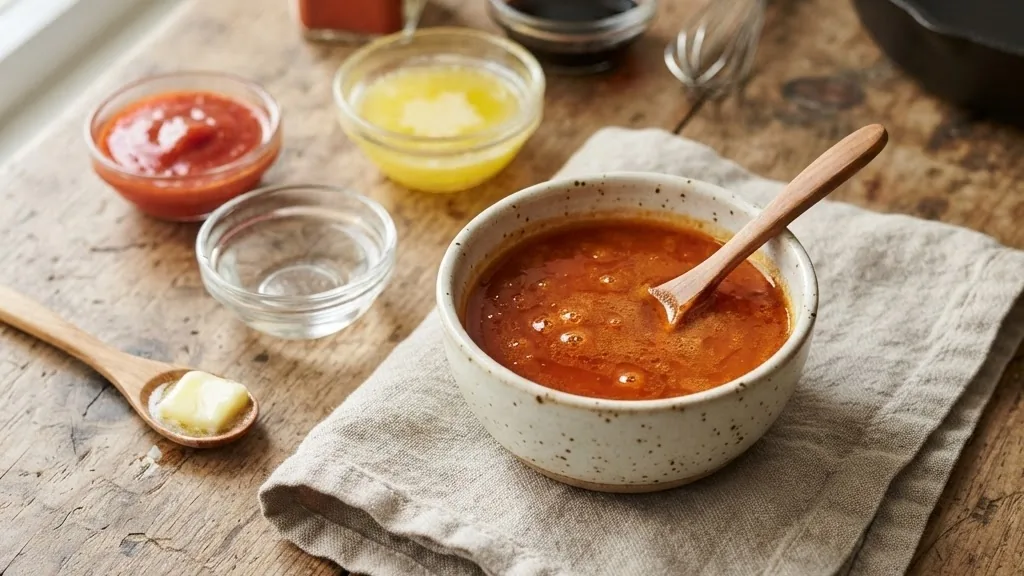
The bottled stuff is fine, but homemade buffalo sauce is better in every way that matters, and it takes about five minutes and four ingredients. Real buffalo sauce is not just hot sauce; it is hot sauce emulsified with butter, which gives it that glossy, clingy, restaurant-style coating and a heat that tastes round instead of harsh. Once you understand that it is an emulsion and treat it like one, you get a smooth, buttery result every time instead of a greasy, broken puddle. That one idea is the difference between a good batch and a great one.
This guide gives you the classic ratio, the single technique that keeps it from splitting, and the right way to make it hotter without throwing off the flavor. You will also get a troubleshooting table for the three things that go wrong, a dairy-free version, ideas for using it well beyond wings, and clear storage instructions. Whether you are saucing two pounds of wings for game day or just want a better dip, this is the method that works.
What Buffalo Sauce Actually Is
Buffalo sauce is a cayenne pepper hot sauce emulsified with melted butter, and that butter is the whole point. The style was born at the Anchor Bar in Buffalo, New York, in 1964, where cooks tossed fried wings in a simple mix of hot sauce and butter. The butter does two jobs: its fat rounds off the sharp vinegar bite of the hot sauce, and it gives it body so it clings to whatever you toss in it. Strip the butter away and you just have plain heat. Add too much or treat it wrong, and you get grease. The magic is in the balance.
Buffalo Sauce vs Hot Sauce vs Wing Sauce
People use these three terms loosely, but the difference is worth knowing because it explains why you cannot just pour hot sauce on wings and call it done. Hot sauce is the base: a thin, vinegary blend of peppers, vinegar, and salt with no fat. Buffalo sauce is hot sauce that has been emulsified with butter, which makes it richer, thicker, and milder in a way that clings to food. Wing sauce is usually just another name for buffalo sauce, sometimes sweetened or thickened a little for extra cling on fried wings.
The practical takeaway is that the butter is not optional if you want true buffalo flavor. It is the ingredient that converts sharp hot sauce into the smooth, buttery coating that defines the style, and it is why every recipe here starts with that two-to-one balance rather than just reaching for the bottle.
The Core Ratio and Ingredients
You only need four things, and you almost certainly have a version of each. The base ratio is roughly two parts hot sauce to one part butter, which keeps it buttery without going greasy. Frank’s RedHot is the traditional choice because the original buffalo flavor was built on a cayenne sauce very much like it, with the right balance of heat and tang. Worcestershire and garlic powder are optional but classic, adding a savory depth that makes the blend taste finished rather than flat. Everything else is a variation on this foundation.
- 1/2 cup (120 ml) Frank’s RedHot or another cayenne-based hot sauce.
- 4 tablespoons (57 g) unsalted butter.
- 1 teaspoon Worcestershire sauce for savory depth.
- 1/2 teaspoon garlic powder.
- Optional: a pinch of cayenne for extra heat, or a splash of vinegar to thin and brighten.
This makes about three-quarters of a cup, which is enough to coat roughly two pounds of wings or a large head of cauliflower with sauce to spare for dipping.
Choosing the Right Hot Sauce
Not every hot sauce makes good buffalo sauce, and the base you pick matters more than any other single choice. The traditional buffalo flavor comes from a cayenne pepper sauce that is vinegar-forward and only moderately hot, which is exactly what Frank’s RedHot is. That tangy, salty, mild-heat profile is what the butter is designed to balance. If you reach for a thick, smoky, or fruit-based hot sauce instead, the result will taste like that sauce with butter in it rather than like buffalo sauce.
If you cannot get Frank’s, look for any cayenne-based sauce whose first ingredients are cayenne peppers, vinegar, and salt. Louisiana-style hot sauces fit the bill and work nearly identically. Avoid very thick sauces and very hot extracts, since the first throws off the texture and the second blows past the gentle heat that defines the style. When in doubt, a simple vinegary cayenne sauce is always the safer base.
The Emulsion Trick (Add Butter Off the Heat)
Here is the single most important technique, and it is the step most quick recipes skip. Butter is about 80 percent fat and the rest water and milk solids, and an emulsion means suspending that fat evenly throughout the watery base so the two stay blended. If you boil the mixture, the fat gets too hot and separates out, leaving an oily layer floating on top. The fix is simple: warm the hot sauce gently, then pull the pan off the heat and whisk in the butter a piece at a time until it melts smoothly. Off the heat, the butter emulsifies into a creamy, unified blend instead of breaking.
Tip: Cut the butter into a few smaller pieces before you add it. Smaller pieces melt faster and more evenly into the warm sauce, which makes a smooth emulsion easier to achieve without putting the pan back on the burner.
How to Make It, Step by Step
The whole process is quick, so have everything measured before you start. The goal is gentle heat and steady whisking, nothing more. Resist the urge to rush it back onto a high flame to speed things up, because that is exactly what breaks the sauce. If you are making wings, time this so the sauce is ready right as the wings come out, since both are best tossed together while warm and the sauce firms up as it cools.
- In a small saucepan over low heat, warm the Frank’s RedHot, Worcestershire, and garlic powder for about a minute, just until steaming.
- Take the pan off the heat.
- Whisk in the butter one piece at a time until fully melted and the sauce looks glossy and smooth.
- Taste and adjust: a pinch of cayenne for more heat, a splash of vinegar to thin it.
- Use immediately while warm, tossing with wings or drizzling as needed.
How to Control the Heat the Right Way
This is where most people go wrong. When they want a hotter batch, they add more hot sauce, but that also adds more vinegar and salt, which throws the whole balance off and makes it thinner and sharper. The better move is to add ground cayenne pepper, which brings pure heat without changing the acid or texture. It works because of the difference in intensity. Frank’s RedHot sits around 450 Scoville Heat Units on the scale chemist Wilbur Scoville devised in 1912, while cayenne pepper runs roughly 30,000 to 50,000 units, so a small pinch raises the heat dramatically while barely changing anything else.
To go the other direction and make a milder batch, add a little more butter rather than cutting the hot sauce. The extra fat coats your tongue and softens the perceived heat without watering down the flavor. A teaspoon of honey can also take the edge off for a sweeter, milder version that kids tend to prefer. Adjusting fat and a touch of sweetness up or down gives you far more control than just changing how much hot sauce goes in.
Why Your Buffalo Sauce Breaks (Cause and Fix)
Almost every problem comes down to heat and the butter ratio, and each has a quick fix. Work through the table one change at a time. The pattern is easy: greasy or separated means the sauce got too hot, too thin means too much hot sauce relative to butter, and too thick or claggy means it cooled too far. Because the recipe is just an emulsion of two main things, rebalancing it is fast once you know which way to push.
| Problem | Most likely cause | Fix |
|---|---|---|
| Greasy or separated | Boiled, or butter added over high heat | Add butter off the heat; whisk in a teaspoon of warm water to re-emulsify |
| Too thin and sharp | Too much hot sauce for the butter | Whisk in another tablespoon of butter |
| Too thick after cooling | Butter firmed up | Rewarm gently over low heat, whisking |
| Too hot to eat | Overdid the cayenne | Add butter or a teaspoon of honey to mellow it |
Uses Beyond Wings
Buffalo flavor is far more versatile than its wing reputation suggests, and a batch keeps well enough to use across several meals. Because it is buttery and bold, it works anywhere you want heat with richness rather than just spice. Toss it with roasted cauliflower for a vegetarian crowd-pleaser, or fold a few spoonfuls into shredded chicken for sandwiches and wraps. It is the base of buffalo chicken dip, and a light drizzle wakes up a grain bowl or a baked potato. If you like building heat into other condiments, the same logic shows up in our homemade hot honey.
- Buffalo cauliflower: toss roasted florets in warm sauce.
- Buffalo chicken dip: blend with cream cheese, ranch, and shredded chicken.
- Sandwiches and wraps: stir into pulled or shredded chicken.
- Drizzle: over baked potatoes, eggs, or grain bowls.
Variations Worth Trying
Once you have the base method down, buffalo sauce takes well to small tweaks, as long as you keep the butter-to-hot-sauce balance intact. Treat extra flavors as additions whisked in at the end, not replacements for the core ingredients, so the emulsion stays stable. Each of these starts from the same warm-sauce, off-the-heat technique and just layers in one more note. They are an easy way to tailor a batch to wings, dips, or a particular crowd without learning a whole new recipe.
- Honey buffalo: whisk in 1 to 2 teaspoons of honey for a sweet-heat balance.
- Garlic parmesan buffalo: add extra garlic and a spoonful of grated parmesan off the heat.
- Smoky buffalo: stir in 1/4 teaspoon smoked paprika or a few drops of liquid smoke.
- Extra tangy: add a teaspoon of white vinegar to sharpen and thin the sauce.
Dairy-Free Buffalo Sauce
The butter is what makes buffalo sauce dairy, since milk is one of the nine major food allergens the FDA requires to be labeled, so a dairy-free version simply swaps the fat. A good plant-based butter melts and emulsifies almost exactly like dairy butter, so use it one-for-one with no other changes. For a richer, slightly different flavor, you can use a neutral oil such as avocado oil, though it will not give quite the same creamy cling that butter or vegan butter provides. Either way, the off-the-heat emulsion method stays the same, since the goal of suspending fat in the hot sauce does not change.
How to Store and Reheat It
Homemade buffalo sauce stores well, which makes it worth doubling. Let it cool, then keep it in a sealed jar in the refrigerator for up to 14 days. The butter will firm up and the sauce will look solid when cold, which is normal. To use it again, rewarm it gently over low heat or in short bursts in the microwave, whisking as it loosens so the emulsion comes back together. Do not boil it during reheating, for the same reason you do not boil it while making it: high heat splits the butter back out and leaves you with a greasy sauce.
Nutrition: What You Are Eating
Buffalo sauce is mostly butter and hot sauce, so it is rich rather than light, but it is used in small amounts. Based on USDA FoodData Central values for butter and cayenne hot sauce, a two-tablespoon serving lands roughly in the 100 to 110 calorie range, with nearly all of that coming from the butter fat. The hot sauce itself is very low in calories but high in sodium, so the salt adds up faster than the calories do. If you want a lighter version, shifting the ratio toward more hot sauce and less butter cuts the calories, though you lose some of the signature creamy body in the trade.
Make-Ahead and Game-Day Tips
If you are cooking for a crowd, a little planning makes the day easier. You can mix a double batch the morning of, refrigerate it, and gently rewarm it right before serving so it is glossy and pourable when the wings come out. Keep it warm in a small slow cooker on the low setting if you are serving over a long window, stirring now and then so the butter stays emulsified rather than pooling on top. Toss only what you will eat soon, since coated wings soften as they sit, and leave a small bowl on the side for dipping.
For heat-sensitive guests, set out a milder portion alongside the spicier one, both built from the same base with a different amount of butter and cayenne. That way one batch covers everyone, and nobody has to push through more burn than they want. A few celery sticks and a creamy dip on the table round things out and give people a cooling break between bites.
Frequently Asked Questions
What is the ratio of butter to hot sauce for buffalo sauce?
The classic ratio is about two parts hot sauce to one part butter, such as 1/2 cup of Frank’s RedHot to 4 tablespoons of butter. That keeps the sauce buttery and smooth without becoming greasy.
Why does my buffalo sauce separate?
It separates when it gets too hot, which splits the butterfat out of the emulsion. Always add the butter off the heat and whisk it in gently, and never let the sauce boil while making or reheating it.
How do I make buffalo sauce hotter?
Add a pinch of ground cayenne pepper rather than more hot sauce. Cayenne is far hotter than Frank’s RedHot, so it raises the heat without adding extra vinegar and salt that would unbalance the sauce.
Can I make buffalo sauce without butter?
Yes. Use a plant-based butter one-for-one for a dairy-free version, or a neutral oil for a lighter option. Keep the same off-the-heat method so the fat still emulsifies into the hot sauce.
How long does homemade buffalo sauce last?
Stored in a sealed jar in the refrigerator, it keeps for up to 14 days. Rewarm it gently before using, since the butter firms up when cold and needs to be whisked back into a smooth sauce.
The Takeaway
Homemade buffalo sauce is one of the highest-reward, lowest-effort sauces you can make: four ingredients, five minutes, and one technique that matters. Warm the hot sauce, pull it off the heat, and whisk in the butter so it emulsifies into something glossy and smooth. Reach for cayenne when you want it hotter and more butter when you want it milder, and keep a jar in the fridge for everything from cauliflower to dip. For more game-day sauces built on the same balance of bold and rich, try our homemade BBQ sauce next.