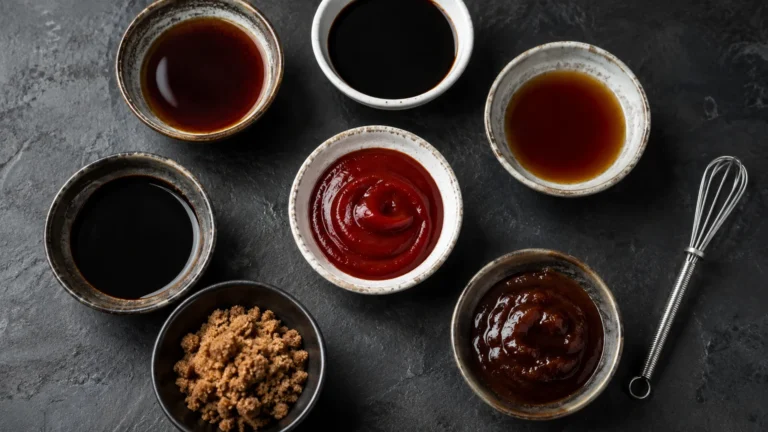

You are halfway through a recipe, reach for the bottle, and it is empty. The good news is that a worcestershire sauce replacement is easy to mix from things already in your kitchen, and most of the time no one will taste the difference. The trick is understanding what worcestershire actually brings to a dish, because once you know that, choosing the right stand-in takes about 10 seconds. It is a balance of salty umami, sharp tang, and a faint sweet funk, and almost every good substitute rebuilds those same three notes from a different starting point.
This guide gives you the seven swaps worth knowing, each with an exact ratio per tablespoon so you are not guessing. You will also get vegan and gluten-free versions, a quick chart for matching a swap to your specific dish, and the short list of things you should not reach for. Whether you are making a marinade, a Bloody Mary, a beef stew, or a Caesar dressing, there is a replacement here that lands close enough to the real thing that the recipe still works exactly as intended.
What Worcestershire Sauce Actually Is
Worcestershire sauce is a fermented condiment, and that fermentation is the secret to why it is hard to replace with any single ingredient. First bottled by Lea and Perrins in 1837 in Worcester, England, the original recipe blends anchovies, tamarind, vinegar, molasses, onion, garlic, and spices, then ages them for up to 18 months. The result is a thin brown sauce that delivers a big hit of glutamate-driven umami from the fermented fish, sharp acidity from the vinegar, and a dark, slightly sweet depth from the molasses and tamarind. Good substitutes do not copy the ingredients; they copy that salty-tangy-sweet balance.
It helps to think of the flavor in three layers. The bottom layer is umami, the deep savory taste that comes from glutamates released during fermentation. The middle layer is acid, the bright vinegar tang that keeps the sauce from feeling heavy. The top layer is a dark sweetness from molasses and tamarind that ties it together and adds a faint fruity funk. When a substitute falls flat, it is usually because it nailed one or two of those layers and ignored the third. The soy-based mixes work precisely because they let you dial each layer separately.
Why Soy Sauce Is the Backbone of Most Swaps
Soy sauce earns its place at the center of nearly every worcestershire replacement for one reason: it is also a fermented, glutamate-rich condiment, so it delivers the same savory depth from a plant source. Like worcestershire, soy sauce is high in sodium, which is why nutrition data from USDA FoodData Central shows both as concentrated, salty seasonings used in small amounts. That shared chemistry is what makes a few drops of soy plus an acid taste so convincingly like the bottle. For context, USDA figures put soy sauce around 290 mg of sodium per teaspoon, while worcestershire sits closer to 65 mg, so soy-based swaps season harder and need a lighter hand. The catch is allergens, which is where you need to read labels rather than assume.
Worcestershire and its swaps touch several of the major allergens. Traditional worcestershire contains anchovies, and fish is one of the nine major allergens the FDA requires to be labeled. Soy sauce adds soy, and most brands also contain wheat, so a soy-based swap can introduce two more. If you are cooking for someone with allergies, that matters more than getting the flavor perfect, and the vegan and gluten-free versions below are built specifically to sidestep these ingredients.
The Fastest Replacement (Soy Sauce, Vinegar, and Sugar)
If you only remember one swap, make it this one. Soy sauce is the closest everyday match for worcestershire’s fermented, glutamate-rich savoriness, and it sits in almost every pantry. On its own it is too salty and one-dimensional, so you add a splash of vinegar for the tang and a tiny pinch of sugar to round off the edge, which rebuilds all three of worcestershire’s signature notes. Per tablespoon of worcestershire, mix 1 tablespoon soy sauce with 1 teaspoon of apple cider or white vinegar and about an eighth of a teaspoon of sugar. Stir and use it exactly as you would the bottle.
Tip: Soy-based swaps run saltier than worcestershire, so taste before adding any extra salt the recipe calls for. It is much easier to add salt at the end than to rescue a dish you have already over-seasoned.
7 Worcestershire Sauce Replacements With Exact Ratios
Each of these is measured to replace one tablespoon of worcestershire sauce, so you can scale them up cleanly for larger recipes. They are ranked roughly from most reliable and pantry-friendly at the top to more specialized at the bottom. The first three cover almost every situation. The lower entries shine when you want to get closer to the original funk or when dietary needs rule out soy. Pick based on what you already have and what the dish needs.
| # | Replacement | Ratio per 1 tbsp worcestershire |
|---|---|---|
| 1 | Soy sauce + vinegar + sugar | 1 tbsp soy + 1 tsp vinegar + pinch sugar |
| 2 | Soy sauce + balsamic vinegar | 2 tsp soy + 1 tsp balsamic + 1/4 tsp brown sugar |
| 3 | Soy sauce + ketchup | 1 tbsp soy + 1/4 tsp ketchup |
| 4 | Coconut aminos + vinegar | 1 tbsp coconut aminos + 1/2 tsp vinegar |
| 5 | Fish sauce + lemon or tamarind | 2 tsp fish sauce + 1/2 tsp lemon juice |
| 6 | Henderson’s Relish | 1 tbsp, used one-for-one |
| 7 | Soy + apple cider vinegar (2:1) | 2 tsp soy + 1 tsp ACV + pinch red pepper |
A Closer Look at the Top Swaps
The soy and balsamic combination is the one to reach for when you want depth rather than just salt. Balsamic vinegar carries its own sweetness and a syrupy body that mimics the molasses in worcestershire better than plain vinegar does, which makes it excellent in stews, gravies, and anything braised. The soy and ketchup version sounds odd but works because ketchup already contains tomato, vinegar, and sugar, so a small amount stirs in the tang and sweetness in one step. Keep the ketchup to a quarter teaspoon, though, or the swap starts tasting distinctly of tomato.
Fish sauce deserves a mention because it is the closest match to worcestershire’s original fermented-anchovy backbone. A little goes a long way, so use about two teaspoons per tablespoon and brighten it with a squeeze of lemon or a dab of tamarind paste to replace the fruit tang. It is the most authentic-tasting option for savory, meaty dishes, though its strong aroma makes it a poor choice for drinks like a Bloody Mary, where a cleaner soy-based swap blends in better.
Vegan Worcestershire Sauce Replacements
Traditional worcestershire is not vegetarian or vegan because of the anchovies, which surprises a lot of people. Fortunately the best plant-based swaps are simple. The soy sauce, vinegar, and sugar mix is already vegan, and it covers most cooking. For something even closer to the bottled flavor, Henderson’s Relish is a British condiment made without any fish, so it stands in one-for-one. Tamari works the same way as soy sauce for anyone who also needs to avoid wheat. A small pinch of dried seaweed or a few drops of mushroom-based seasoning can add back some of the deep umami that the anchovy normally provides.
Gluten-Free Worcestershire Sauce Replacements
Two issues come up for gluten-free cooks. First, many soy sauces are brewed with wheat, so a soy-based swap is not automatically gluten-free. Second, some commercial worcestershire sauces themselves can contain gluten depending on the brand. The reliable fix is to build your replacement from certified gluten-free ingredients: use tamari or coconut aminos in place of regular soy sauce, add your vinegar and a pinch of sugar, and you have a swap that is both gluten-free and very close in flavor. Coconut aminos are naturally soy-free and gluten-free, though slightly sweeter and less salty, so a touch of extra salt helps.
For more on navigating soy and wheat in your pantry, our guides to whether soy sauce has gluten and soy sauce versus liquid aminos break down the labels worth checking before you buy.
Which Replacement to Use for Each Dish
The best swap depends on what you are cooking, because some dishes hide a substitution easily while others put it front and center. Marinades and stews are forgiving, so the basic soy and vinegar mix disappears into them. Drinks and dressings are less forgiving, since the worcestershire flavor is meant to stand out, so reach for a closer match. Use this quick guide to pick fast.
- Beef stew or gravy: soy + balsamic, for body and depth.
- Burgers and meatloaf: soy + ketchup, which also adds moisture.
- Bloody Mary: soy + a little extra vinegar and hot sauce, kept clean.
- Caesar dressing: fish sauce + lemon, closest to the savory original.
- Stir-fry or marinade: the basic soy, vinegar, and sugar mix.
What Not to Use as a Substitute
A few swaps get suggested online that are not worth your time. Plain vinegar alone brings the tang but none of the umami or sweetness, so it leaves a dish thin and sour. Steak sauce such as A1 is closer in spirit, but it is much thicker and more tomato-forward, so it changes the texture and flavor of anything saucy. Liquid smoke adds a smoky note that worcestershire does not have, and it overwhelms quickly. When in doubt, default to a soy-based mix, since it rebuilds the savory base that vinegar or tomato alone cannot.
Warning: Do not simply double a substitute hoping for more flavor. Most swaps are saltier or more acidic than worcestershire, so doubling the amount usually throws the dish off balance rather than deepening it. If a sauce tastes flat, add a few drops of vinegar or a pinch of sugar to sharpen the layer that is missing instead of pouring in more of the whole mix.
Adjusting Any Swap to Taste
No substitute is perfect straight from the spoon, so a quick taste-and-tweak makes all the difference. Think in the same three layers worcestershire is built on. If the dish tastes thin and sharp, it needs more umami, so add a few drops of soy sauce or a tiny dab of tomato paste. If it tastes flat and heavy, it needs acid, so add a small splash of vinegar or lemon. If it tastes harsh or overly salty, a pinch of sugar or a spoonful of the cooking liquid softens it. Make these adjustments a little at a time, tasting between each one, and you can steer almost any swap to land right where the recipe wanted worcestershire to take it.
Make Your Own Worcestershire From Scratch
If you have a little more time, you can build a sauce that is closer to the real thing than any quick swap, and it keeps for weeks. The idea is to simmer the same flavor layers together so they meld instead of tasting like separate ingredients stirred in a bowl. This makes enough to refill a small bottle and works in any recipe that calls for worcestershire. It is also a good way to control the salt and skip the anchovies if you want a vegetarian version from the start.
In a small saucepan, combine 1/2 cup (120 ml) soy sauce or tamari, 2 tablespoons apple cider vinegar, 2 tablespoons water, 1 tablespoon molasses or brown sugar, 1/4 teaspoon ground ginger, 1/4 teaspoon garlic powder, 1/4 teaspoon onion powder, and a pinch of ground clove and black pepper. For the traditional savory funk, mash in one anchovy fillet or a teaspoon of fish sauce; leave it out to keep the sauce vegan. Simmer the mixture gently for about 5 minutes (300 seconds of low heat is plenty), let it cool, and strain it into a clean jar. The flavor deepens after a day in the refrigerator.
This homemade version gets you the molasses depth and the warm spice notes that a simple two-ingredient swap cannot, which makes it the best choice when worcestershire is a starring flavor rather than a background one. Because it is built on salt, acid, and sugar, it stays good in the fridge for up to 30 days, so a single batch covers a lot of cooking.
How to Store a Homemade Mix
If you mix a larger batch of the soy, vinegar, and sugar swap, it keeps well. Store it in a small sealed jar in the refrigerator for up to 14 days, and shake it before each use since the sugar can settle. Because the base ingredients are already shelf-stable and high in salt and acid, the mix is slow to spoil, but the fresher vinegar tang fades over time, so smaller batches taste brightest. Label the jar with the date, and you will always have an instant worcestershire sauce replacement ready whenever the real bottle runs dry.
Frequently Asked Questions
What is the best worcestershire sauce replacement?
For most recipes, mix 1 tablespoon soy sauce with 1 teaspoon vinegar and a pinch of sugar per tablespoon of worcestershire. It rebuilds the salty, tangy, and lightly sweet balance of the original and uses ingredients almost everyone already has.
Can I use soy sauce alone instead of worcestershire?
In a pinch, yes, but it will be saltier and miss the tang and sweetness. Adding even a few drops of vinegar and a tiny pinch of sugar makes a noticeably closer match, so it is worth the extra 10 seconds.
Is there a vegan worcestershire replacement?
Yes. The soy sauce, vinegar, and sugar mix is naturally vegan, and Henderson’s Relish is a fish-free British condiment that stands in one-for-one. Both avoid the anchovies in traditional worcestershire sauce.
What is a gluten-free worcestershire substitute?
Build it from tamari or coconut aminos instead of regular soy sauce, then add vinegar and a pinch of sugar. This keeps the swap gluten-free while staying close to the original flavor.
How much substitute equals one tablespoon of worcestershire?
Each swap in this guide is measured to replace exactly one tablespoon. For the default mix, that is one tablespoon of soy sauce plus one teaspoon of vinegar plus a pinch of sugar.
The Takeaway
Running out of worcestershire is not a reason to abandon a recipe. Remember that the sauce is just salty umami, sharp tang, and a little sweet funk, and you can rebuild it in seconds from soy sauce, vinegar, and a pinch of sugar. Step up to soy and balsamic for stews, soy and ketchup for burgers, or fish sauce and lemon when you want the closest match, and adjust the salt to taste. Keep a small jar of the mix in the fridge and you will never be stuck again. For another pantry rescue, see our guide to the best substitute for soy sauce when that bottle runs dry too.