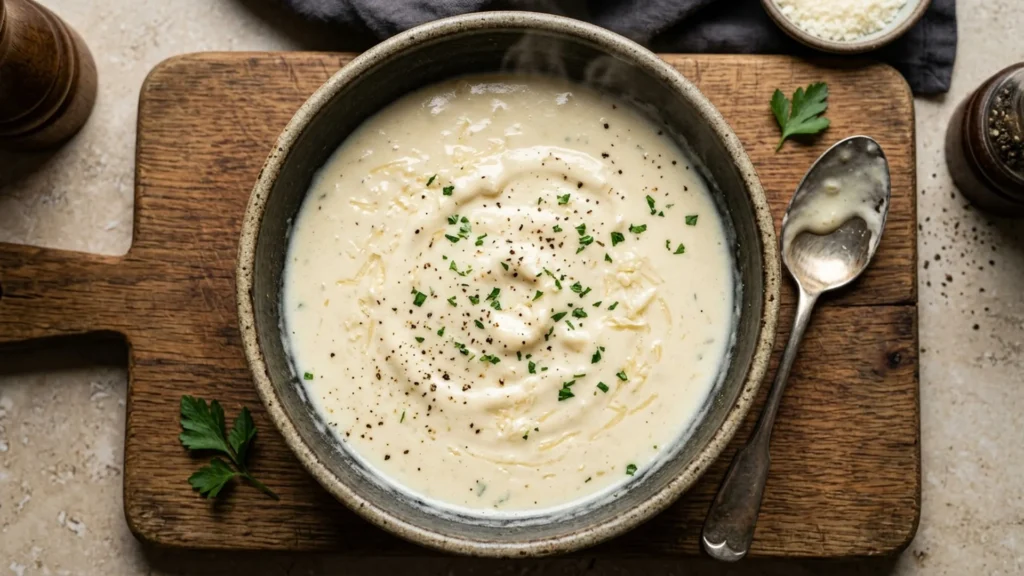
Homemade alfredo sauce is one of the easiest restaurant-quality sauces you can make, and it comes down to three core ingredients handled with a little care: butter, cream, and real Parmesan. Most failures are not about the recipe but about technique, since high heat and pre-shredded cheese are what turn a glossy sauce into a grainy or greasy mess. Get the temperature right, grate your cheese fresh, and you can have a thick, clinging sauce ready in about ten minutes, with no flour, no roux, and no fancy equipment.
This guide walks through the classic American-style cream version most people picture, plus the original Roman style that uses no cream at all, the exact ratios that work, the order of operations that keeps the sauce smooth, and how to fix it when it breaks or thickens too much. There is a side-by-side comparison of cheese and dairy options, a section on building flavor without burying the Parmesan, and a full FAQ covering reheating, freezing, and the questions people ask most.
The Two Kinds of Alfredo You Should Know
There is a real difference between the original Italian dish and what most American recipes call alfredo, and knowing both helps you understand why the cream version behaves the way it does. The original, fettuccine al burro, was created in Rome and uses only butter, Parmigiano-Reggiano, and a splash of the starchy pasta water that emulsifies everything into a creamy coating. There is no cream in it at all. The richness comes entirely from the emulsion of fat, cheese, and water clinging to hot pasta.
The American version, the one most people search for, adds heavy cream and often garlic and seasoning, which makes it more forgiving, thicker, and able to sit in a pan or on a plate without tightening up the way the Roman style does. Cream stabilizes the sauce, so it is far less likely to break, and that is exactly why it became the standard at home. Both are legitimate. If you want the lighter, more delicate original, use butter and pasta water. If you want the thick, pourable sauce that coats chicken and vegetables, use cream. This guide focuses on the cream version but covers the butter method too.
The Core Ingredients and What Each One Does
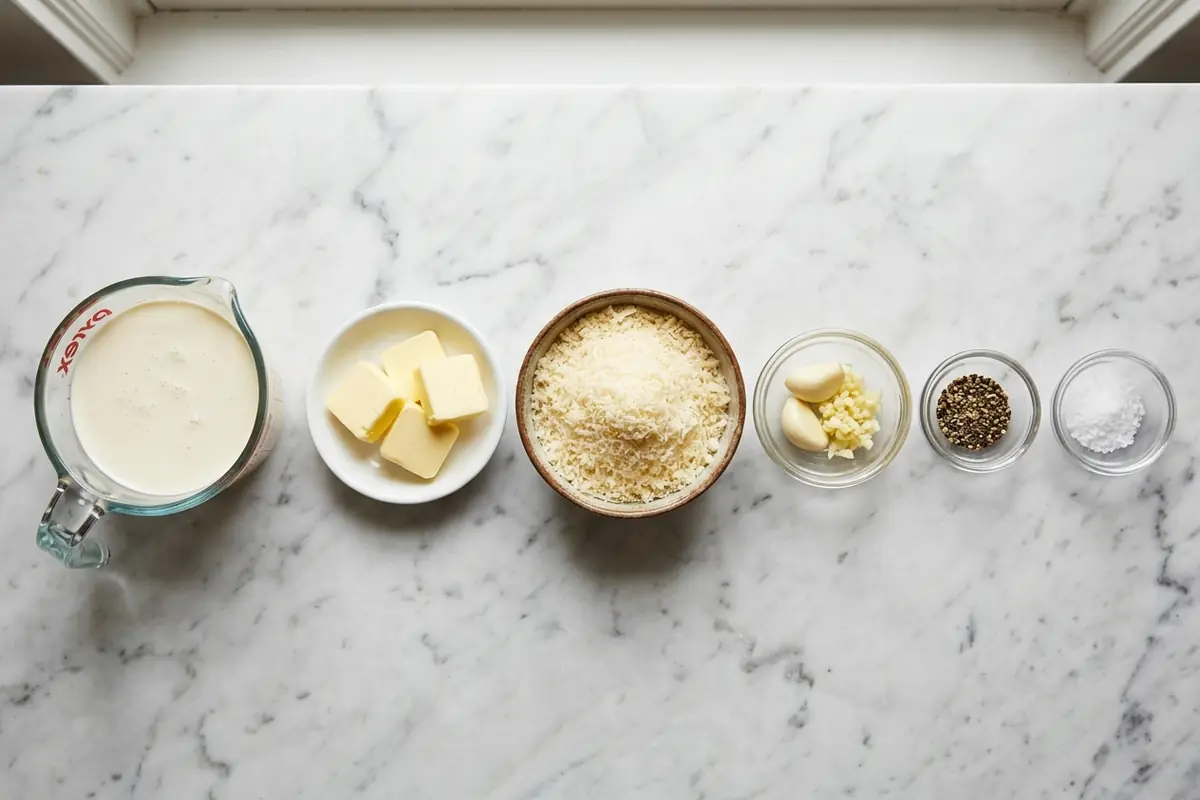
A reliable batch of cream-style alfredo uses about half a cup of unsalted butter, one and a half cups of heavy cream, two cups of freshly grated Parmesan, and a clove or two of garlic, which yields roughly two cups of sauce, enough for a pound of pasta. Each ingredient has a job. The butter adds richness and a glossy mouthfeel. The heavy cream is the body and the stabilizer, and it has to be heavy cream or heavy whipping cream, not half-and-half or milk, because the higher fat content is what keeps the sauce from breaking when the cheese goes in.
The Parmesan is the flavor and a good part of the thickening. Use a wedge of real Parmigiano-Reggiano or a good domestic Parmesan and grate it yourself. This single choice matters more than any other. Pre-shredded bagged cheese is coated with anti-caking agents like cellulose that stop it from melting cleanly, which is the most common cause of a grainy, gritty sauce. Garlic is optional in the strict sense but standard in the American style; one or two cloves, minced fine, gives savory depth without taking over. Salt and black pepper finish it, though go light on salt because Parmesan is already salty.
Step by Step: The Cream Method
Start by grating your Parmesan before you turn on the heat, because once the sauce comes together it moves fast and you do not want to be grating while it sits over the burner. Melt the butter in a wide saucepan or skillet over medium-low heat, then add the minced garlic and let it cook gently for about thirty seconds until fragrant, not browned. Pour in the heavy cream and bring it to a bare simmer, small bubbles around the edge, never a rolling boil. Let it simmer gently for two to three minutes so it warms through and reduces slightly.
Now lower the heat and add the grated Parmesan a handful at a time, whisking or stirring constantly so each addition melts into the cream before you add more. Adding all the cheese at once, or adding it to a sauce that is too hot, is the second most common way to end up with clumps. Once the cheese has melted in and the sauce looks smooth and slightly thickened, season with a little salt and pepper, taste, and pull it off the heat. The sauce will keep thickening as it cools, so stop while it still looks a touch loose. Toss it with hot pasta right away, loosening with a splash of pasta water if it tightens too much.
The Butter Method (Original Roman Style)
If you want the authentic version, skip the cream entirely. Cook your fettuccine until just shy of done and reserve a full cup of the starchy cooking water. In a wide pan off the heat, or over very low heat, toss the hot drained pasta with a generous amount of cold butter cut into pieces and a large handful of finely grated Parmigiano-Reggiano, adding splashes of the reserved pasta water as you go and tossing hard. The starch in the water and the constant motion emulsify the butter and cheese into a creamy sauce that coats every strand. The keys are heat control, since too hot and the cheese seizes, and the pasta water, which is non-negotiable here. This version is lighter and more delicate, and it has to be eaten immediately.
Building Flavor Without Burying the Cheese
Plain alfredo is good, but a few small moves make it taste like something you would order out. A pinch of freshly grated nutmeg, just a whisper, adds warmth that plays well with cream and cheese and is a classic trick in cream sauces. Toasting the garlic gently in the butter rather than dumping it in raw rounds off its bite. Fresh cracked black pepper, added at the end, gives the sauce a little backbone. If you want more savory depth, a small amount of finely grated Pecorino Romano alongside the Parmesan adds a sharper, saltier edge, though use it sparingly because it is much saltier.
What you want to avoid is drowning the sauce in garlic powder, dried herbs, or so much added seasoning that the Parmesan disappears. Alfredo is a showcase for good cheese and good butter. Let those lead. If you are adding protein like grilled chicken or shrimp, season the protein well separately so the sauce itself can stay clean and simple.
Cheese and Dairy: What to Use and What to Skip
The dairy you choose decides whether the sauce is silky or broken, so this table lays out the common options and how they behave.
| Ingredient | Result | Use it? |
|---|---|---|
| Heavy cream | Thick, stable, classic American body | Yes, the standard |
| Half-and-half | Thinner, more likely to break under heat | Only in a pinch, keep heat low |
| Whole milk | Too thin, needs a roux to hold | Not for this method |
| Cream cheese (1-2 oz) | Adds stability, helps prevent separating | Optional insurance |
| Fresh-grated Parmesan | Melts clean, smooth sauce | Yes, always |
| Pre-shredded bagged cheese | Anti-caking coating causes graininess | Avoid |
A small amount of cream cheese, one to two ounces melted in with the cream, is a useful trick if you keep breaking your sauce. It adds emulsifiers that keep the fat and water bound together, giving you a more stable sauce that holds longer on the plate, at the cost of a slightly tangier, less pure flavor.
Common Mistakes and How to Avoid Them
Most alfredo problems trace back to heat and cheese. Boiling the sauce hard is the top mistake, because high heat causes the fat to separate out and pool as grease while the proteins seize. Keep it at a gentle simmer and add the cheese over low heat. Using pre-shredded cheese is the second, and it gives you a sauce that never goes fully smooth no matter what you do. Dumping all the Parmesan in at once instead of in handfuls leads to clumping. And walking away from the pan lets the sauce overheat or overthicken, since it sets up quickly as it cools.
If your sauce does break and turns greasy or grainy, it is usually rescuable. Pull it off the heat immediately, then whisk in a splash of warm cream, milk, or pasta water off the burner to bring the emulsion back together. Our full walkthrough on how to fix a broken sauce covers the exact rescue steps for a separated or curdled cream sauce, including when to use an immersion blender. If the sauce is simply too thick rather than broken, loosen it with reserved pasta water or a little more warm cream, a tablespoon at a time. For thin sauces and the wider set of thickening options, see our guide on how to thicken sauce, since reduction and a touch of extra cheese both work well here without resorting to starch.
Make-Ahead, Storage, and Reheating
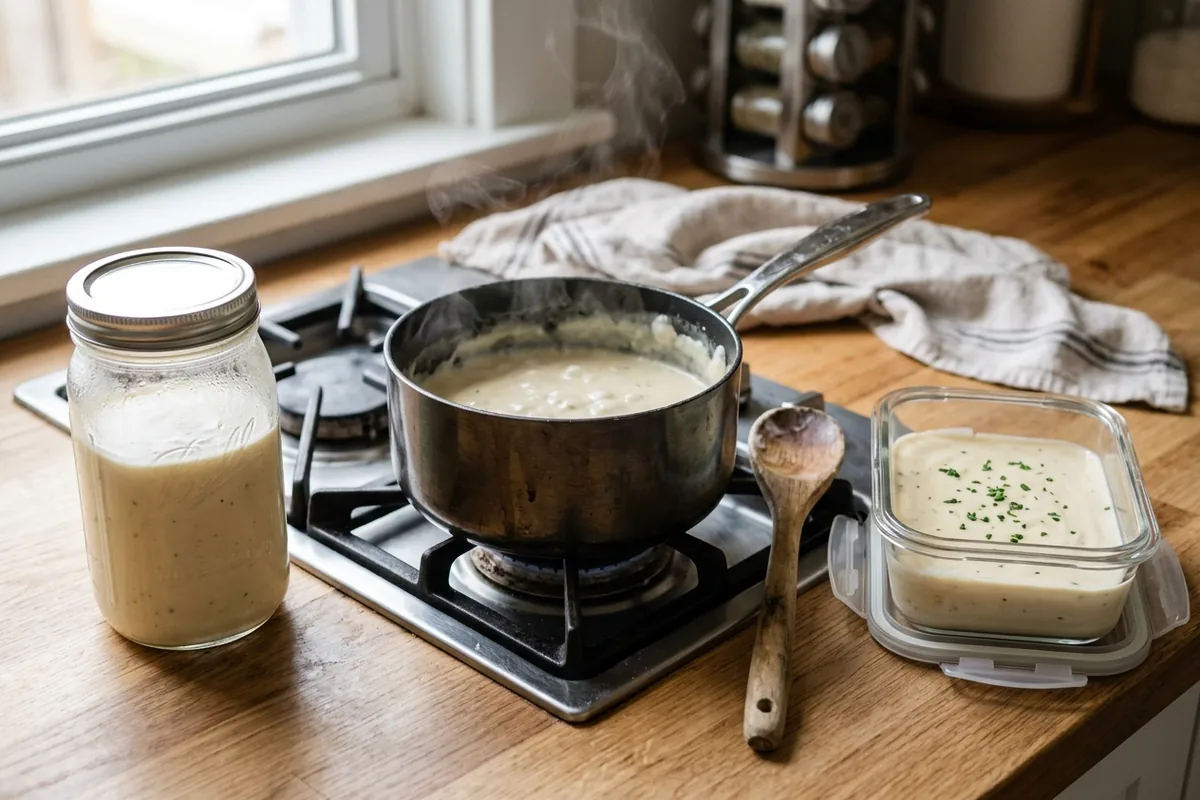
Cream-based alfredo is best fresh, because the emulsion is most stable right after you make it, but you can store and reheat it with care. Cooled sauce keeps in an airtight container in the refrigerator for about three to four days. The challenge is reheating, since cream sauces want to break when blasted with heat. Reheat gently over low heat on the stovetop, stirring constantly, and add a splash of milk or cream to loosen it and re-emulsify as it warms. Avoid the microwave on full power, which heats unevenly and is the fastest way to split the sauce; if you must use it, go in short bursts at reduced power and stir between each.
Freezing is the trickier question. Cream sauces can separate when frozen and thawed because the dairy and fat split, though a sauce made with the cream-cheese addition holds up better. If you want the full breakdown on whether and how to freeze it, our dedicated guide on whether you can freeze alfredo sauce walks through the freezing and reheating method that keeps it creamy. For technique-driven sauce work in general, America’s Test Kitchen at americastestkitchen.com is a reliable reference, and Bon Appetit at bonappetit.com has good coverage of the Roman butter style if you want to go deeper on the original.
Serving Ideas Beyond Fettuccine
Alfredo is far more flexible than the standard plate of fettuccine. Spoon it over grilled or roasted chicken, toss it with steamed broccoli or peas for a quick vegetable side, use it as the base for a white pizza, or stir it into a baked pasta with extra cheese on top before broiling. It pairs naturally with seafood, especially shrimp and scallops, and a little lemon zest brightens those versions. Because the sauce tightens as it cools, anything you build with it benefits from being served hot, with a splash of pasta water or cream kept on hand to loosen it back to a pourable consistency at the table.
Scaling the Recipe and Choosing the Right Pan
The ratios scale cleanly, which makes alfredo easy to adjust for a crowd or a single serving. The working proportion is roughly equal parts butter and Parmesan by volume to a slightly larger amount of cream, so for a smaller batch you might use a quarter cup of butter, three-quarters of a cup of cream, and a cup of cheese. For a big family dinner, double everything and use a wider pan. The one thing that does not scale is patience: a larger volume takes longer to heat and longer to melt the cheese into, so keep the heat low and give it the extra minute or two rather than cranking the burner to speed it up.
Pan choice matters more than people expect. A wide, heavy-bottomed saucepan or a large skillet is better than a tall narrow pot, because the wider surface heats the cream evenly and gives you room to whisk the cheese in without it clumping in a deep pool. A heavy pan holds steady heat and resists the hot spots that cause a sauce to break, while a thin pan can scorch the cream before you notice. Nonstick or stainless both work; stainless lets you see the color of the sauce more clearly, which helps you catch it at the right moment. Whatever you use, have your grated cheese, your pasta water, and your tongs ready before you start, because alfredo comes together in a few minutes and rewards a cook who is set up and paying attention.
Pairing Pasta and Finishing the Dish
The classic pairing is fettuccine, and there is a reason for it: the wide, flat ribbons carry a rich cream sauce better than thin strands, giving you sauce and pasta in every bite. Other good shapes are pappardelle, tagliatelle, and even short shapes with ridges or hollows like rigatoni or penne, which trap the sauce in their nooks. Skip very thin pasta like angel hair, which the heavy sauce overwhelms and clumps together. Cook the pasta to just shy of al dente, since it will finish in the hot sauce, and always reserve at least a cup of the starchy cooking water before you drain.
The finishing move that ties everything together is tossing the drained pasta directly into the sauce over low heat, adding splashes of reserved pasta water as you go. The starchy water loosens the sauce to the right consistency and helps it cling to the pasta rather than sliding off, which is the same emulsifying trick that makes the original Roman version work. Toss for a minute so every strand is coated, then plate it immediately while it is hot and loose, finishing with a little extra grated Parmesan and a few cracks of black pepper. A dish built this way tastes far better than sauce simply spooned over a pile of plain noodles.
Frequently Asked Questions
Why is my alfredo sauce grainy?
Graininess almost always comes from one of two things: pre-shredded bagged cheese coated with anti-caking agents that will not melt smoothly, or adding the cheese to a sauce that is too hot. Grate Parmesan fresh from a wedge, lower the heat before adding it, and stir it in a handful at a time.
Can I make alfredo without heavy cream?
Yes. The original Roman version uses only butter, Parmigiano-Reggiano, and starchy pasta water, emulsified by tossing hot pasta hard. It is lighter and more delicate but must be eaten right away. Half-and-half can work in the cream method if you keep the heat low, but it breaks more easily.
How do I keep alfredo sauce from getting too thick?
The sauce naturally thickens as it cools and as the cheese sets. Pull it off the heat while it still looks slightly loose, and keep a cup of reserved starchy pasta water or warm cream nearby to thin it back out, adding a tablespoon at a time until it pours the way you want.
What cheese is best for alfredo sauce?
Freshly grated Parmigiano-Reggiano or a good domestic Parmesan is the standard. A small amount of Pecorino Romano alongside it adds a sharper, saltier edge. Always grate from a block rather than buying pre-shredded, since the coating on bagged cheese causes a grainy texture.
Why did my alfredo sauce break or turn greasy?
Breaking is caused by too much heat, which separates the fat from the rest of the sauce. Take it off the burner immediately and whisk in a splash of warm cream, milk, or pasta water to bring the emulsion back. Keeping the sauce at a gentle simmer rather than a boil prevents it in the first place.
Can I freeze homemade alfredo sauce?
You can, but cream sauces tend to separate after freezing and thawing because the dairy splits. A version made with a little cream cheese holds together better. Thaw it in the refrigerator and reheat slowly over low heat with a splash of cream, whisking to bring it back to a smooth texture.
Bottom Line
Homemade alfredo sauce rewards good ingredients and gentle handling far more than any complicated technique. Use heavy cream, real butter, and Parmesan you grate yourself, keep the heat low so the sauce never hard-boils, and add the cheese gradually so it melts clean. Stop cooking while it still looks slightly loose, since it firms up off the heat, and keep pasta water on hand to adjust the consistency. Master those few habits and you will turn out a silky, glossy sauce in ten minutes that beats anything from a jar, every time.