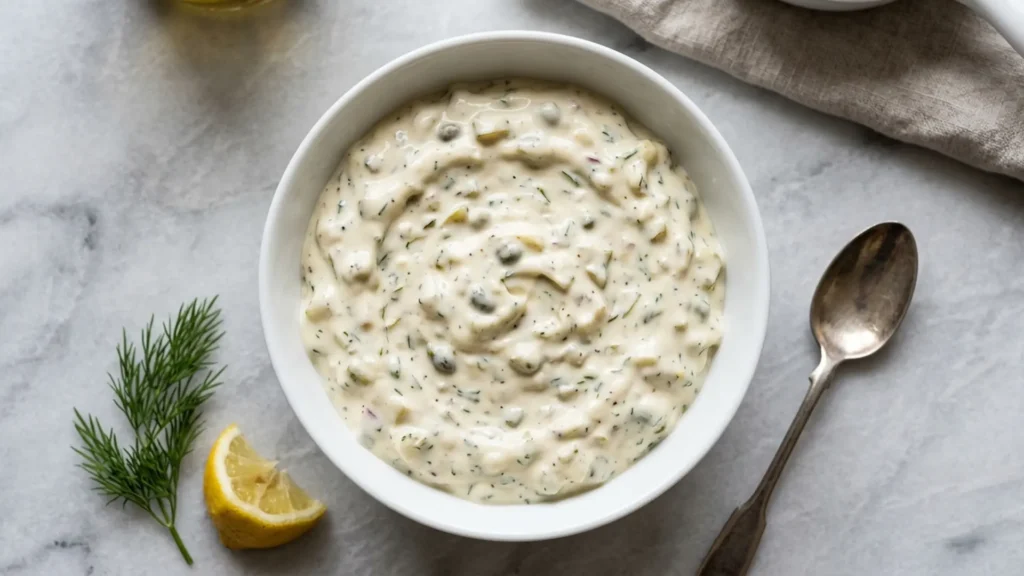
How to make tartar sauce comes down to one simple idea: stir chopped pickles, a little acid, and a few aromatics into mayonnaise until you have a creamy, tangy, briny sauce, and the whole thing takes about five minutes. The classic version starts with mayonnaise as the base, then adds finely chopped dill pickles for crunch, fresh lemon juice for brightness, capers for a salty pop, fresh dill, a little Dijon mustard, and a dash of Worcestershire sauce to tie it together. That is the entire trick. Homemade tartar sauce beats the jarred kind because you control the ratio of creamy to tangy, the size of the pickle pieces, and how much punch it carries, and it costs a fraction of a bottle from the store.
This guide gives you a reliable master recipe with exact measurements, explains what each ingredient does and how to adjust it, walks through the technique that makes the texture right, and covers every common variation: relish versus chopped pickle, sweet versus dill, Southern style, a lighter version, and a few flavor upgrades. You will also get troubleshooting for sauce that is too thin, too bland, or too sharp, plus serving ideas and storage. By the end you will be able to make tartar sauce to your exact taste without ever measuring again.
The Master Tartar Sauce Recipe
This is a balanced, classic recipe that makes about three-quarters of a cup, enough for four servings of fish. Scale it up freely; the ratios hold.
- 1/2 cup mayonnaise
- 3 tablespoons finely chopped dill pickle (about 1 small pickle)
- 1 tablespoon capers, chopped
- 1 tablespoon fresh lemon juice
- 1 tablespoon fresh dill, chopped (or 1 teaspoon dried)
- 1/2 teaspoon Dijon mustard
- 1/2 teaspoon Worcestershire sauce
- Salt and black pepper to taste
Combine everything in a small bowl and stir until well blended and creamy. Taste, then adjust: more lemon for tang, more pickle for crunch and bite, a pinch of salt if it tastes flat. Cover and refrigerate for at least fifteen minutes before serving, which lets the flavors meld and noticeably improves the sauce. That short rest is the single easiest upgrade, and it is the step most people skip.
What Each Ingredient Does
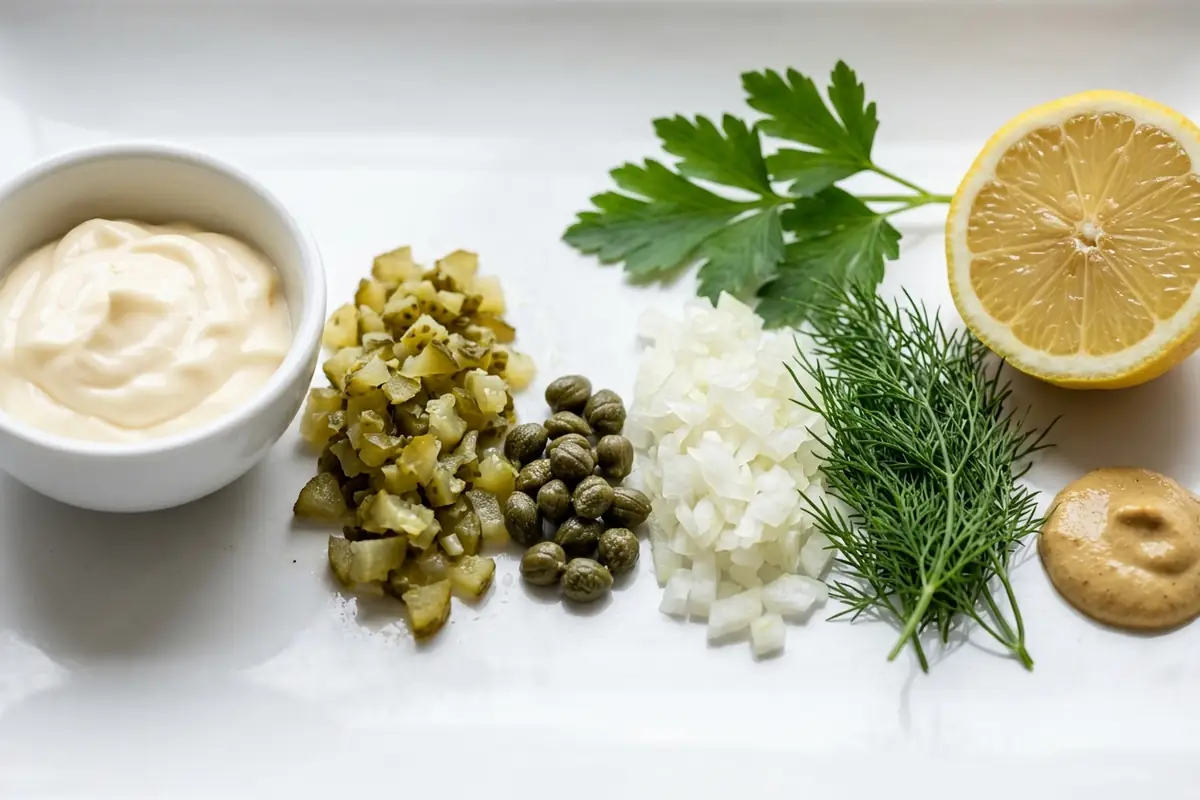
Understanding the role of each component is what lets you adjust the sauce to your taste instead of following a recipe blindly.
Mayonnaise: the base
Mayonnaise gives tartar sauce its body and richness, and it is the largest single ingredient, so its quality matters. A good full-fat mayonnaise makes a richer sauce, while light mayo makes a leaner, tangier one. You can also use homemade mayonnaise for the freshest flavor. The mayo carries everything else, so start here and build.
Pickles and capers: crunch and brine
Finely chopped dill pickles deliver the signature crunch and a vinegary bite, while capers add concentrated salty, briny pops that give the sauce its grown-up depth. Chop both small so every spoonful has even texture; large chunks make the sauce uneven. If you want a smoother sauce, use pickle relish instead of chopped pickle, which blends in more evenly.
Acid and aromatics: brightness and balance
Fresh lemon juice brightens the whole sauce and cuts the richness of the mayo, while Dijon mustard adds tang and a subtle sharpness. Fresh dill brings the herbal note people associate with classic tartar sauce, and a dash of Worcestershire sauce rounds everything out with a savory backbone. These are the levers you pull to dial the sauce in.
Relish vs Chopped Pickle: Which to Use
One of the most common questions is whether to use chopped pickles or pickle relish, and the answer depends on the texture you want.
| Choice | Texture | Best for |
|---|---|---|
| Finely chopped dill pickle | Distinct crunch, chunkier | Classic, texture-forward sauce |
| Dill relish | Smooth, even, softer | Quick, spreadable sauce |
| Sweet relish | Smooth, sweeter | Southern-style, sweeter sauce |
If you use relish, drain off the excess liquid first so the sauce does not turn watery. A useful trick: pat chopped pickles dry with a paper towel before adding them, which keeps the sauce thick. Either way, three tablespoons of pickle to half a cup of mayo is a good starting ratio.
Popular Variations
The basic formula takes well to variation, and a few small changes shift the sauce to match the dish or the regional style you are after.
Sweet vs dill
For a sweeter Southern-style tartar sauce, use sweet pickle relish instead of dill pickle and add a small pinch of sugar; this version pairs especially well with fried catfish and shrimp. For a sharper, tangier sauce, stay with dill pickle and capers and add extra lemon.
Add aromatics
A tablespoon of finely minced onion, shallot, or chives adds a savory edge that many people love. Keep it finely minced so it does not overpower, and consider soaking minced raw onion in cold water for a few minutes to mellow its bite before mixing it in.
Lighter and dairy-swapped versions
Swap half the mayonnaise for plain Greek yogurt to lighten the sauce and add a pleasant tang, or use a vegan mayo for an egg-free version. Both work, though the texture changes slightly, so taste and adjust the lemon and salt. The same balance of creamy base, brine, and acid that makes tartar sauce work also underpins many cold sauces; once you understand it, building a creamy creamy alfredo or a tangy dip becomes a matter of the same instincts.
Restaurant-Style and Copycat Versions
If the tartar sauce you love is the kind from a fish-and-chips shop or a seafood restaurant, you can get very close at home by leaning the recipe in a specific direction. Restaurant tartar sauce tends to be a little sweeter and smoother than a sharp homemade dill version, because a touch of sweetness reads as crowd-pleasing and a smoother texture spreads easily on a sandwich. To copy that style, use sweet pickle relish in place of chopped dill pickle, add a small pinch of sugar, include a tablespoon of finely minced onion, and a squeeze of lemon to keep it from being cloying. Some chains also add a whisper of garlic powder or a few drops of hot sauce for a savory backnote, so a tiny amount of either nudges a homemade batch toward that familiar flavor. The classic British chip-shop style, by contrast, goes the other way: sharp, heavy on chopped gherkins and capers, with plenty of lemon and very little sweetness. Knowing which direction your favorite leans, sweeter and smoother or sharper and chunkier, tells you exactly which levers to pull.
Flavor Upgrades Worth Trying
Once you have the base down, a few additions take tartar sauce from good to genuinely memorable without much effort.
- Fresh herbs: Beyond dill, a little chopped tarragon, parsley, or chives adds a fresh, garden note that brightens the sauce.
- A touch of heat: A few drops of hot sauce, a pinch of cayenne, or a little prepared horseradish gives a gentle kick that plays well with fried seafood.
- Extra brightness: A small grating of lemon zest, in addition to the juice, deepens the citrus note without adding more liquid.
- More brine: A teaspoon of the caper or pickle brine itself, stirred in carefully, sharpens the whole sauce; add it a little at a time so it does not get watery.
- Smoke or depth: A tiny pinch of smoked paprika adds color and a subtle smoky edge that works well with grilled fish.
Add these one at a time and taste as you go, since the point of a homemade sauce is to land it exactly where you want it rather than chasing someone else’s recipe. A good tartar sauce is balanced first and interesting second, so get the creamy-tangy-briny core right before reaching for the upgrades.
Scaling for a Crowd
Tartar sauce scales cleanly, which makes it easy to prepare for a fish fry, a party, or a big family dinner. The master ratio of half a cup of mayonnaise to three tablespoons of chopped pickle holds at any size, so for a crowd simply multiply everything by the same factor. A useful rule of thumb is to plan for about two tablespoons of sauce per person as a dipping portion, a little more if it is the only sauce on the table. When you scale up, taste at the end and adjust salt and lemon, because seasoning does not always scale in a perfectly straight line and a large batch can taste flatter than a small one until you brighten it. Make large batches a few hours ahead so the flavors have time to meld, and keep the bowl chilled over ice if it will sit out during a gathering, since the sauce is mayonnaise-based and should stay cold. Leftovers keep for the usual week or so, so an oversized batch rarely goes to waste.
The Technique That Makes It Better
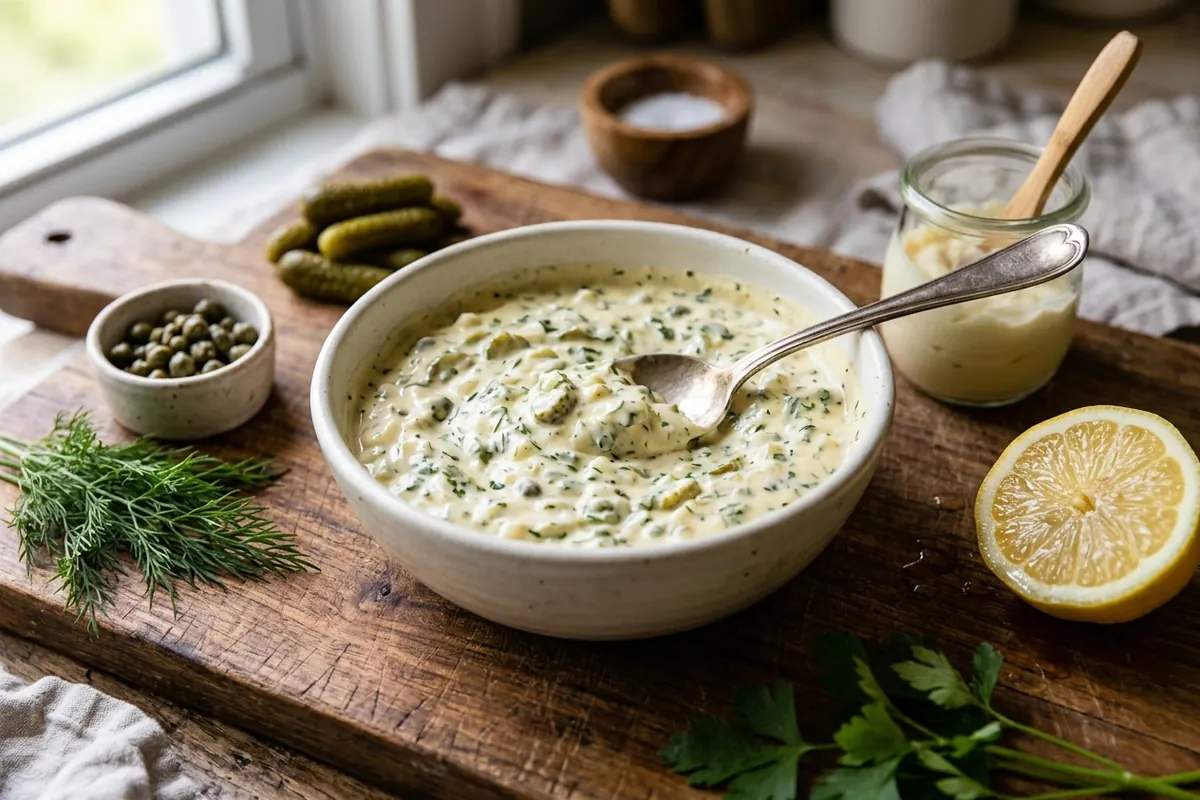
Tartar sauce is forgiving, but a few technique points separate a good batch from a great one. First, chop everything small and even, because uniform pieces give consistent flavor in every bite, while a single big chunk of pickle throws a spoonful off. Second, drain or pat-dry the wet ingredients so the sauce stays thick and does not weep on the plate. Third, build the flavor in stages: mix the base, taste, then adjust acid and salt rather than dumping everything in and hoping. Fourth, give it that fifteen-minute rest in the fridge, since the pickle, capers, mustard, and herbs need a little time to bloom into the mayonnaise. Finally, taste it cold, the way you will serve it, because flavors read differently at fridge temperature than at room temperature. None of this is hard, and it is exactly the kind of small-batch control that store-bought tartar sauce cannot give you.
Troubleshooting Common Problems
If your tartar sauce is not quite right, the fix is usually simple.
- Too thin or watery: You added too much pickle liquid or relish brine. Stir in a little more mayonnaise, and next time drain and pat the pickles dry.
- Too bland: It needs salt, acid, or brine. Add a pinch of salt, a squeeze of lemon, or a few more chopped capers and taste again.
- Too sharp or sour: Balance it with a little more mayonnaise or a small pinch of sugar to round the edges.
- Too rich or flat: Brighten it with extra lemon juice and a touch of mustard to cut the fat.
- Pieces too big: Chop finer next time, or pulse the whole sauce briefly for a smoother texture.
Because the sauce comes together in minutes, you can always make a small correction and re-taste rather than starting over.
What to Serve With Tartar Sauce
Tartar sauce is the classic partner for seafood, but it stretches further than most people use it. It is the obvious match for fried fish, fish sticks, crab cakes, fried shrimp, and calamari, where its creamy tang cuts through the richness of the fry. It is also excellent with baked or grilled salmon, where it adds brightness without heaviness. Beyond seafood, tartar sauce makes a great dip for fries, onion rings, fried mushrooms, and popcorn chicken, and it works as a spread on a fish sandwich or burger. If you are building a seafood spread, having a couple of cold sauces ready helps, and many cooks keep tartar sauce alongside a tangy cocktail sauce so guests can choose; if you want the lighter numbers on the other classic, our cocktail sauce nutrition guide breaks them down.
Make-Ahead and Storage
Tartar sauce is an ideal make-ahead condiment, and it actually improves after a few hours as the flavors meld, so making it the day before a meal is smart rather than a compromise. Store it in an airtight container or jar in the refrigerator, where it keeps well for about a week and often up to two weeks, since the acid and salt help preserve it. Always use a clean spoon to avoid introducing crumbs or bacteria, keep it cold, and give it a stir before serving since a little separation is normal. Do not leave it out at room temperature for long, especially in warm weather, because it is mayonnaise-based. If you used Greek yogurt in a lighter version, lean toward the shorter end of that window. For the brightest flavor, taste it again after a day in the fridge and adjust the lemon or salt before serving, since chilling can mute the seasoning slightly. Test kitchens such as America’s Test Kitchen and Bon Appetit stress this same point about resting and re-tasting cold sauces, and it holds for tartar sauce too.
Why Homemade Beats the Jar
It is worth saying plainly why making your own is the better move. Store-bought tartar sauce is built for shelf life and a broad average palate, which usually means more sugar, more stabilizers, and a uniform, muted flavor that cannot match a fresh batch. When you make it yourself, you choose a mayonnaise you actually like, you control exactly how much pickle crunch and lemon brightness goes in, and you can tilt it sweeter or sharper to match the meal in front of you. You also avoid the gums and preservatives in many bottled versions, and you can keep it as clean-label as you want. The cost difference is real too: a homemade batch made from pantry staples runs a fraction of the price of a name-brand jar, and it takes about the same time as a trip to the condiment shelf at the store. For a sauce this quick, there is little reason to settle for the bottle once you have the ratio memorized.
Frequently Asked Questions
How do you make tartar sauce from scratch?
Stir together 1/2 cup mayonnaise, 3 tablespoons finely chopped dill pickle, 1 tablespoon chopped capers, 1 tablespoon lemon juice, 1 tablespoon fresh dill, 1/2 teaspoon Dijon mustard, and a dash of Worcestershire sauce. Season with salt and pepper, then chill 15 minutes before serving so the flavors meld.
What is tartar sauce made of?
Tartar sauce is a creamy, tangy sauce made from a mayonnaise base mixed with chopped pickles or relish, lemon juice, and usually capers, fresh dill, mustard, and a little Worcestershire sauce. The mayo provides richness while the pickles, capers, and acid add crunch, brine, and brightness.
Can I use relish instead of chopped pickles?
Yes. Dill relish makes a smoother, more spreadable sauce, and sweet relish makes a sweeter Southern-style version. Drain off excess relish liquid first so the sauce does not turn watery. Chopped dill pickle gives more distinct crunch, while relish blends in more evenly.
How long does homemade tartar sauce last?
Stored in an airtight container in the refrigerator, homemade tartar sauce keeps for about a week and often up to two weeks, thanks to the acid and salt. Always use a clean spoon, keep it cold, and stir before serving. Lighter versions made with yogurt are best used within about a week.
What can I use instead of capers?
If you have no capers, finely chopped green olives or extra chopped pickle give a similar salty, briny pop. You can also add a little extra lemon and a pinch of salt to mimic the brightness capers provide. The sauce still works well without them, just slightly less complex.
What do you eat tartar sauce with?
Tartar sauce is classic with fried fish, fish sticks, crab cakes, fried shrimp, and calamari, and it is great with baked salmon too. Beyond seafood, use it as a dip for fries, onion rings, and fried mushrooms, or as a spread on a fish sandwich or burger.
Bottom Line
Homemade tartar sauce is one of the easiest condiments to make and one of the most rewarding, because you control the balance of creamy, tangy, and briny that a jar can never match. Start with the master ratio of half a cup of mayonnaise to three tablespoons of chopped pickle, add lemon, capers, dill, mustard, and a dash of Worcestershire, then taste and adjust to your liking. Chop everything small, drain the wet ingredients, and let it rest fifteen minutes so the flavors come together. Swap in relish, sweeten it Southern-style, or lighten it with yogurt as you please, and keep a jar in the fridge ready for the next batch of fried fish or fries.