
Soy and gluten free soy sauce is what you need when you have to avoid both soybeans and wheat at the same time, which rules out almost every bottle on a normal grocery shelf. Regular soy sauce contains both wheat and soy. Even most gluten-free soy sauce and tamari are still made from soybeans, so they solve the gluten problem but not the soy one. If you are cooking for a soy allergy, a wheat allergy, celiac disease, or all of the above, you need a different category of product altogether: a sauce that delivers the same dark, salty, savory umami without either ingredient. The good news is those products exist, from commercial pea-based and coconut-based bottles to a homemade blend you can mix in five minutes, and most of them work as a one-to-one swap.
This guide explains why standard and even gluten-free soy sauces still contain soy, which commercial bottles are genuinely both soy-free and gluten-free, how each one tastes and where it shines, the exact ratios for a homemade version, and how to adjust recipes so the swap lands right. By the end you will know which bottle to buy and how to cook with it when both soy and wheat are off the table.
Why Most Soy Sauce Is Neither Soy-Free Nor Gluten-Free
To understand the problem, look at how soy sauce is made. Traditional soy sauce is brewed from soybeans, wheat, salt, and a fermentation culture, with the soybeans and wheat present in roughly equal amounts. That means a standard bottle is doubly off-limits for someone avoiding both: the wheat brings gluten, and the soybeans bring soy. People often assume that a gluten-free label fixes everything, but it only fixes the wheat half. Tamari, the most common gluten-free soy sauce, is made with little or no wheat precisely so it is gluten-free, yet it is still fundamentally a soybean product, so it remains a soy food. The same is true of most liquid aminos, which are derived from soybeans. So for a soy allergy, the gluten-free aisle is a trap: nearly everything there is still soy. If gluten is your only concern, our guide to gluten free soy sauce covers the tamari and rice-based options in full. But if you also need soy-free, you have to leave the soy sauce family entirely and reach for an alternative built from something other than soybeans.
Commercial Soy-Free and Gluten-Free Options
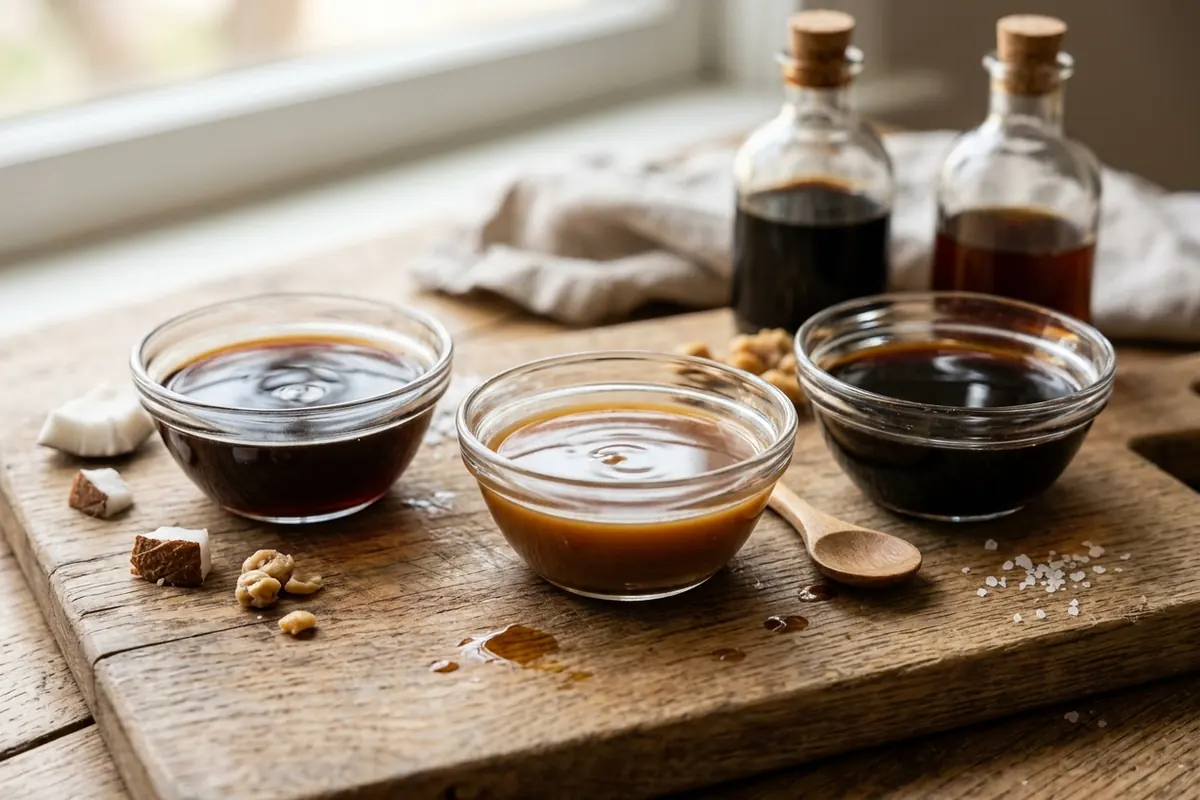
A small but growing group of products are formulated to be both soy-free and gluten-free, and they have gotten good enough that most people cannot tell the difference in a finished dish. Here are the main categories.
| Product | Made from | Flavor and use |
|---|---|---|
| Coconut aminos | Fermented coconut sap, salt | Milder, sweeter, less salty; great all-purpose swap |
| Pea-based “no soy” tamari | Fermented peas, salt | Closest to real soy sauce; deep, salty umami |
| Coconut secret aminos | Coconut sap, sea salt | Sweet-savory; good for dressings and dips |
| Homemade broth blend | Broth, molasses, vinegar, spices | Customizable; cheapest; for cooking |
Coconut aminos
Coconut aminos are the most widely available soy-free, gluten-free option. They are made from the fermented sap of coconut palms blended with salt, so there is no soybean and no wheat anywhere in the product. The flavor is milder and noticeably sweeter than soy sauce, with about a third less sodium, which is a bonus for anyone watching salt. Because they are less salty and a little sweet, the practical adjustment is to use a touch more than the soy sauce a recipe calls for, and to cut back slightly on any added sugar. They behave well in stir-fries, marinades, dressings, and dipping bowls. The main downside is price, since coconut aminos cost more per ounce than soy sauce, but a bottle lasts a long time.
Pea-based no-soy tamari
For people who want something that tastes almost exactly like real soy sauce, a pea-based “no soy” tamari is the closest match. These are brewed with the same fermentation know-how used for traditional tamari, but they swap fermented peas in for soybeans, so the result is both soy-free and gluten-free while keeping a deep, salty, genuinely soy-sauce-like umami. This is the bottle to reach for when a recipe really leans on that classic dark, salty backbone and you do not want to compromise on flavor. It works as a true one-to-one swap in most dishes.
Homemade Soy-Free Gluten-Free Soy Sauce
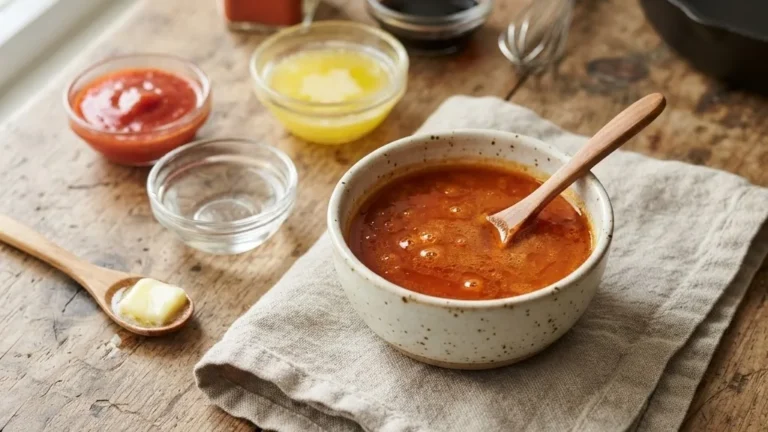
If you cannot find a commercial bottle, or you just want full control over the ingredients, you can build a soy-free, gluten-free soy-sauce-style seasoning at home in a few minutes. The idea is to combine a savory base with a dark sweetener and a little acid to mimic the salt, color, and depth of brewed soy sauce. Here is a reliable starting formula that makes about half a cup.
- 1/4 cup gluten-free beef or vegetable broth (use vegetable to keep it vegan)
- 2 tablespoons blackstrap molasses, for dark color and a deep, slightly bitter sweetness
- 1 tablespoon cider vinegar or rice vinegar, for brightness
- 1/2 teaspoon ground ginger
- 1/4 teaspoon garlic powder
- 1/4 to 1/2 teaspoon fine sea salt, to taste
- A pinch of black pepper
Combine everything in a small saucepan and simmer gently for three to five minutes until it darkens and thickens slightly, then taste and adjust the salt. Blackstrap molasses is the key ingredient here, since it supplies both the near-black color and the bold, complex flavor that makes the blend read as soy sauce rather than just salty broth. The result is not an exact copy of fermented soy sauce, because real fermentation takes months and builds flavors you cannot rush, but it is a genuinely useful stand-in for stir-fries, marinades, and braises, and it contains neither soy nor wheat. Store leftovers in the fridge for up to a week. When you build a sauce from scratch like this, you control every ingredient, the same advantage that makes a homemade hoisin sauce substitute reliably free of whatever you need to avoid.
How to Choose Between Your Options
The right pick depends on what the dish needs and what matters most to you. If you want to taste the alternatives side by side before committing, test kitchens like America’s Test Kitchen and Cook’s Illustrated regularly compare soy sauce stand-ins and note where each one performs best.
Match the flavor profile
If a recipe depends on a strong, salty, dark soy character, such as a glaze or a savory braise, a pea-based no-soy tamari gives the most faithful result. If the dish is lighter or you do not mind a touch of sweetness, coconut aminos are excellent and add a pleasant rounded note. For a quick weeknight fix when you are out of both, the homemade blend covers you.
Mind the salt and sugar
Coconut aminos are less salty and a little sweet, so taste as you go and you may need a pinch of extra salt, while trimming added sugar. Pea-based tamari is closer to soy sauce in saltiness, so use it one-to-one. The homemade blend lets you dial salt and sweetness exactly where you want them, which is helpful for anyone managing sodium. A balanced sauce, like a tangy oyster sauce substitute, can be rebuilt soy-free and gluten-free using the same logic of swapping the salty-umami base and adjusting sweetness to match.
Cooking and Recipe Adjustments
Swapping in a soy-free, gluten-free option is mostly seamless, but a few small adjustments help the dish taste right. Because coconut aminos are sweeter, reduce any honey, brown sugar, or mirin in the recipe by a little to keep the balance, and add a pinch of salt at the end if it tastes flat. For the homemade blend, remember it is thinner and less concentrated than bottled soy sauce, so you may want to use slightly more or let a sauce reduce a touch longer to concentrate the flavor. In stir-fries, add your soy-free sauce toward the end of cooking rather than at the start, since high heat for a long time can dull the flavor of the sweeter alternatives. In cold applications like salad dressings and dipping sauces, all three options work straight from the bottle or the fridge with no cooking needed. And always double-check that the other bottled ingredients in your recipe are themselves soy-free and gluten-free, because hidden soy and wheat hide in teriyaki, hoisin, and many prepared sauces just as gluten does.
Watching for Hidden Soy and Gluten

Swapping your soy sauce only protects you if the rest of the dish is clean, and both soy and wheat hide in a lot of prepared foods. Bottled teriyaki, hoisin, oyster sauce, and many barbecue and stir-fry sauces are commonly built on wheat-based soy sauce, so they can carry both allergens at once. Soy also turns up as soy lecithin, soy protein, and textured vegetable protein in processed foods, while wheat hides as hydrolyzed wheat protein, malt, and flour thickeners. The reliable habit is to read every label in a recipe, not just your soy sauce stand-in, and to choose soy-free, gluten-free versions of every bottled sauce you add. When in doubt, building sauces yourself from single ingredients removes the guesswork, which is why home cooks managing multiple allergies often keep a small set of from-scratch sauces on hand rather than relying on bottled blends.
Using These Swaps in Specific Dishes
The reason a generic “just use coconut aminos” tip often disappoints is that different dishes lean on soy sauce for different reasons, so the best swap changes with the recipe. Here is how to think about the most common uses.
Stir-fries and fried rice
Stir-fries want a salty, savory hit that clings to the food. Pea-based no-soy tamari is the most faithful choice because it brings real saltiness and depth without thinning the sauce. If you use coconut aminos, add a pinch of salt and a few drops of acid to sharpen the flavor, and add the sauce in the last minute of cooking so its sweetness does not scorch. Either way, keep the heat high and the sauce light, since a stir-fry should season the food, not drown it.
Marinades and glazes
Marinades benefit from the sugar in coconut aminos, which helps proteins brown and caramelize, so this is a place where the sweeter option is an asset rather than a compromise. For a sticky glaze, reduce the sauce gently until it coats a spoon, and balance the sweetness with a little vinegar or citrus. A pea-based tamari glaze will taste more like a classic teriyaki, while a coconut aminos glaze leans sweeter and rounder.
Dressings, dips, and finishing
For cold uses, all three options work straight from the fridge. Whisk your soy-free sauce with oil, vinegar or lime, a little sweetener, and aromatics for a quick dressing, or use it neat as a dipping sauce. Because nothing cooks off, taste the dressing as you build it and adjust salt directly, which is the easiest way to compensate for the milder, sweeter alternatives.
Reading Allergy Labels With Confidence
Anyone managing both a soy and a wheat issue learns to read labels closely, and a few habits make it faster. In the United States, both soy and wheat are among the major allergens that must be declared, so a clear “Contains: soy” or “Contains: wheat” line is your fastest screening tool; if neither appears and the ingredient list is clean, the product is very likely safe on both counts. Watch for the sneaky listings: soy can appear as soy lecithin, soy protein isolate, soya, edamame, or textured vegetable protein, while wheat can hide as hydrolyzed wheat protein, malt, malt vinegar, modified food starch from wheat, or simply flour used as a thickener. Coconut aminos and pea-based tamari should list only a short set of recognizable ingredients, which is part of why they are easy to trust. When a label is vague or an imported product lacks a clear English allergen statement, the safer move for a true allergy is to skip it and choose a product that states both soy-free and gluten-free outright. Building your own sauce from single ingredients sidesteps the labeling question entirely, which is the most reliable path for a sensitive household.
Storage and Shelf Life
Storage depends on which option you choose. Commercial coconut aminos and pea-based tamari are shelf-stable thanks to their salt content; keep them capped, and refrigerate after opening to preserve the brightest flavor, where they last many months. The homemade broth blend is different, because it has no preservatives and a lower salt level, so it must be refrigerated and used within about a week, or frozen in small portions for longer storage. Freezing in an ice cube tray gives you single-tablespoon portions you can drop straight into a hot pan. As with any sauce, keep containers sealed to limit air exposure, and give homemade blends a sniff and a look before using if they have been in the fridge a while. None of these storage habits change the soy-free or gluten-free status, which is fixed by the ingredients; they only protect flavor and freshness. One practical tip for the homemade blend: make a double batch and freeze half, so you always have a safe sauce ready even on a week when you have no time to cook one from scratch. A labeled, dated container in the freezer is cheap insurance against reaching for an unsafe bottle in a hurry.
Frequently Asked Questions
Is there a soy and gluten free soy sauce?
Yes. While regular and most gluten-free soy sauces still contain soybeans, you can buy coconut aminos and pea-based u0022no soyu0022 tamari that are both soy-free and gluten-free, or make a homemade blend from broth, molasses, vinegar, and spices. All deliver a salty, savory, soy-sauce-like flavor without soy or wheat.
Is tamari soy-free?
Standard tamari is not soy-free. Most tamari is made with little or no wheat, which makes it gluten-free, but it is still brewed from soybeans, so it is a soy product. For a soy-free version you need a specially made u0022no soyu0022 tamari brewed from peas instead of soybeans.
Are coconut aminos gluten-free and soy-free?
Yes, coconut aminos are made from fermented coconut sap and salt, with no soybeans and no wheat, so they are naturally both soy-free and gluten-free. They are milder and sweeter than soy sauce with about a third less sodium, so use a little more and trim any added sugar in the recipe.
What is the best one-to-one replacement for soy sauce that avoids soy and gluten?
A pea-based no-soy tamari is the closest one-to-one swap because it keeps the deep, salty soy-sauce flavor while being soy-free and gluten-free. Coconut aminos are the next best, though they are sweeter and less salty, so taste and adjust the salt and sugar in the dish.
How do I make soy-free gluten-free soy sauce at home?
Simmer 1/4 cup gluten-free broth, 2 tablespoons blackstrap molasses, 1 tablespoon cider vinegar, ground ginger, garlic powder, and a little salt for a few minutes until it darkens and thickens. Blackstrap molasses provides the dark color and bold flavor. Refrigerate and use within a week.
Why is gluten-free soy sauce not always soy-free?
Because gluten-free soy sauce only solves the wheat problem. Tamari and rice-based gluten-free soy sauces remove or reduce the wheat, but they are still made from soybeans, so they remain a soy food. If you have a soy allergy as well as a gluten issue, you must use a non-soy alternative like coconut aminos or pea-based tamari.
Bottom Line
When you have to skip both soy and gluten, the regular and even the gluten-free soy sauce aisles will not serve you, because almost everything there is still made from soybeans. The fix is to step outside the soy sauce family. Coconut aminos give you a mild, slightly sweet, lower-sodium swap; a pea-based no-soy tamari gets you closest to the real salty, dark flavor; and a quick homemade blend of broth, molasses, vinegar, and spices covers you in a pinch. Use them one-to-one with small adjustments for salt and sweetness, read every other label in the recipe for hidden soy and wheat, and store them properly, and you will keep the savory depth your cooking needs without either ingredient on your plate.