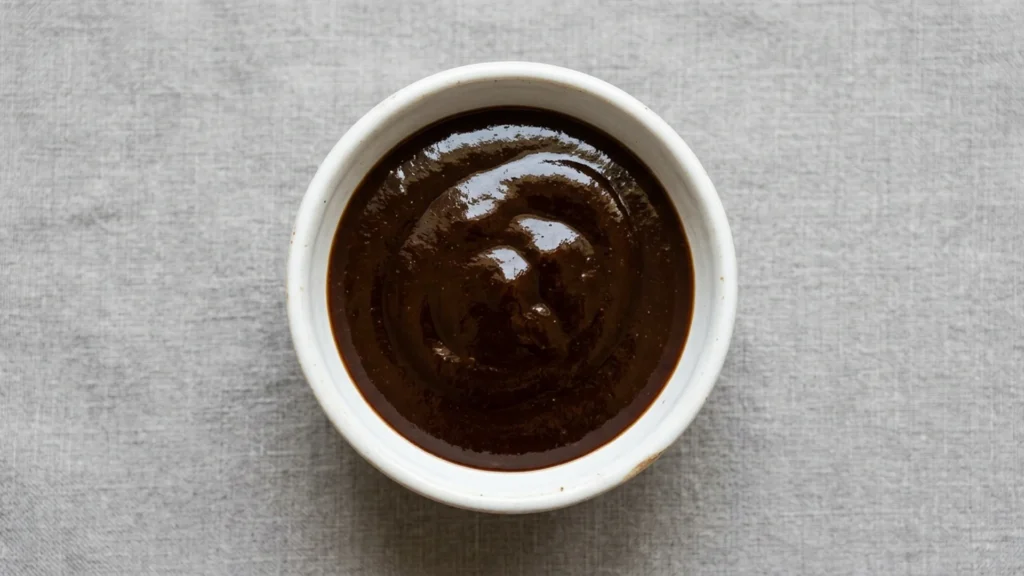
What is hoisin sauce? Hoisin sauce is a thick, sweet-and-savory Chinese condiment made from fermented soybeans, sugar, garlic, vinegar, sesame, and warm spices. It tastes like a deeper, funkier cousin of barbecue sauce: sweet up front, salty and umami underneath, with a tangy finish. Cooks use it as a glaze for roast meats, a dipping sauce, and a flavor base for stir-fries. The name translates loosely to seafood sauce, but despite that, traditional hoisin contains no seafood at all.
Hoisin is one of the bottles worth keeping on hand because a single spoonful does so much work. Below is exactly what is in it, what each ingredient does, how it differs from the sauces it gets confused with, how to use it without overdoing it, and a fast homemade version for when the bottle runs dry.
Key takeaways:
- Hoisin is a thick, sweet-savory sauce built on fermented soybean paste, sugar, and spice.
- It contains no seafood despite a name that translates to seafood sauce.
- Best used as a glaze, dip, or stir-fry base, in small amounts because it is intense.
- Closest cousins are oyster sauce and sweet bean sauce, but each behaves differently.
- A quick homemade swap takes about 5 minutes with pantry staples.
What Is Hoisin Sauce Made Of
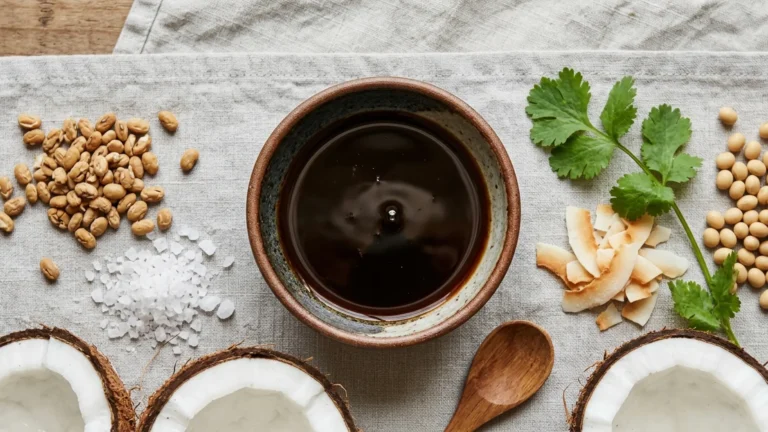
Hoisin starts with fermented soybean paste, the same family of ingredient that gives miso and soy sauce their savory backbone. From there it picks up sugar or molasses for sweetness and body, garlic for sharpness, rice vinegar for tang, sesame for a nutty note, and warm spices, usually Chinese five spice, which leans on star anise and cinnamon. Many versions add a little chili and a starch like sweet potato or wheat to thicken it. The result is dark, glossy, and thick enough to cling to a spoon.
The fermented soybean paste is the heart of it, and it is worth understanding because it is what separates real hoisin from a sugary imitation. That paste, sometimes labeled as fermented soybean or sweet bean paste, has been aged so that the soy proteins break down into glutamates, the same savory compounds that make soy sauce and miso taste deep. That fermentation is why a good hoisin has a rounded, almost meaty backbone under all the sweetness rather than just tasting like sweetened soy, a flavor-science point culinary outlets like Serious Eats have detailed in their work on fermented pastes. Cheaper bottles skimp on real fermentation and lean on sugar and caramel color to fake the depth, which is why they taste flat.
The word hoisin itself comes from the Cantonese for seafood, which trips people up because there is no seafood in it. The leading theory is that it was originally served alongside seafood as a dipping sauce, and the name stuck to the sauce rather than describing its contents. Whatever the origin, the practical point stands: vegetarians and people with shellfish allergies can use hoisin freely, unlike oyster sauce, which genuinely contains shellfish.
Knowing what each part contributes lets you adjust it, which is the thing the recipe pages never explain. Here is the breakdown.
| Ingredient | What it brings |
|---|---|
| Fermented soybean paste | Salty umami depth and a little funk |
| Sugar or molasses | Sweetness, dark color, sticky body |
| Garlic | Sharp aromatic backbone |
| Rice vinegar | Tang that keeps it from being cloying |
| Five spice | Warmth from star anise and cinnamon |
| Sesame oil | Nutty finish and aroma |
Once you can taste those parts separately, you can fix a hoisin dish that is off. Too sweet? A splash of vinegar or soy. Too flat? A pinch more five spice or a clove of grated garlic. That tuning instinct is the same one the SauceGrove guide to a substitute for soy sauce builds around the fermented-soybean flavor at the core of both.
What Does Hoisin Sauce Taste Like
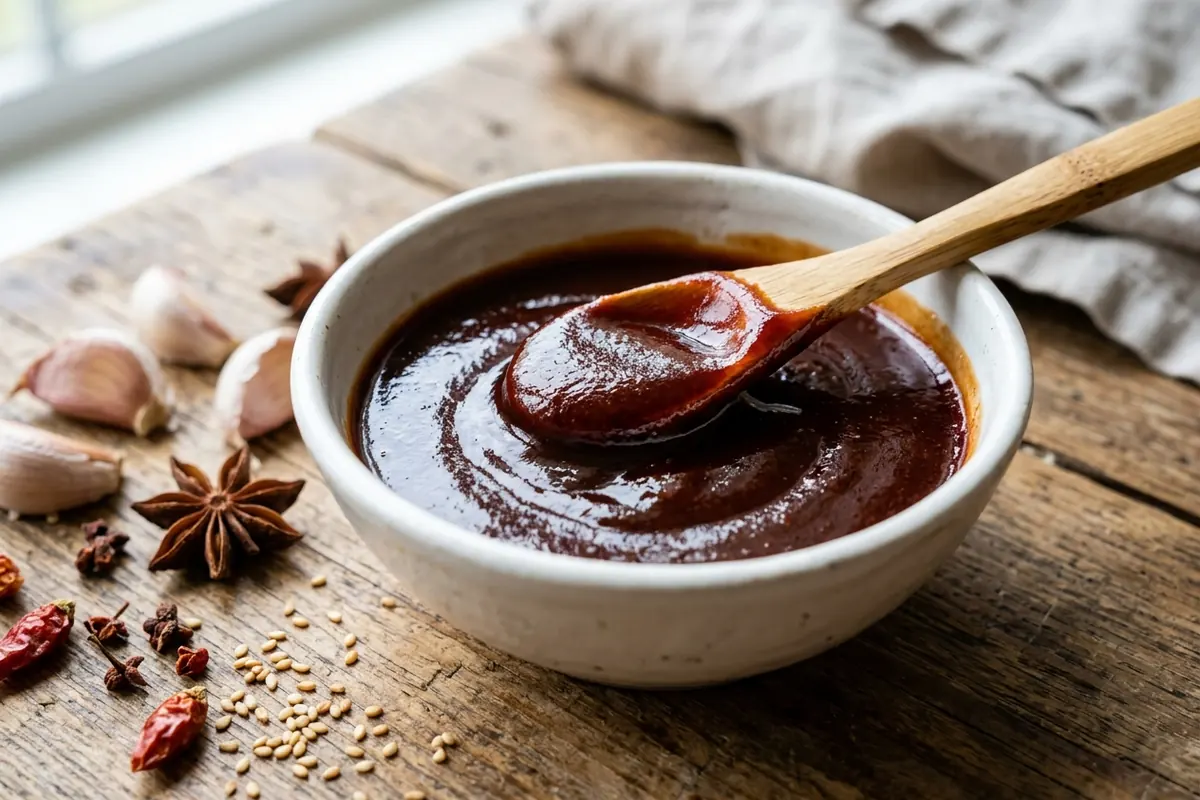
The quickest way to describe hoisin is sweet barbecue sauce with a savory, fermented soul. The first thing you notice is sweetness, then a salty umami wave from the soybean paste, then a tang and a faint warmth from the spice on the finish. It is thick and glossy, closer to ketchup or barbecue sauce in body than to thin soy sauce. Because all those flavors are concentrated, a little goes a long way; a tablespoon can season a whole stir-fry.
That intensity is also behind the most common mistake. People treat hoisin like soy sauce and pour it, and the dish turns one-note and sugary. Hoisin is a seasoning and a glaze, not a sauce you swim food in. Start with a tablespoon, taste, and add more only if the dish needs it. Balanced against something salty, sour, or spicy, it sings; on its own in quantity, it cloys.
The flavor also shifts depending on what you pair it with, which is worth knowing when you cook with it. Against fatty meats like pork belly or duck, the sweetness and acidity cut the richness and the sauce reads as balanced. Against lean chicken or vegetables, that same sweetness can dominate, so you want to back it off and lean on the savory soy and garlic notes. A squeeze of lime, a hit of chili, or a splash of vinegar alongside hoisin keeps it from tipping into dessert territory. Hoisin rarely works alone; it is a team player that needs a salty or sour partner to show its best side.
Hoisin vs the Sauces It Gets Confused With
Hoisin sits in a crowded shelf of dark Asian sauces, and people mix them up constantly. The table below sorts them by sweetness, body, and main use so you can grab the right one.
| Sauce | Sweetness | Body | Best use |
|---|---|---|---|
| Hoisin | High | Thick | Glaze, dip, stir-fry accent |
| Oyster sauce | Low | Thick | Savory stir-fry, greens |
| Soy sauce | None | Thin | All-purpose seasoning |
| Sweet bean sauce | Medium | Thick | Peking duck, noodles |
| Char siu sauce | High | Thick | Barbecue pork glaze |
Here is how it differs from the usual suspects in plain terms.
Oyster sauce is the closest in color and thickness, but it is savory and briny rather than sweet, made from oyster extract, so it carries a mild seafood depth hoisin lacks. Use oyster sauce when you want salty-savory; use hoisin when you want sweet-savory. Soy sauce is thin, salty, and not sweet at all, a seasoning rather than a glaze. Sweet bean sauce, sometimes called tianmianjiang, is a close relative, less sweet and less spiced, used in dishes like Peking duck and zhajiangmian. Char siu sauce is essentially hoisin dressed up for barbecue pork, sweeter and redder. If you want to compare swaps directly, the SauceGrove rundown on an oyster sauce substitute covers the savory side of this same shelf.
There is also a frequent mix-up with sweet chili sauce and with the Korean gochujang. Sweet chili sauce is thin, bright, and fruity, built on red chili and sugar with no fermented soybean depth, so it cannot stand in for hoisin in a glaze. Gochujang is a fermented chili paste, savory and spicy with only mild sweetness, thicker and far hotter than hoisin. They live in the same flavor neighborhood of fermented, sweet, and savory, but each pulls in its own direction. If a recipe calls for hoisin and you reach for one of these by mistake, the dish will not taste wrong exactly, just noticeably different in sweetness and heat. Knowing the map keeps you from those surprises.
How to Use Hoisin Sauce
Hoisin earns its place because it is so versatile, and a few rough amounts keep you from overdoing it.
- Glaze: about 2 tablespoons per pound of meat, brushed on in the last 5 minutes.
- Stir-fry: start with 1 tablespoon per two servings and adjust.
- Dipping sauce: 2 tablespoons thinned with a teaspoon of water and a teaspoon of vinegar serves two to three people.
The classic use is as a glaze: brush it on ribs, chicken, pork belly, or salmon in the last few minutes of cooking and it caramelizes into a sticky, lacquered coat. It is the sauce smeared inside the pancake in Peking duck. As a dip, it is served straight or thinned with a little water and vinegar for spring rolls and dumplings. In a stir-fry, a spoonful added near the end gives instant sweet-savory complexity. And it is the secret to a quick marinade: mix it with soy, garlic, and a little oil and you have a glaze and marinade in one.
My favorite move is a fast weeknight glaze: a tablespoon of hoisin, a teaspoon of soy, a teaspoon of rice vinegar, and a grated clove of garlic, brushed over chicken thighs for the last 5 minutes under the broiler. The sugar caramelizes, the vinegar keeps it bright, and dinner tastes like it took far more effort than it did. America’s Test Kitchen has explored these quick glaze techniques, and the principle is the same at home: sugar for the lacquer, acid for balance, heat to set it. For dishes to pair it with, pastapeak.com keeps a deep run of chicken pasta ideas that take a savory glaze in stride.
A timing note that saves a lot of burnt dinners: because hoisin is high in sugar, it scorches fast under direct heat. Brush it on near the end of cooking, not the start. If you glaze ribs or chicken and then leave them over high heat, the sugar blackens and turns bitter before the meat is done. The pattern that works: cook the protein most of the way through plain, then apply the hoisin glaze for the final few minutes so it caramelizes without burning. The same rule applies on the grill, where flare-ups will char a sugary glaze in seconds if you are not watching.
Beyond glazes, hoisin makes a quick dipping sauce that punches above its effort. Thin a couple of tablespoons with a teaspoon of water and a teaspoon of rice vinegar, add a few drops of sesame oil and a pinch of chili, and you have a dip for dumplings, spring rolls, or lettuce wraps in under a minute. It also folds beautifully into ground-meat dishes; a spoonful stirred into the filling for lettuce wraps or a noodle bowl gives that takeout-style sweet-savory depth that is hard to pin down but easy to taste. Once you start using it, you find a dozen small ways it earns its shelf space.
A Fast Homemade Hoisin Sauce
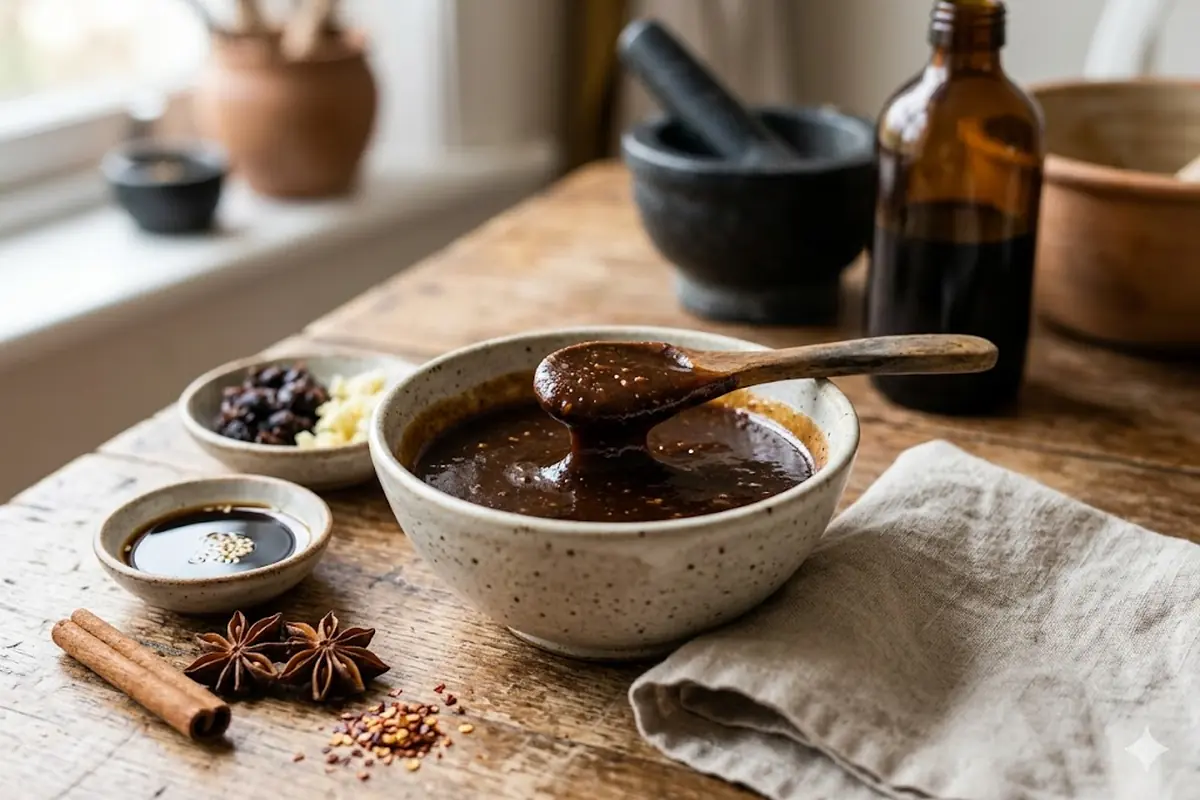
When the bottle is empty, you can build a passable hoisin in about 5 minutes from pantry staples, and you control the salt and sugar. The base ratio: 4 tablespoons soy sauce, 2 tablespoons of a nut or seed butter like peanut or tahini for body, 1 tablespoon molasses or honey for sweetness, 2 teaspoons rice vinegar, a grated clove of garlic, a quarter teaspoon five spice, and a teaspoon of sesame oil. Whisk it smooth and thin with a little water if needed.
It will not be identical to a store bottle, which gets its depth from real fermentation, but it hits the sweet-salty-tangy notes well enough for a glaze or a stir-fry in a pinch. The nut butter is the trick that makes it work; it gives the thick, clinging body that sugar alone cannot. Bon Appetit has a more involved from-scratch version if you want to go deeper, and the SauceGrove guide on how to make teriyaki sauce uses the same glaze logic of soy plus sweetener plus aromatics.
Storing Hoisin and Buying a Good One
Once opened, hoisin needs to live in the fridge, where it keeps well for around six months thanks to its salt and sugar. It is thick, so give it a stir if it separates. When buying, scan the label: the better bottles lead with fermented soybeans and keep the ingredient list short, while cheaper ones lean hard on sugar, caramel color, and thickeners. Lee Kum Kee is a widely trusted brand and a safe default, and Kikkoman makes a reliable gluten-free version worth seeking out if wheat is a concern. If you only cook with hoisin occasionally, buy the smaller size even though the big bottle looks like the better deal, because the bright spice notes fade over many months and a part-used bottle goes dull long before it spoils. Brand availability and pricing noted here are current as of 2026 and vary by region.
One practical tip: because hoisin is intense and you use it in small amounts, a bottle lasts a long time, so spend the extra dollar on a good one. A quality hoisin tastes balanced and complex; a cheap one tastes like sweet salt. The difference shows up in every glaze and stir-fry you make with it. If an old bottle tastes flat, a fresh pinch of five spice and a splash of vinegar can revive it enough for a stir-fry, though for a showcase glaze you want a fresh one.
Is Hoisin Sauce Worth Keeping Around
Yes, without hesitation. Hoisin is one of those few bottles that turns ordinary weeknight food into something with restaurant-style depth, and it does it in a single spoonful. It bridges the gap between a glaze, a marinade, a dip, and a stir-fry seasoning, which means one jar covers a lot of cooking. The only real learning curve is restraint: use it as an accent, balance it with salt or acid, and keep it away from high heat until the end. Get those three habits down and hoisin becomes one of the hardest-working sauces in your kitchen, the secret behind dozens of dishes that taste like more work than they were.
Frequently Asked Questions
What is hoisin sauce made of?
Hoisin sauce is made from fermented soybean paste, sugar or molasses, garlic, rice vinegar, sesame, and warm spices like five spice. Many versions add chili and a starch to thicken it. Despite the name, which translates to seafood sauce, traditional hoisin contains no seafood.
What does hoisin sauce taste like?
Hoisin tastes sweet and savory with a tangy finish, much like a deeper, funkier barbecue sauce. The sweetness hits first, followed by a salty umami depth from the soybean paste and a faint warmth from the spices. It is thick and concentrated, so a little goes a long way.
Is hoisin sauce the same as oyster sauce?
No. Oyster sauce is savory and briny, made from oyster extract, while hoisin is sweet and spiced with no seafood. They are similar in color and thickness, but use oyster sauce for salty-savory dishes and hoisin when you want a sweeter glaze or flavor.
What can I use hoisin sauce for?
Hoisin works as a glaze for ribs, chicken, pork, and salmon, a dipping sauce for spring rolls and dumplings, a stir-fry flavor base, and a quick marinade when mixed with soy and garlic. It is also the classic sauce in Peking duck pancakes.
Can I make hoisin sauce at home?
Yes. A fast version blends 4 tablespoons soy sauce, 2 tablespoons peanut butter or tahini, 1 tablespoon molasses or honey, 2 teaspoons rice vinegar, a grated garlic clove, a quarter teaspoon five spice, and a teaspoon of sesame oil. It is not identical to fermented store-bought hoisin but works well for a glaze or stir-fry.
Does hoisin sauce need to be refrigerated?
Yes, refrigerate hoisin after opening. It keeps for about six months in the fridge thanks to its salt and sugar content. Give it a stir if it separates, and discard it if the smell or color changes noticeably.
Is hoisin sauce gluten-free?
Usually not, because many brands include wheat as a thickener or in the soybean paste. If you need gluten-free hoisin, check the label carefully or make your own using gluten-free tamari in place of soy sauce.