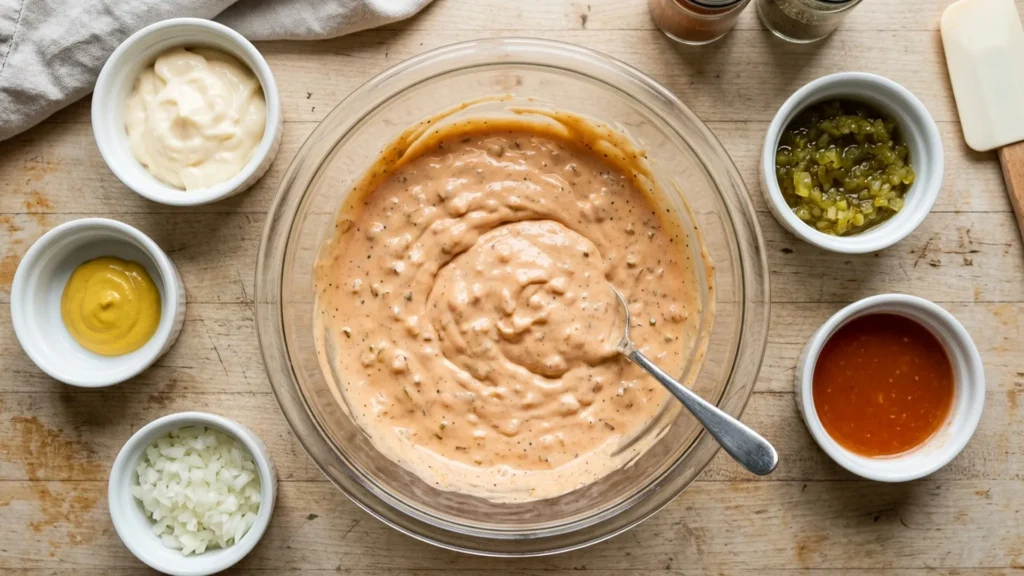
If you want to know how to make Big Mac sauce, here is the honest truth up front: it is shockingly simple, it costs almost nothing, and the homemade version genuinely tastes like the real thing once you get two small details right. The whole sauce comes together in about five minutes with ingredients you probably already have. No cooking, no special equipment, just a bowl and a whisk. The reason most homemade attempts fall a little flat is not a missing secret ingredient; it is technique, and this guide shows exactly where people go wrong so yours nails it on the first try.
The famous burger special sauce is one of the most satisfying to crack because the magic is in balance, not complexity. Get the ratio of creamy to tangy to sweet right, treat the onion correctly, and let it rest, and you will have a sauce that disappears into a burger exactly the way it is supposed to. Here are the recipe, the reasoning, every variation, and the storage facts the quick recipe blogs tend to skip.
What Big Mac Sauce Actually Is
First, the most common myth: Big Mac sauce is not Thousand Island dressing. People assume it is because both are creamy, pinkish, and pickly, but they are built differently. The signature burger sauce skips ketchup almost entirely and gets its tang from mustard instead, while Thousand Island dressing leans on a tomato base. That single swap, mustard for ketchup, is the biggest reason a lot of copycats taste too sweet and too red. The real thing is mellower, tangier, and more savory.
At its core, this is a mayonnaise-based emulsion seasoned to a precise balance. The richness comes from mayonnaise, the tang from yellow mustard and pickle, the sweetness from relish, and the savory depth from onion, garlic, and paprika. Understanding it as a seasoned mayo rather than a “secret formula” makes it far easier to adjust to your taste.
The Ingredients
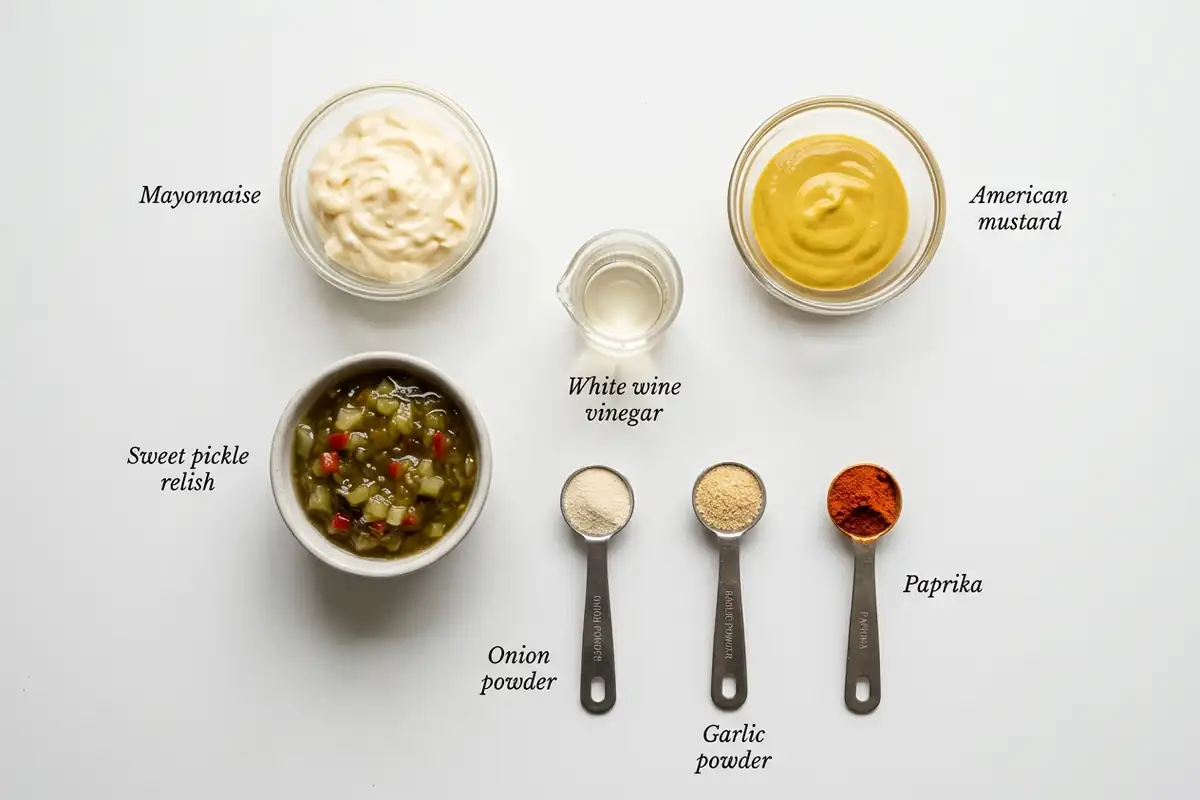
Here is the lineup that gets you closest to the original. These measurements make roughly two-thirds of a cup, enough for several burgers.
| Ingredient | Amount | What it does |
|---|---|---|
| Mayonnaise | 1/2 cup | Creamy base and body |
| Sweet pickle relish | 2 tablespoons | Sweetness and texture |
| Yellow mustard | 2 teaspoons | Tang and acidity |
| Grated yellow onion (with juices) | 1 tablespoon | Savory backbone |
| White vinegar | 1/2 teaspoon | Brightness, optional |
| Paprika | 1/2 teaspoon | Color and gentle warmth |
| Onion powder | 1/2 teaspoon | Depth |
| Garlic powder | 1/4 teaspoon | Roundness |
| Fine sea salt | 1/4 teaspoon | Seasoning |
A quick note on the relish question, because it splits people. The original sauce reads as having a sweet, dilled pickle character. Sweet pickle relish gets you there most directly. If you only have dill relish, use it and add a small pinch of sugar to compensate. The goal is a sweet-and-tangy pickle note, not a purely sour one.
The Method, Step by Step
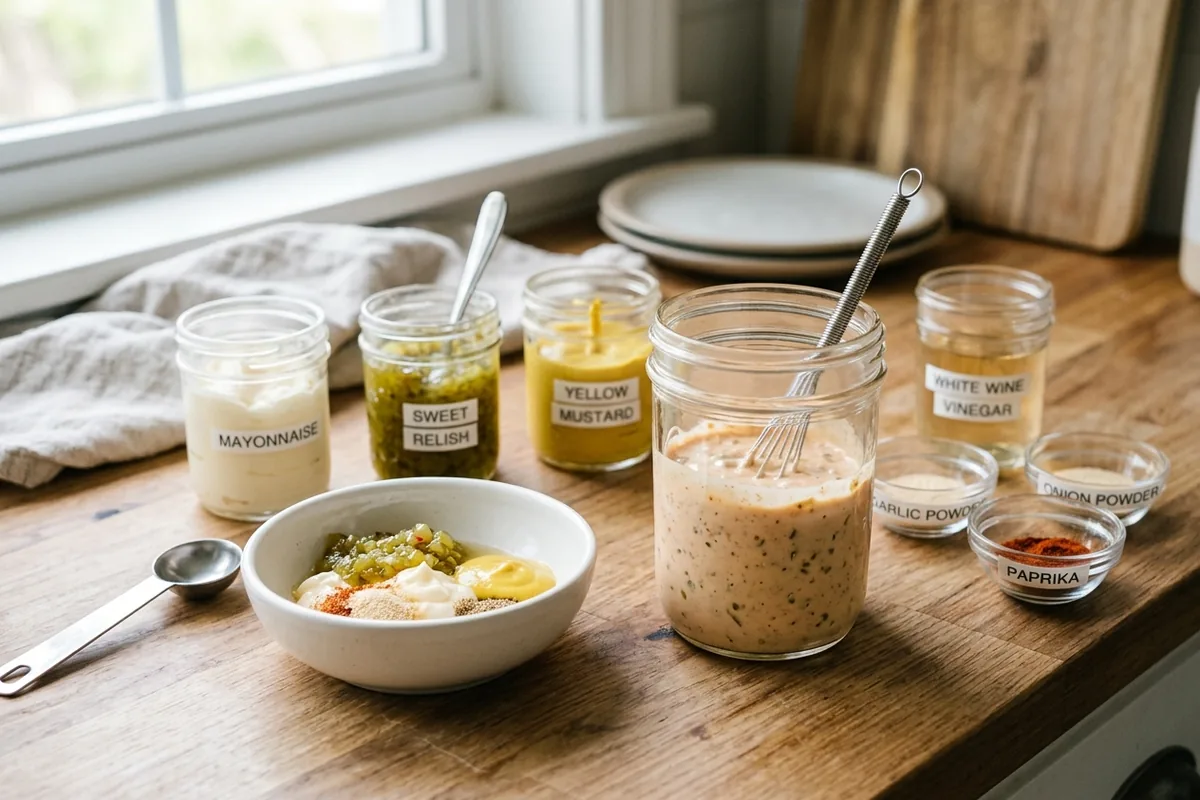
This is where the two details that make or break the sauce come in, so read past the obvious “mix everything” step.
Step one: grate the onion, do not chop it. This is the single most important technique in the whole recipe. Grating a yellow onion on the small holes of a box grater turns it into a pulp with juices, and that pulp melts into the sauce instead of giving you crunchy raw bits. Chopped onion makes the sauce taste like onion; grated onion makes the sauce taste savory and finished, with no one able to point to why. Save the juices that pool on the cutting board and add them too; that liquid is pure flavor.
Step two: combine everything in a bowl and whisk until smooth and uniform. That is genuinely all the assembly there is.
Step three, and do not skip it: cover and refrigerate for at least one hour, ideally two to four. Freshly mixed, the sauce tastes a little disjointed, with the mustard and onion standing apart from the mayo. Resting lets the flavors marry into one cohesive sauce, the same way many cold sauces and dressings improve overnight. This rest is the difference between “pretty good” and “that is exactly it.” The chemistry is simple: time lets the salt and acid distribute evenly and the raw onion mellow.
Dialing In the Flavor
Taste after the rest, not before, because cold sauce tastes different from room-temperature sauce and the flavors will have shifted. If it needs more tang, add vinegar or mustard a few drops at a time. If it is too sharp, a pinch more relish or sugar softens it. If it tastes flat, it almost always needs a touch more salt rather than more of anything else; salt is what makes the other flavors pop. Adjust gradually and re-taste, because this sauce tips out of balance quickly when you over-correct.
One pro habit: use a good mayonnaise. Because mayo is more than half the sauce, its quality sets the ceiling on the whole thing. A clean, neutral, full-fat mayo gives the best result. Avoid a sweet sandwich spread style mayo unless you specifically want a sweeter sauce, since it stacks sweetness on top of the relish.
Choosing the Right Pickle and Relish
Since pickle flavor is one of the defining notes of this sauce, it is worth spending a sentence or two on getting it right, because this is where homemade versions most often drift from the original. The target taste is a sweet-and-tangy dill character, not a flat sweetness and not a pure sourness. Sweet pickle relish hits that target most directly and is the recommended default. Dill relish leans more sour and herbal, so if you use it, balance it with a small pinch of sugar to restore the sweetness the original has. Bread-and-butter pickle relish is sweeter still and can work if you cut back elsewhere.
Avoid anything labeled “hamburger relish” that is mostly tomato and corn syrup, because it pushes the sauce toward ketchup territory and muddies the clean mustard tang. If you only have whole pickles, simply mince them very finely and add a splash of their brine for the missing acidity. The texture matters too: you want small, even flecks that distribute through the sauce, not big chunks, so that every bite carries the pickle note evenly. Getting the relish right is a quiet detail that separates a convincing copycat from one that is merely close.
Variations Worth Trying
Once you have the base down, it is easy to riff. For a spicy version, add a teaspoon of your favorite hot sauce or a pinch of cayenne. For a smoky take, swap regular paprika for smoked paprika. For a tangier, more “secret sauce” profile, add a teaspoon of ketchup, which nudges it slightly toward Thousand Island territory (some people prefer this). For extra texture, fold in a tablespoon of finely minced dill pickle on top of the relish. And if you want a lighter sauce, replace part of the mayo with plain Greek yogurt, accepting that it will taste a little tangier and less rich.
This kind of seasoned-mayo logic underpins a whole family of creamy condiments. If you enjoy building these, the same balancing instincts carry straight over to the guide on how to make tartar sauce, which is mayo plus pickle and acid tuned in a different direction. And for a smoky, sweet companion on the same burger, a from-scratch homemade BBQ sauce rounds out the spread nicely.
How to Use It (Beyond the Burger)
The obvious home is a burger, and a homemade double cheeseburger with shredded lettuce, this sauce, and a sesame bun is a revelation. But the sauce is far too good to limit. Use it as a dip for fries, onion rings, or nuggets. Spread it on any sandwich or wrap that wants a creamy, tangy lift. Drizzle it over a chopped salad as a punchy dressing. It is also excellent with crispy chicken, the kind you would get from a tray of air fryer chicken, turning plain pieces into something that tastes like a fast-food treat. For a meatless burger night, it works just as well slathered on a hearty patty from the world of vegan burgers, where a great sauce does most of the flavor work.
The Science of Why It Tastes the Way It Does
It is worth understanding the flavor architecture, because once you get it you can fix any batch by ear instead of following a recipe blindly. A great burger sauce is a balance of four forces: fat, acid, sweet, and salt, with savory depth woven through. The mayonnaise supplies the fat, which carries flavor and gives the sauce its luxurious cling. The mustard and vinegar supply acid, which cuts the richness so the sauce tastes bright instead of heavy. The relish supplies sweetness, which rounds the sharp edges. And salt ties everything together and amplifies the rest.
When a sauce tastes wrong, it is almost always one of these four forces out of balance. Too flat means not enough salt or acid. Too sharp means too much mustard or vinegar relative to the sweet and fat. Too dull means it has not rested, so the elements have not yet integrated. The savory layer, from grated onion, onion powder, garlic powder, and paprika, is what gives the sauce its moreish, hard-to-place quality; it is the difference between a sauce that tastes like seasoned mayo and one that tastes like the real thing. Paprika in particular does double duty, lending both the warm orange color and a subtle sweet-smoky note.
This four-force framework is not unique to burger sauce. It is the same balance that governs nearly every cold creamy condiment, which is why learning it once pays off across your whole repertoire. Once you can taste a sauce and name which force is missing, you stop needing exact measurements and start cooking with judgment.
Scaling the Recipe for a Crowd
If you are feeding a group or doing a burger night, the recipe scales without drama because there is no cooking and no emulsion to break. Simply multiply every ingredient by the same factor: double it, triple it, quadruple it. The only thing to watch is the onion, because grating a large amount by hand is tedious; for big batches you can pulse a peeled onion in a food processor to a fine pulp and measure from there, keeping all the juices. Mix the larger batch in a bigger bowl and give it the same resting time; a bigger volume does not need longer to meld, an hour or two still does the job. Keep the ratios identical and the flavor stays identical, which is the beauty of a sauce that is assembled rather than cooked. Make only as much as you will use within a week, though, since the fresh-onion shelf life does not change with batch size.
Storage and Shelf Life
Here is the practical information most quick recipes leave out. Store the sauce in an airtight container in the refrigerator. Because it contains raw grated onion and fresh mayo, it keeps well for about five to seven days. It will not last as long as a commercial bottle, which is loaded with preservatives, so make it in the amounts you will use within a week. Do not leave it at room temperature for more than a couple of hours, and never freeze it; mayonnaise-based sauces split and turn grainy when thawed, ruining the texture. If you want sauce on hand for a crowd, the recipe doubles or triples cleanly, just keep the ratios identical and grate proportionally more onion.
Bottom Line
Making Big Mac sauce at home is genuinely a five-minute job, but the result lives or dies on two habits: grate the onion instead of chopping it, and let the sauce rest in the fridge before you judge it. Remember that it is mustard, not ketchup, that defines the flavor, so resist the urge to make it red and sweet. Nail the balance, give it an hour to come together, and you will have a sauce that tastes like the drive-thru original at a fraction of the cost, with no mystery ingredients at all.
Building the Perfect Copycat Burger Around the Sauce
The sauce is the star, but it earns its keep in context, so it helps to assemble the burger the way the original is built. The classic format is a thin patty rather than a thick one, because the sauce, pickles, onion, and lettuce are meant to be tasted in every bite alongside the beef, not buried under it. Use a soft sesame bun, since the gentle sweetness and the seeds are part of the experience. Shredded iceberg lettuce, not leaf lettuce, gives that signature cool crunch that the sauce clings to. Add a slice of mild cheese, a few thin dill pickle rounds, and a scatter of finely diced raw onion.
Then be generous but not reckless with the sauce, spreading it on both the bun and over the lettuce so it touches everything. The reason a homemade version often beats the drive-thru is freshness: your lettuce is crisper, your sauce was made today, and your patty is hot off the pan. Toast the bun lightly so it holds up to the sauce without going soggy. Assembled this way, the sauce does exactly what it was designed to do, tying beef, bun, and toppings into one familiar, very good bite. It is a small bit of staging, but it turns a good sauce into a genuinely convincing copycat burger.
Frequently Asked Questions
What is Big Mac sauce made of?
It is a mayonnaise base seasoned with sweet pickle relish, yellow mustard, grated onion, paprika, onion powder, garlic powder, salt, and an optional splash of white vinegar. Despite popular belief, it does not rely on ketchup; the tang comes from mustard and pickle, which is what gives it its distinctive savory, not-too-sweet flavor.
Is Big Mac sauce just Thousand Island dressing?
No. They look similar but are built differently. Thousand Island uses a ketchup or tomato base, while Big Mac sauce uses mustard for its tang and contains little or no ketchup. That swap makes the burger sauce less sweet, less red, and more savory than Thousand Island.
Why does my homemade Big Mac sauce taste off?
Two common reasons. First, chopped instead of grated onion leaves raw, crunchy bits and a sharp onion taste; grating it into a pulp fixes this. Second, not letting it rest. The sauce tastes disjointed right after mixing and needs at least an hour in the fridge for the flavors to marry. If it still tastes flat, add a little more salt rather than more of any other ingredient.
How long does homemade Big Mac sauce last?
About five to seven days in an airtight container in the refrigerator, since it contains fresh mayonnaise and raw grated onion. Keep it chilled, do not leave it out for more than a couple of hours, and do not freeze it, because mayonnaise-based sauces separate and turn grainy when thawed.