The best fish sauce substitute depends on what you need fish sauce to do in the dish, but for most cooking the quickest swap is soy sauce, and the closest in flavor is a mix of soy sauce with a mashed anchovy or a splash of Worcestershire. Fish sauce brings three things at once: salt, a deep fermented umami, and a faint funky-fishy note. Once you know which of those a recipe is leaning on, picking a replacement stops being guesswork. Below, the swaps are broken down by what they actually contribute, with exact ratios and a homemade mock fish sauce you can build from pantry staples in a couple of minutes.
Fish sauce is one of the most useful bottles in the kitchen and one of the easiest to run out of mid-recipe, which is why good stand-ins matter. The trick that nobody tells you is that no single swap copies fish sauce perfectly, but you almost never need it to. Match the property the dish is using, adjust the salt, and the result is usually indistinguishable on the plate.
Key takeaways:
- Fish sauce delivers salt, fermented umami, and a faint fishy funk; pick a swap by which one matters.
- Soy sauce is the easiest 1:1 fallback; soy plus a mashed anchovy is the closest in flavor.
- Worcestershire sauce is the sneaky best match because it already contains anchovies.
- For vegan cooking, mushrooms plus soy and a little seaweed rebuild the umami without fish.
- Most swaps are saltier or sweeter, so taste and adjust the rest of the dish.
What Fish Sauce Actually Does
Before you reach for a replacement, it helps to understand what you are replacing. Fish sauce is made from fish, usually anchovies, salted and fermented for months until the proteins break down into a thin, intensely savory amber liquid. That fermentation is the whole point. It generates glutamates, the same compounds that make Parmesan and soy sauce taste deep, which is why a single teaspoon of fish sauce can make a whole pot of curry taste rounder and more complete.
So fish sauce is doing three jobs in any recipe. First, it salts the dish, and it is very salty. Second, it adds a savory, mouth-filling umami that makes everything taste more like itself. Third, it contributes a faint funky, fishy aroma that is barely noticeable in the finished dish but adds a background complexity. The reason picking a substitute confuses people is that they try to match all three at once. You rarely need to. A stir-fry mostly wants the salt and umami. A Vietnamese dipping sauce wants all three, including that funk. A marinade wants the umami and a little salt. Identify the job and the choice gets easy.
This is also why the amount matters as much as the ingredient. Fish sauce is a seasoning, not a base, so most recipes use a teaspoon to a tablespoon, not a cup. That means even an imperfect swap, used in that small amount, disappears into the dish. You are seasoning, not flavoring the whole thing, which gives you a lot of room to improvise. The same logic runs through every good swap, including the ones in the SauceGrove guide to a substitute for soy sauce, where matching the function beats matching the label.
The Best Fish Sauce Substitutes, Ranked

Here is how the swaps rank, from the everyday fallback to the closest flavor match, with a working ratio for each. All of these assume you are replacing a small seasoning amount, a teaspoon to a tablespoon, which is the realistic case.
| Substitute | Ratio | Best for |
|---|---|---|
| Soy sauce | 1:1 | Everyday fallback, stir-fries |
| Soy sauce plus anchovy | 1:1 soy, 1 anchovy per Tbsp | Closest all-around match |
| Worcestershire sauce | 1:1, taste first | Marinades, savory braises |
| Oyster sauce | 1:1, thin with water | Stir-fries, glossy dishes |
| Coconut aminos plus salt | 1:1 plus a pinch of salt | Soy-free, gluten-free |
| Mushroom and soy blend | see homemade below | Vegan and vegetarian |
Soy sauce is the first swap to reach for because it is in every kitchen and it nails two of the three jobs: salt and umami. It misses the fishy funk, but in a stir-fry or fried rice nobody will notice. Use it one to one, then taste, because soy and fish sauce are similarly salty but not identical, so a small adjustment may be needed. If you have light or regular soy sauce, that is what you want here, not the thick dark sweet kind.
Soy sauce plus a mashed anchovy is the pick when you want the closest thing to real fish sauce. The anchovy supplies exactly the salty, fishy fermented note that plain soy lacks, so the two together cover all three jobs. Mash one oil-packed anchovy fillet into the pan or into a tablespoon of soy sauce and it melts away, leaving only the savory depth behind. This is the swap that fools people, and it costs you nothing but a minute.
Worcestershire sauce deserves more credit than it gets, because it is genuinely close. It is built on fermented anchovies and tamarind, which means it already has the salty, fishy, tangy profile fish sauce brings, just with a little more sweetness and spice. Use it one to one but taste as you go, since it is bolder and the extra sweetness can show up if you pour too much. It shines in marinades and braises where its complexity is a feature. If you want to understand its makeup before you swap, the SauceGrove rundown on a oyster sauce substitute walks through the same family of dark, savory bottles and how they trade places.
Substitutes for Specific Dishes
The flat lists you find online skip the part that actually matters, which is that the right swap changes with the dish. A Thai curry, a Vietnamese dipping sauce, and a quick stir-fry all use fish sauce differently, and matching that use is how you avoid a result that tastes off. Here is how to choose by recipe type.
For a Thai or Southeast Asian curry or soup, you want salt and umami more than funk, so soy sauce or soy plus an anchovy works beautifully, and the long simmer blends everything. For a Vietnamese dipping sauce, the kind built around fish sauce, lime, sugar, and chili, the fishy funk is part of the flavor you are after, so this is the one case where Worcestershire or soy-plus-anchovy really earns its place over plain soy, because you actually want that fermented depth front and center.
For a stir-fry, almost anything works because the high heat and other aromatics carry the dish, so reach for whatever is closest at hand, usually soy or oyster sauce. For a marinade, Worcestershire and oyster sauce both shine because their body clings to the meat and their sweetness helps with browning. And for a salad dressing or a fresh sauce where the fish sauce is raw and prominent, spend the extra effort on the soy-plus-anchovy or a proper vegan version below, because there is nothing to cook off and hide a weak swap. Pairing the right savory swap with the right dish is the same instinct that drives a good batch of pasta sauces, where the seasoning has to match the build.
Vegan and Vegetarian Fish Sauce Substitutes
If you do not eat fish, the good news is that the umami fish sauce brings can be rebuilt entirely from plants, because the flavor comes from glutamates, not from fish specifically. The two workhorses are mushrooms and seaweed. Dried shiitake mushrooms, soaked or simmered, release a deep savory liquid that is one of the most fish-sauce-like plant flavors there is. Seaweed, especially kombu or nori, adds the briny, slightly oceanic note that stands in for the fishiness without any fish.
The simplest vegan swap is a good soy sauce or tamari with a pinch of extra salt, which covers salt and umami. To get closer, simmer soy sauce with a little dried mushroom and a small piece of seaweed for a few minutes, then strain. That gives you a homemade vegan fish sauce with real depth. Miso whisked into a dish is another strong move, since it brings fermented savory body, though it is thicker and you will want to thin it. The point is that plant umami is abundant once you know where to find it, so a vegan kitchen never has to feel short-changed on depth.
For everyday convenience, coconut aminos deserve a mention here too, since they are soy-free, gluten-free, and vegan. They are milder and a touch sweet, so use them one to one and add a pinch of salt to make up for their lower sodium. They will not deliver the funk, but for a weeknight stir-fry or a quick sauce they do the salty-savory job cleanly, which is often all you need.
How to Make a Homemade Mock Fish Sauce
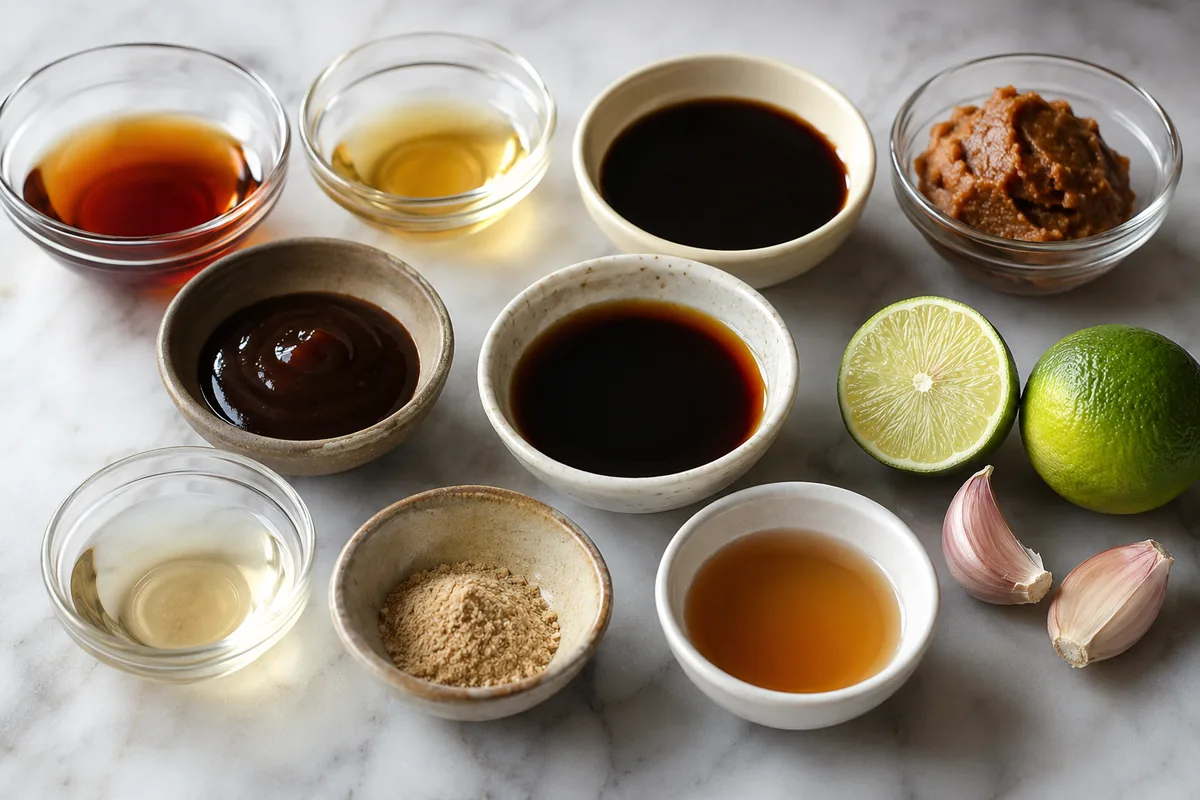
For a stand-in that genuinely tastes like fish sauce, a quick mock version takes about five minutes. The base formula is simple and scalable. Mix 3 tablespoons soy sauce, 1 mashed oil-packed anchovy or 1 teaspoon of a dried-mushroom-and-seaweed brew for a vegan version, 1 teaspoon rice vinegar, and a small splash of water to thin. Warm it gently for a minute to let the anchovy or mushroom dissolve, then taste and adjust.
That ratio hits all three of fish sauce’s jobs: the soy brings salt and umami, the anchovy or mushroom-seaweed brings the fishy fermented funk, and the vinegar adds the faint tang real fish sauce carries. It is not identical to a aged bottle of Red Boat, which gets its depth from months of fermentation, but it is close enough that it disappears into curries, dressings, and dipping sauces without anyone the wiser. The vinegar is the detail most people forget; without it the mix tastes flat and one-note, and a quarter teaspoon brings it to life.
The beauty of making your own is control. You decide the salt level, you decide whether it leans fishy or stays vegan, and you can scale it to exactly the tablespoon a recipe calls for instead of buying a whole bottle for one dish. If you keep oil-packed anchovies and soy sauce on hand, you effectively never run out of fish sauce again, which is a small but real win for anyone who cooks Southeast Asian food often.
Mistakes to Avoid When Swapping
The single most common mistake is ignoring salt. Fish sauce is intensely salty, and so are most of its swaps, but not equally. Soy sauce is in the same ballpark, coconut aminos are noticeably less salty, and Worcestershire sits a little lower with added sweetness. Whenever you substitute, taste the dish before you add any other salt, because it is far easier to add salt than to fix an over-salted pot. This one habit prevents most swap failures.
The second mistake is pouring too much because the swap seems weaker. Coconut aminos and some homemade versions are milder, and the instinct is to double the amount to compensate. Resist it. Adding more of a sweet or thin swap throws off the dish’s balance and sweetness instead of fixing the umami. If a swap tastes weak, reach for a pinch of salt or a tiny bit of miso or anchovy to deepen it, rather than just adding volume.
The third mistake is using the wrong soy sauce. A thick, sweet dark soy or a sweetened sauce will not behave like fish sauce; you want a standard salty soy or tamari. And if the recipe is one where fish sauce is raw and prominent, like a fresh dipping sauce, do not settle for a lazy swap, because there is no cooking step to blend it. Match the effort to how exposed the substitute will be, and you will rarely be disappointed. Outlets like Serious Eats have written at length about how fermentation builds these savory flavors, and that background is exactly why a thoughtful swap, not just any salty liquid, gets you there. America’s Test Kitchen has run similar taste tests on umami seasonings that back up the same conclusion.
The Bottom Line on Fish Sauce Substitutes
You almost never need to abandon a recipe just because the fish sauce bottle is empty. Decide what the recipe is using fish sauce for, salt and umami in a stir-fry, the full fishy depth in a dipping sauce, and pick the swap that covers that job. Soy sauce is the easy fallback, soy plus a mashed anchovy is the closest, Worcestershire is the sleeper hit, and a quick homemade mock version gives you the real thing in five minutes. For vegan cooks, mushrooms, seaweed, and soy rebuild the depth without any fish at all. Taste as you go, mind the salt, and the substitute will vanish into the dish, which is exactly what a good seasoning should do.
Frequently Asked Questions
What is the best fish sauce substitute?
The best all-around fish sauce substitute is soy sauce mixed with a mashed anchovy, because together they cover all three of fish sauce’s jobs: salt, fermented umami, and a faint fishy funk. For a quick one-ingredient swap, plain soy sauce works well in most cooked dishes, and Worcestershire sauce is the closest single bottle because it already contains anchovies.
Can I use soy sauce instead of fish sauce?
Yes. Soy sauce is the easiest fish sauce substitute and works at a one-to-one ratio in most recipes. It delivers the salt and umami fish sauce provides but misses the fishy funk, which rarely matters in a stir-fry, fried rice, or soup. For a closer match, mash one oil-packed anchovy into a tablespoon of soy sauce.
What is a vegan substitute for fish sauce?
For a vegan fish sauce substitute, use soy sauce or tamari with a pinch of salt for a simple swap, or simmer soy sauce with dried shiitake mushrooms and a small piece of kombu or nori seaweed, then strain. The mushrooms and seaweed rebuild the savory, slightly oceanic depth without any fish. Coconut aminos also work for a milder, soy-free option.
Is Worcestershire sauce a good substitute for fish sauce?
Yes, Worcestershire sauce is one of the closest substitutes because it is made with fermented anchovies and tamarind, giving it a salty, fishy, tangy profile much like fish sauce. It is a little sweeter and spicier, so use it one to one but taste as you go. It works especially well in marinades and braises.
How much fish sauce substitute should I use?
Match the amount of fish sauce the recipe calls for, usually a teaspoon to a tablespoon, since fish sauce is a seasoning, not a base. Use most swaps at a one-to-one ratio, then taste before adding any other salt. Milder swaps like coconut aminos may need a pinch of salt, but avoid simply doubling the amount.
Can I make fish sauce at home?
You can make a quick mock fish sauce in about five minutes by warming 3 tablespoons soy sauce with 1 mashed anchovy (or a dried mushroom and seaweed brew for vegan), 1 teaspoon rice vinegar, and a splash of water. It will not match a months-aged bottle, but it disappears into curries, dressings, and dipping sauces convincingly.
What can I use instead of fish sauce in a dipping sauce?
In a raw dipping sauce where fish sauce is prominent, use soy sauce plus a mashed anchovy or Worcestershire sauce, since you want the fishy fermented depth front and center and there is no cooking step to hide a weak swap. For a vegan dipping sauce, a mushroom and seaweed soy brew with a little lime and chili works well.