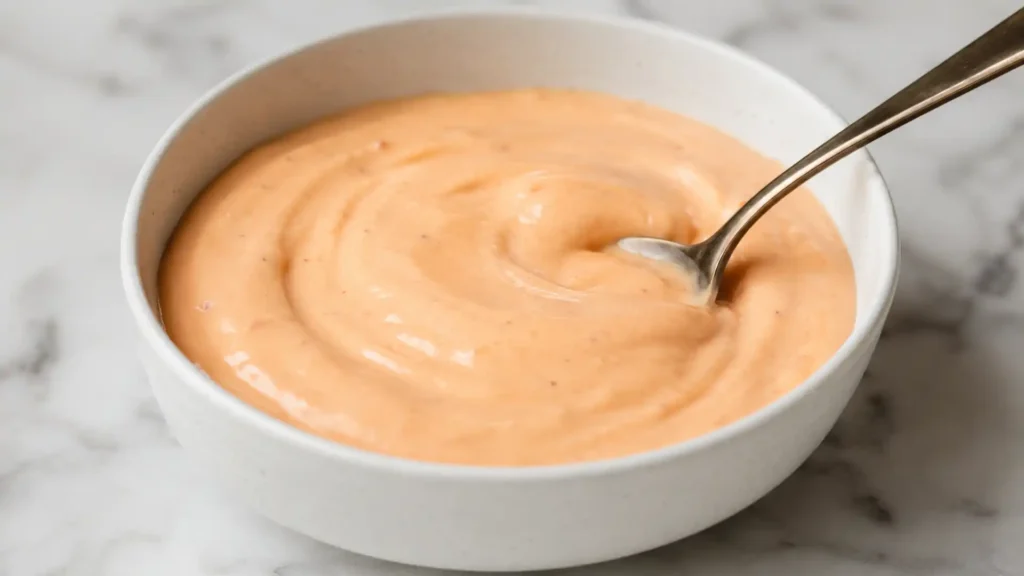
How to make yum yum sauce comes down to one bowl and five minutes: whisk together 1 cup of mayonnaise, 1 tablespoon of ketchup, 1 tablespoon of melted and cooled butter, 1 teaspoon of rice vinegar, 1 teaspoon of sugar, half a teaspoon each of garlic powder and paprika, and a tablespoon or two of water to thin it to a pourable, spoon-coating texture. Whisk it smooth, then, and this is the part most people rush, cover it and chill it for at least a few hours so the flavors hydrate and meld. That rest is the difference between a sharp, raw-tasting mix and the smooth, mellow pink-orange sauce you get at a hibachi grill.
This guide from the SauceGrove Editorial Desk compiles the common ways to recreate the Japanese steakhouse version at home. The good news is it is genuinely a five-minute, no-cook recipe with pantry staples. The better news is that understanding why each ingredient is in there lets you tune it to taste exactly like your favorite restaurant’s, whether that is the sweet, pale kind or the tangier, peachier kind. Below is the full method, the why behind every ingredient, the two schools of yum yum sauce, and how to fix it when it comes out wrong.
Key takeaways:
- Yum yum sauce is a mayo-based sauce with ketchup, rice vinegar, sugar, garlic, and paprika.
- It takes 5 minutes to mix but needs a few hours chilling to taste right.
- Resting lets the flavors hydrate and mellow, which is why it tastes better the next day.
- Thin it with water a teaspoon at a time to reach a pourable, spoon-coating consistency.
- Despite the hibachi association, it is an American steakhouse creation, not traditional Japanese.
What Is Yum Yum Sauce
Yum yum sauce is the creamy, pale pink-orange sauce served at Japanese steakhouses and hibachi grills, drizzled over fried rice, grilled shrimp, chicken, and vegetables. Despite the Japanese-restaurant setting, it is not a traditional Japanese sauce at all. It is an American invention that grew up alongside the teppanyaki dinner-and-a-show format that took off in the United States, and you will not find it in Japan by that name. It also goes by sakura sauce, shrimp sauce, or simply white sauce on some menus.
At its heart it is a seasoned mayonnaise. Mayo gives it the rich, creamy body; everything else is there to season and color that base. The flavor is mild, savory, faintly sweet, and tangy, designed to complement grilled food without overpowering it. That mildness is the point: it is a dipping and drizzling sauce meant to make everything on the plate a little better, not to be the star. Knowing it is fundamentally seasoned mayo demystifies the whole thing, because it means you are not cooking, you are balancing.
Because it is so simple, the quality of your mayonnaise matters more than anything else. A full-fat, good-tasting mayo gives you a silky sauce; a low-fat or harsh-tasting one gives you a thin, sour one. Many cooks swear by Kewpie, the Japanese mayo made with only egg yolks and a touch of MSG, which adds a rounder, more savory umami note than standard American mayo. Either works, but if you want the most restaurant-accurate result, Kewpie is the upgrade that matters. Like any cold, emulsion-based sauce, it lives or dies on its base, the same way a good homemade tartar sauce does.
Ingredients and Why Each One Matters
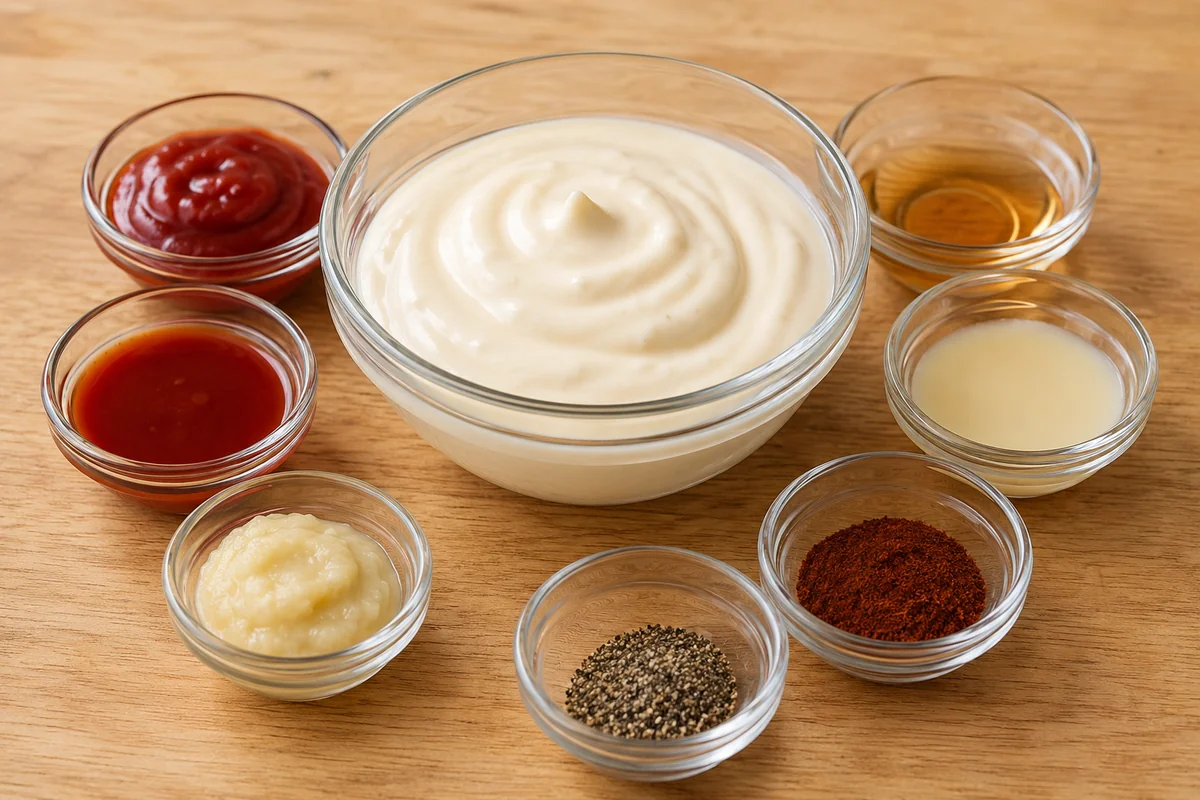
Every ingredient in yum yum sauce earns its place, and once you know what each does, you can adjust the recipe with confidence instead of guessing. Here is the breakdown.
| Ingredient | What it does |
|---|---|
| Mayonnaise | The creamy base and body of the whole sauce |
| Ketchup or tomato paste | Color and a touch of sweet-tangy depth |
| Melted butter | Richness and a smooth, restaurant-style mouthfeel |
| Rice vinegar | The signature gentle tang that brightens it |
| Sugar | Balances the acid and rounds the flavor |
| Garlic powder | Savory background depth |
| Paprika | Warm color and a faint sweet-smoky note |
| Water | Thins it to a pourable, drizzling consistency |
Mayonnaise is the foundation and the largest ingredient by far, so it sets the character of the sauce. The ketchup does double duty, lending the trademark pale-pink color and a little sweet-tangy tomato note, though as you will see, the more authentic versions skip ketchup for tomato paste and sugar to get a cleaner color. Melted butter is the ingredient home cooks most often leave out, and it is a mistake, because it adds the rich, almost glossy mouthfeel that separates restaurant yum yum from a bowl of seasoned mayo. Just be sure to cool the melted butter before mixing, or its heat can break the mayonnaise.
Rice vinegar is the flavor that makes it taste like yum yum sauce specifically rather than generic pink mayo. Its gentle, slightly sweet acidity is milder than white vinegar or lemon, and it is worth using the real thing rather than substituting. Sugar balances that acid and rounds everything out; without it the sauce can taste sharp. Garlic powder, not fresh garlic, gives a smooth savory background that dissolves evenly, and paprika delivers the warm color and faint smoky-sweet undertone. The water is purely for texture, letting you take a thick, mayo-like paste down to the loose, drizzling consistency you want.
How to Make Yum Yum Sauce, Step by Step
The method could not be simpler, which is why this is such a satisfying sauce to make at home. There is no cooking and no special equipment, just a bowl and a whisk.
Start by melting the butter and setting it aside to cool for a few minutes; this matters because hot butter dropped into mayonnaise can cause it to separate. While it cools, add the mayonnaise to a medium bowl. Once the butter is just warm, not hot, whisk it into the mayo along with the ketchup, rice vinegar, sugar, garlic powder, and paprika. Whisk until the sauce is completely smooth and an even pale orange-pink throughout.
Now adjust the consistency. The sauce will be thick at this stage, closer to a spread than a drizzle. Add water one teaspoon at a time, whisking after each addition, until it reaches a pourable texture that coats the back of a spoon but still drips off it slowly. For most batches this takes one to two tablespoons of water total. Add the water gradually, because it is easy to overshoot and end up with a thin, watery sauce that you then have to thicken back up with more mayo.
The final and most important step is to cover the bowl and refrigerate the sauce for at least a couple of hours, and ideally overnight. This rest is not optional if you want the real flavor. Straight out of the bowl, the sauce tastes raw and a little sharp because the dry seasonings have not yet hydrated and the flavors have not had time to marry. After a few hours in the fridge, the garlic powder and paprika bloom, the acid mellows, and the whole thing turns smooth and rounded. It genuinely tastes better the next day, so if you can, make it ahead.
The Two Schools of Yum Yum Sauce
If you have tried to copy a specific restaurant’s yum yum sauce and could not quite match it, the reason is that there are two different styles, and recipes online mix them up. Knowing which one you are chasing is the key to getting it right.
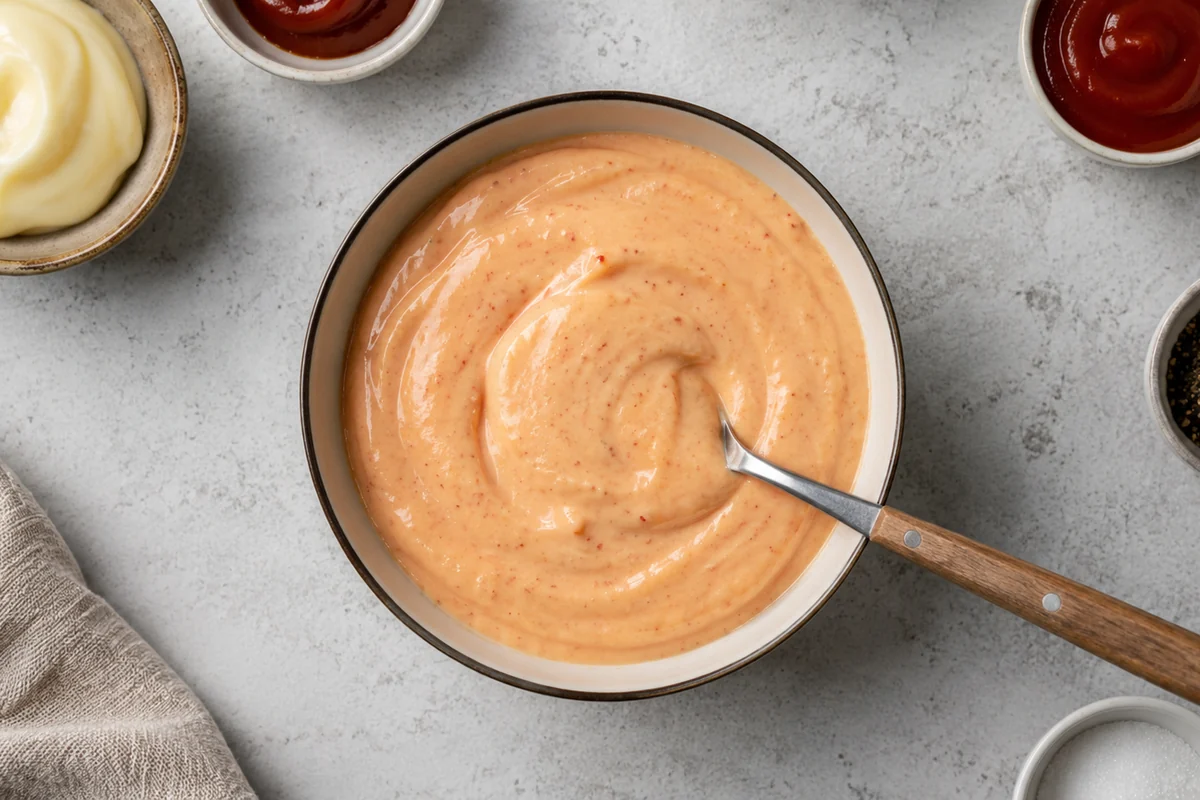
The first and most common home-recipe style uses ketchup. This gives a slightly pinker color and a more pronounced sweet-tangy tomato flavor. It is quick, it uses ingredients everyone has, and it is the version most blogs publish. If your local hibachi sauce tastes a bit sweet and tomato-forward, this is your match. The second style, which many people consider more authentic to the original steakhouse sauce, skips ketchup entirely and instead uses tomato paste plus a little extra sugar and water. This produces a paler, more peach-colored sauce with a cleaner, less tomato-y taste, leaning more on the savory mayo and paprika. If your favorite restaurant’s sauce is pale and mellow rather than pink and tangy, build it this way.
You can move between the two freely once you understand the lever: ketchup adds sweetness, tang, and pink color all at once, while tomato paste adds color and body without the vinegar-sugar tang, letting you control those separately. The tomato-paste version suits restaurant accuracy, and the ketchup version suits something fast for the family. Neither is wrong; they are two valid takes on an American original. That kind of build-it-your-way thinking is the same approach behind a good homemade teriyaki sauce, where small ratio changes shift the whole character.
How to Fix Yum Yum Sauce That Tastes Off
Because it is all about balance, yum yum sauce is easy to nudge back into line when it comes out wrong. Here are the most useful fixes.
- Too sharp or sour: add a pinch more sugar and a little more mayo to soften the acid.
- Too sweet or flat: add a few drops more rice vinegar and a tiny pinch of salt to wake it up.
- Too thick: whisk in water a teaspoon at a time until it pours.
- Too thin: whisk in a spoonful more mayonnaise to rebuild the body.
- Tastes raw or harsh: it probably has not rested; give it a few more hours in the fridge.
The most common complaint is a sauce that tastes raw and harsh, and nine times out of ten the fix is simply patience: it has not chilled long enough. The dry garlic and paprika need time in the wet base to hydrate and release their flavor smoothly, and rushing it leaves you with a bowl that tastes like its separate parts rather than one sauce. If you have waited and it still tastes harsh, you likely have too much garlic powder, so make a second small batch without it and blend the two.
The other frequent issue is color and flavor not matching the restaurant. If it is too pink and tomato-forward, you used too much ketchup; switch toward the tomato-paste method. If it is too pale and bland, add a touch more paprika for color and a little ketchup or tomato paste for depth. Treat each adjustment as a small step, taste after every change, and you will dial it in. The whole sauce is forgiving precisely because nothing is cooked, so there is no point of no return.
What to Serve With Yum Yum Sauce
Yum yum sauce is far more versatile than its hibachi origins suggest, and once you have a batch in the fridge you will find uses for it all week. The classic pairings are the obvious place to start: drizzle it over fried rice, grilled shrimp, chicken, steak, or hibachi vegetables, exactly as the steakhouse does. It is also a natural dip for tempura, dumplings, spring rolls, and fries.
Beyond the Japanese-steakhouse plate, it works as a sandwich and burger spread, a sauce for grain bowls, a dip for raw vegetables, and a drizzle for roasted potatoes or salmon. Because it is mild and creamy, it plays nicely with almost any savory grilled or fried food, adding richness and a gentle tang without clashing. A jar in the fridge during grilling season gets used constantly. The sauce’s origins are genuinely murky, and even the cooks who popularized it disagree on the exact recipe, which is freeing: there is no single correct yum yum sauce, only the one you like best. For more ideas on the hibachi-sauce family, Food Network rounds up several takes, and for the science of building creamy condiments from a mayo base, sites like Serious Eats have deep archives on emulsion sauces worth a read.
Storing Homemade Yum Yum Sauce
Homemade yum yum sauce keeps well in an airtight container in the refrigerator for about five to seven days. Because it is mayonnaise-based, it must stay chilled and should not sit out at room temperature for long, especially in summer. Give it a quick stir before each use, as a little separation over a few days is normal and whisks right back together.
Freezing it is not recommended, because mayonnaise-based sauces break and turn grainy when thawed, and the texture never fully recovers. The good news is that a batch comes together so fast that there is little reason to freeze it; just make what you will use within the week. If anything, make it a day ahead on purpose, since the flavor peaks after that first overnight rest and holds beautifully for several days after. A small batch, made fresh and chilled overnight, is yum yum sauce at its best.
Frequently Asked Questions
What is yum yum sauce made of?
Yum yum sauce is made of mayonnaise as the base, plus ketchup or tomato paste for color, melted butter for richness, rice vinegar for tang, sugar to balance, and garlic powder and paprika for flavor and color. A little water thins it to a drizzling consistency. It is essentially a seasoned, mildly sweet and tangy mayonnaise.
How do you make yum yum sauce from scratch?
Whisk 1 cup mayonnaise with 1 tablespoon ketchup, 1 tablespoon cooled melted butter, 1 teaspoon rice vinegar, 1 teaspoon sugar, and half a teaspoon each of garlic powder and paprika until smooth. Thin with water a teaspoon at a time until pourable, then chill it for at least a few hours so the flavors meld before serving.
Why does my yum yum sauce taste sharp or raw?
It most likely has not rested long enough. The dry garlic powder and paprika need a few hours in the refrigerator to hydrate and mellow, so freshly mixed sauce tastes harsh and disjointed. Chill it for at least two hours, ideally overnight, and it will taste smooth and rounded. If it is still sharp, add a pinch of sugar and a little more mayo.
Is yum yum sauce Japanese?
No, despite being served at Japanese steakhouses and hibachi grills, yum yum sauce is an American creation that developed alongside the teppanyaki dinner format in the United States. You will not find it in Japan under that name. It is sometimes called sakura sauce, shrimp sauce, or white sauce on American menus.
How long does homemade yum yum sauce last?
Stored in an airtight container in the refrigerator, homemade yum yum sauce lasts about five to seven days. Because it is mayonnaise-based, keep it chilled and do not leave it at room temperature for long. Stir before each use, since slight separation is normal. Avoid freezing it, as mayo-based sauces turn grainy when thawed.
Can I make yum yum sauce without ketchup?
Yes, and many consider it more authentic. Replace the ketchup with about a teaspoon of tomato paste plus a little extra sugar and water. This gives a paler, more peach-colored sauce with a cleaner, less tomato-forward taste that leans on the mayo and paprika, closer to the original steakhouse style than the pinker ketchup version.
What can I serve with yum yum sauce?
Yum yum sauce is great drizzled over fried rice, grilled shrimp, chicken, steak, and hibachi vegetables, and as a dip for tempura, dumplings, spring rolls, and fries. Beyond hibachi food it works as a burger or sandwich spread, a grain-bowl sauce, and a dip for raw vegetables, since its mild creaminess suits almost any savory food.