Is hot sauce good for you? For most people, yes, in moderation. A teaspoon or two adds big flavor for almost no calories, and the capsaicin that makes chiles burn has been linked in large studies to a lower risk of heart disease and a modest metabolism bump. The catch is sodium and your own stomach: if you have acid reflux, ulcers, or a salt-restricted diet, the heat and the salt can work against you. So the honest answer is that hot sauce is a smart, low-calorie way to season food, as long as you treat it as a seasoning and not a beverage.
Hot sauce is one of the quickest ways to wake up a flat dish. So here is the food-first version of this question, the part the supplement-style blogs skip: what is actually in the bottle, who genuinely benefits, who should ease off, and how to get the upside without the salt overload.
What Capsaicin Actually Does
The active compound is capsaicin, the thing that triggers the heat receptors on your tongue, and its concentration is what the Scoville scale measures, from a mild poblano up through cayenne, jalapeno, habanero, and the ghost pepper at the far end. It does more than burn. Capsaicin binds to a receptor called TRPV1, and a stack of population studies has tied regular chile eating to real outcomes. One large analysis the American Heart Association highlighted found people who ate chili peppers regularly had roughly a 26 percent lower risk of dying from cardiovascular disease. Other work points to a modest metabolism effect, on the order of 50 to 100 extra calories burned a day, plus a tendency to feel full sooner, which can curb snacking.
None of that makes hot sauce a health supplement. The effects are modest and they come from a pattern of eating chiles, not from one fiery wing night. But as a flavor tool that happens to carry a small upside, hot sauce earns its place. It also brings trace vitamins A and C from the peppers themselves. The practical takeaway is simple: a regular splash of hot sauce is a low-cost, low-calorie habit with a mild health tailwind, not a medicine.
There is a satiety angle worth dwelling on because it is the most practical benefit for everyday eating. Capsaicin nudges your body to feel full a little sooner, and a sharp, spicy flavor slows down how fast you eat. When food is interesting and a touch fiery, you take smaller bites and pause more. That behavioral effect, eating slower and stopping sooner, probably does more for most people than the calorie burn ever will. A bowl of plain rice and beans tends to disappear in a hurry, but the same bowl with a good hot sauce gets eaten more slowly, and less can feel satisfying.
A word on the longevity studies people love to cite. Some large population studies have found that frequent spicy-food eaters show a lower risk of early death, in one case around 14 percent lower. Those are associations, not proof that the hot sauce itself did the work. People who eat a lot of chiles often eat more vegetables and whole foods generally, so the chile may be a marker of a broader pattern. Worth knowing, not worth overselling. The peppers are good company to keep, but they are not a magic bullet.
Is Hot Sauce Good for You? The Sodium Math
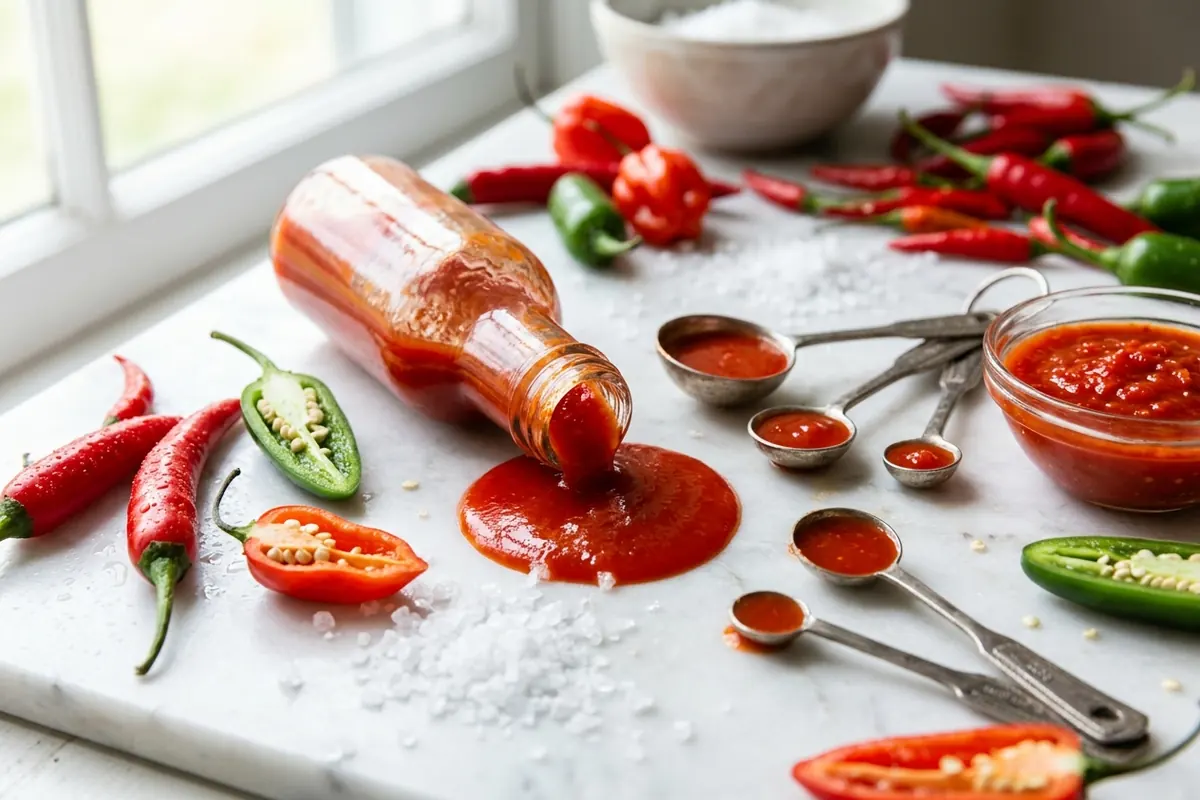
Here is the number that actually decides whether your hot sauce habit helps or hurts: sodium. Most hot sauces run about 30 to 80 milligrams of sodium per teaspoon, and some thicker or soy-based ones hit 120 milligrams or more. Set that against the general daily guideline of 2,300 milligrams of sodium, and the picture clears up fast.
Two teaspoons of a typical hot sauce is maybe 60 to 160 milligrams, a rounding error in your day. That is the moderate use that carries all the upside. The problem starts when hot sauce stops being a seasoning. Pour a quarter cup over a basket of wings and you can clear 1,000 milligrams in one sitting, which is nearly half your daily budget before you count the wings, the fries, and everything else. The heat masks the salt, so it is easy to overshoot without tasting it. My rule at home: dash, taste, dash again. You almost never need as much as you reach for.
Sugar is the other hidden line on the label, especially in sweet-heat and Asian-style sauces. Sweet chili sauce, some sriracha blends, and a lot of barbecue-adjacent hot sauces carry real sugar, sometimes several grams per tablespoon. If you are watching either salt or sugar, the fix is the same: read the label and notice serving size, because the numbers are usually printed per teaspoon, and nobody uses one flat teaspoon. Multiply by what you actually pour. A sauce that looks clean at 35 milligrams of sodium per teaspoon becomes a different story at four teaspoons.
Capsaicin content also varies wildly, and more heat does not mean more benefit in a way you can feel. A few drops of a fiery extract sauce and a generous spoon of a mild fermented sauce can deliver similar amounts of the compound; the extract just hurts more. So chasing the hottest bottle on the shelf for health reasons makes no sense. Pick the heat level you genuinely enjoy, because the sauce you actually use beats the trophy bottle gathering dust in the cabinet.
Fermented vs Vinegar Hot Sauce: They Are Not the Same
This is the distinction nobody making the health argument bothers to draw, and it matters for both flavor and your gut. Hot sauces split into two broad camps. Vinegar-forward sauces, the classic Louisiana-style bottles, are peppers and vinegar, sharp and bright and shelf-stable. Fermented sauces are made from a pepper mash left to ferment for weeks or months, which builds deep, rounded, almost savory flavor and, in unpasteurized versions, can carry live cultures similar to what you find in other fermented foods.
The fermentation here is lacto-fermentation, the same process behind sauerkraut and kimchi, where salt-tolerant bacteria convert sugars in the pepper mash into lactic acid. That acid preserves the sauce and builds the tangy, savory depth. The pepper you start with shapes the result: a Fresno or red jalapeno mash ferments into something rounded and mild-hot, a habanero or scotch bonnet mash turns fiery and fruity, and a chipotle, which is a smoked jalapeno, brings smoke into the picture. For pure eating pleasure, fermented wins; the flavor has layers a quick vinegar sauce cannot touch. For gut interest, a raw fermented hot sauce is the more compelling of the two, though most commercial bottles are heat-treated for shelf life, which kills the live cultures. If that is a draw for you, look for the words raw or unpasteurized and keep it refrigerated. If you mostly want a clean, sharp kick to cut through rich food, vinegar sauce does the job and lasts forever in the pantry. This mirrors how the SauceGrove guide to substitute for soy sauce treats fermentation: the long, slow build is where the deep flavor lives.
Who Should Go Easy on It
Hot sauce is friendly to most people, but not everyone, and the recipe-style health posts gloss over this. Use this as a quick gut check.
| If you have… | What to do |
|---|---|
| Frequent acid reflux or heartburn | Go light; capsaicin can relax the valve that holds acid down |
| IBS or a sensitive gut | Test small; spice can trigger flares for some people |
| A salt-restricted diet | Cap it near 1/2 to 1 teaspoon, or make a low-sodium sauce |
| A history of ulcers | Talk to your doctor before making it a daily thing |
This is general food guidance, not medical advice. If a food consistently makes you feel worse, that signal beats any study. For most healthy adults, none of these apply and a daily dash is completely fine.
How to Use Hot Sauce as a Cook, Not a Dare
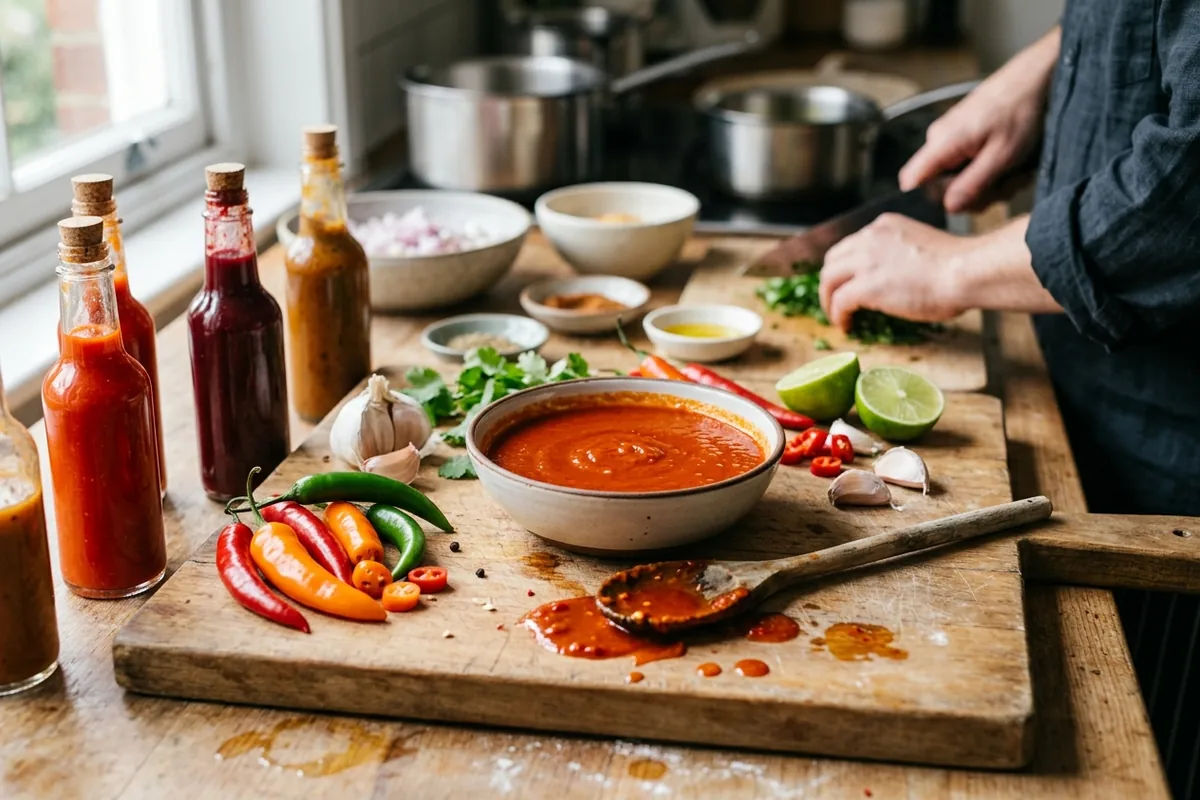
The biggest mistake is treating hot sauce as a heat contest instead of a seasoning. Heat for its own sake numbs your palate and buries the food. What hot sauce does best is add brightness, acidity, and a little funk that lifts everything around it. A few dashes in a pot of beans, a swirl into mayo for a sandwich, a hit in a salad dressing, a line across scrambled eggs. In each case the sauce is doing a seasoning job, balancing richness and adding lift, the same role acid plays in the SauceGrove notes on best meatball sauce where a splash of something sharp keeps a rich sauce from going flat.
The most reliable move: a dash of hot sauce at the very end of cooking, off the heat, so the vinegar stays bright and the flavor reads fresh. Cook it too long and the top notes fade into a dull background warmth. It also helps to keep a vinegar sauce and a fermented sauce side by side and pick by dish, sharp Louisiana-style for fried things, deep fermented for stews and eggs. That two-bottle habit covers almost everything.
Pairing matters as much as quantity. Hot sauce loves fat and richness because the heat cuts through it, which is why it works so well on eggs, fried chicken, tacos, and creamy dips. It also loves acid-friendly dishes, where its vinegar amplifies a squeeze of lime or a pickled garnish. Where it struggles is delicate food, a subtle fish, a light cream sauce, where the heat steamrolls the very thing you wanted to taste. Knowing when not to use it is half of using it well. Keep hot sauce away from anything meant to taste quiet, and reach for it on anything bold enough to take the punch.
Temperature and texture play a role too. A thin vinegar sauce disperses evenly and seasons a whole bowl with a few shakes, while a thick fermented paste sits where you put it and gives a concentrated hit. For a soup or a braise, the thin sauce works best so it melts in; for a taco or a sandwich, the thick one stays put and delivers heat right where you bite. Matching the body of the sauce to the dish is a small thing that makes a real difference.
Make Your Own to Control the Salt
If sodium is your concern, the cleanest fix is making your own. A basic vinegar hot sauce is just fresh or dried chiles, vinegar, garlic, and salt, simmered and blended, and you control exactly how much salt goes in. You can cut the sodium well below a store bottle and still get plenty of flavor from the peppers, garlic, and a squeeze of lime. A fermented version takes longer, a week or two of the mash bubbling away under brine, but it rewards you with a flavor depth no quick sauce matches. Bon Appetit has a reliable fermented hot sauce method if you want to try the longer route, and America’s Test Kitchen covers the quick vinegar style in their condiment archive.
One more reason to make it: you skip the gums, stabilizers, and excess salt that pad out cheap commercial sauces. The flavor is cleaner and brighter, and you can dial the heat to where you actually enjoy it rather than where a brand decided it should be. For more cross-kitchen ideas to put your sauce to work, pastapeak.com keeps a deep run of chicken pasta dishes that take a final dash of heat beautifully.
A practical low-sodium recipe to start from: simmer 8 to 10 dried chiles, 3 cloves of garlic, a cup of water, and half a cup of vinegar for about 15 minutes, then blend and add salt a quarter teaspoon at a time until it tastes balanced. You will usually land far below a store bottle on salt while getting more chile flavor, because the peppers are doing the heavy lifting instead of sodium. Strain it for a smooth sauce or leave it rustic. It keeps in the fridge for weeks thanks to the vinegar, and the flavor actually improves over the first few days as it settles.
So, Should You Eat Hot Sauce?
Pull it all together and the answer is steady. For the large majority of people, hot sauce is a genuinely good thing to have in the rotation: nearly calorie-free, flavor-packed, and carrying a mild capsaicin upside when eaten regularly in normal amounts. Treat it as the seasoning it is, keep an eye on sodium and sugar on the label, and lean toward simpler sauces with short ingredient lists. If your stomach or your blood pressure gives you reasons to be careful, listen to that over any headline about chiles and longevity.
My own bottom line, after years of cooking with the stuff: hot sauce is one of the highest-flavor, lowest-cost upgrades you can make to everyday food. It turns plain into interesting, and interesting food is food you slow down and enjoy. That alone is worth the shelf space, health footnotes aside.
Frequently Asked Questions
Is hot sauce good for you every day?
For most healthy adults, a daily teaspoon or two of hot sauce is fine and may carry a small upside from capsaicin, like a modest metabolism effect and links to better heart health. The main thing to watch is sodium, so keep portions to a seasoning amount rather than dousing your plate.
Does hot sauce help you lose weight?
Only modestly. Capsaicin can raise calorie burn by roughly 50 to 100 calories a day and may help you feel full sooner, which can reduce snacking. It is a small helper, not a weight-loss tool on its own, and it works best as part of an overall balanced diet.
Is hot sauce bad for your stomach?
For most people, no. But if you have frequent acid reflux, ulcers, or a sensitive gut, capsaicin can aggravate symptoms because it can relax the valve that keeps stomach acid down. If hot sauce consistently makes you feel worse, scale back and pay attention to that signal.
How much sodium is in hot sauce?
Most hot sauces contain about 30 to 80 milligrams of sodium per teaspoon, with some thicker or soy-based sauces reaching 120 milligrams or more. Two teaspoons is trivial against a 2,300 milligram daily guideline, but pouring a quarter cup over a meal can add up fast.
Is fermented hot sauce healthier than vinegar hot sauce?
Raw, unpasteurized fermented hot sauce can carry live cultures similar to other fermented foods, which gives it a slight gut-health edge and a deeper flavor. Most commercial bottles are heat-treated, which kills those cultures, so check for raw or unpasteurized on the label if that matters to you.
Does cooking hot sauce destroy the benefits?
Capsaicin holds up well to heat, so the basic benefits survive cooking. What fades is the bright, fresh flavor from vinegar and fermentation, which is why a final dash off the heat tastes livelier than sauce simmered for a long time. For flavor, add it at the end.
What is the healthiest hot sauce to buy?
Look for a short ingredient list of peppers, vinegar, garlic, and salt, with sodium on the lower end of the range and no unnecessary sugar or stabilizers. A simple Louisiana-style vinegar sauce or a raw fermented sauce both fit the bill better than thick, heavily salted varieties.