A substitute for soy sauce comes down to one question: which of soy sauce’s jobs do you actually need to replace? Soy sauce delivers salt, deep fermented umami, and a dark color all at once, and the right swap depends on whether you are out of it, allergic to soy, avoiding gluten, watching sodium, or cooking vegan. This guide sorts the options by exactly those needs, gives you ratios that work, and explains the flavor logic so you can choose with confidence instead of guessing. Whether you need a quick pantry fix or a permanent dietary replacement, there is a clear best answer here for your situation.
Once you understand what a sauce is doing on the plate, you are never trapped by an empty bottle or a dietary restriction. Soy sauce is a great teaching example because it does three distinct things, and most failed substitutions happen when someone matches one job and forgets the other two.
What Soy Sauce Actually Does
Soy sauce is a fermented liquid made from soybeans, wheat, salt, and a koji culture, aged until it develops its characteristic dark color and savory depth. On the plate it does three jobs. First, it is salty, which is why a small splash seasons a whole stir-fry. Second, it delivers glutamate-driven umami, the savory, mouth-filling quality that makes food taste richer and more complete. Third, it adds a dark brown color that browns and glazes food. A good substitute should cover the jobs your recipe relies on. In a marinade you may need all three; in a soup you mainly need salt and umami; in a finishing drizzle the color and umami matter most. Identify which jobs matter, and the right swap becomes obvious.
The Closest Overall Swap: Tamari
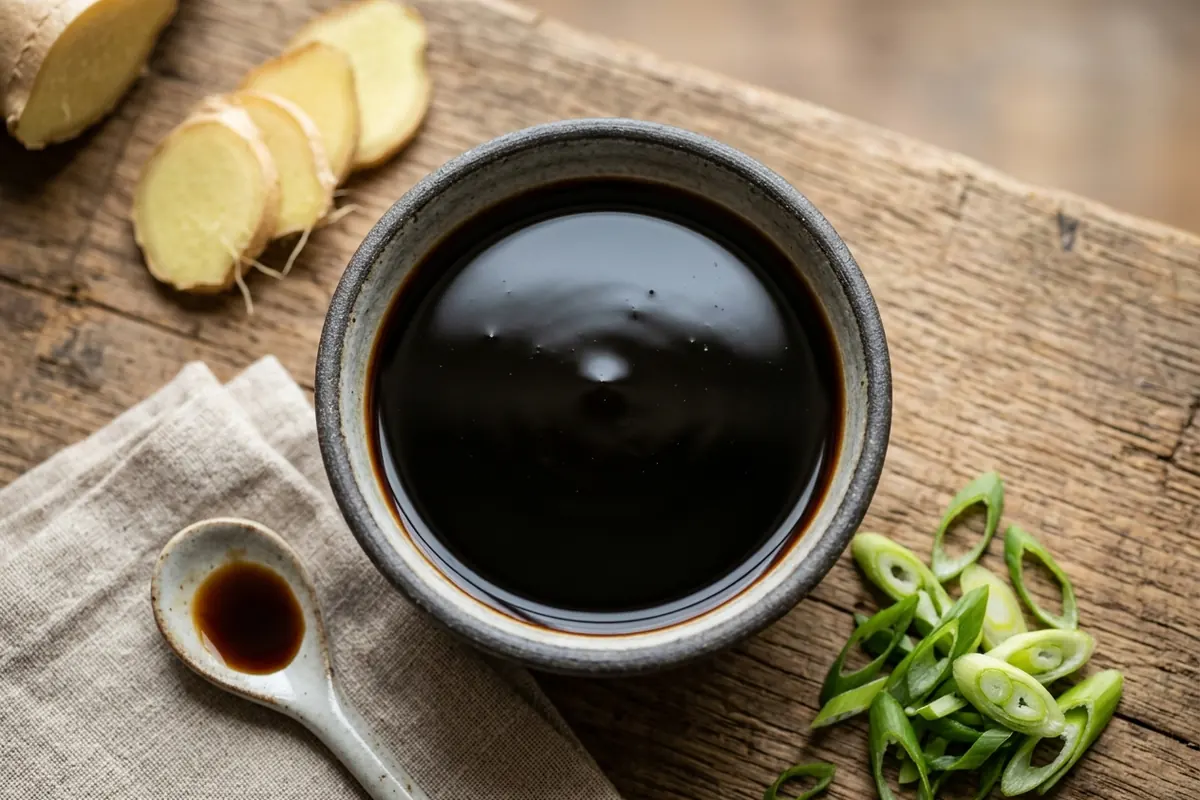
If you simply want the nearest thing to soy sauce, tamari is the answer. It is made almost identically, from fermented soybeans, but typically with little or no wheat, so it is darker, richer, slightly less sharp, and usually gluten-free. Use it as a 1:1 replacement. Because some tamari is a touch less salty than soy sauce, taste and add a pinch of salt if needed. For nearly every recipe, soup, stir-fry, marinade, or dipping sauce, tamari is indistinguishable enough that most people will not notice the swap. If your only goal is gluten-free cooking and you still eat soy, tamari is the easiest answer there is, and the deeper breakdown of soy sauce and gluten free options explains which tamari brands are certified safe.
The Best Soy-Free and Allergen-Friendly Swap: Coconut Aminos
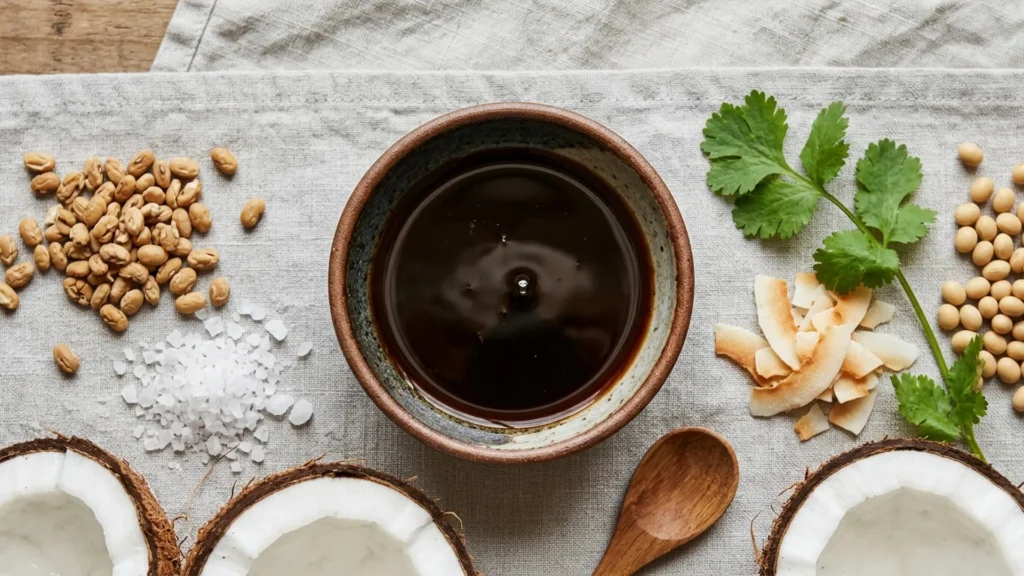
For a soy allergy, the standout is coconut aminos, made from fermented coconut sap and salt. It is free of soy, gluten, and wheat, and it carries a savory, slightly sweet, umami-forward flavor. Use it 1:1, but know two things: it is noticeably lower in sodium than soy sauce, so you will likely need to add salt to hit the same seasoning, and it is a little sweeter, so in savory dishes you may want a few drops of vinegar to balance it. Coconut aminos is the most allergen-friendly option on this list because it sidesteps soy, gluten, and fish all at once, which makes it the reliable choice when cooking for people with multiple restrictions.
The Best Low-Sodium Approach
If sodium is your concern, you have two routes. The first is reduced-sodium soy sauce or tamari, which cuts the salt by roughly a third while keeping the flavor. The second is coconut aminos, which is naturally much lower in sodium. With either, the trick is to keep the umami while pulling back the salt, so you may want to add a small amount of a salt-free umami booster like a pinch of mushroom powder or a dash of nutritional yeast to keep the savory depth that the missing salt would otherwise have carried. Do not simply use less soy sauce, because you lose the umami along with the salt and the dish tastes thin.
Umami-Forward Swaps for Cooked Dishes
When the dish will be cooked, a few fermented pantry staples shine. Miso paste shares soybeans, salt, and koji with soy sauce and brings a rounded, savory depth. Whisk it with an equal amount of warm water into a smooth liquid first, then use about double the volume of the soy sauce called for, and add it to soups, broths, and braises where it can cook. Liquid aminos, made from soybeans or sometimes other proteins, taste close to soy sauce and swap 1:1, though they may still contain soy. Fish sauce is a powerful 1:1 swap for salt and umami, but start with less because it is potent and funky, and skip it for vegetarian cooking. For the deepest, most rounded result in a stew or braise, a spoon of miso plus a drop of fish sauce or a splash of mushroom liquid layers the umami in a way a single ingredient cannot.
Tangy and Complex Swaps for Flavor Only
Some substitutes work when you want soy sauce’s savory-tangy character rather than its exact salt level. Worcestershire sauce is fermented and dark with a complex sweet-savory-tangy profile, and it swaps 1:1 for flavor, though it is less salty and brings its own spice, so it works best where you want depth rather than straight seasoning. Ponzu adds a citrus-bright, tangy version of soy flavor and is excellent in dressings and dipping sauces. Teriyaki can stand in if you thin it with water and cut back on other sweeteners in the recipe, since it is already sweetened. These are flavor swaps, not salt swaps, so always taste and adjust the salt separately. The team at Bon Appetit has written usefully about how these fermented and tangy condiments overlap and where they diverge, which is worth a read if you want to understand the family.
How to Build Your Own Soy Sauce Substitute
If you have none of the above, you can build a passable stand-in from common ingredients, and this is genuinely useful in a pinch. Simmer together about four parts beef or vegetable broth with one part balsamic or cider vinegar, a teaspoon of molasses or brown sugar, a pinch of garlic powder, a pinch of ground ginger, and a small pinch of black pepper, then reduce slightly and salt to taste. The broth supplies umami and body, the vinegar and molasses mimic the fermented tang and color, and the salt brings it in line. For a vegetarian version, use vegetable broth and add a little mushroom powder or nutritional yeast for extra savory depth. The test cooks at Cook’s Illustrated have shown how layering broth, acid, and a touch of sweetness recreates a surprising amount of a fermented sauce’s character, which is exactly the principle this blend relies on.
Choosing by Dish Type
The best swap also shifts depending on what you are cooking, because each dish leans on different jobs of soy sauce. In a stir-fry, you want salt, umami, and the dark color that glazes the ingredients, so tamari or liquid aminos are the cleanest, with coconut aminos a sweeter alternative that may need extra salt. In a marinade, all three jobs matter and the long contact time lets a homemade blend or a miso mix marry into the protein, so you have the most freedom here. In a soup or broth, color matters less and salt plus umami matter most, which makes miso or a reduced-sodium tamari ideal. In a dipping sauce, the swap is tasted directly and unmixed, so ponzu or tamari with a touch of rice vinegar give the brightest, most authentic result. In a fried rice or noodle dish, you want quick, even seasoning without too much liquid, so a concentrated tamari beats a watery substitute. Thinking about which job the dish needs most takes the guesswork out and points you to the swap that will disappear seamlessly.
Sodium and Nutrition Compared

Because soy sauce is used so often, the sodium differences between swaps are worth knowing. Regular soy sauce runs very high in sodium, around 900 to 1000 milligrams per tablespoon, which is why even a small splash seasons a dish. Tamari is similar to slightly lower. Reduced-sodium soy sauce and tamari cut that by roughly a third. Coconut aminos is dramatically lower, often less than half the sodium of soy sauce, which is its biggest selling point for anyone managing blood pressure or heart health, with the trade-off that you may need to add salt elsewhere. Fish sauce is comparable to or saltier than soy sauce, so it is not a low-sodium option despite being soy-free. Miso varies widely by type, with white miso milder and red miso saltier. If you are cutting sodium, the move is to choose a lower-sodium base and rebuild the lost savory depth with salt-free umami like mushroom powder, nutritional yeast, or a splash of unsalted broth, rather than simply using less seasoning and ending up with a flat dish.
Matching the Swap to the Dish and Diet
Pull it all together by matching the swap to your goal. Just out of soy sauce? Tamari or liquid aminos, 1:1. Soy allergy? Coconut aminos, with a pinch of added salt. Gluten-free? Tamari labeled gluten-free, or coconut aminos. Low sodium? Reduced-sodium tamari or coconut aminos plus a salt-free umami booster. Vegan? Tamari, miso, or coconut aminos; avoid fish sauce and Worcestershire with anchovy. Want the funk for a stir-fry? Fish sauce, used lightly. The dietary questions around these sauces overlap a lot, and the guide on whether fish sauce is gluten free helps you avoid hidden gluten when you reach for an alternative. The key is to name your single biggest constraint first, then pick the swap that respects it while covering as many of soy sauce’s three jobs as possible.
Swaps to Use With Caution
A few commonly suggested options need care. Plain salt water gives you the salt but none of the umami or color, so a dish made with it tastes flat. Maggi seasoning is close in flavor but often contains wheat and is very intense, so use a light hand. Oyster sauce is thick, sweet, and shellfish-based, so it changes texture and is off-limits for shellfish allergies and vegetarians. Steak sauce or barbecue sauce can fake the color and some savory notes but bring far too much sweetness and tomato or smoke. None of these are wrong in the right dish, but they are not seamless one-to-one swaps, so reach for them only when you understand how they will change the result.
Storing Your Substitutes
If you start keeping these alternatives on hand, a few storage notes save you waste. Tamari and liquid aminos behave like soy sauce, keeping for many months in a cool, dark cupboard and even longer in the fridge, where the flavor stays freshest. Coconut aminos is best refrigerated after opening to preserve its delicate, slightly sweet character. Miso paste keeps for months sealed in the fridge and only deepens in color over time, which is harmless. A homemade broth-based blend is the exception: because it lacks the preservative salt concentration of commercial soy sauce, treat it like a fresh sauce and use it within about a week, storing it airtight in the fridge. Labeling your jars with the date is a small habit that pays off, since several of these look similar and you do not want to discover a year-old homemade blend mid-recipe.
Frequently Asked Questions
What is the closest substitute for soy sauce?
Tamari is the closest substitute because it is made almost identically from fermented soybeans, just usually without wheat. Use it 1:1, tasting for salt since some tamari is slightly less salty. It is darker and a touch richer than soy sauce but close enough that most people will not notice the swap in soups, stir-fries, marinades, or dipping sauces.
What can I use instead of soy sauce if I have a soy allergy?
Coconut aminos is the best soy-free substitute. Made from fermented coconut sap and salt, it is free of soy, gluten, and wheat, with a savory, slightly sweet flavor. Use it 1:1, but add a pinch of salt since it is lower in sodium than soy sauce, and a few drops of vinegar if your dish needs less sweetness.
Is there a gluten-free substitute for soy sauce?
Yes. Tamari labeled gluten-free is made without wheat and tastes very close to soy sauce, swapping 1:1. Coconut aminos is also naturally gluten-free and soy-free. Always check the label, since standard soy sauce contains wheat and not every tamari is certified gluten-free.
Can I use Worcestershire sauce instead of soy sauce?
You can use Worcestershire sauce 1:1 when you want soy sauce’s savory, tangy depth rather than its exact salt level. Worcestershire is fermented, dark, and complex, but it is less salty and brings its own spice and sweetness, so taste and adjust the salt separately. It works best in marinades, stews, and sauces rather than as a straight seasoning.
How do I substitute miso paste for soy sauce?
Whisk miso paste with an equal amount of warm water until smooth, then use about double the volume of the soy sauce the recipe calls for. Add it to dishes where it can cook, like soups, broths, and braises, since miso brings a rounded, savory umami. It is a good vegan and often lower-sodium option, though it does contain soy.
What is a vegan substitute for soy sauce?
Tamari, miso paste, and coconut aminos are all vegan substitutes for soy sauce. Avoid fish sauce and standard Worcestershire, which contain seafood. For a homemade vegan version, simmer vegetable broth with a little vinegar, molasses, garlic and ginger powder, and a pinch of mushroom powder or nutritional yeast for extra savory depth, then salt to taste.
Is coconut aminos a good 1:1 swap for soy sauce?
Coconut aminos works as a 1:1 swap by volume, but it is sweeter and much lower in sodium than soy sauce, so the result tastes milder. Add a pinch of salt to match soy sauce’s seasoning, and a few drops of vinegar in savory dishes to offset the sweetness. It is the best choice when you need a soy-free and gluten-free option.
Can I use fish sauce instead of soy sauce in a stir-fry?
Yes, fish sauce can replace soy sauce in a stir-fry for its salt and strong umami, but use less since it is more potent and pungent. It will not add the same dark color, and it is not vegetarian. A light hand keeps the dish savory without tasting overtly fishy, and a drop of vinegar or a pinch of sugar helps round it out.
The Takeaway
A substitute for soy sauce is easy once you decide which of its three jobs, salt, umami, and color, you actually need to cover, and which dietary constraint matters most. Tamari is the closest all-around swap, coconut aminos is the allergen-friendly champion, miso and fish sauce add deep umami to cooked dishes, and a quick broth-vinegar-molasses blend will rescue you when the cupboard is bare. Match the swap to your goal, taste and adjust the salt, and you will keep your cooking on track no matter what is or is not in the bottle.