Soy sauce and gluten free are not a natural match, because regular soy sauce is brewed with wheat and therefore contains gluten, which surprises a lot of people who assume a thin, salty Asian sauce must be safe. Traditional soy sauce uses roughly equal parts soybeans and wheat, fermented together in a salty brine, and the wheat is there for flavor and aroma, not by accident. A common hope is that the long fermentation breaks the gluten down to a safe level, and while there is some evidence it reduces it, the science is genuinely unsettled, and current testing cannot reliably confirm a finished bottle is below the safe threshold. That uncertainty is the whole reason anyone with celiac disease should not rely on regular soy sauce and should instead choose a product specifically made and labeled gluten-free.
This guide explains how much gluten is actually in soy sauce, what the fermentation research really shows and why testing it is so hard, how the 20 parts-per-million standard works, which products are safe, how to read a label and a restaurant menu, and how to convert your favorite recipes to be gluten-free without losing flavor. The goal is to give you the facts to make a confident, safe decision rather than a vague reassurance.
Does Soy Sauce Contain Gluten?
Yes, regular soy sauce contains gluten, because wheat is one of its two primary ingredients. Classic soy sauce, sometimes labeled shoyu, is made by combining cooked soybeans with crushed or roasted wheat, then fermenting the mixture with a culture in a salty brine for months. The wheat contributes to the sauce’s color, aroma, and the slightly sweet, sharp character people associate with it. Because wheat carries gluten, the finished sauce carries gluten too. This is the default for the overwhelming majority of soy sauce sold worldwide, which is why “is soy sauce gluten-free” almost always answers to no unless the bottle says otherwise. The exception is a small category of products deliberately brewed without wheat, which we will get to. The takeaway for now is simple: assume a standard bottle of soy sauce contains gluten unless it is specifically labeled gluten-free.
The Fermentation Question: Does Brewing Remove the Gluten?
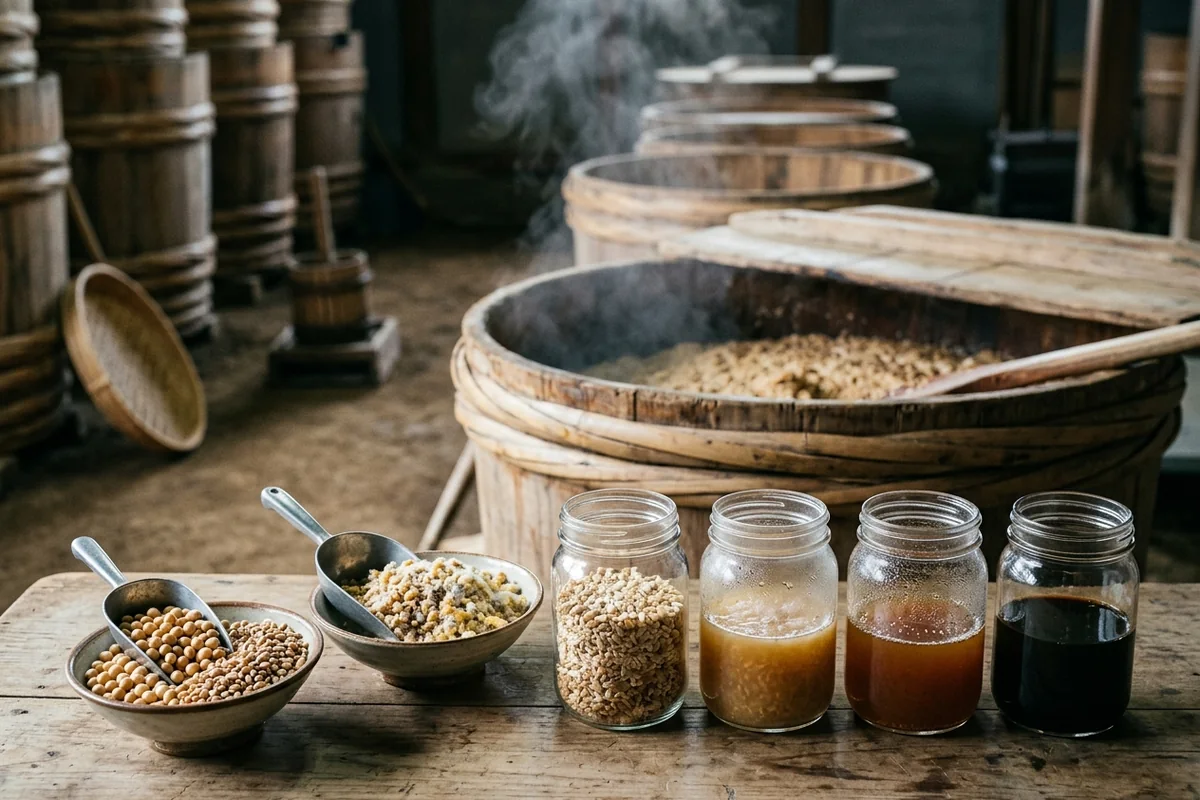
This is where the science gets genuinely interesting, and where a lot of well-meaning advice goes wrong. Fermentation does break gluten proteins apart into smaller fragments called peptides, and some studies suggest that wheat-containing soy sauce may be tolerated by people with a wheat allergy, which is a different condition from celiac disease. The trouble is that breaking gluten into peptides is not the same as making it safe for celiacs, because some of those fragments can still trigger an immune response, and current laboratory tests cannot reliably measure them.
Why testing fermented soy sauce is so hard
Standard gluten tests are designed to detect intact gluten proteins, but fermentation chops gluten into fragments those tests may miss, so a finished soy sauce can read low on a test while still containing reactive peptides. For this reason, regulators take the position that gluten in fermented foods should be assessed based on the ingredients before fermentation, not on testing the finished product. In practical terms, that means a wheat-brewed soy sauce cannot be confidently called gluten-free just because a test of the bottle came back low. The honest scientific summary is that we cannot reliably know how much reactive gluten is in a finished traditional soy sauce, which is exactly why the cautious path is to avoid it entirely if you have celiac disease.
The 20 PPM Standard and What It Means for You
In the United States, a product can only be labeled gluten-free if it contains fewer than 20 parts per million of gluten, a threshold regulators consider safe for the vast majority of people with celiac disease. That number is the anchor for every safe-shopping decision. The complication, as noted above, is that this standard is hard to apply to fermented foods because the testing is unreliable, so the regulatory position is that a product made with a gluten-containing grain like wheat cannot carry the gluten-free label even if a test of the finished sauce comes back low. The flip side is good news: when you see a gluten-free label or certification on a soy sauce, it means the product was made without wheat from the start, not that a wheat-based sauce squeaked under the line. So the label is doing real work for you. Trust the certification, not the fermentation folklore.
Which Soy Sauce Options Are Gluten-Free
There are three reliable routes to a gluten-free soy-sauce experience, and they cover every cooking situation.
| Option | How it stays gluten-free | Flavor |
|---|---|---|
| Tamari | Made with little or no wheat, mostly soybeans | Richer, smoother, deep umami |
| Rice-based gluten-free soy sauce | Rice replaces wheat in brewing | Close to regular soy sauce |
| Coconut aminos | No grain at all, made from coconut sap | Milder, sweeter, lower sodium |
Tamari is the closest substitute for everyday cooking and is widely certified gluten-free, though a few brands add a little wheat, so the label is still the final word. Rice-based gluten-free soy sauces, like Kikkoman’s gluten-free bottle, taste nearest to the everyday original and slot into recipes seamlessly. Coconut aminos are the option for anyone who also needs to avoid soy, since they contain no grain and no soybean. Trusted brands include Kikkoman, San-J, and Lee Kum Kee. For a deeper breakdown of brands, how each is made, and cooking tips, our full guide to gluten free soy sauce covers it in detail.
Why the label matters more than the test
It is worth restating the practical upshot, because it flips the usual intuition. Many people assume that if a sauce tests low for gluten it must be safe, but with fermented soy sauce the test itself is the weak link, since it can underread the broken-up gluten fragments. That is why a printed gluten-free certification carries more weight than any single test result a marketer might cite: certification means the product was built without wheat in the first place, so there is simply no gluten to fragment and hide. For a celiac shopper, this reframes the whole decision. You are not trying to find a wheat-based soy sauce that happens to be low enough; you are looking for a sauce that never contained wheat at all. Once that clicks, shopping gets much simpler, because the question collapses to a single yes-or-no: does the label say gluten-free or not.
How to Read a Soy Sauce Label
Shopping safely is mostly a matter of knowing where to look. First, scan the ingredient list for wheat; if you see it, the sauce is not gluten-free, full stop. Second, look for an explicit “gluten-free” statement or a certification mark such as a crossed-grain symbol, which is the strongest assurance because it means the product was formulated without wheat. Third, check the allergen line for “Contains: wheat,” which US products must declare and which gives you a fast yes-or-no. Fourth, be aware that the same brand often sells both a regular and a gluten-free version in nearly identical bottles, so read the specific label rather than relying on the brand name or memory. A bottle of tamari, for instance, is usually but not always gluten-free, so confirm it. When in doubt, certified is always safer than assumed, and a clean label paired with a gluten-free statement is the combination you want to see before it goes in your cart.
Soy Sauce and Gluten at Restaurants
Eating out is the riskiest scenario, because most kitchens, especially Asian restaurants, cook with standard wheat-based soy sauce by default. A dish that sounds safe can still contain gluten, and the soy sauce is usually the hidden source rather than the protein or vegetables. Cross-contamination compounds the problem: shared woks, fryers, and utensils carry traces of gluten from one dish to the next, so even a dish made with gluten-free ingredients can pick up gluten from a wok that just cooked a wheat-soy stir-fry. If you have celiac disease, ask whether the kitchen can cook with gluten-free soy sauce or tamari, whether your dish can be prepared in a clean pan, and whether the sauces are made in-house with wheat. Many strict eaters carry a small bottle of tamari to add to plain dishes themselves, or order proteins and vegetables with the sauce on the side so they can dress the food at home with their own gluten-free soy sauce. Treat restaurant sauces as guilty until proven innocent.
Converting Recipes to Gluten-Free Soy Sauce
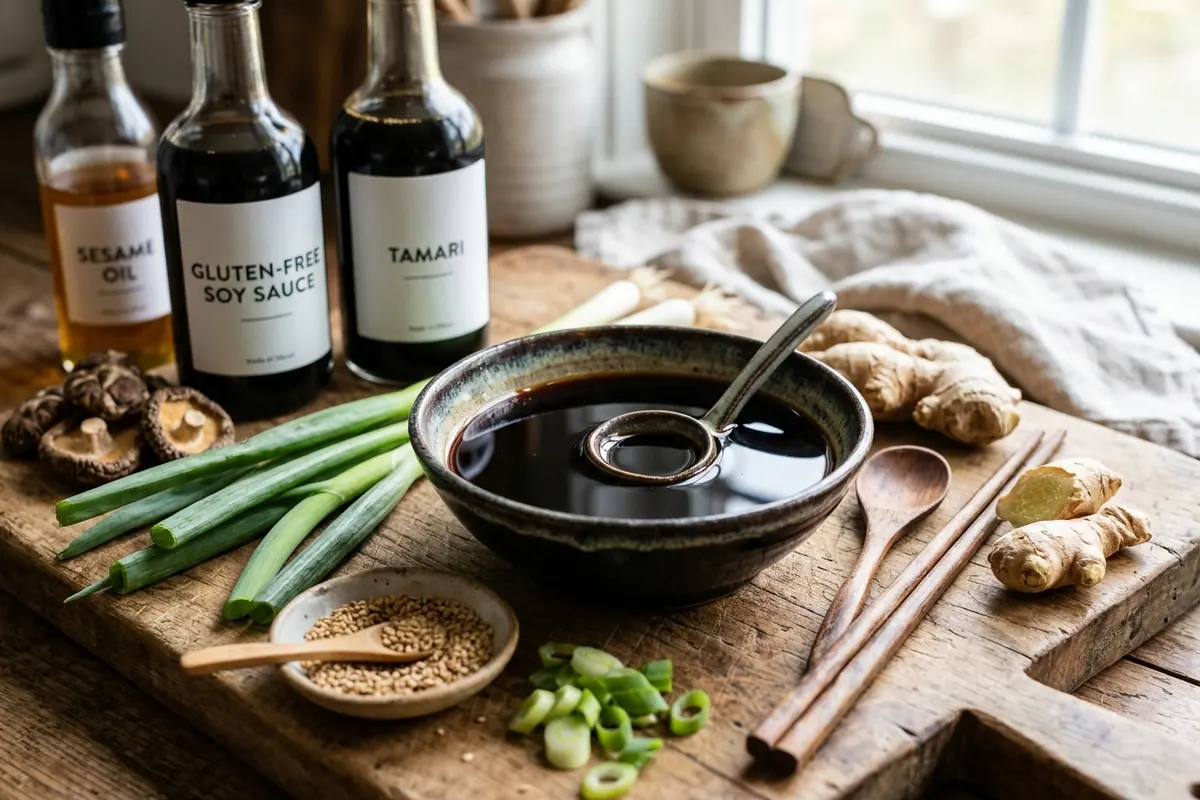
Switching your cooking over is easier than it sounds, because gluten-free soy sauce behaves almost exactly like the regular kind in the pan. Use tamari or a rice-based gluten-free soy sauce one-to-one in stir-fries, marinades, braises, dressings, and dipping bowls. The one adjustment to keep in mind is that tamari is slightly less salty and more intensely flavored than standard soy sauce, so taste and adjust, sometimes adding a touch more to match the saltiness you expect in a carefully balanced sauce. If you use coconut aminos, remember they are sweeter and less salty, so add a pinch of salt and cut back on other sweeteners. The bigger task is auditing the rest of the recipe, because the soy sauce is rarely the only place gluten hides.
Watch the other bottles
Teriyaki, hoisin, oyster sauce, and many barbecue and stir-fry sauces are commonly built on wheat-based soy sauce or thickened with wheat flour, so a stir-fry can still contain gluten even when you used gluten-free soy sauce, simply because the bottled teriyaki did not. Read every label in a recipe and choose gluten-free versions of each bottled sauce. When you build sauces yourself, you control every ingredient, which is the most reliable path to a guaranteed gluten-free meal; the same logic that makes a homemade hoisin sauce substitute reliably safe applies to any sauce you mix from scratch, and a from-scratch oyster sauce substitute lets you keep an entire stir-fry clean.
Substitutes When You Have No Gluten-Free Soy Sauce
If no tamari or gluten-free soy sauce is on hand, a few alternatives deliver similar savory depth. Coconut aminos, made from fermented coconut sap, is gluten-free and soy-free, less salty and a little sweeter, so use a bit more and trim added sugar. Liquid aminos, made from soybeans, are gluten-free and taste close to soy sauce. In a savory braise, a small amount of gluten-free Worcestershire-style sauce or a spoonful of miso thinned with water adds umami, though these shift the flavor more. None is an exact copy, so expect a slightly different result, but each keeps a dish gluten-free when soy sauce is off the table. Test kitchens such as America’s Test Kitchen and Cook’s Illustrated have tasted these stand-ins side by side if you want to compare flavor before committing to one. Tamari remains the closest and easiest swap, so reach for it first whenever you can find it.
Hidden Sources of Gluten Beyond the Bottle
Once you have a safe soy sauce in the cupboard, the next job is recognizing the less obvious places gluten sneaks into soy-flavored foods, because the bottle on your counter is only part of the picture. Many prepared and packaged products use wheat-based soy sauce or soy-sauce powder as a flavoring, so the gluten rides along even when soy sauce is not the headline ingredient. Watch for it in marinades and sauce packets, instant noodle seasoning, bottled stir-fry and dumpling sauces, some teriyaki jerky, certain rice and noodle mixes, and flavored snack foods like wasabi peas or soy-glazed nuts. Even a simple dipping sauce served alongside sushi or dumplings is almost always regular soy sauce unless you bring your own. Sushi itself can be a trap because the rice is sometimes seasoned with a vinegar blend that includes soy sauce, and imitation crab often contains wheat. The reliable habit is to read the ingredient list on anything that tastes savory and soy-forward, and when a packaged food simply lists “soy sauce” with no gluten-free claim, assume it is the wheat-based kind. Building the dish yourself from a safe soy sauce removes that whole layer of guesswork.
Soy Sauce vs Other Sauces on Gluten Risk
It helps to put soy sauce in context with the other savory sauces in your kitchen, since they do not all carry the same risk. Fish sauce, made from just anchovies and salt, is naturally gluten-free in its pure form and only carries gluten when a brand adds wheat, so it is the opposite of soy sauce, where wheat is the default. Worcestershire sauce traditionally contains malt vinegar derived from barley, so it often contains gluten unless labeled otherwise, which surprises many cooks. Oyster sauce and hoisin sauce are frequently thickened or flavored with wheat, so they tend to carry gluten like soy sauce does. The lesson is that you cannot judge a sauce’s gluten status by how it looks or tastes; you have to know its base. Soy sauce, oyster sauce, hoisin, and many barbecue sauces lean gluten-containing by default, while pure fish sauce leans gluten-free by default. Knowing which category each sauce falls into lets you scan a recipe and immediately spot which bottles need a gluten-free swap.
Frequently Asked Questions
Is soy sauce gluten-free?
Regular soy sauce is not gluten-free, because wheat is one of its two main ingredients, and fermentation does not reliably remove the gluten. To stay safe, use a product specifically labeled gluten-free, such as tamari or a rice-based gluten-free soy sauce, rather than assuming standard soy sauce is acceptable.
Does fermentation make soy sauce gluten-free?
No. Fermentation breaks gluten into smaller fragments, and while that may make wheat-based soy sauce tolerable for a wheat allergy, it does not make it safe for celiac disease. Current tests cannot reliably measure the gluten fragments, so regulators do not consider wheat-brewed soy sauce gluten-free.
How much gluten is in soy sauce?
The exact amount in a finished wheat-brewed soy sauce is hard to measure, because fermentation creates gluten fragments that standard tests may miss. That uncertainty is why a wheat-based sauce cannot be labeled gluten-free, and why the safe choice is a product brewed without wheat from the start.
What is the gluten-free soy sauce called?
The most common gluten-free soy sauce is tamari, which is brewed with little or no wheat. There are also rice-based gluten-free soy sauces, like Kikkoman’s gluten-free version, and coconut aminos for anyone avoiding soy as well. Look for an explicit gluten-free label or certification on any of them.
Is tamari always gluten-free?
Most tamari is gluten-free because it is made with little or no wheat, but it is not guaranteed. A few brands add a small amount of wheat, so a tamari bottle can still contain gluten. Always check for a gluten-free statement or certification on the specific bottle before buying.
Can I use gluten-free soy sauce in any recipe?
Yes, gluten-free soy sauce and tamari substitute one-to-one in stir-fries, marinades, dressings, and dipping sauces. Tamari is a little less salty and more intense, so taste and adjust. The bigger risk is other bottled sauces in the recipe, like teriyaki or hoisin, which often contain wheat-based soy sauce themselves.
Bottom Line
Soy sauce and gluten free only go together when you choose a product made without wheat, because regular soy sauce is brewed with wheat and the fermentation does not reliably remove the gluten. The science is clear on one point: you cannot count on testing a finished bottle, so a gluten-free label or certification is your real safeguard, since it means the sauce was formulated without wheat from the start. Reach for tamari or a rice-based gluten-free soy sauce for everyday cooking, or coconut aminos if you also avoid soy, and use them one-to-one. Read every label, treat restaurant sauces with caution, and audit the other bottles in your recipe, and you will keep the savory depth of soy sauce without the gluten.