
Gluten free soy sauce is real soy sauce brewed without wheat, so it delivers the same dark, salty, savory umami as regular soy sauce while staying safe for people with celiac disease or gluten sensitivity. The catch most people miss is that ordinary soy sauce is not gluten-free, because wheat is one of its two main ingredients alongside soybeans, and the fermentation process does not reliably break that gluten down to safe levels. Gluten-free versions solve this in two ways: tamari, a Japanese soy sauce traditionally made with little or no wheat, and dedicated wheat-free soy sauces that swap in rice. Both give you that essential seasoning back without the gluten, and in most recipes you can use them exactly where you would use regular soy sauce.
This guide explains why standard soy sauce contains gluten, how gluten-free soy sauce is made, which brands are certified and trustworthy, how tamari differs from wheat-free soy sauce, where hidden gluten sneaks into sauces and restaurant dishes, and how to cook with gluten-free soy sauce so the flavor lands right. By the end you will know which bottle to buy and how to use it with confidence.
Why Regular Soy Sauce Contains Gluten
Traditional soy sauce is brewed from four things: soybeans, wheat, salt, and a fermentation culture. The wheat is not an afterthought; it makes up roughly half the grain in classic soy sauce and contributes to the flavor, aroma, and slightly sweet, sharp character people associate with the condiment. Because wheat contains gluten, regular soy sauce contains gluten too. A common assumption is that the long fermentation, which runs for months, breaks the gluten down enough to make the sauce safe, but that is not dependable. While fermentation does reduce gluten, testing has shown that finished traditional soy sauce can still carry gluten above the threshold considered safe for people with celiac disease, which is generally 20 parts per million. That uncertainty is exactly why anyone who needs to avoid gluten should not rely on regular soy sauce or on the hope that fermentation handled it, and should instead reach for a product that is made without wheat from the start and labeled accordingly.
How Gluten-Free Soy Sauce Is Made
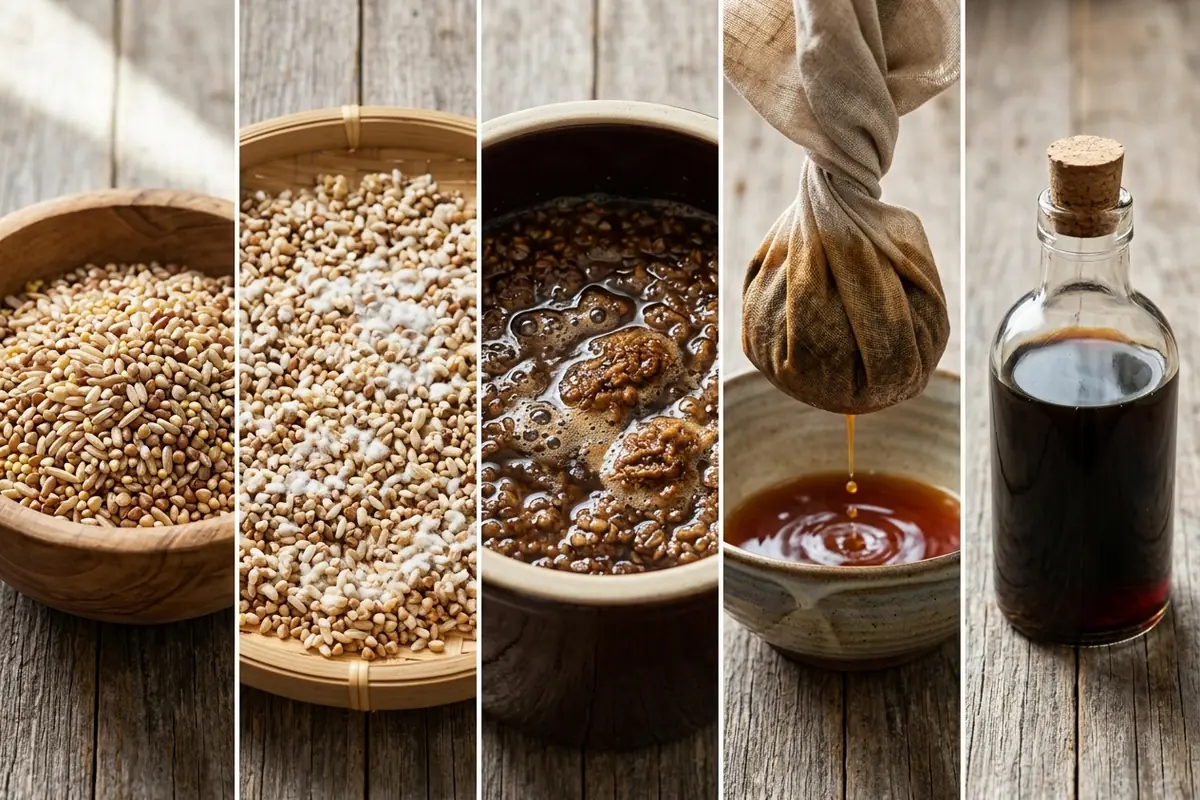
Gluten-free soy sauce reaches the same destination by a different route, removing or replacing the wheat so there is no gluten to worry about. There are two main approaches. The first is tamari, which is traditionally produced as the liquid byproduct of making miso paste; because miso is soybean-heavy, tamari uses a high proportion of soybeans and little or no wheat, which is why most tamari is naturally gluten-free. The second approach is a dedicated wheat-free soy sauce, where producers brew the sauce using rice in place of wheat. Rice supplies the starch and sugars that the fermentation needs to develop flavor and color, but it carries no gluten, so the result tastes close to regular soy sauce while being safe. In both cases the soybeans, salt, and fermentation culture do the heavy lifting on umami, and the only real change is what grain, if any, joins the soybeans. The end product is a dark, savory, salty sauce you can use just like the wheat-based original.
Tamari vs Wheat-Free Soy Sauce: What Is the Difference
People often use tamari and gluten-free soy sauce interchangeably, and for most cooking they are interchangeable, but there are small differences worth knowing.
| Feature | Tamari | Wheat-free soy sauce |
|---|---|---|
| Grain | Little or no wheat, mostly soybeans | Rice instead of wheat |
| Flavor | Richer, smoother, deeper umami | Closer to regular soy sauce, milder |
| Saltiness | Slightly less salty, fuller | Bright, sharp, salty |
| Gluten status | Usually gluten-free, check label | Gluten-free when labeled |
The practical takeaway is that tamari gives you a rounder, deeper flavor that is excellent for dipping and finishing, while a rice-based gluten-free soy sauce tastes more like the everyday soy sauce most people grew up with, which makes it a seamless swap in familiar recipes. Either one keeps a dish gluten-free. One reminder that applies to both: not every tamari is guaranteed wheat-free, since a few brands add a small amount, so the certified gluten-free label is always the final word.
Trusted Gluten-Free Soy Sauce Brands
Several widely available brands make reliable, certified gluten-free options, which takes the guesswork out of shopping. Kikkoman Gluten-Free Soy Sauce is made from rice instead of wheat, certified gluten-free by the Gluten Intolerance Group, and has a mild, familiar flavor with no added preservatives, which makes it a safe default. Kikkoman and San-J both offer gluten-free tamari, with San-J also selling a reduced-sodium tamari that cuts salt by about a quarter while keeping the savory depth, useful for anyone watching sodium. Lee Kum Kee makes a gluten-free soy sauce from whole soybeans, and Aloha Shoyu offers a Hawaiian-style gluten-free version with no added MSG. When buying any of these, look for an explicit gluten-free statement or certification on the label rather than assuming, since the same brand may sell both regular and gluten-free bottles that look nearly identical on the shelf. Buying a certified product is the single most reliable way to stay safe.
How to Cook With Gluten-Free Soy Sauce
The good news is that cooking with gluten-free soy sauce requires almost no adjustment, because it behaves like regular soy sauce in the pan. Use it one-to-one in stir-fries, marinades, braises, dressings, and dipping bowls, and it will season the dish the same way. If you are using tamari rather than a rice-based gluten-free soy sauce, keep in mind that tamari is a little less salty and more intensely flavored, so you may want to taste and adjust, sometimes adding a touch more to match the saltiness you expect, especially in a carefully balanced sauce. For a sweet-savory glaze, gluten-free soy sauce slots right in; the same balance of soy and sweetener that makes a good homemade teriyaki sauce work applies whether the soy is gluten-free or not. The one place to slow down is when soy sauce is combined with other prepared ingredients, because those companions, not the soy sauce, are usually where hidden gluten hides.
Hidden Gluten in Sauces and Dishes
This is the part most articles skip, and it is where people on a gluten-free diet actually get caught. Swapping in gluten-free soy sauce only protects you if the rest of the dish is clean, and many common sauces and prepared foods quietly contain wheat. Teriyaki sauce, hoisin sauce, oyster sauce, and many barbecue sauces are frequently made with wheat-based soy sauce or wheat thickeners, so a stir-fry can still contain gluten even if you used gluten-free soy sauce, simply because the bottled teriyaki did not. Thickeners are another culprit: some sauces are thickened with wheat flour rather than cornstarch. Even seemingly simple condiments can carry malt vinegar or maltodextrin derived from wheat. The safe habit is to read every label in a recipe, not just the soy sauce, and to choose gluten-free versions of every bottled sauce you add. When you build sauces yourself, you control every ingredient, which is one reason making your own, like a from-scratch homemade spaghetti sauce, is often the simplest path to a guaranteed gluten-free meal.
Gluten-Free Soy Sauce at Restaurants and Takeout
Eating out is the riskiest situation, and it deserves its own caution. Most restaurants, especially Asian restaurants, cook with standard wheat-based soy sauce by default, so a dish that sounds safe can still contain gluten unless you ask. Cross-contamination compounds the risk: shared woks, fryers, and utensils can transfer gluten even when a dish is made with gluten-free ingredients, and a wok that just cooked a wheat-soy stir-fry will carry traces into the next dish. If you have celiac disease, ask whether the kitchen can use gluten-free soy sauce or tamari, whether they can cook your dish in a clean pan, and whether sauces are made in-house with wheat. Some people carry a small bottle of tamari to add to plain dishes themselves. Takeout is similar; sauces are almost always the hidden source, so ordering proteins and vegetables with sauce on the side, then dressing them at home with your own gluten-free soy sauce, is a reliable workaround when you cannot verify the kitchen.
Substitutes If You Cannot Find Gluten-Free Soy Sauce
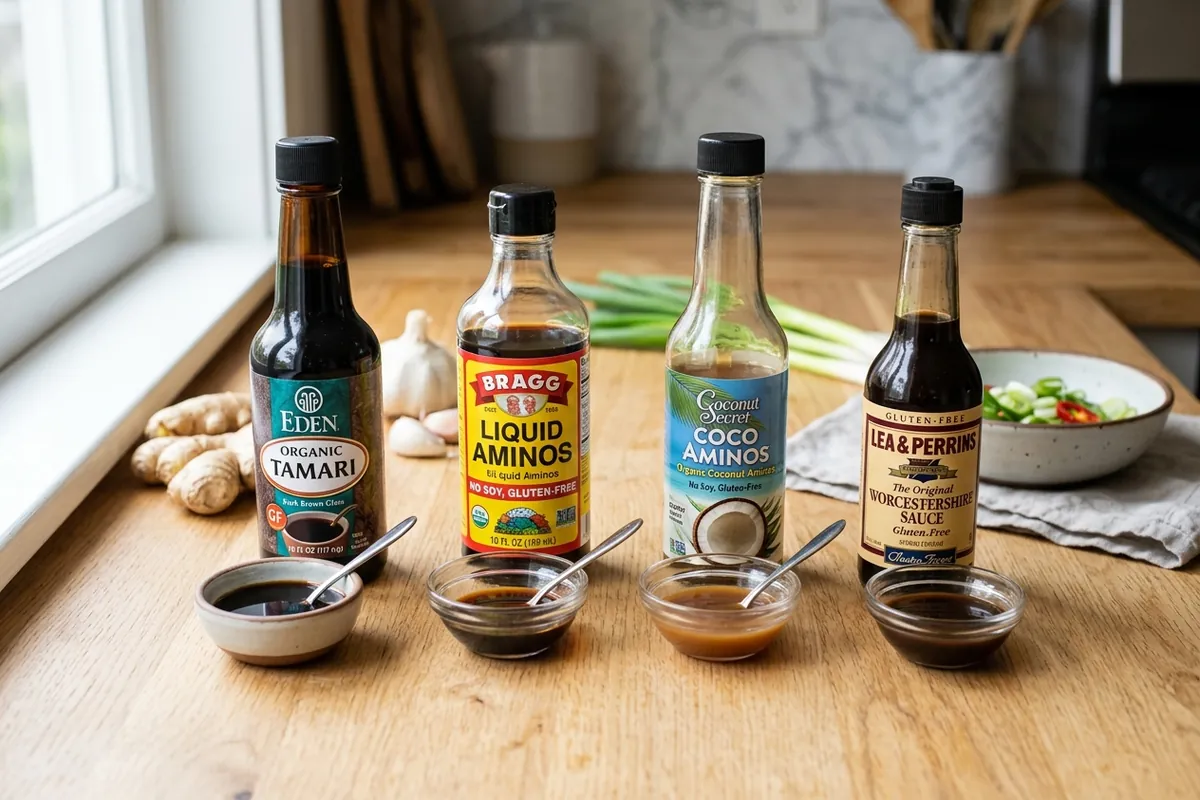
If no gluten-free soy sauce or tamari is on hand, a few alternatives deliver similar savory depth. Coconut aminos, made from fermented coconut sap, is soy-free and gluten-free, less salty, and a little sweeter, so use a bit more to reach the same depth and cut back on any added sugar in the recipe. Liquid aminos, made from soybeans, are gluten-free and taste close to soy sauce, serving as a direct stand-in for many cooks. In a savory braise or stew, a small amount of gluten-free Worcestershire-style sauce or a spoonful of miso thinned with water can add umami, though these change the flavor more. None is an exact copy, so expect a slightly different result, but each keeps a dish gluten-free when soy sauce is off the table. Tamari remains the closest and easiest swap, so it is the alternative to reach for first whenever you can find it. Test kitchens like America’s Test Kitchen and Cook’s Illustrated taste these soy sauce alternatives side by side if you want to compare flavor before committing to one.
Sodium and Nutrition Notes
Gluten-free soy sauce is nutritionally similar to regular soy sauce, and the main thing to watch is sodium. Like all soy sauce, it is high in salt, with a single tablespoon delivering a meaningful share of a day’s sodium, so it is used as a seasoning in small amounts rather than poured freely. Reduced-sodium gluten-free options, like San-J’s reduced-sodium tamari, cut the salt significantly while keeping much of the savory flavor, which is helpful for anyone managing blood pressure or limiting sodium. Beyond salt, soy sauce contributes a small amount of protein and the umami compounds that make food taste more savory and complete, which is a big part of why a splash makes a dish sing. Going gluten-free does not change these basics; a wheat-free or rice-based soy sauce carries roughly the same salt and umami as its wheat-based counterpart. As always, the smart approach is to use it as a flavor accent and to reach for a reduced-sodium version if salt is a concern. A balanced sauce, such as a tangy homemade BBQ sauce built with gluten-free soy, lets you control both the salt and the gluten at once.
Making Your Own Gluten-Free Soy-Style Seasoning
If you want full control or simply run out, you can build a quick gluten-free soy-style seasoning at home that covers most cooking needs. The simplest version starts with a base that already carries umami and salt, then adds depth. Combine 1/4 cup of gluten-free beef or vegetable broth, 1 tablespoon of molasses or dark brown sugar, 1 teaspoon of cider vinegar, a pinch of ground ginger and garlic powder, and a little salt, then simmer for a few minutes until it thickens slightly and darkens. The result is not identical to brewed soy sauce, since real fermentation takes months, but it gives a salty, savory, faintly sweet liquid that works in stir-fries and marinades when you are stuck. For a faster fix, stir a teaspoon of miso paste, checked for gluten, into warm water with a splash of vinegar. Neither replaces a good bottle of tamari for everyday use, but both are handy backups that keep a dish gluten-free without a trip to the store.
How to Store Gluten-Free Soy Sauce
Storage is the same as for regular soy sauce, since the high salt content acts as a natural preservative. Unopened, a bottle lasts a very long time on the shelf. Once opened, it stays safe at room temperature for months, but its flavor is best preserved in the refrigerator, where the cold slows the gradual loss of aroma that happens on a warm shelf. Keep it tightly capped to limit air exposure, and do not worry about minor color darkening or a little sediment over time, which is normal and not a sign of spoilage. Stored in the fridge and kept sealed, a bottle of gluten-free soy sauce or tamari tastes brighter for longer and stays good for many months, ready whenever a dish needs a hit of safe, savory depth.
Frequently Asked Questions
Is soy sauce gluten-free?
Regular soy sauce is not gluten-free, because wheat is one of its main ingredients and fermentation does not reliably remove the gluten. To stay safe, use a product labeled gluten-free, such as tamari or a rice-based gluten-free soy sauce, rather than assuming standard soy sauce is acceptable.
Is tamari the same as gluten-free soy sauce?
Tamari is a type of soy sauce made with little or no wheat, so most tamari is gluten-free and works as a gluten-free soy sauce. It tastes richer and smoother than rice-based gluten-free soy sauce. Always check the label, since a few tamari brands add a small amount of wheat.
What brands make gluten-free soy sauce?
Kikkoman, San-J, Lee Kum Kee, and Aloha Shoyu all make certified or labeled gluten-free options, including rice-based soy sauce and gluten-free tamari. San-J also offers a reduced-sodium tamari. Look for an explicit gluten-free statement on the label, since brands often sell both regular and gluten-free versions.
Can I use gluten-free soy sauce in any recipe?
Yes, gluten-free soy sauce substitutes one-to-one for regular soy sauce in stir-fries, marinades, dressings, and dipping sauces. If you use tamari, it is slightly less salty and more intense, so taste and adjust. The bigger risk is other bottled sauces in the recipe that may contain wheat.
Why is gluten-free soy sauce not safe at restaurants?
Most kitchens cook with regular wheat-based soy sauce by default, and shared woks, fryers, and utensils can cause cross-contamination even with gluten-free ingredients. Ask whether the kitchen can use tamari and a clean pan, or order sauce on the side and add your own gluten-free soy sauce at home.
What can I use instead of gluten-free soy sauce?
Coconut aminos and liquid aminos are the closest alternatives, both gluten-free, with coconut aminos being soy-free, milder, and slightly sweet. They give a similar savory note but taste a little different, so adjust the amount. Tamari is the easiest and closest swap whenever you can find it.
Bottom Line
Gluten free soy sauce gives you back the dark, salty, savory seasoning that regular soy sauce provides, minus the wheat that makes the standard version unsafe for anyone avoiding gluten. The two reliable choices are tamari, which is richer and naturally low or free of wheat, and a rice-based gluten-free soy sauce, which tastes closest to the everyday original; certified brands like Kikkoman and San-J take the guesswork out. Use it one-to-one in your cooking, but remember that the soy sauce is only one ingredient, so read every label and watch for hidden wheat in teriyaki, hoisin, oyster sauce, and restaurant dishes. Store it sealed in the fridge for the best flavor, reach for a reduced-sodium version if salt is a concern, and you will always have a safe way to add savory depth to a gluten-free meal.