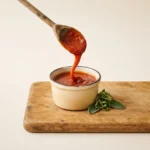
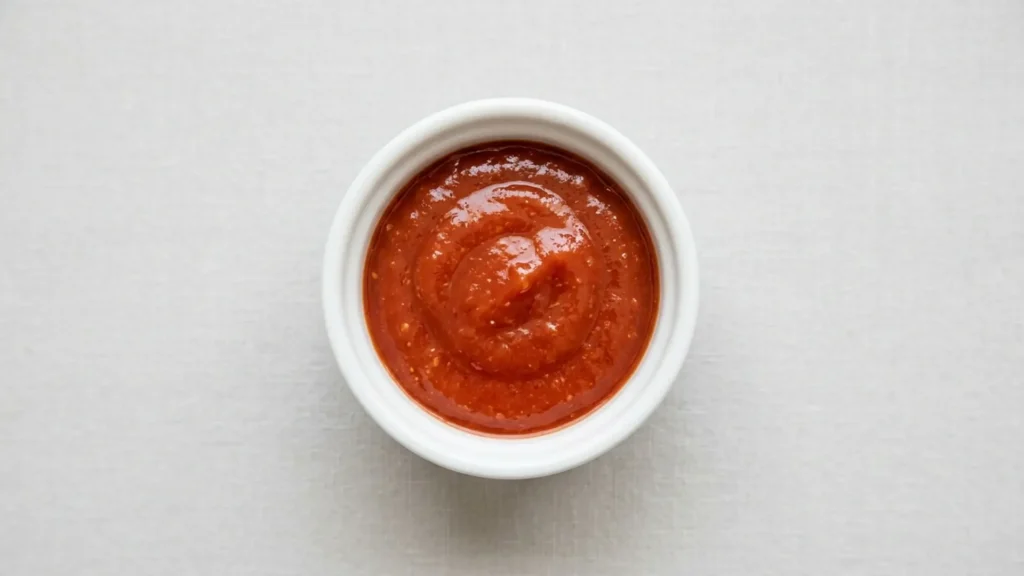
Cocktail sauce nutrition is dominated by three numbers: calories, sugar, and sodium. A typical quarter-cup serving of store-bought cocktail sauce has about 90 calories, 20 grams of carbohydrate including roughly 10 grams of sugar, around 550 milligrams of sodium, no fat, and about 1 gram of protein. A smaller two-tablespoon dip, which is closer to what most people actually use, runs about 35 calories with 9 grams of carbohydrate. The reason those carbs and sugars are high is simple: cocktail sauce is built on a ketchup or tomato paste base, and ketchup brings sugar with it. The sodium comes from salt, horseradish, and the tomato base combined. None of this makes cocktail sauce unhealthy in normal amounts, but it does mean the sugar and salt add up quickly if you are pouring rather than dipping.
This guide breaks down the full nutrition profile, explains where the calories, carbs, and sodium come from, compares store-bought brands to a homemade version, and shows how to cut the sugar and salt without losing the bright, horseradish-forward flavor. You will also get the numbers for low-carb and keto-friendly options and a clear sense of how cocktail sauce fits into a balanced plate.
Full Nutrition Breakdown
Here is the nutrition profile for a standard store-bought cocktail sauce, shown for the two serving sizes people use most. Values vary by brand, but these are representative.
| Nutrient | 2 tbsp (~36 g) | 1/4 cup (~72 g) |
|---|---|---|
| Calories | ~35-45 | ~90 |
| Total carbohydrate | ~9-10 g | ~20 g |
| Sugars | ~5 g | ~10 g |
| Sodium | ~270-300 mg | ~550 mg |
| Total fat | 0 g | 0 g |
| Protein | ~0-1 g | ~1 g |
| Fiber | ~0-1 g | ~1 g |
The headline is that cocktail sauce is essentially a fat-free, low-protein, carbohydrate-driven condiment. Its calories come almost entirely from sugar and the tomato base, which is why it is light on the plate but easy to overdo on sugar and salt.
Where the Calories and Carbs Come From
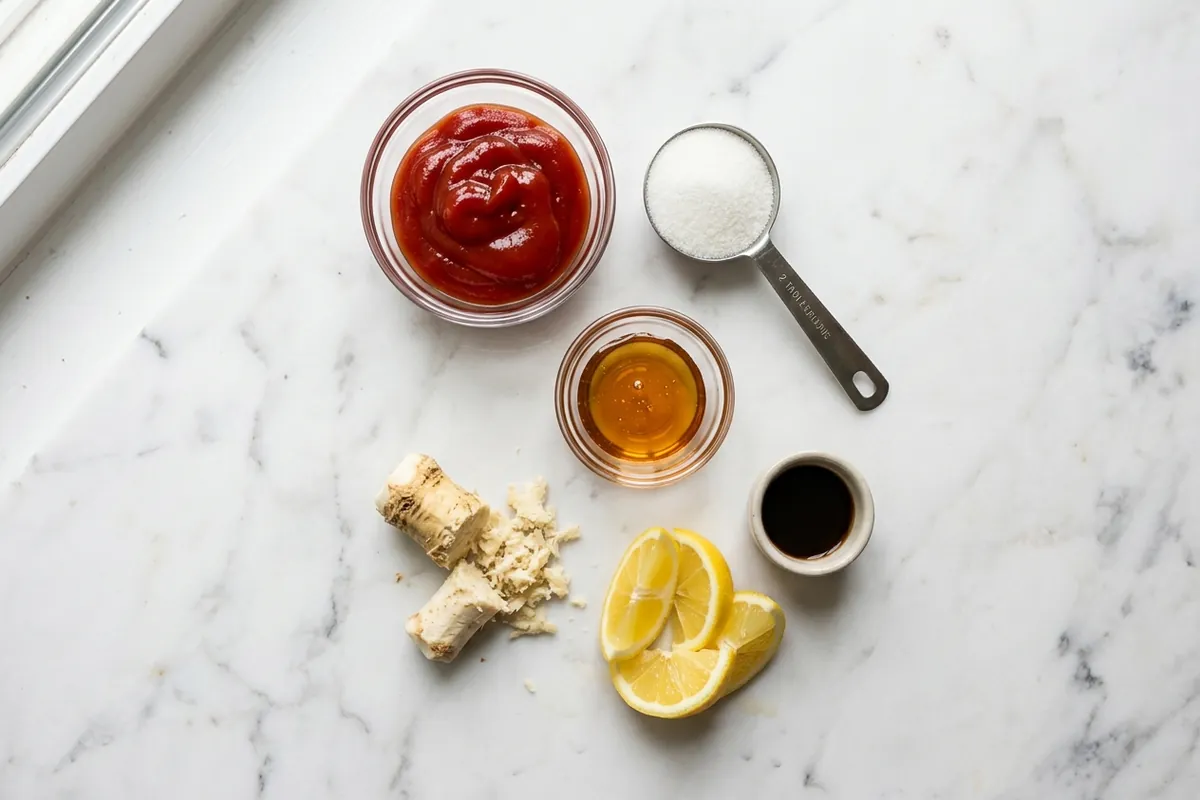
Almost all of cocktail sauce’s calories trace back to its tomato base and added sugar. Ketchup or tomato paste supplies natural tomato sugars plus the added sugar that ketchup already contains, and many recipes add more sugar on top to balance the sharp horseradish and vinegar. Because there is no fat and very little protein, carbohydrate is the only meaningful calorie source, and roughly half of that carbohydrate is sugar. This is worth knowing if you are counting carbs or watching blood sugar, since a generous serving alongside a shrimp platter can add up faster than the small portion size suggests. The flip side is that cocktail sauce has no fat and is naturally low in calories per spoonful, so a moderate dip adds bright flavor for very little. The same tomato-and-sugar dynamic shows up in other tomato-based sauces; a long-simmered homemade spaghetti sauce carries natural tomato sugars too, which is why tasting and balancing matters in both.
The Sodium Question
Sodium is the nutrient most worth watching in cocktail sauce. A quarter-cup serving carries around 550 milligrams, which is roughly a quarter of the commonly cited 2,300 milligram daily limit, and that is before you account for the salt in the shrimp, crackers, or other foods you are eating alongside it. The sodium comes from added salt, the prepared horseradish, which is brined, and the tomato base. For most healthy people an occasional serving is not a concern, but anyone managing blood pressure or following a low-sodium plan should treat cocktail sauce as a real source of salt rather than a freebie. The practical move is portion control, since most people use far less than a full quarter cup when they dip rather than pour, and a two-tablespoon serving roughly halves the sodium. Making your own, covered below, lets you cut the salt directly while keeping the flavor.
Store-Bought vs Homemade Nutrition
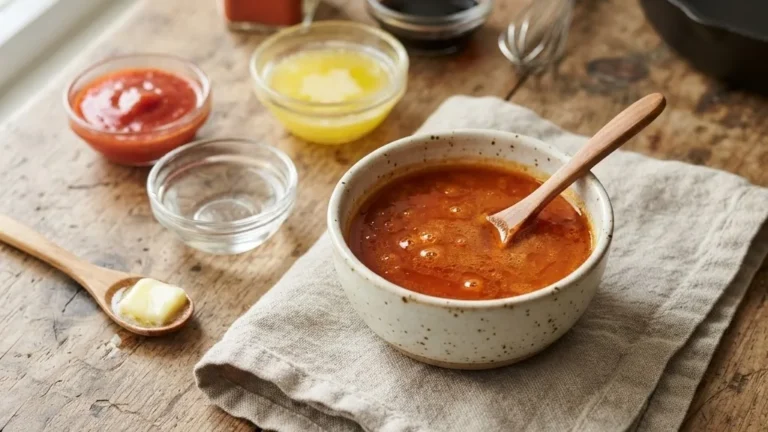
Homemade cocktail sauce can be meaningfully better for you, mostly because you control the sugar and salt. A basic homemade version is just ketchup or tomato paste, prepared horseradish, lemon juice, Worcestershire sauce, and a little hot sauce, and you can dial each ingredient to taste. Starting from tomato paste rather than ketchup, and adding only a small amount of sweetener, cuts the sugar substantially compared with many bottled versions. Using a reduced-sodium ketchup or unsalted tomato paste, and going easy on added salt, brings the sodium down too. The flavor actually improves, because fresh horseradish and lemon taste brighter than the muted versions in shelf-stable bottles. The trade-off is convenience and shelf life, since homemade keeps only about a week in the fridge while bottled lasts for months. For anyone watching sugar or sodium, though, a five-minute homemade batch is the single most effective change, the same way making a from-scratch homemade BBQ sauce lets you control exactly how much sugar goes in.
Low-Carb and Keto-Friendly Cocktail Sauce
Standard cocktail sauce is too high in sugar and carbs to fit a strict keto plan, but a low-carb version is easy to build. The sugar is the issue, so the fix is replacing the sweet ketchup base. Start with a no-sugar-added or sugar-free ketchup, or with plain tomato paste, then add prepared horseradish, lemon juice, Worcestershire, and a sugar-free sweetener like a few drops of liquid monk fruit or erythritol to round out the sharpness. This brings the carbohydrate per serving down dramatically, often to two or three grams instead of nine or ten, which fits low-carb and keto eating. The flavor stays close to the original because horseradish, lemon, and tomato do most of the work; the sugar was only there to soften the edges. Brands like Primal Kitchen also sell a no-added-sugar cocktail sauce if you would rather buy than mix. For anyone on keto, this small swap turns a high-sugar dip into a sauce that fits the plan.
How Brands Compare
Bottled cocktail sauces differ more than you might expect, mostly in sugar and sodium. Classic supermarket brands like Heinz tend to be higher in sugar, since they lean on a sweet ketchup base, and carry the typical 500-plus milligrams of sodium per quarter cup. Specialty and better-for-you brands vary: some emphasize extra horseradish for heat with less added sugar, while no-sugar-added lines like Primal Kitchen cut the sugar to near zero and often use a cleaner ingredient list. When comparing labels, look at the sugar grams and the sodium per serving, and check the serving size itself, because a brand can look lower in sodium simply by listing a smaller serving. Reading the panel rather than the front of the jar is the only reliable way to compare, since marketing terms like natural or original tell you nothing about the numbers. Reputable test kitchens such as America’s Test Kitchen and Bon Appetit taste these condiments side by side, which helps if you want flavor recommendations alongside the nutrition.
Is Cocktail Sauce Healthy?
Cocktail sauce is a reasonable condiment choice in normal amounts, with a few caveats. On the positive side, it has no fat, is low in calories per serving, and gets its flavor partly from horseradish and tomato, which contribute small amounts of beneficial compounds. The tomato base supplies a little lycopene and some vitamin C, and horseradish adds sharp flavor for almost no calories. The downsides are the added sugar and the sodium, which are the two things to moderate, especially if you are watching blood sugar or blood pressure. Compared with creamy, mayonnaise-based dipping sauces, cocktail sauce is lighter and fat-free, which is a point in its favor. The honest summary is that it is neither a health food nor something to avoid; used as a small dip rather than a heavy pour, it adds a lot of flavor for modest calories, and a homemade or no-sugar version makes it fit almost any eating plan.
What Is Actually In Cocktail Sauce
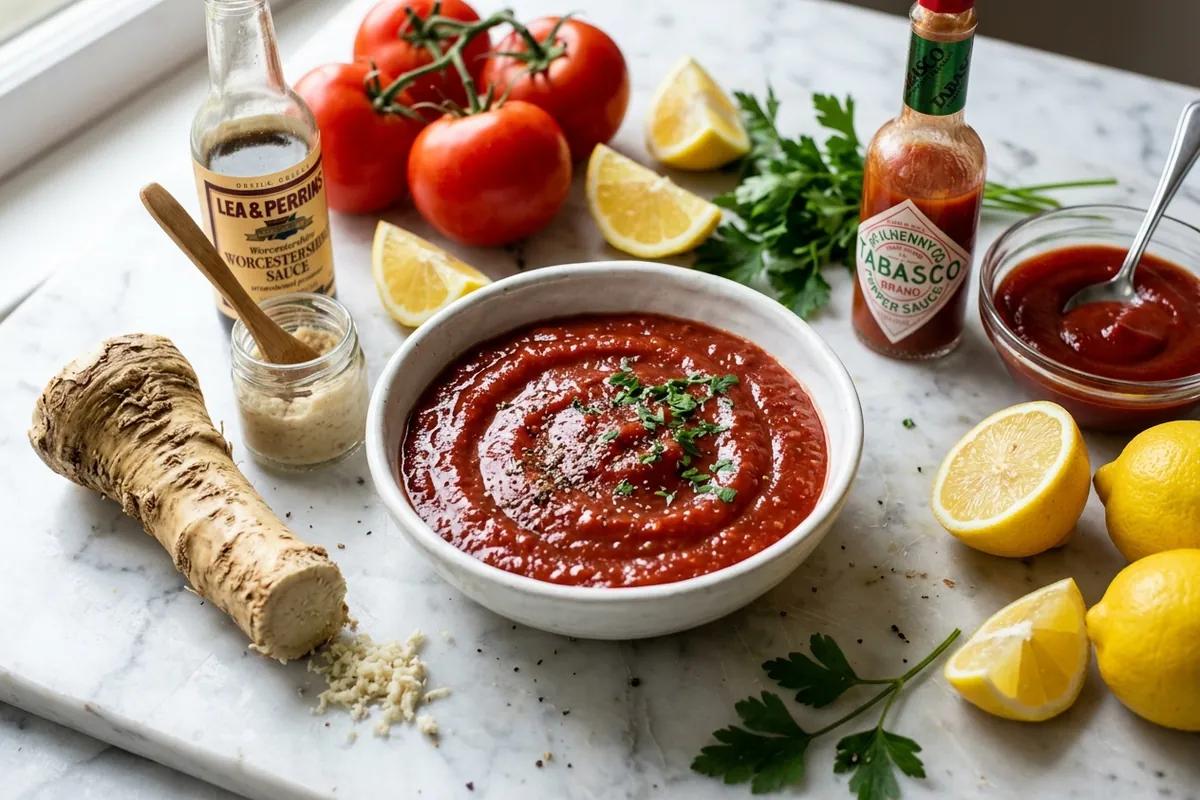
Understanding the ingredient list explains every number on the nutrition panel. At its core, cocktail sauce is a tomato base, usually ketchup or tomato paste, mixed with prepared horseradish for heat, plus acid and seasoning. The standard supporting cast is lemon juice or vinegar for brightness, Worcestershire sauce for savory depth, and a dash of hot sauce for a little extra kick. Sugar, whether added directly or carried in by the ketchup, balances the sharp horseradish and acid. Salt rounds everything out. That short list is why the macros look the way they do: the tomato base and sugar drive the carbohydrate and calories, the salt and horseradish brine drive the sodium, and the absence of any oil or dairy is why the fat sits at zero. Knowing the ingredients also tells you exactly which levers to pull when you want a healthier version, since the sugar comes from the base and added sweetener, and the sodium comes from the salt, horseradish, and Worcestershire. Adjust those three and you change the nutrition without touching the character of the sauce.
Horseradish: The Flavor That Carries No Cost
One of the better things about cocktail sauce nutritionally is that much of its punch comes from horseradish, which adds intense flavor for essentially no calories. Horseradish is a pungent root, and the prepared version mixes grated root with vinegar and salt. It brings the signature sinus-clearing heat that defines a good cocktail sauce, and because you taste it so strongly, a little goes a long way. This matters for anyone trying to lighten the sauce: leaning harder on horseradish, lemon, and hot sauce lets you cut back on sugar without the sauce tasting flat, because the perceived intensity stays high. Fresh horseradish, grated just before mixing, is sharper still and lets you use even less of everything else. The only nutritional note is that prepared horseradish carries some sodium from its brine, so it contributes a little to the salt total, but the trade is favorable given how much flavor it delivers per spoonful. Treating horseradish as the star, rather than the sugar, is the simplest path to a brighter, lighter sauce.
How to Use Cocktail Sauce Without Overdoing It
The simplest way to keep cocktail sauce nutrition in check is to manage the portion and the pairing. Dip rather than drown, since a thin coat on each shrimp uses a fraction of what a poured puddle does, and the sugar and sodium scale directly with how much you use. Pair it with lean, high-protein foods like shrimp, crab, or raw vegetables, where the sauce is an accent to a healthy base rather than the main event. If you are serving a crowd, putting the sauce in small individual cups rather than one big bowl naturally limits how much each person uses. And if sugar or salt is a real concern, make a homemade or low-carb batch ahead of time so the better option is the one sitting on the table. These habits let you enjoy the bright, horseradish-forward flavor without the numbers creeping up. The same portion logic applies to any bold condiment, including a tangy chimichurri sauce, where a little goes a long way.
Cocktail Sauce on a Shrimp Platter: The Whole-Plate Picture
Nutrition is easier to judge when you look at the whole serving rather than the sauce alone. A classic shrimp cocktail pairs lean, high-protein shrimp with cocktail sauce, and that combination is actually a sensible appetizer. Shrimp is low in calories and fat and high in protein, so the sauce’s sugar and sodium are balanced by a nutrient-dense base. A typical serving of six to eight shrimp with a couple of tablespoons of sauce lands well under 150 calories total, with a solid hit of protein, which is far lighter than most fried or creamy appetizers. The thing to watch is the sodium stacking, since both the shrimp, if it was cooked or brined in salt, and the sauce contribute salt, so the combined total can climb. If you are mindful of that, a shrimp cocktail is one of the better appetizer choices on a table, delivering protein and bright flavor for modest calories. Choosing fresh-cooked unsalted shrimp and a homemade sauce gives you the cleanest version of the dish. Adding a side of crisp raw vegetables like celery, cucumber, or bell pepper for dipping stretches the sauce across more food while keeping the calorie and sugar load low, since the vegetables add fiber and crunch for almost nothing. That simple addition turns a small appetizer into something more filling without changing the cocktail sauce nutrition math in any meaningful way, and it is an easy trick when you are serving the sauce to a group and want the platter to go further.
Frequently Asked Questions
How many calories are in cocktail sauce?
A quarter-cup serving of store-bought cocktail sauce has about 90 calories, while a more typical two-tablespoon dip has around 35 to 45 calories. The calories come almost entirely from carbohydrate and sugar, since cocktail sauce has no fat and very little protein.
Is cocktail sauce high in sugar?
Yes, relatively. A quarter-cup serving has roughly 10 grams of sugar, about half its total carbohydrate, because it is built on a ketchup or sweetened tomato base. Homemade versions made from tomato paste, or no-sugar-added brands, cut the sugar substantially while keeping the flavor.
Is cocktail sauce high in sodium?
It can be. A quarter-cup serving has around 550 milligrams of sodium, roughly a quarter of the common daily limit, from salt, brined horseradish, and the tomato base. Using a smaller portion or a homemade reduced-salt version lowers the sodium considerably.
Is cocktail sauce keto-friendly?
Standard cocktail sauce is too high in sugar for strict keto, but a low-carb version is easy. Use sugar-free ketchup or plain tomato paste with horseradish, lemon, Worcestershire, and a sugar-free sweetener to bring carbs down to about two or three grams per serving, which fits keto.
Is cocktail sauce healthier than tartar sauce?
In calories and fat, yes. Cocktail sauce is fat-free and lower in calories, while tartar sauce is mayonnaise-based and much higher in fat and calories. Cocktail sauce does carry more sugar and sodium, so the better choice depends on whether you are watching fat or sugar and salt.
Can I make a healthier cocktail sauce at home?
Yes. Combine tomato paste or reduced-sodium ketchup with prepared horseradish, lemon juice, Worcestershire, and a little hot sauce, sweetening lightly or with a sugar-free sweetener. This lets you control the sugar and salt directly, and it tastes brighter than most bottled versions while keeping about a week in the fridge.
Bottom Line
Cocktail sauce is a light, fat-free condiment whose nutrition centers on carbohydrate, sugar, and sodium: roughly 90 calories, 20 grams of carbohydrate, 10 grams of sugar, and 550 milligrams of sodium per quarter cup, with most people using less than that when they dip. It is neither a health food nor something to avoid; the two numbers to watch are the added sugar and the salt. The most effective way to improve them is to make your own from tomato paste, horseradish, and lemon, or to choose a no-sugar-added brand, either of which can cut the sugar and sodium sharply while keeping the bright, horseradish-forward flavor. Dip rather than pour, pair it with lean protein, and cocktail sauce stays a flavorful, sensible part of the plate.