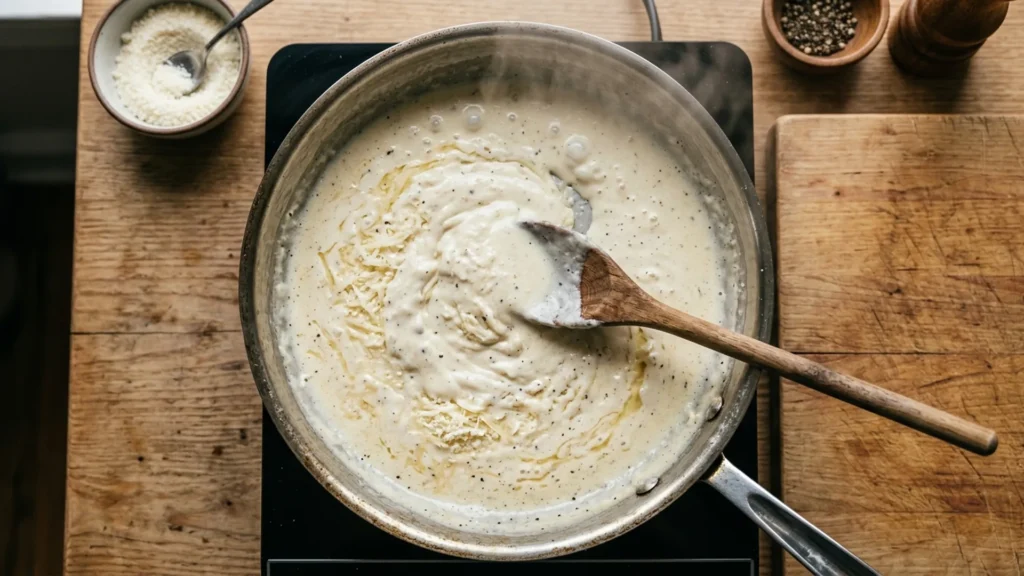
How to make alfredo sauce with milk comes down to one trick: you build a light roux of butter and flour first, then whisk in warm milk to create the body that heavy cream would normally provide. Classic alfredo leans on cream for its richness, but milk plus a roux gives you a sauce that is just as silky and creamy, lighter, and made from ingredients most people already have. The basic formula is 3 tablespoons butter, 2 tablespoons flour, 2 cups warm whole milk, and about 1 cup of freshly grated Parmesan, seasoned with garlic, salt, and pepper. Get the roux right, add the milk gradually, and finish with real cheese off the heat, and you will have a smooth, restaurant-style alfredo without a drop of cream.
This guide walks through the exact ratios, the order of operations that prevents lumps and graininess, which milk works best, how to fix a sauce that is too thick, too thin, or broken, and how to reheat it without it separating. You will also get a no-flour milk method and a few variations, so you can make creamy alfredo with milk reliably every time.
The Basic Recipe and Ratios
Here is the working formula. The roux ratio is what controls thickness, so keep the butter and flour roughly equal and scale the milk and cheese to the amount of sauce you want.
| Ingredient | Amount | Job |
|---|---|---|
| Butter | 3 tbsp | Fat for the roux and flavor |
| Flour | 2 tbsp | Thickener; builds the roux |
| Whole milk | 2 cups, warmed | Body in place of cream |
| Parmesan | 1 cup, freshly grated | Flavor and extra thickening |
| Garlic | 1-2 cloves, minced | Aromatic base |
| Salt and pepper | To taste | Seasoning |
This makes enough sauce for about a pound of fettuccine, serving four. If you want it thicker, add another tablespoon each of butter and flour; for a thinner sauce, hold back a little flour or add a splash more milk at the end.
Step by Step: The Order That Prevents Lumps
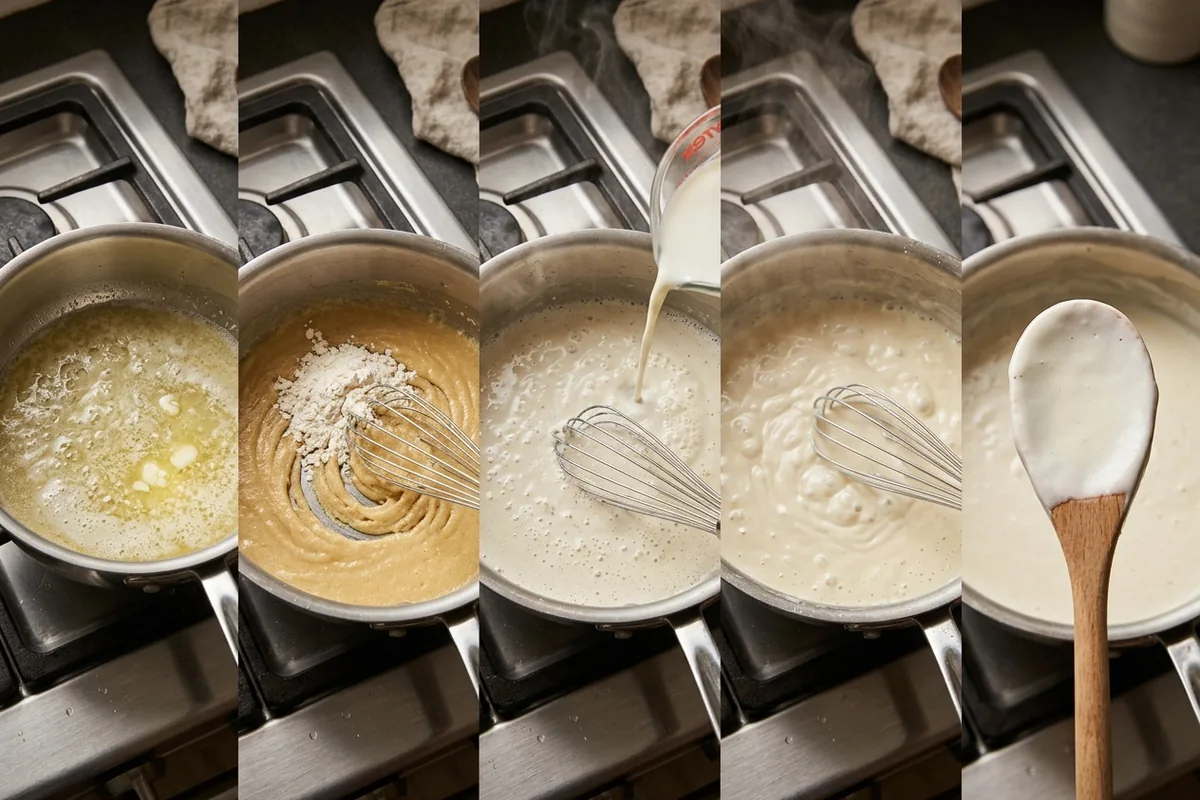
The sequence matters more than anything, because alfredo with milk fails when steps are rushed. Start by warming the milk, either in the microwave or a small pan, so it is hot but not boiling; cold milk hitting a hot roux is the number one cause of lumps. In a separate saucepan over medium-low heat, melt the butter, then add the minced garlic and cook for about 30 seconds until fragrant. Sprinkle in the flour and whisk constantly, cooking the raw flour for one to two minutes until the mixture is bubbly and smells nutty rather than pasty; this cooks out the raw-flour taste. Now add the warm milk a quarter cup at a time, whisking each addition in completely before adding more. The sauce will look thick and gluey at first, then loosen as you add milk; this gradual incorporation is what keeps it smooth. Once all the milk is in, bring it to a gentle simmer and whisk for about five minutes until it thickens enough to coat the back of a spoon. Take the pan off the heat, then stir in the grated Parmesan until melted, and season with salt and pepper.
Why You Add the Cheese Off the Heat
This single step separates smooth alfredo from grainy alfredo, so it is worth understanding. Parmesan and most hard cheeses break when they get too hot: the proteins seize and the fat squeezes out, leaving a grainy, oily, or clumpy sauce instead of a creamy one. By pulling the pan off the burner before you add the cheese, you let the residual heat melt it gently without pushing it past the point where it breaks. Add the cheese gradually, a handful at a time, whisking it in so it melts evenly into the warm milk base. If the sauce cools too much to melt the cheese, return it to very low heat briefly, but never let it boil with the cheese in it. Using freshly grated cheese from a block matters here too, because pre-shredded cheese is coated with anti-caking starch that resists smooth melting, and the powdered cheese in a can will not melt into a silky sauce at all. Fresh-grated Parmesan off the heat is the reliable path to a creamy finish.
Which Milk Works Best
Whole milk is the clear winner for alfredo, because its fat is what gives the sauce richness and a creamy mouthfeel in the absence of heavy cream. You can use lower-fat milk, but the trade-off is real: 2 percent milk makes a thinner, less luxurious sauce, and skim milk produces a watery, lean result that tastes more like a thin cheese sauce than alfredo. If whole milk is all you have, you are in good shape. If you only have low-fat milk, you can compensate by adding a little extra butter or an extra tablespoon of flour to build back some body, and by leaning on a generous amount of Parmesan for richness. For an in-between richness without going to full cream, a half-and-half splash mixed into the milk bridges the gap. Avoid using non-dairy milks unless you choose an unsweetened, unflavored variety, since sweetened or vanilla plant milks will throw off the savory flavor. The bottom line is to reach for whole milk first and adjust upward with butter and cheese if you need more richness.
Troubleshooting: Too Thick, Too Thin, or Broken
Most alfredo problems are easy to fix once you know the cause.
Sauce is too thick
This is the most common issue and the easiest to fix: whisk in a splash of warm milk, a tablespoon at a time, until it loosens to the consistency you want. Alfredo also thickens as it sits and cools, so it is normal for it to firm up off the heat. Thin it just before serving.
Sauce is too thin
Let it simmer a little longer to reduce and thicken, whisking often. If it still will not thicken, mix a teaspoon of flour or cornstarch with a tablespoon of cold milk to make a slurry, then whisk it in and simmer a minute. More grated Parmesan also thickens the sauce as it melts.
Sauce is grainy or broken
This usually means the cheese was added over too much heat. Pull the pan off the burner immediately, add a splash of warm milk, and whisk hard to bring it back together. Adding the cheese off the heat next time prevents it. A grainy sauce can often be rescued this way before it fully separates.
No-Flour Method: Alfredo With Just Milk and Cheese
If you want to skip the roux, you can make a milk-based alfredo without flour by relying on the cheese and a gentle reduction to thicken it. Melt the butter and cook the garlic, then add the milk and bring it to a gentle simmer, letting it reduce and concentrate for several minutes. Off the heat, whisk in a generous amount of freshly grated Parmesan, which both flavors and thickens the sauce as it melts; the cheese proteins give the sauce body in place of the flour. This version is a little more delicate and can be thinner than the roux method, so it works best when you toss it immediately with hot pasta, where the starchy pasta water helps it cling and thicken. A spoonful of the pasta cooking water, which is full of starch, whisked into the sauce is a chef’s trick that tightens and emulsifies it without any flour at all. The result is a lighter, glossier alfredo that comes together fast.
Flavor Variations
Once you have the base, alfredo with milk is an easy canvas. Stir in a pinch of nutmeg for a classic, subtly warm note that flatters the cheese. Add cracked black pepper generously for a cacio e pepe lean, or a pinch of red pepper flakes for heat. Fresh herbs like parsley or basil brighten it, and a little lemon zest cuts the richness. For a heartier sauce, fold in sauteed mushrooms, wilted spinach, or cooked chicken. Swapping part of the Parmesan for Romano sharpens the flavor, while a spoonful of cream cheese makes it extra plush if you want more richness without cream. These small additions let one base recipe cover many dinners. Test kitchens such as America’s Test Kitchen and Bon Appetit have developed detailed cream-free alfredo methods if you want to compare techniques side by side. If you enjoy building sauces from scratch, the same roux-and-dairy technique underpins many creamy sauces, and the principles in our homemade alfredo sauce guide carry straight over to the milk version. For a different creamy direction entirely, the slow-simmered approach in a homemade spaghetti sauce shows how patience builds flavor in tomato-based sauces too.
Milk vs Cream Alfredo: What You Gain and Give Up
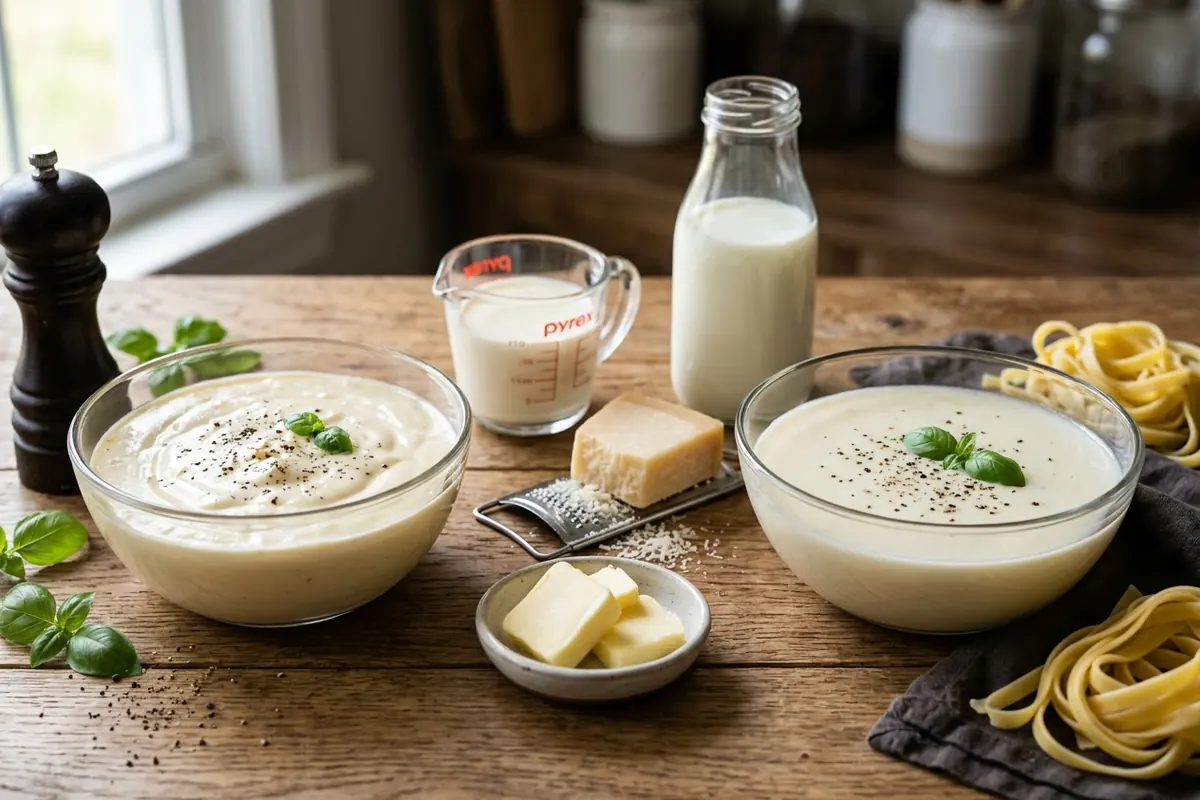
It is worth being honest about the trade-offs, because milk-based alfredo is not identical to the cream version. What you give up is a little of the heavy, coating richness that pure cream provides; cream has far more fat, so a cream alfredo clings thicker and tastes more decadent straight off the stove. What you gain is a lighter sauce with fewer calories and less saturated fat, made from an ingredient you almost always have on hand, since few people keep heavy cream in the fridge but most keep milk. The roux is the equalizer: by thickening the milk with flour and butter, you replace the body that cream’s fat would have supplied, so the texture comes surprisingly close. For everyday pasta nights, the milk version is often the more practical choice, and many people cannot tell the difference once it is tossed with pasta and cheese. Save the cream version for when you want an especially rich, occasional treat, and use the milk method as your reliable weeknight default. Knowing what each delivers lets you choose on purpose rather than by what happens to be in the fridge.
The Best Pasta and Pairings for Milk Alfredo
The sauce is only half the dish, so the pasta and pairings matter. Fettuccine is the classic partner because its flat, wide ribbons hold the creamy sauce well, but any pasta with surface area or ridges works, including linguine, pappardelle, or short shapes like penne and rigatoni that trap sauce in their grooves. Cook the pasta to al dente and reserve a cup of the starchy cooking water before draining, then toss the hot pasta directly in the sauce with a splash of that water, which loosens the alfredo and helps it coat every strand. Add the pasta to the sauce rather than the sauce to the pasta, and toss over low heat for a minute so they marry. For a complete meal, milk alfredo pairs naturally with grilled chicken, shrimp, or sauteed vegetables stirred in at the end, and a simple green salad and bread on the side balance the richness. Because the milk version is lighter than cream, it carries add-ins like spinach, peas, or mushrooms without feeling heavy, which makes it an easy base for a one-pan dinner.
Common Mistakes to Avoid
A few recurring mistakes account for most disappointing batches. Adding cold milk to the roux is the biggest, since the temperature shock causes lumps; always warm the milk first. Rushing the milk in all at once rather than gradually also breaks the smooth incorporation, so add it in stages and whisk each in fully. Skipping the one to two minutes of cooking the flour leaves a raw, pasty taste in the finished sauce. Using pre-shredded or canned cheese gives a grainy or refusing-to-melt result, so grate fresh from a block. Adding the cheese over high heat breaks it, which is why off-the-heat is the rule. And over-reducing or overcooking makes the sauce gluey and too thick, so pull it when it just coats a spoon, remembering it will thicken further as it sits. Avoiding these six errors is most of what separates a silky, professional-tasting alfredo from a lumpy or grainy one, and none of them requires special skill, just attention to temperature and timing.
How to Store and Reheat
Alfredo with milk keeps in an airtight container in the refrigerator for about three to four days. It will thicken considerably as it chills, which is normal. The key to reheating is to go low and slow and to add liquid, because high heat will break the sauce and make it grainy or oily. Reheat it gently in a saucepan over low heat, whisking in a splash of milk a little at a time to loosen it back to a creamy consistency. In the microwave, heat in short bursts of about 30 seconds, stirring between each and adding a little milk, rather than blasting it on high. Avoid boiling reheated alfredo, since that is what causes separation. Because milk-based alfredo does not freeze well, the dairy tends to separate on thawing, it is best made in the amount you will use within a few days. Made and reheated gently, it stays smooth and creamy.
Frequently Asked Questions
Can you make alfredo sauce with milk instead of heavy cream?
Yes. Make a roux of butter and flour, then whisk in warm whole milk to build the body that cream would provide, and finish with freshly grated Parmesan off the heat. The result is a lighter but still creamy alfredo made from everyday ingredients, without any heavy cream.
What kind of milk is best for alfredo sauce?
Whole milk is best because its fat gives the sauce richness and a creamy texture. Lower-fat milk makes a thinner sauce, so compensate with extra butter, flour, or Parmesan. Avoid sweetened or flavored non-dairy milks, which throw off the savory flavor of the sauce.
Why is my alfredo sauce grainy?
Graininess usually means the cheese was added over too much heat, which makes it break. Add the Parmesan off the burner so residual heat melts it gently, and use freshly grated cheese rather than pre-shredded or canned. To rescue a grainy sauce, whisk in a splash of warm milk off the heat.
How do I thicken alfredo sauce made with milk?
Simmer it longer to reduce, add more grated Parmesan, or whisk in a slurry of a teaspoon of flour or cornstarch mixed with cold milk and simmer briefly. Starting with the right roux ratio of roughly equal butter and flour prevents a thin sauce in the first place.
Can I make alfredo with milk and no flour?
Yes. Reduce the milk gently to concentrate it, then whisk in plenty of freshly grated Parmesan off the heat to thicken and flavor the sauce. Tossing it immediately with hot pasta and a spoonful of starchy pasta water helps it cling and tighten without any flour.
How do I reheat alfredo sauce without it separating?
Reheat gently over low heat or in short microwave bursts, whisking in a splash of milk to loosen it. Avoid high heat and boiling, which break the sauce and make it grainy. Milk-based alfredo does not freeze well, so make only what you will use within a few days.
Bottom Line
Making alfredo sauce with milk instead of heavy cream is straightforward once you respect the order of operations: warm the milk, build a butter-and-flour roux, add the milk gradually to keep it smooth, and stir in fresh-grated Parmesan off the heat so it does not break. Whole milk gives the best richness, and the roux ratio of roughly equal butter and flour controls the thickness. If the sauce ends up too thick, thin it with warm milk; too thin, simmer or add cheese; grainy, pull it off the heat and whisk in milk. With those simple corrections and gentle reheating, a milk-based alfredo comes out silky, creamy, and lighter than the cream version, using ingredients you already keep on hand.