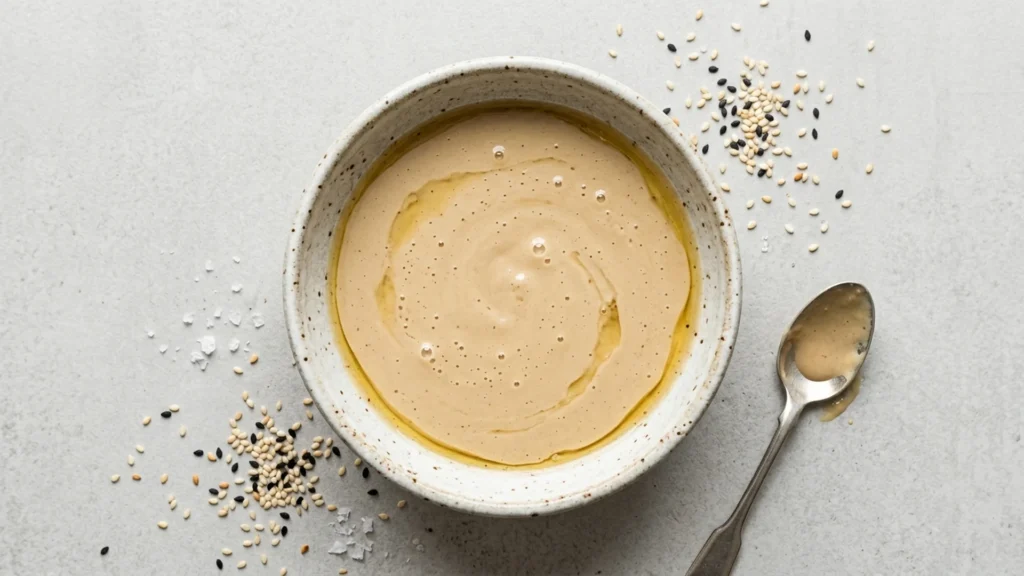
This question comes up constantly, usually from someone holding a falafel wrap and reading the back of a jar. Does tahini sauce have dairy? The short answer is no. Real tahini sauce is built entirely from sesame seeds and a few pantry liquids, and there is not a drop of milk anywhere in the traditional recipe. The creaminess that fools people into thinking dairy is hidden in there comes from the natural oils pressed out of toasted sesame, not from cream or yogurt.
That said, the short answer is not the whole story. The word “tahini” gets stretched in a lot of directions on grocery shelves and restaurant menus, and some of those directions do quietly walk dairy back into the picture. So here is exactly what tahini sauce is, where dairy can sneak in, and how to read a label or question a server so you never get caught out. The difference between a clean tahini sauce and a doctored one usually comes down to two or three ingredients you can learn to spot in seconds.
What Tahini Sauce Actually Is
Two things get jumbled together here, and they are worth separating. Tahini, on its own, is a paste. It is made by grinding hulled sesame seeds, often lightly toasted first, into a smooth butter the way peanuts get ground into peanut butter. That is the entire ingredient list for pure tahini: sesame seeds. Sometimes a pinch of salt. Nothing else belongs in a jar labeled plain tahini.
Tahini sauce is what happens when you loosen that thick paste into something pourable and bright. The classic Levantine version, the one you get drizzled over falafel and shawarma across the Middle East, is tahini whisked with cold water, fresh lemon juice, crushed garlic, and salt. As you add water the paste does something almost magical: it seizes up, turns pale and thick, then loosens into a silky cream. People taste that texture and assume there must be dairy doing the work. There is not. It is sesame oil and water emulsifying, the same way an egg-free vinaigrette can turn creamy when you whisk it hard enough.
The sesame seed itself is a small powerhouse, naturally rich in fat, and that fat content is the whole secret to the body of the sauce. For a thicker pour on a grain bowl, add less water; for a thin drizzle on a salad, add more. Either way the ingredient list never changes, and never includes anything from an animal.
So Where Does the Dairy Confusion Come From?
If tahini sauce is naturally dairy-free, why does the question keep coming up? Three reasons, and all of them are worth understanding because they apply to a lot of sauces, not just this one.
First, the texture. We are conditioned to associate that thick, pale, creamy look with milk products. Ranch, alfredo, sour cream dips, they all share a similar mouthfeel. Tahini sauce mimics that without any dairy, so people reasonably wonder what is doing the heavy lifting. The answer, again, is emulsified sesame fat and water.
Second, restaurant blends. This is the big one. A lot of kitchens, especially in the West, build a “tahini” or “white sauce” that starts with real tahini but gets stretched and softened with Greek yogurt, sour cream, or even mayonnaise to cut cost and mellow the bitterness. Shawarma garlic sauces in particular are a coin flip; some are pure tahini, some are yogurt-based, and some are a blend of both. The menu rarely tells you which.
Third, packaged dressings. The bottled “tahini dressing” or “tahini Caesar” in the refrigerated aisle is a different animal from a jar of plain tahini. Manufacturers add stabilizers, sweeteners, and sometimes dairy derivatives to extend shelf life and standardize flavor. This is where you actually need to read the label.
The Dairy Ingredients to Watch For on a Label
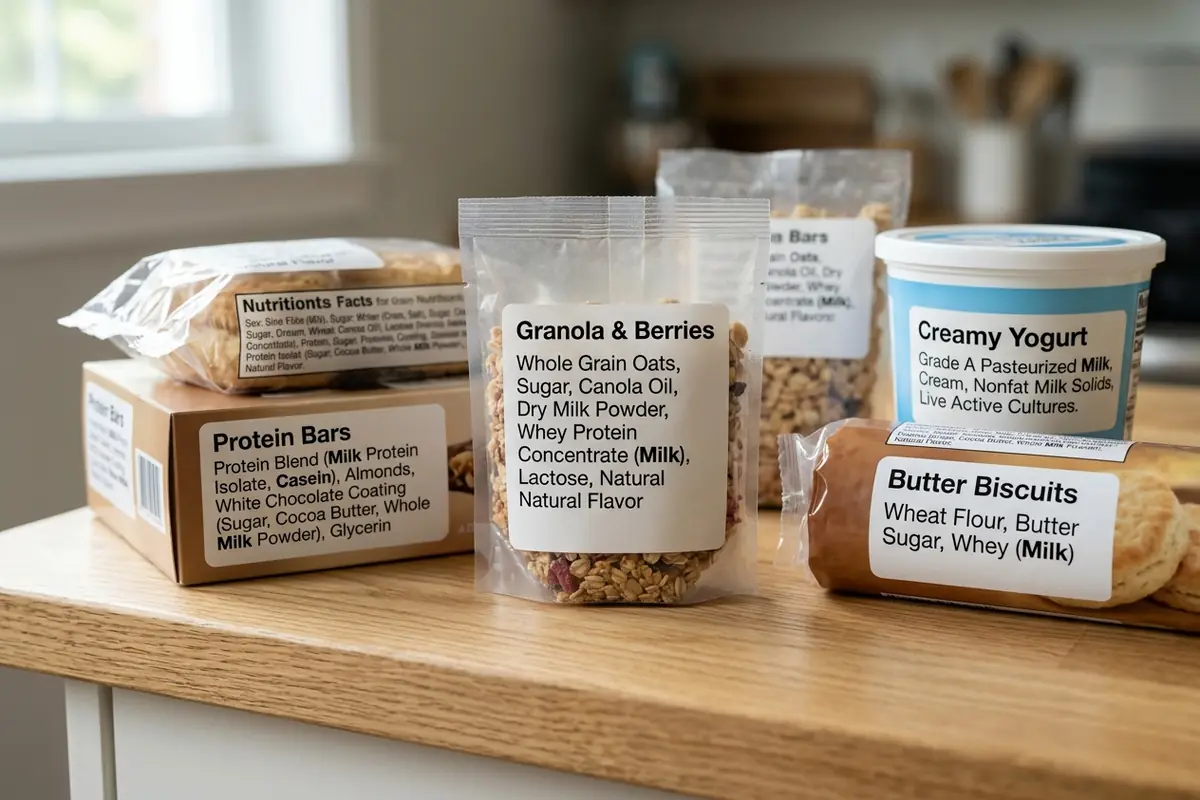
If a tahini product does contain dairy, it will show up under one of a handful of names. This list is worth keeping in mind every time you shop. Here is what hides milk on an ingredient panel.
Whey and whey protein are the most common, used to add body and a faint tang. Casein and caseinate are milk proteins that turn up in creamy commercial products. Milk powder, nonfat milk solids, and buttermilk solids are dry forms of dairy that blend invisibly into a paste. Yogurt and Greek yogurt are obvious once you look but easy to skim past. And lactose sometimes appears as a bulking sweetener. If none of those words are on the panel and the allergen statement does not say “contains milk,” your tahini sauce is dairy-free.
| If you see this on the label | What it means | Dairy-free? |
|---|---|---|
| Sesame, sesame seeds (only) | Pure tahini paste | Yes |
| Sesame, water, lemon, garlic, salt | Classic tahini sauce | Yes |
| Whey, casein, caseinate | Added milk proteins | No |
| Yogurt or Greek yogurt | Blended dairy base | No |
| Milk powder, nonfat milk solids | Dried dairy filler | No |
| “Contains: milk” allergen line | Regulated dairy warning | No |
Tahini Sauce Versus the Dairy-Based Lookalikes
Part of what makes this question sticky is that tahini sauce sits on the table next to several creamy sauces that genuinely do contain dairy. Knowing the difference at a glance helps you order with confidence. A real tahini sauce is sesame, lemon, garlic, water. A tzatziki is yogurt, cucumber, garlic, herbs, and it is fully dairy. A toum, the fierce Lebanese garlic sauce, is garlic, oil, lemon, and salt whipped to a fluffy white, and it is dairy-free despite looking like mayonnaise. A ranch or a Caesar is dairy through and through.
The lesson is to never judge a creamy white sauce by its color. Color tells you almost nothing about whether dairy is present. Ingredients do. When the texture is the clue you are tempted to trust, that is exactly when you should slow down and ask.
Here is a side-by-side for when a creamy white sauce shows up on the table and it is not clear what it is. The visual cues overlap heavily, so the only reliable tells are taste and ingredients.
| Creamy white sauce | Main ingredients | Contains dairy? |
|---|---|---|
| Tahini sauce | Sesame paste, lemon, garlic, water | No |
| Toum (garlic sauce) | Garlic, oil, lemon, salt | No |
| Tzatziki | Yogurt, cucumber, garlic, herbs | Yes |
| Ranch | Buttermilk, mayo, herbs | Yes |
| Caesar dressing | Parmesan, egg, anchovy, oil | Usually yes |
| Restaurant “white sauce” | Varies (tahini OR yogurt blend) | Ask the kitchen |
The signature note that separates pure tahini from any dairy lookalike is its flavor: a gentle, nutty, slightly bitter sesame taste lifted by lemon. Dairy versions carry a cultured tang you can detect with a single taste. When you cannot read an ingredient list, your tongue is the next best label reader.
Eating Out: How to Ask Without the Awkwardness
Restaurants are where most of the real risk lives, because the recipe is invisible and the staff may not know the full ingredient list. If you are avoiding dairy for an allergy, intolerance, or a vegan diet, here is how to ask. Skip the vague “is this dairy-free?” and get specific: “Is your tahini sauce made with yogurt, sour cream, or any milk?” That phrasing tells the server exactly what you are checking and prompts them to go find out if they do not know.
Be especially careful with anything labeled garlic sauce, white sauce, or shawarma sauce at a casual counter. Those names are not standardized and could mean tahini, toum, or a yogurt blend depending on the kitchen. When in doubt, ask them to put it on the side so you can taste a dab; dairy versions have a distinct cultured tang that pure tahini never has. Tahini’s signature note is a gentle, nutty bitterness with a lemony lift, not a sour creaminess.
Make Your Own and Skip the Guesswork
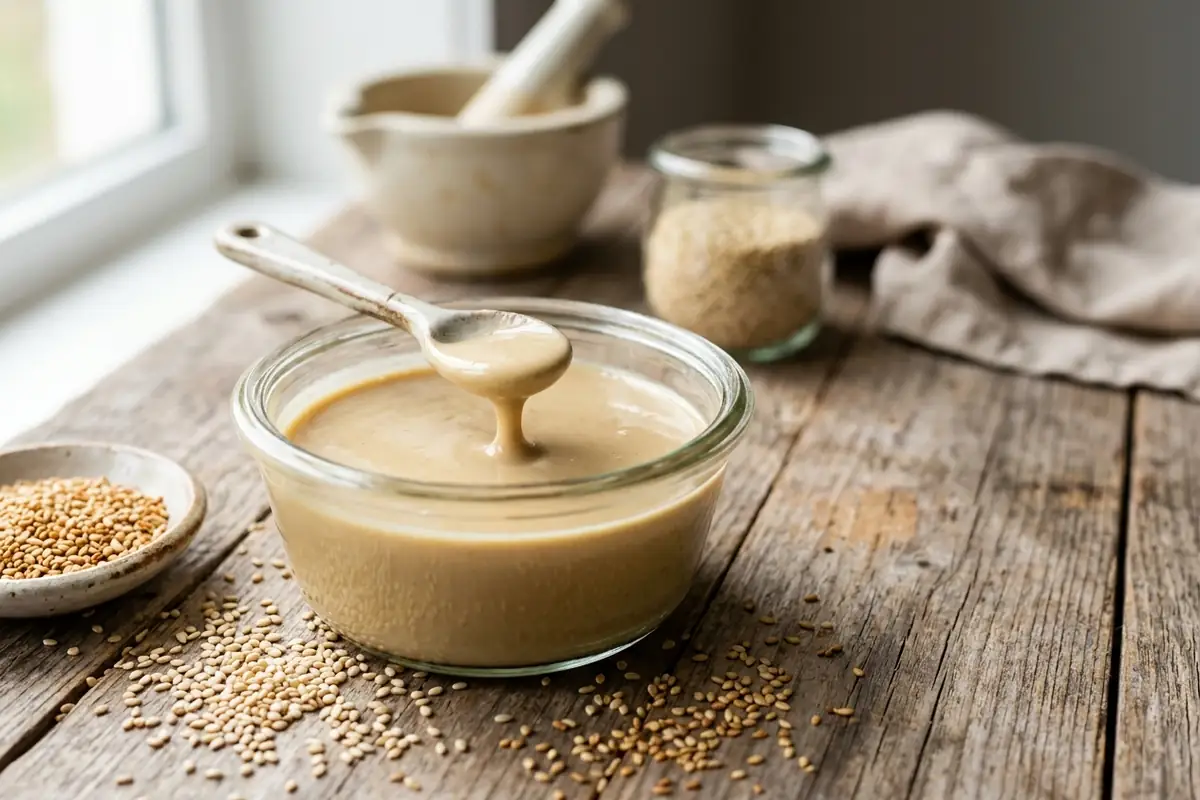
The surest way to know your tahini sauce has zero dairy is to make it yourself, and it takes about three minutes. You need good tahini, cold water, lemon, garlic, and salt. Start with a half cup of tahini in a bowl. Add a clove of finely grated garlic and the juice of half a lemon, then whisk. It will seize into a stiff paste; do not panic, that is the sign it is working. Now drizzle in cold water a tablespoon at a time, whisking between each addition, and watch it transform from clumpy to glossy. Stop when it pours like a thick cream. Salt to taste.
From that base you can go a hundred directions, none of which require dairy. Whisk in chopped parsley and cumin for a herby drizzle. Add a spoon of harissa for heat. Thin it further for a salad dressing or keep it thick as a dip. If you ever struggle to get the consistency right, the same emulsion principles covered in the guide on how to thicken a sauce apply here in reverse; controlling water is everything. And if you are missing a punchy umami ingredient in a recipe, the notes on a good hoisin sauce substitute can help you round out flavor without reaching for anything off your safe list.
Tahini Sauce on a Dairy-Free or Vegan Table
Because pure tahini sauce is plant-based start to finish, it is one of the most useful tools you can keep on hand if you cook dairy-free. It does the job cream usually does: it adds richness, coats food, and makes a plate feel finished. It works well drizzled over roasted vegetables, folded into grain bowls, or used to turn plain greens into something worth eating.
It pairs beautifully with the kind of plant-forward cooking you find in a vegan bowl, where a good sauce is the difference between a sad pile of grains and a real meal. It is also a smart way to add body to lighter pasta dishes without cream, an idea that fits right in with the lighter pasta sauces people reach for when they want flavor without heaviness. The point is that once you trust tahini sauce is dairy-free, it stops being a question mark and becomes a default.
Storage, Shelf Life, and Why It Stays Dairy-Free
One reason people suspect dairy in tahini sauce is that it behaves a little like a dairy product in the fridge: it firms up when cold and loosens at room temperature. That is not milk fat solidifying, it is sesame oil and the natural thickening of the emulsion. A homemade tahini sauce keeps in an airtight container in the refrigerator for about four to five days. It will thicken considerably as it sits, which is completely normal; just whisk in a splash of cold water to bring it back to a pourable cream before serving. If it ever smells sharp, bitter in a rancid way, or sour, that is the sesame oil going off, not dairy spoiling, and it is your cue to discard it.
Plain tahini paste, the jarred base, lasts far longer, often many months in the pantry and even longer refrigerated, because it is essentially pure ground seed with no water added. The oil naturally separates and rises to the top in the jar; stirring it back in is part of normal use and has nothing to do with any added ingredient. None of this storage behavior introduces dairy at any stage, which is worth knowing if you have ever wondered whether a thickened or separated jar had somehow “turned” into something containing milk. It has not.
Tahini Sauce and Other Allergens
Since people often ask about dairy as part of a broader set of dietary needs, it helps to map tahini sauce against the common allergens. It is naturally free of dairy, eggs, and gluten in its classic form, which makes it unusually friendly for restricted diets. The one allergen it absolutely does contain is sesame, which is now recognized as a major allergen and must be declared on US labels. So while tahini sauce is a hero ingredient for dairy-free and gluten-free cooks, it is off the table for anyone with a sesame allergy, no exceptions.
Cross-contact is the other thing to keep in mind in a shared kitchen or restaurant. A naturally dairy-free tahini sauce can still pick up traces of milk if it is made with shared utensils next to yogurt-based sauces, which matters for a serious milk allergy though not for a general preference. As always, when the stakes are an allergy rather than a choice, ask the kitchen directly about how the sauce is prepared and stored.
A Note on Other Sesame Sauces
Tahini has cousins worth a quick mention so you do not confuse them. The sesame paste used in Chinese cooking is similar but usually made from unhulled, more heavily toasted seeds, giving a darker, stronger flavor; still dairy-free. Tahini sauce should also not be confused with a sesame-ginger dressing, which is dairy-free in its classic form but, like everything bottled, can vary by brand. Whenever a product carries the word sesame and nothing else animal-derived, you are on safe ground. The history and reach of tahini across Mediterranean and Middle Eastern cooking is worth a read if you want to appreciate just how old and how naturally plant-based this sauce really is.
Why Tahini Sauce Tricks People Into Thinking Dairy
It is worth dwelling for a moment on the texture science, because understanding it permanently settles the dairy question in your own mind. When you whisk water into thick tahini paste, the sesame oil and the water do not want to mix on their own; oil and water repel. But the paste also contains tiny particles of ground sesame solids that act as natural emulsifiers, coaxing the oil into suspending evenly through the water as microscopic droplets. That suspension is what scatters light and turns the sauce pale, opaque, and creamy. It is the exact same optical and physical trick that makes milk look white: milk is also fat droplets suspended in water. So tahini sauce and milk can look like cousins while sharing none of the same ingredients. Same physics, completely different source.
This is also why the sauce seizes before it smooths out. At first you add too little water for the oil to disperse, so the paste tightens into a stiff clump. Keep adding water and you cross a threshold where the emulsion forms and the whole thing relaxes into silk. None of those stages involves anything but sesame, water, and your whisk. Once you have watched it happen with your own hands a few times, the idea that there must be hidden cream in there stops being believable. The creaminess is structural, not dairy.
Quick Buying Tips for a Trustworthy Jar
If you would rather buy than make, getting a clean, dairy-free product is easy with a couple of habits. Reach for jars whose ingredient list is short, ideally just sesame seeds, or sesame plus salt for plain tahini. For bottled tahini sauces and dressings, prefer those that proudly state “vegan” or “dairy-free” on the front, because that is a manufacturer making the promise explicitly rather than leaving you to decode the panel. Favor brands that specialize in Middle Eastern or Mediterranean products, since traditional recipes have no reason to include dairy in the first place. And give the bottle a glance for the allergen line; a sesame-only allergen statement with no mention of milk is exactly what you want to see. With those habits, you will pick a dairy-free jar nearly every time without having to scrutinize every word.
Frequently Asked Questions
Is tahini sauce dairy-free?
Yes. Traditional tahini sauce is made from sesame seed paste, water, lemon juice, garlic, and salt, with no dairy of any kind. The creamy texture comes from the natural oil in sesame seeds emulsifying with water, not from milk or cream. Only check the label on bottled blends, since some commercial or restaurant versions add yogurt or milk proteins.
Does store-bought tahini sauce ever contain milk?
Pure tahini almost never does, but bottled “tahini dressings” and refrigerated white sauces sometimes do. Watch for whey, casein, milk powder, yogurt, or a “contains milk” allergen line on the panel. If none of those appear, the product is dairy-free.
Is the white garlic sauce at restaurants the same as tahini sauce?
Not always. A counter may call a yogurt-based sauce, a tahini sauce, or a whipped garlic toum all “white sauce” or “garlic sauce.” Tahini and toum are dairy-free; yogurt-based versions are not. Ask specifically whether it contains yogurt, sour cream, or milk before assuming.
Is tahini sauce vegan?
Classic tahini sauce is fully vegan, since it contains only plant ingredients. The same caution applies as with dairy: a few commercial or restaurant blends sweeten or thicken with honey or yogurt, so check the label or ask if you follow a strict vegan diet.