Fresh tomatoes tomato sauce, meaning sauce built from real summer tomatoes rather than a can, is one of those projects that looks simple and quietly humbles people every August. The fruit is mostly water, so the whole game is concentrating flavor without cooking the life out of it. Done right, a sauce from peak-season tomatoes tastes brighter and rounder than anything from a can. Done carelessly, you get a thin, sour, watery puddle and a wasted afternoon. Both outcomes are common. Here is how to land on the good side every time.
Quick answer before the details: pick meaty paste tomatoes, peel them, decide whether to seed based on your texture goal, then simmer low and slow in a wide pan until the volume drops by about half. Plan on roughly 4 pounds of fresh tomatoes to yield about 1 quart of finished sauce. That ratio is the single most useful number in this whole piece.
What follows is the order of work for harvest season, plus the parts most recipes skip: how much your batch will actually shrink, when peeling and seeding are worth the trouble, how to rescue a sauce that came out thin or sour, and the honest comparison between a fresh batch and a good can. None of it is hard once you understand that you are really just managing water and heat.
Pick the Right Tomato First
The variety matters more than the technique. Paste tomatoes, the egg-shaped ones like Roma, San Marzano, and Amish Paste, are built for sauce. They have thick walls, dense flesh, fewer seed pockets, and less water, which means you spend less time boiling off liquid and keep more fresh flavor. Round slicing tomatoes and beefsteaks make sauce too, but they carry far more water and gel, so you will reduce them longer and lose some brightness in the process.
Cherry and grape tomatoes are the wild card. They taste fantastic and are often the sweetest thing in the garden, but they are seedy and a pain to peel at volume. Use them as a flavor booster blended into a paste-tomato base, not as the whole batch. Whatever you choose, ripeness is non-negotiable. A truly ripe tomato is heavy for its size, gives slightly to a gentle squeeze, and smells like a tomato at the stem. Pale, firm, refrigerated supermarket tomatoes will make pale, flat sauce no matter how long you cook them. If your tomatoes are not great, good canned San Marzano will honestly beat them, even for anyone who loves a fresh batch.
Why Water Content Decides Everything
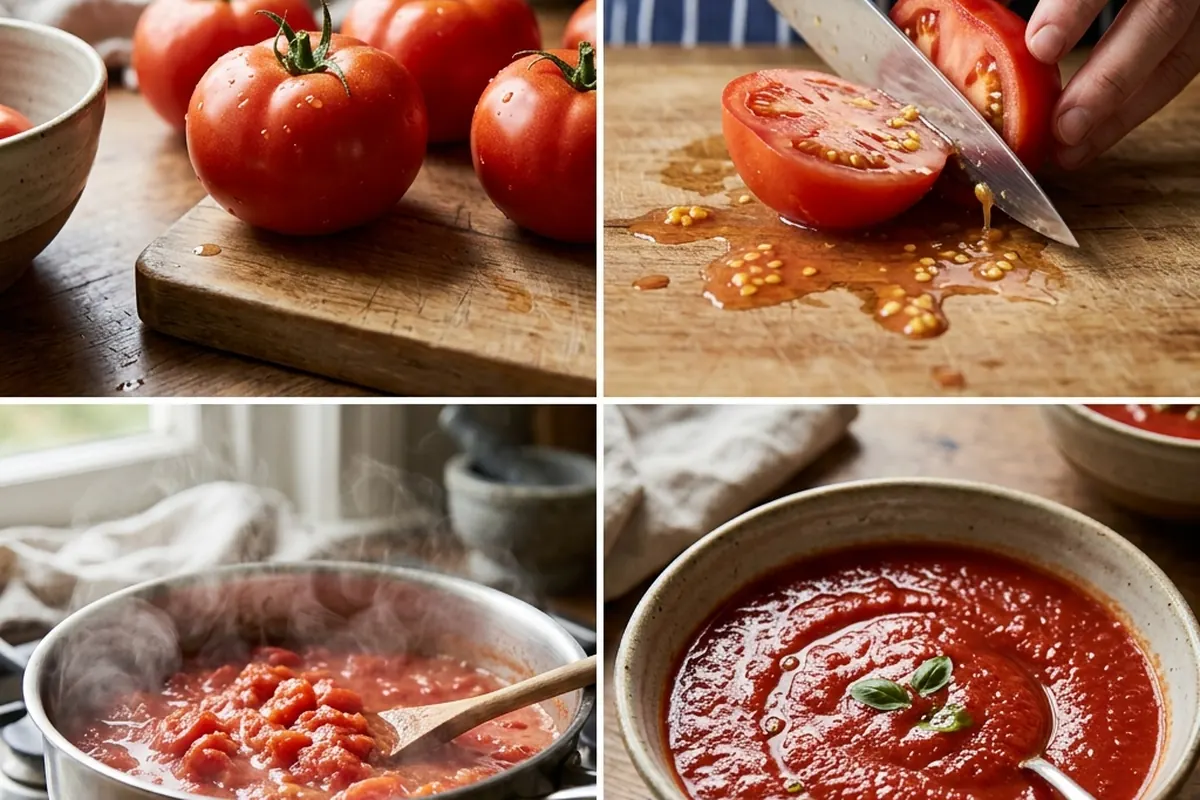
A ripe tomato is around 94 percent water. Sit with that number, because it explains every frustration people have with fresh sauce. When you chop a pile of tomatoes into a pot, most of what you are looking at is water that has to leave before you have sauce. That is why the volume shrinks so dramatically and why a wide, shallow pan beats a tall stockpot. More surface area means faster evaporation, which means a shorter cook and fresher taste.
This is also why the yield math matters. Expect to lose roughly half your volume to evaporation. Four pounds of fresh tomatoes cooks down to about a quart, which feeds about four people over pasta. If you want sauce for a crowd or for the freezer, scale the raw tomatoes up hard. People consistently underestimate this and end up with a sad cup of sauce from what looked like a mountain of fruit.
To Peel or Not to Peel
Peel. For a smooth, restaurant-style sauce, tomato skins are the enemy. They will not break down during a normal simmer, so they curl into tough little ribbons that catch on your tongue. Two reliable ways to get the skins off:
The blanch method is the classic. Score a small X on the bottom of each tomato, drop them into boiling water for 30 to 60 seconds until the skin starts to peel back at the X, then shock them in an ice bath. The skins slip off with your fingers. Do not leave them in the boiling water too long or you start cooking the flesh.
The freezer method is the lazy favorite for end-of-season gluts. Freeze whole washed tomatoes on a tray. When you thaw them, the skins slide off on their own, no boiling pot required. The texture of the flesh changes slightly, but for cooked sauce it makes no difference, and it lets you stockpile tomatoes at the peak and make sauce in October.
The Peel and Seed Decision Tree
Not every step is worth it for every sauce. Here is how to decide:
- Smooth, refined sauce for a nice dinner: peel and seed, then pass through a food mill or blend. Worth the effort.
- Rustic, chunky sauce for a weeknight: peel, skip seeding, hand-crush. The seeds add a little tartness that reads as character here.
- Sauce you will run through a food mill anyway: skip both peeling and seeding. The mill removes skins and seeds for you in one pass. This is the real shortcut nobody mentions.
- Using paste tomatoes with few seeds: skip seeding regardless. There is barely anything to remove.
That food mill point is the one to remember. If you own a food mill, you can quarter the raw tomatoes, cook them down, and run the whole thing through. The mill catches skins and seeds and pushes pure pulp out the bottom. It turns a fussy afternoon into a calm one.
The Core Method, Step by Step
Here is the standard version, the one that respects the fruit. Warm 3 tablespoons of good olive oil in a wide pan over medium heat. Add 3 to 4 cloves of thinly sliced garlic and let it soften and turn fragrant without browning, about 2 minutes. Browned garlic turns bitter, so keep the heat gentle.
Add your prepped tomatoes, roughly 4 pounds, along with a solid pinch of salt. Bring to a simmer, then drop the heat to a lazy bubble. Cook uncovered, stirring now and then, until the tomatoes collapse and the liquid reduces by about half. With paste tomatoes in a wide pan this can take 30 to 45 minutes. With watery slicing tomatoes, give it longer. Tear in a big sprig of fresh basil in the last few minutes, taste, and adjust salt. That is the whole sauce. If you built it on a clean garlic-and-oil base, you are most of the way to a proper marinara, and the technique overlaps almost completely with how to make a real marinara sauce from scratch.
For texture, decide at the end. Leave it chunky, mash it with a spoon for a rustic feel, or buzz it with an immersion blender for smooth. Each is correct depending on what you are saucing.
A note on salt timing, because it changes the result. Salting early, when the tomatoes go in, helps draw out moisture and season the sauce from within. But salt also concentrates as the water evaporates, so a sauce that tasted right at the start can turn salty by the end. The fix is to salt lightly up front and adjust at the finish, once the volume has settled. Taste three times: after the tomatoes collapse, halfway through reducing, and right before serving. That habit catches almost every seasoning miss before it becomes permanent.
The Roasting Shortcut for Deeper Flavor
If your tomatoes are good but not spectacular, roasting fixes a lot. Halve the tomatoes, toss them with olive oil and salt, lay them cut side up on a sheet pan, and roast at 400 degrees F for about 35 to 45 minutes until the edges char and the juices concentrate. The dry heat drives off water and caramelizes the natural sugars, which builds a deeper, almost sweet flavor that a stovetop simmer cannot reach. Throw a head of garlic and a couple of onion wedges on the same pan and you have most of a sauce before you even start the pot.
After roasting, scrape everything into a pan with a splash of olive oil, simmer for 10 minutes to marry it, then blend or mill. This is the move for early-season or supermarket tomatoes that lack punch. It is also forgiving, because the oven does the watching for you. The only watch-out is the garlic, which can scorch faster than the tomatoes, so pull it if it darkens early.
The Equipment That Actually Helps
You do not need much, but a few tools change the experience. A wide, heavy-bottomed pan or a Dutch oven is the most important, because surface area and even heat do the real work. A food mill is the single best optional buy, since it removes skins and seeds and gives you a clean pulp without peeling by hand. An immersion blender is the cheap alternative for smooth sauce, though it keeps the skins and seeds in, so use it only on peeled, seeded tomatoes.
Skip the gadgets that promise to do everything. A so-called sauce maker attachment can work, but for most home batches a knife, a pot, and a mill cover it. Good kitchen tongs make blanching and peeling far less of a burn hazard, and a wide ladle and flat freezer bags turn storage into a five-minute job. Quality matters more in the pan and the mill than anywhere else.
Troubleshooting a Fresh Tomato Sauce
Most fresh sauce problems come down to four issues, and each has a clean fix.
Watery and thin. You stopped cooking too soon, or your pan was too tall and narrow. Keep simmering uncovered until it visibly tightens and a spoon dragged across the pan leaves a brief trail. If you are out of patience, a tablespoon of tomato paste stirred in adds body and deeper color fast.
Too sour or sharp. Underripe tomatoes are acidic. A small pinch of sugar balances it, but the better fix is fat. A pat of butter or an extra glug of olive oil stirred in at the end rounds the acid off without making the sauce taste sweet.
Bitter. Usually browned or burnt garlic, or scorched fond at the bottom of the pan. There is no rescue once it is in. Prevent it by keeping the garlic gentle and stirring the bottom regularly.
Bland. Almost always not enough salt, not a lack of herbs. Salt in stages, tasting as you go. A fresh sauce that tastes flat usually wakes up with one more pinch. If you are still short on depth, understand the difference between thin sauce and concentrated paste in our guide to tomato sauce versus paste, and use a spoon of paste to anchor the flavor.
Storing, Freezing, and Canning
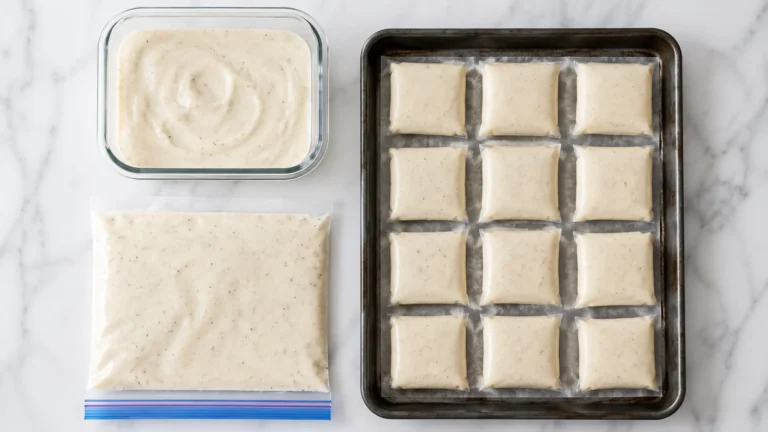
Fresh tomato sauce keeps in the fridge for about 4 to 5 days in a sealed container. It freezes well for up to 6 months, and freezing is the recommended route for most home cooks because it is foolproof. Cool the sauce fully, portion it into freezer bags laid flat, press out the air, and stack them like files. Flat bags thaw fast and store small. For single servings, freeze the sauce in a muffin tin first, then pop the pucks into a bag, so you can pull exactly one portion for a quick weeknight bowl. A label with the date matters more than you think, since a year-old bag tends to slide to the back and get forgotten.
Canning is a different commitment. Tomatoes sit right on the edge of the acidity needed for safe water-bath canning, which is why tested recipes call for added bottled lemon juice or citric acid to guarantee a safe pH. The National Center for Home Food Preservation calls for 2 tablespoons of bottled lemon juice or 1/2 teaspoon citric acid per quart, and it says plainly: do not leave the acid out. If you want shelf-stable jars, follow a current, tested canning guide to the letter rather than improvising. For everyday cooks, the freezer gives you the same flavor with none of the safety math.
Fresh vs Canned: An Honest Verdict
Fresh does not always win. Peak-season, locally grown paste tomatoes make a sauce that canned cannot touch, bright and almost floral. But a sauce made from out-of-season, watery, underripe tomatoes is worse than one built on quality canned San Marzano or canned whole peeled tomatoes. Canned tomatoes are picked and packed at peak ripeness, which is exactly why professional kitchens and recipe developers at America’s Test Kitchen use them year round. My rule is simple: make fresh sauce when you have great tomatoes in front of you, and reach for good canned the other ten months of the year. There is no shame in either, and a cook who knows when to skip the fresh batch eats better than the purist who insists on it in February.
FAQ
How many fresh tomatoes do I need for tomato sauce?
Plan on roughly 4 pounds of fresh tomatoes for about 1 quart of finished sauce, since you lose around half the volume to evaporation. For a big batch or freezer stock, scale up hard, because the pile shrinks far more than most people expect once the water cooks off.
Do I have to peel tomatoes for sauce?
For a smooth sauce, yes, because skins do not break down and turn into chewy ribbons. You can skip peeling if you plan to run the cooked tomatoes through a food mill, which removes skins and seeds in one pass, or if you genuinely want a rustic, chunky texture.
Should I remove the seeds?
It is optional. Seeds add slight tartness and a touch of bitterness, which suits a rustic sauce. For a smooth, refined result, seed the tomatoes or pass them through a food mill. Paste tomatoes have so few seeds that removing them is usually not worth the effort.
Why is my fresh tomato sauce watery?
Either you stopped cooking too early or your pan was too narrow. Simmer uncovered in a wide pan until the volume drops by half and the sauce coats a spoon. For a quick fix, stir in a tablespoon of tomato paste to add body and color without more cooking time.
Can I freeze homemade tomato sauce?
Yes, and it is the easiest way to store it. Cool the sauce completely, portion it into freezer bags laid flat, press out the air, and freeze for up to 6 months. Flat bags thaw quickly and stack neatly, so you can pull out exactly what you need.
What kind of tomatoes make the best sauce?
Meaty paste varieties like Roma, San Marzano, and Amish Paste are best because they are dense, low in water, and have fewer seeds, so they reduce faster and keep more fresh flavor. Whatever you use, fully ripe fruit matters more than the exact variety.