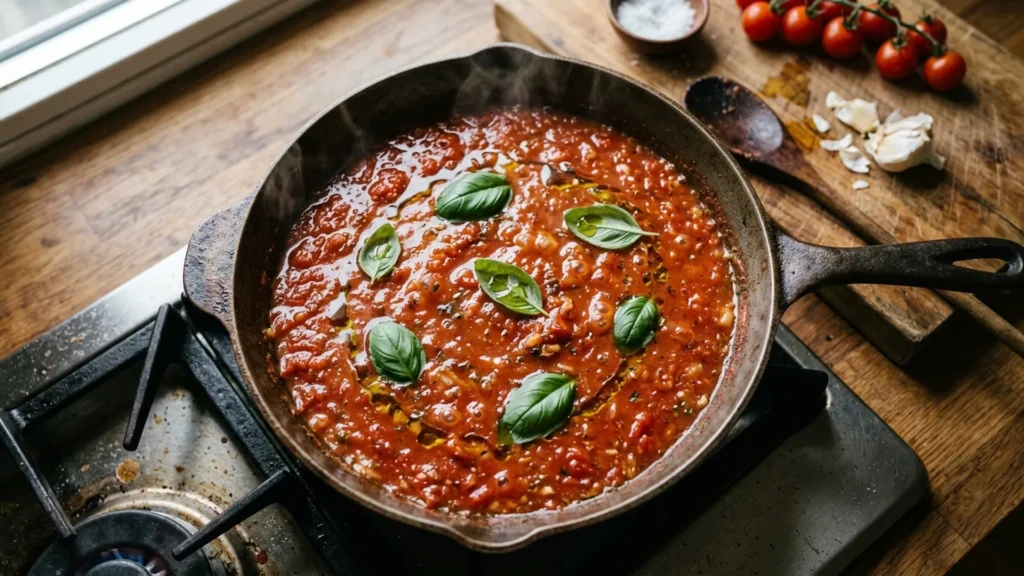
How to make marinara sauce is one of the first things every home cook should learn, because it is fast, it uses pantry staples, and it tastes dramatically better than anything in a jar. Real marinara needs only a handful of ingredients and about half an hour, yet most people get it slightly wrong in ways that cost it depth and brightness. This guide takes you from choosing the right canned tomatoes all the way to a finished sauce, with the technique and the reasoning behind each step so you can make it perfectly every time and fix it when something goes sideways. By the end you will be able to make marinara without a recipe and adjust it to whatever you are cooking.
Tomato sauce is the backbone of so much home cooking, and marinara is the cleanest, most useful version of it. It is one of the most common sauces there is, and the differences between a flat batch and a bright, balanced one come down to a few choices you control completely.
What Marinara Sauce Actually Is
Marinara is a quick, bright, tomato-forward sauce built on tomatoes, garlic, olive oil, and a little herb, simmered just long enough to come together. The defining trait is speed and freshness. Unlike a long-simmered Sunday gravy or a meaty ragu, marinara is meant to taste of tomato, not of hours on the stove. That is why it cooks in roughly 20 to 30 minutes and why it leans on good tomatoes rather than slow reduction for its flavor. It is also typically meatless, which makes it the most flexible tomato sauce in your kitchen: it works on pasta, pizza, as a dipping sauce, and as the base for dozens of other dishes.
Because it is so simple, the quality of your ingredients shows. There is nowhere to hide. That is good news, because it means a great marinara is mostly about smart shopping and a few correct techniques rather than any difficult skill.
Choosing the Right Tomatoes
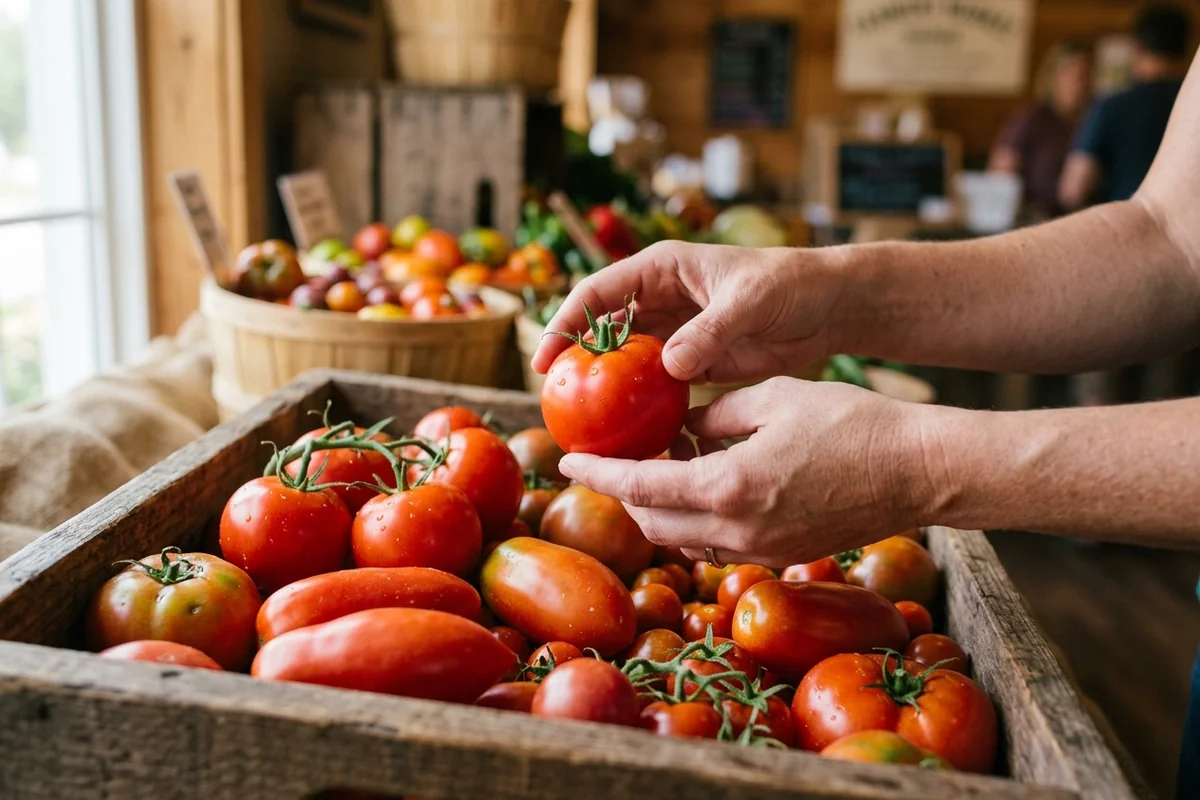
This is the single most important decision, and it is where most home cooks go wrong. For an out-of-season sauce, good canned tomatoes beat fresh supermarket tomatoes every time, because cannery tomatoes are picked and packed at peak ripeness. Look for whole peeled tomatoes in juice, ideally San Marzano-style plum tomatoes, which are meaty, low in seeds, and balanced in acid and sweetness. Crushed tomatoes give a smoother, faster sauce and are a fine shortcut. Diced tomatoes are the worst choice for marinara because they are treated with calcium chloride to hold their shape, so they never break down into a cohesive sauce. If you start with whole tomatoes, crush them by hand or with a spoon as they cook for the best texture and control. If you have peak-summer fresh tomatoes, by all means use them; the homemade tomato sauce walkthrough covers the fresh-tomato method in detail.
The Core Recipe and Method
Here is the working recipe. It makes enough for a pound of pasta, about four servings.
- 3 tablespoons good olive oil
- 4 to 5 garlic cloves, thinly sliced or minced
- 1 small onion, finely diced (optional, see below)
- One 28-ounce can whole peeled or crushed tomatoes
- 1/2 teaspoon salt, plus more to taste
- Pinch of red pepper flakes (optional)
- A few fresh basil leaves or a small sprig, torn
- Pinch of sugar if needed to balance acid
The method: warm the olive oil in a non-reactive pan over medium-low heat, add the garlic and optional onion, and cook gently until soft and fragrant but not browned, about 3 to 5 minutes. Browning the garlic turns it bitter, so keep the heat moderate. Add the tomatoes, crushing whole ones with a spoon, then the salt and red pepper flakes. Bring to a gentle simmer and cook partially covered for 20 to 30 minutes, stirring now and then, until the sauce thickens and the raw tomato edge softens into something rounder. Stir in the torn basil at the end, taste, and adjust salt and a pinch of sugar if the tomatoes are sharp. That is the entire sauce.
Onion or No Onion, and the Butter Trick
There are two great schools of marinara. The first uses olive oil and garlic only, for a sharp, bright, fast sauce that tastes intensely of tomato; this is the more traditional approach and what many Italian cooks make at home. The second softens a diced onion in the oil first, which adds a gentle sweetness and body that many Americans expect. Neither is wrong, so choose based on the dish. There is also a famous trick worth knowing: simmering the tomatoes with a whole peeled onion and a few tablespoons of butter, then removing the onion at the end. The butter rounds out the acid and gives the sauce a silky richness with no cream, and it is a genuinely transformative tip for anyone who finds their marinara too sharp. Both versions are worth keeping in rotation, depending on whether you want bright or mellow.
Partial Cover, Simmer, and Why It Matters
Two technique points decide your texture. First, simmer with the lid partially on. A fully covered pot traps steam and the sauce stays watery; a fully open pot reduces too fast and can scorch. A partial cover lets just enough water escape to thicken the sauce while protecting it from spitting and over-reducing. Second, keep the heat at a true simmer, a lazy bubble, not a hard boil. A hard boil can break the olive oil out of the sauce and make it greasy, and it cooks off the fresh tomato character you are trying to preserve. Marinara is a gentle sauce; treat it gently. If it gets too thick, loosen it with a splash of water or pasta water rather than cooking it shorter.
Seasoning and Balancing the Sauce
Tomatoes vary a lot in acidity, so tasting and adjusting at the end is essential. If the sauce tastes sharp or sour, a small pinch of sugar or that butter trick will round it; do not dump in sugar, just balance. If it tastes flat, it needs salt, which is almost always the fix for a dull tomato sauce. If you want more savory depth, a teaspoon of tomato paste cooked in with the garlic adds backbone, and a tiny splash of something salty and savory deepens it without anyone noticing. The general principle, which the test cooks at America’s Test Kitchen demonstrate across their tomato-sauce work, is that salt, fat, acid, and a touch of sweetness must be in balance for a tomato sauce to taste finished rather than raw. Taste, adjust one element, taste again.
Smooth or Chunky, and Finishing
Texture is your choice. For a rustic pasta sauce, leave it chunky. For pizza or a dipping sauce, blend it smooth with an immersion blender. Either way, finish marinara off the heat with the basil and a final drizzle of good raw olive oil, which adds aroma and a glossy mouthfeel that cooking would have dulled. If you are saucing pasta, toss the drained pasta in the sauce in the pan for a minute with a splash of starchy pasta water; the starch helps the sauce cling to the noodles instead of sliding off. This finishing step is what separates restaurant pasta from sauce ladled on top.
Storage, Freezing, and Make-Ahead
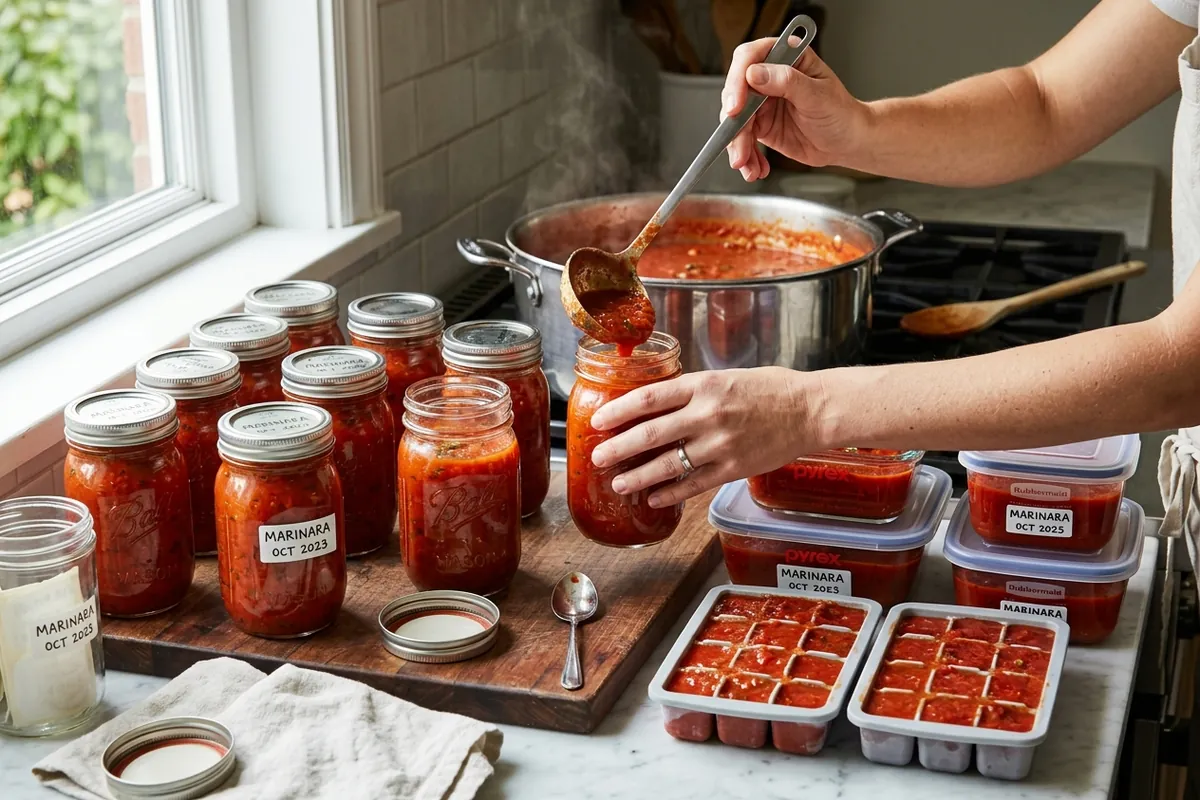
Marinara is excellent make-ahead food and actually tastes better the next day once the flavors meld. Store it in an airtight container in the fridge for up to five days. It freezes well for up to three months, so a double batch with half frozen in portions makes sense. Freeze it flat in zip bags for fast thawing, or in jars leaving headspace for expansion. Reheat gently on the stove with a splash of water if it has thickened in storage. Because it is meatless and freezes so well, a batch of marinara in the freezer is one of the most useful things you can have for a fast weeknight dinner. If you ever want to turn a jar of marinara into a richer dish, the same base flexes into meatball sauces and beyond, and for a quick dipping companion the notes on building a fresh cold sauce like how to make tartar sauce show the same taste-and-balance discipline applied to a different style of sauce. Good general technique writing from Bon Appetit reinforces that a well-stocked freezer of base sauces is the foundation of quick home cooking.
Ways to Use Your Marinara
The reason marinara earns its place as a staple is how many directions it goes. The obvious use is tossed with pasta, where a splash of pasta water and a minute in the pan binds it to the noodles. Beyond that, it is the classic sauce for chicken or eggplant parmesan, layered into baked ziti and lasagna, and ladled over polenta. It is a natural dipping sauce for mozzarella sticks, arancini, garlic bread, and fried vegetables, in which case you may want to blend it smooth and season it a touch more boldly since it is being tasted on its own. It is a quick pizza sauce straight from the pan, no cooking required on the crust. You can simmer eggs in it for a fast shakshuka-style breakfast, or spoon it over grilled chicken or fish. Treat marinara as a base ingredient rather than a finished product and it quietly shows up in half your weeknight dinners. It also stretches a small amount of meat or cheese a long way, which is part of why it became a staple of home kitchens in the first place.
Herb and Flavor Variations
Once the base is second nature, small additions take it in different directions without changing the method. A pinch of dried oregano added with the tomatoes gives the familiar pizzeria flavor, while fresh basil stirred in at the end keeps it bright and summery. Push the red pepper flakes up and you have arrabbiata, marinara’s spicy sibling. A handful of pitted olives and a tablespoon of capers turns it toward puttanesca. A splash of red wine added after the garlic and reduced for a minute gives a deeper, rounder sauce. For a creamier finish, stir a little butter or a splash of cream off the heat at the very end, which moves it toward a rosa or vodka-style sauce. Because each of these starts from the same tomato-garlic-oil base, you can decide at the stove which way to take it based on what you are serving, which is the whole advantage of mastering one good base sauce instead of memorizing twenty.
Common Mistakes and How to Fix Them
Bitter sauce: You browned or burned the garlic. Start over with gentler heat, and add garlic to warm, not hot, oil. Too acidic: Add a pinch of sugar or the butter trick. Watery sauce: Simmer longer with the lid off, or you used diced tomatoes that will not break down. Flat and boring: More salt, and consider a teaspoon of tomato paste for depth. Greasy: You boiled too hard and split the oil; lower the heat and stir to re-emulsify. Tinny or metallic taste: Lower-quality canned tomatoes, or you cooked in a reactive aluminum pan; use stainless, enameled, or ceramic-coated cookware. Each of these is easy to avoid once you know what causes it.
Frequently Asked Questions
What is the difference between marinara and tomato sauce?
Marinara is a quick, bright sauce of tomatoes, garlic, olive oil, and herbs simmered for about 20 to 30 minutes, and it is usually meatless and tomato-forward. A general tomato sauce or Sunday gravy is often cooked much longer, may include onion, carrot, and meat, and develops a deeper, mellower flavor. Marinara prioritizes freshness and speed over long simmering.
What are the best tomatoes for marinara sauce?
Good canned whole peeled plum tomatoes, ideally San Marzano-style, make the best marinara because they are packed at peak ripeness and have balanced acid and sweetness. Crushed tomatoes are a fine, faster option. Avoid canned diced tomatoes, which are treated to stay firm and will not break down into a smooth sauce.
Do I need to add sugar to marinara sauce?
Not always. Add a small pinch of sugar only if your tomatoes taste sharp or sour after simmering, since sugar balances acidity. Many good canned tomatoes need none. An alternative to sugar is simmering the sauce with a few tablespoons of butter and a halved onion, which rounds the acid naturally and adds richness.
How long should marinara sauce simmer?
About 20 to 30 minutes is ideal for marinara. That is long enough to soften the raw tomato edge and thicken the sauce while keeping its fresh, bright character. Simmer it gently, partially covered, rather than at a hard boil, which would break the oil and cook off the fresh flavor.
Can I make marinara sauce ahead and freeze it?
Yes, marinara is one of the best sauces to make ahead. It keeps up to five days in the fridge and freezes well for up to three months. Freeze it in portions flat in bags or in jars with headspace, and reheat gently with a splash of water if it has thickened. It often tastes even better the next day.
What pan should I use to make marinara?
Use a non-reactive pan such as stainless steel, enameled cast iron, or a ceramic-coated pot. Tomatoes are acidic, and cooking them in bare aluminum or unseasoned cast iron can leach a metallic, tinny taste into the sauce. A wide, heavy-bottomed pan also helps the sauce simmer and reduce evenly without scorching, which makes a noticeable difference in the final flavor and texture.
Why does my marinara taste bitter?
Bitterness in marinara almost always comes from burnt garlic. Garlic scorches fast and turns acrid, so add it to warm oil over medium-low heat and cook only until fragrant, not browned. If the sauce is already bitter, it is hard to fully fix, so it is best to start the aromatics again gently and add the tomatoes before the garlic colors.
The Takeaway
Knowing how to make marinara sauce well is a skill that pays off at almost every dinner. Buy good canned tomatoes, soften your garlic gently without browning it, simmer partially covered at a lazy bubble for 20 to 30 minutes, and balance the finished sauce with salt and a touch of sugar or butter. Choose onion-or-not and smooth-or-chunky to fit the dish, finish with raw olive oil and fresh basil, and freeze a batch for later. Get those few things right and your marinara will outclass any jar, and you will have a base sauce ready for pasta, pizza, and a dozen other meals whenever you need it. The first time you make it from scratch you will wonder why you ever bought the jarred kind, and once the method lives in your hands you will start tweaking it to your own taste, brighter here, richer there, until it becomes your sauce rather than a recipe you follow. That ownership is exactly the point of cooking from scratch.