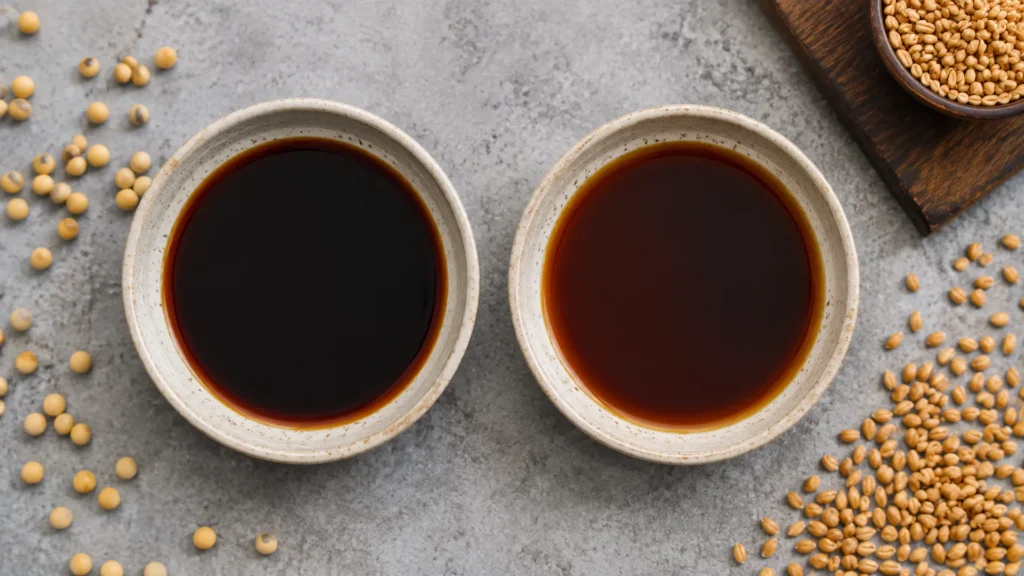
In the tamari vs soy sauce comparison, the key differences come down to wheat, flavor, and gluten. Both are dark, savory, fermented soybean condiments that add deep umami to food, but tamari is made with little or no wheat, which makes it richer, less salty, and usually gluten-free, while traditional soy sauce is brewed with wheat, giving it a sharper, saltier, thinner character. In most recipes you can swap one for the other, but the small differences matter when you are seasoning carefully, cooking for someone gluten-free, or finishing a dish where flavor takes center stage. Knowing which is which lets you reach for the right bottle every time.
This guide breaks down exactly what tamari and soy sauce are, how they differ in ingredients, flavor, color, and texture, whether you can substitute one for the other and in what ratio, which to use for cooking versus dipping, the gluten-free considerations, and how they compare to alternatives like coconut aminos. By the end you will know precisely when to use each.
The Short Answer
Soy sauce is made from fermented soybeans and wheat, while tamari is made mostly from soybeans with little or no wheat, originally as a byproduct of making miso. That single difference drives everything else: tamari is typically gluten-free, has a richer and smoother flavor with deeper umami, tastes a little less salty, and is slightly thicker and darker. Soy sauce has a sharper, saltier bite and a thinner body. They are roughly interchangeable in cooking, so if you only keep one, either works for most dishes, but each shines in particular uses. The choice usually comes down to whether you need it gluten-free and whether you want a sharper or a rounder flavor.
What Is Soy Sauce?
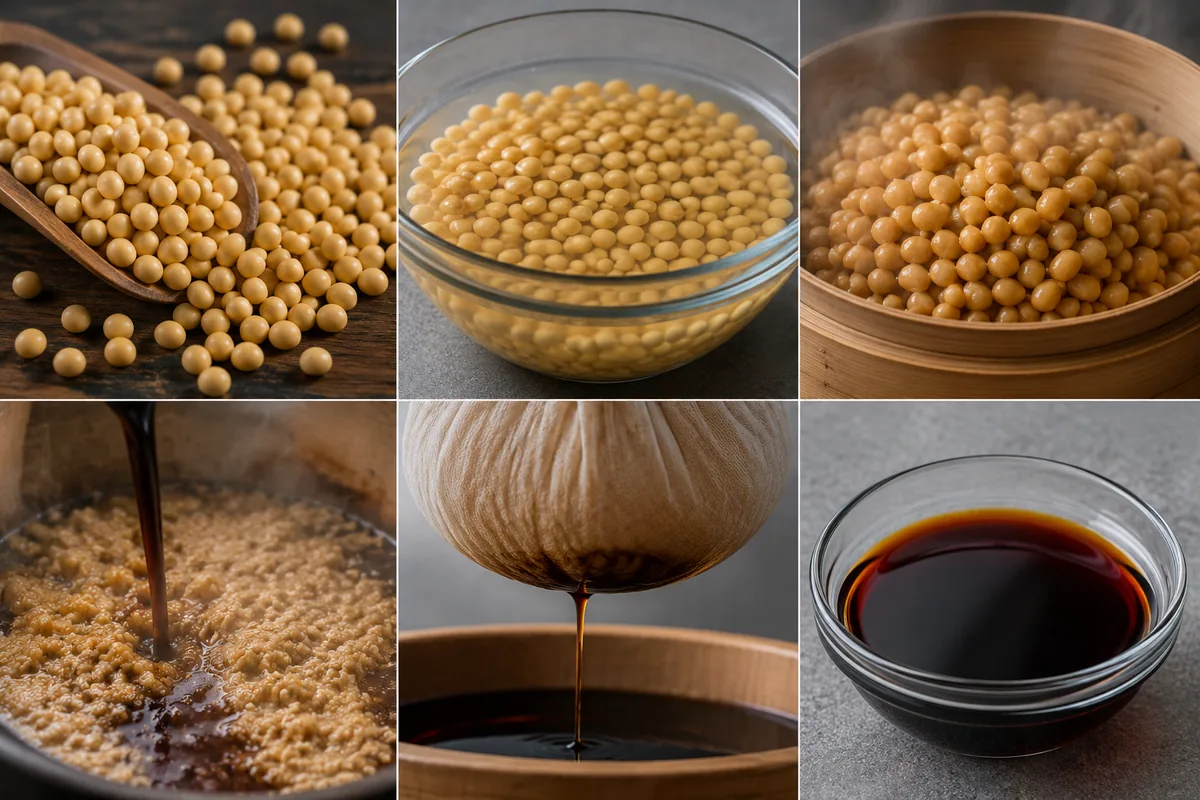
Soy sauce is one of the oldest and most widely used condiments in the world, made by fermenting soybeans and wheat with salt and a culture over a period of months. The wheat contributes to its flavor, aroma, and slightly sweeter, sharper profile, and it is what makes most regular soy sauce unsuitable for a gluten-free diet. There are many styles, from light and dark Chinese soy sauces to Japanese shoyu, each with its own balance of saltiness, sweetness, and color, but the common thread is that thin, salty, intensely savory punch that seasons everything from stir-fries to marinades to dipping bowls. Its sharpness and saltiness make it a workhorse for cooking, where it seasons a dish from within.
What Is Tamari?
Tamari is a Japanese soy sauce traditionally made as a liquid byproduct of fermenting soybeans into miso paste, which is why it uses a higher proportion of soybeans and little or no wheat. That longer, soybean-heavy fermentation gives tamari its signature qualities: a darker color, a thicker body, and a richer, smoother, more rounded flavor with deep umami and less of soy sauce’s sharp edge. Because it is made without wheat, most tamari is gluten-free, though you should always check the label since some brands add a small amount of wheat. Tamari’s depth and smoothness make it especially good as a finishing sauce and a dipping sauce, where its flavor is tasted directly rather than cooked into a dish.
The Key Differences
| Feature | Tamari | Soy sauce |
|---|---|---|
| Main ingredients | Mostly soybeans, little or no wheat | Soybeans and wheat |
| Gluten | Usually gluten-free (check label) | Contains wheat |
| Flavor | Richer, smoother, deep umami | Sharper, saltier bite |
| Saltiness | A little less salty | Saltier |
| Color and texture | Darker and thicker | Lighter and thinner |
Can You Substitute One for the Other?
Yes, tamari and soy sauce are largely interchangeable, and in most recipes you can swap one for the other without anyone noticing. Tamari is the go-to substitute when you need a gluten-free version of soy sauce, delivering the same savory depth without the wheat. The one thing to keep in mind is that they are not always a perfect one-to-one swap, because tamari is less salty and more intensely flavored, so when substituting you may want to taste and adjust: use a touch more tamari to match soy sauce’s saltiness, or a touch less soy sauce when standing in for tamari to avoid an overly salty, sharp result. For everyday cooking the difference is small enough that a straight swap works fine, but for a carefully balanced sauce, taste as you go. This flexibility makes tamari a valuable pantry staple for anyone cooking gluten-free, the same way it slots into a rotation of gluten-free dinners.
Which One Should You Use?
Each has uses where it shines. Use soy sauce for cooking, especially in stir-fries, marinades, braises, and anywhere its sharp, salty punch seasons the dish from within and the wheat is not a concern; its thinner body also disperses easily through a sauce. Use tamari as a finishing and dipping sauce, where its rich, smooth, less harsh flavor is tasted directly, such as alongside sushi, drizzled over a finished dish, or in a dipping bowl. Tamari is also the obvious choice any time you are cooking gluten-free. In a pinch, either covers for the other, so do not stress if you only have one, but if you keep both, reach for soy sauce when cooking and tamari when finishing or dipping, and you will get the best of each. A savory glaze or stir-fry sauce built on either pairs well with the deep flavors of a hoisin sauce.
Gluten-Free Considerations
Tamari is the natural choice for gluten-free cooking, but there is an important caveat: not all tamari is guaranteed gluten-free, since some brands include a small amount of wheat. Anyone with celiac disease or a true gluten sensitivity should always read the label and look for a certified gluten-free designation rather than assuming. Regular soy sauce, by contrast, almost always contains wheat and is not gluten-free. There are also dedicated gluten-free soy sauces on the market, brewed without wheat, which offer another option. The bottom line is that tamari is usually safe and is the easiest swap, but the label is the final word, so check it every time when gluten matters, because brands and formulations vary.
Other Alternatives: Coconut and Liquid Aminos
If you want to go beyond both tamari and soy sauce, a couple of alternatives offer similar savory notes with different profiles. Coconut aminos, made from fermented coconut sap, is soy-free, gluten-free, and noticeably less salty and a little sweeter than soy sauce, which makes it popular for those avoiding soy or wanting a milder seasoning, though you may need more of it to get the same depth. Liquid aminos, made from soybeans without traditional fermentation, deliver a comparable salty, savory flavor and are gluten-free, serving as another stand-in. Neither is identical to soy sauce or tamari, so expect a slightly different taste, but both are useful for specific dietary needs. For most cooks, tamari remains the closest and easiest swap for soy sauce, with these aminos filling in when soy itself is off the table. Reliable cooking references like America’s Test Kitchen and Cook’s Illustrated test these condiments side by side if you want to go deeper.
A Brief History of Tamari
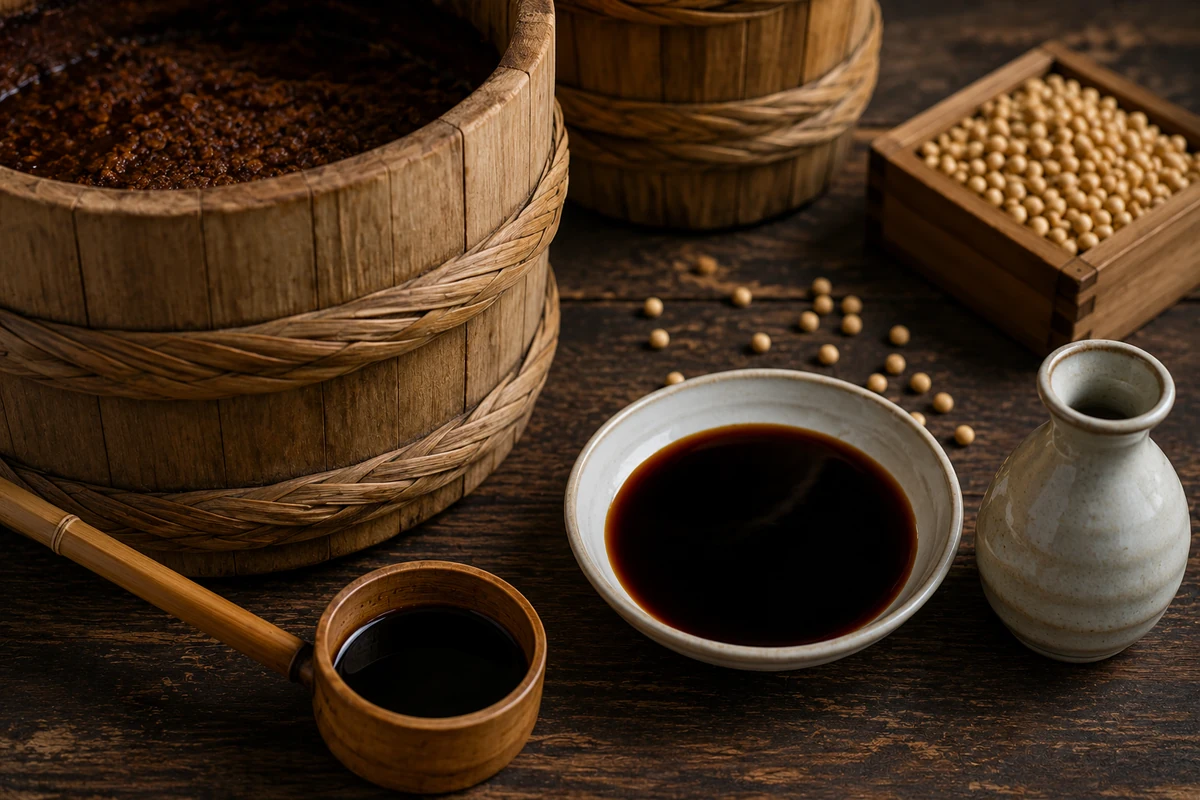
Tamari has a longer and quieter history than most people realize, and it explains why it tastes the way it does. It originated in Japan as the liquid that pooled, or tamari, from the top of fermenting miso paste, which was collected and used as a seasoning long before modern soy sauce production. That origin is why tamari uses a high proportion of soybeans and traditionally little or no wheat, since miso is soybean-based. Regular soy sauce, by contrast, developed with wheat as a major ingredient, which gives it a different, sharper character. Knowing that tamari is essentially the original, soybean-driven Japanese soy seasoning, while the wheat-based soy sauces most people grew up with came later and spread more widely, makes the flavor difference make sense. Tamari is the deeper, more savory ancestor, and its renewed popularity owes a lot to the gluten-free movement, which rediscovered a condiment that had quietly been wheat-free all along.
Tamari and Soy Sauce in Specific Dishes
Putting the two to work in real cooking makes the choice concrete. In a stir-fry, soy sauce is the classic pick, seasoning the dish quickly with its sharp, salty punch as it hits the hot pan, though tamari works just as well and adds more depth. For a marinade, either is excellent, with tamari lending a rounder, less aggressive saltiness and soy sauce a brighter bite. As a dipping sauce for sushi, dumplings, or tempura, tamari is often preferred because its smooth, rich flavor is tasted directly and is gentler on the palate. In salad dressings and finishing drizzles, tamari’s depth shines without overwhelming. And in long-cooked braises and stews, soy sauce melts into the background while paste-like depth builds, so either works. A savory Asian-style glaze pairs beautifully with the sweet depth of a hoisin sauce, and the same logic of matching the condiment to the dish applies whether you reach for tamari or soy. The practical habit is to default to soy for fast, hot cooking and tamari for anything tasted raw or finished.
Reduced-Sodium and Other Varieties
Both tamari and soy sauce come in more than one form, which is worth knowing if you watch your salt. Reduced-sodium versions of each cut the salt significantly while keeping much of the savory flavor, making them a useful choice for anyone limiting sodium, and they let you season more generously without oversalting. Beyond that, soy sauce ranges from light, saltier styles used for seasoning to dark, thicker styles used for color and depth, while tamari is more consistent but varies in intensity by brand. There are also low-sodium tamari options for those who want both gluten-free and reduced salt. The takeaway is that the can or bottle you grab is not the only option, and matching the variety to your needs, whether that is less salt, more color, or guaranteed gluten-free, gives you better control over the final dish than treating all soy sauce or all tamari as the same.
How to Store Soy Sauce and Tamari
Both keep well, but a couple of habits preserve their flavor. Unopened, soy sauce and tamari last a very long time thanks to their high salt content, which acts as a preservative. Once opened, they stay safe for a long time at room temperature, but their flavor is best preserved in the refrigerator, where the cold slows the slow loss of aroma and freshness that happens over months on a warm shelf. They will not spoil quickly either way, but a bottle kept in the fridge tastes brighter and more nuanced for longer than one left by the stove. Keep them tightly capped to limit air exposure, and there is no need to worry about the small amount of sediment or color change that can develop over time, which is normal. Treated this way, a bottle of either stays good for many months, ready whenever a dish needs a hit of savory depth.
Nutrition: Sodium, Umami, and More
Nutritionally, tamari and soy sauce are similar, with a few distinctions worth knowing. Both are high in sodium, which is the main consideration, since a tablespoon delivers a significant portion of a day’s salt, so they are used as seasonings in small amounts rather than poured freely. Tamari tends to taste a little less salty despite comparable sodium, because its richer flavor means you often need less to season a dish, which can be a quiet advantage. Both provide a small amount of protein and some umami compounds that make food taste savory and satisfying, a big part of why a splash of either makes a dish taste more complete. Tamari, with its higher soybean content, can have marginally more protein and a deeper umami profile. Neither is a health food given the salt, but used as intended, a little goes a long way, and the depth they add can reduce the need for other heavy seasonings. For anyone managing sodium, reduced-salt versions of both make it easier to keep the flavor while cutting back.
Frequently Asked Questions
What is the difference between tamari and soy sauce?
Tamari is made mostly from soybeans with little or no wheat, making it usually gluten-free, richer, smoother, and slightly less salty. Soy sauce is brewed with both soybeans and wheat, giving it a sharper, saltier flavor and a thinner body. Tamari is also a bit darker and thicker.
Can I use tamari instead of soy sauce?
Yes, tamari substitutes well for soy sauce and is the go-to gluten-free swap. Because tamari is less salty and more intense, it is not always an exact one-to-one match, so taste and adjust the amount when seasoning a carefully balanced dish. For most cooking, a straight swap works fine.
Is tamari gluten-free?
Most tamari is gluten-free because it is made with little or no wheat, but not all of it, since some brands add a small amount. Anyone with celiac disease or gluten sensitivity should read the label and look for a certified gluten-free version rather than assuming. Regular soy sauce contains wheat.
Does tamari taste different from soy sauce?
Yes. Tamari has a richer, smoother, more rounded flavor with deeper umami and less saltiness, thanks to its higher soybean content and longer fermentation. Soy sauce is sharper, saltier, and thinner. The difference is subtle in cooked dishes but more noticeable when used as a dipping or finishing sauce.
Which is better for cooking, tamari or soy sauce?
Soy sauce is often preferred for cooking because its sharp, salty punch seasons dishes well and its thin body mixes easily into sauces and marinades. Tamari shines as a finishing and dipping sauce where its smoother flavor is tasted directly, and it is the choice for gluten-free cooking.
What can I use if I have neither tamari nor soy sauce?
Coconut aminos and liquid aminos are the closest alternatives, both gluten-free, with coconut aminos being soy-free, less salty, and slightly sweet. They give a similar savory note but taste a little different, so adjust the amount to taste. They are especially useful for avoiding soy, gluten, or both.
Bottom Line
Tamari and soy sauce are close cousins that differ mainly in wheat, gluten, and flavor: tamari is mostly soybeans, usually gluten-free, and richer and smoother, while soy sauce is brewed with wheat and has a sharper, saltier bite. You can swap one for the other in most recipes, tasting and adjusting since tamari is less salty, and the simplest rule is to reach for soy sauce when cooking, tamari when finishing or dipping, and tamari whenever you need it gluten-free. Keep both on the shelf and you will always have the right savory depth for the dish, and once you taste them side by side you will start to notice which one a given recipe really wants rather than treating them as the same bottle.