The fastest substitute for oyster sauce is hoisin used at a 1:1 ratio, or a quick mix of 2 teaspoons soy sauce with 1/2 teaspoon sugar for every tablespoon you need. If you cook plant-based, a mushroom blend built from dried shiitake gives you the same salty, savory glaze without shellfish. Below are 8 swaps, each with a ratio, a flavor note, and the dishes where it earns its spot. Sodium is flagged along the way, since the original runs high at roughly 490 mg per tablespoon. Pick the one that matches what is already in your pan.
What oyster sauce actually does in a dish
Before you swap anything, it helps to know the job you are filling. Oyster sauce is a thick, glossy condiment made from oyster extract, sugar, salt, and a little cornstarch. It brings three things at once: deep umami, gentle sweetness, and a syrupy body that clings to noodles and vegetables. That coating action is why a splash near the end of a stir-fry makes everything look and taste finished.
Because it is doing three jobs, no single bottle in your door shelf copies it perfectly. Soy sauce nails the salt and umami but stays thin. Hoisin matches the body and sweetness but leans candy–sweet. When choosing a stand-in, ask which of the three traits matters most for the recipe, then adjust with sugar, salt, or a starch slurry to close the gap.
Sodium is the other reason to pay attention. According to nutrition data compiled by the USDA and summarized on Healthline, a tablespoon of oyster sauce carries close to 490 mg of sodium while landing near 9 kcal. Against the FDA daily value of 2300 mg, that single spoon is about 21 % of your day. Several swaps below are saltier still, so tasting as you go is not optional. For a house-made chili paste that layers heat into these blends, the gochujang sauce guide pairs well with most of them.
The 8 best substitutes and how to use each one
Here are the swaps, roughly in order of reliability. Each entry gives you a ratio, the flavor it delivers, and the moment it works best. Read the flavor notes, because a swap that shines in a beef stir-fry can wreck a delicate steamed dish.
1. Hoisin sauce, the closest match
Hoisin is the first pick for body and gloss. Built from fermented soybeans, garlic, vinegar, and sugar, it has the same thick pour as the original and a comparable umami punch. Use it at a straight 1:1 ratio. The catch is sweetness: hoisin is noticeably sweeter, so in a savory braise, cut it with a few drops of soy sauce or a squeeze of lime to pull it back. It excels in stir-fries, glazes for roast pork, and dipping blends where a little sweetness is welcome.
2. Soy sauce plus sugar, the pantry default
When the bottle runs dry mid-recipe, this is the rescue that almost always works. For every tablespoon of oyster sauce, whisk 2 teaspoons soy sauce with 1/2 teaspoon sugar until the grains dissolve. You get the salt and the roasted umami immediately, and the sugar mimics the caramel edge. For more depth, add 3 to 4 drops of Worcestershire. Keep in mind soy sauce is saltier than what you removed, near 900 mg of sodium per tablespoon, so reduce any other salt in the dish.
3. Fish sauce, briny and bold
Fish sauce is pure savory intensity, so treat it with respect. Use half the amount the recipe lists, since a tablespoon carries around 1400 mg of sodium and a sharp aroma. For a rounder result, blend 1 teaspoon fish sauce with 1 tablespoon soy sauce and 1/2 teaspoon sugar, which lands close to the briny depth of the original without shouting. It suits fish and seafood stir-fries, Thai and Vietnamese dishes, and anywhere a background funk reads as flavor rather than a mistake.
4. Worcestershire sauce, the surprise swap
Worcestershire shares more DNA with oyster sauce than you might guess, since it is fermented and carries anchovy and tamarind notes. Use it at about a 1:1 ratio, but add it in stages because it is thin and tangy. On its own it lacks body, so stir in a small cornstarch slurry, roughly 1/2 teaspoon starch in 15 ml water, to build cling. It works best in marinades, meat glazes, and hearty braises rather than light vegetable plates.
5. Teriyaki sauce, sweet and glossy
Teriyaki gives you the shine and stickiness with less effort. Made from soy sauce, sugar, and sake or mirin, it pours at a similar thickness and works at a 1:1 ratio. Expect a sweeter, more polished profile, so scale back any honey or brown sugar elsewhere in the recipe. Teriyaki is at its best in stir-fries, chicken and salmon glazes, and noodle bowls where a lacquered finish is the goal. In a savory-only dish, temper the sweetness with a splash of soy or rice vinegar.
6. Tamari, the gluten-free route
If gluten is a concern, tamari is a soy sauce brewed with little or no wheat, and it carries a rounder, less sharp flavor. Use it 1:1 with a pinch of sugar to echo the sweetness the original brought. Because it is still a salty condiment, taste before adding any table salt. Tamari fits the same slots as soy sauce: fast stir-fries, dressings, and dipping blends. Look for a bottle labeled certified gluten-free, since some tamari still includes a small amount of wheat.
7. Mushroom sauce, the vegan workhorse
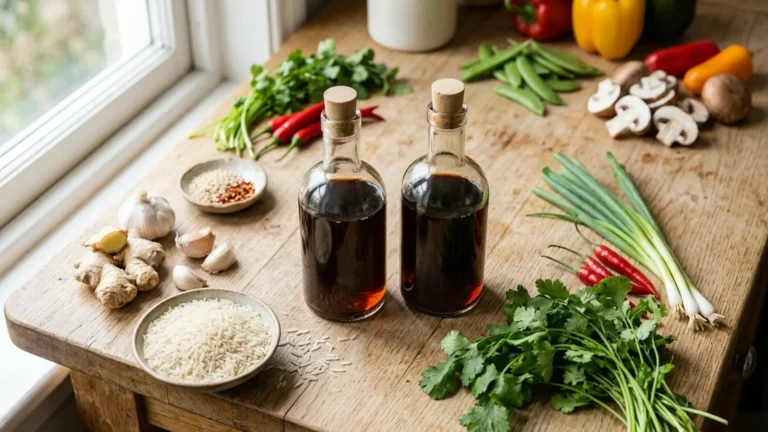
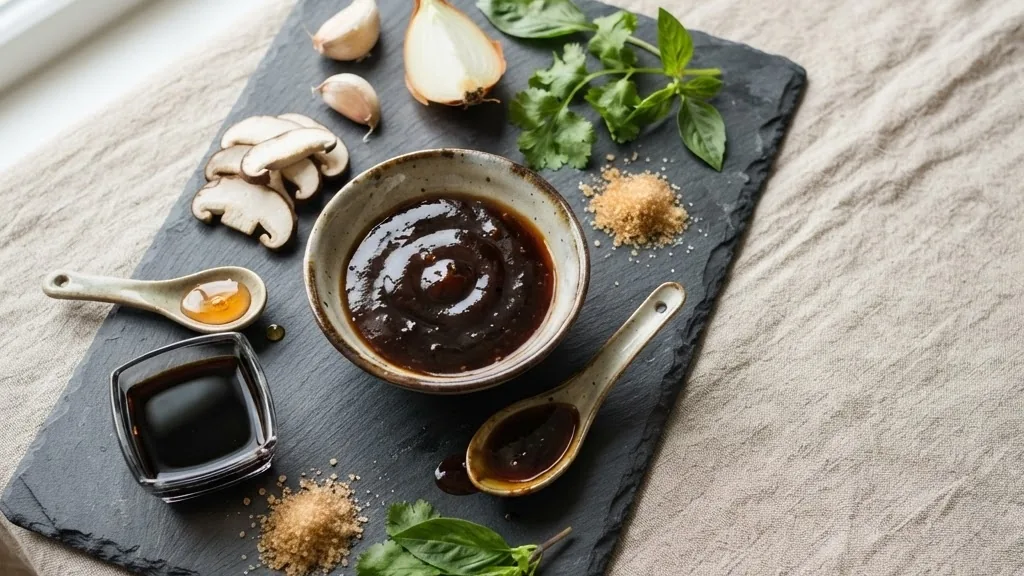
A mushroom-based sauce is the go-to swap for plant-based cooking, and it is the closest vegan match by a wide margin. Store-bought vegetarian oyster sauce or a house blend of dried mushrooms both deliver the savory, slightly sweet coating without shellfish. Use it at a 1:1 ratio. Dried shiitake are the secret, since they are packed with glutamate, the natural compound behind that oyster-like depth. A full recipe appears further down so you can make a batch and skip the store entirely.
8. Soy plus hoisin blend, the balanced fix
For the salt of soy and the body of hoisin in one spoon, mix them. Combine 2 parts hoisin with 1 part soy sauce, then use that blend 1:1 for the amount you need. The soy tames the hoisin sweetness while the hoisin adds the cling that soy alone cannot. This blend is a go-to for beef and broccoli, fried rice finishing, and quick noodle sauces. Add a few drops of sesame oil at the end for a toasted note that ties it together.
Substitute comparison table with swap ratios
Print this or screenshot it. The table lines up every swap against its ratio, the dishes it suits, and a quick sodium flag so you can steer around a salt overload. Values are per tablespoon of oyster sauce you are replacing.
| Substitute | Swap ratio | Best for | Sodium note |
|---|---|---|---|
| Hoisin sauce | 1:1 | Stir-fries, pork glazes, dips | Similar to oyster sauce, cut sweetness |
| Soy sauce + sugar | 2 tsp soy + 1/2 tsp sugar per tbsp | Emergency pantry fix | Saltier, near 900 mg per tbsp |
| Fish sauce | Half the amount | Seafood and Thai dishes | Very high, near 1400 mg per tbsp |
| Worcestershire | 1:1, add slowly | Marinades and braises | Moderate, thin so add starch |
| Teriyaki | 1:1 | Glazes and noodle bowls | Moderate, sweeter profile |
| Tamari | 1:1 + pinch sugar | Gluten-free cooking | Salty, like soy sauce |
| Mushroom sauce | 1:1 | Vegan and vegetarian | Adjustable, lowest if homemade |
| Soy + hoisin blend | 2 hoisin : 1 soy, then 1:1 | Beef, fried rice, noodles | Moderate, balanced |
One habit that saves dinners: measure the swap into a small bowl, taste it on a clean spoon, and adjust before it hits the hot pan. A blend that tastes flat cold will taste flat cooked, and a blend that tastes sharp usually needs a pinch of sugar or a splash of water rather than more salt.
Best vegan and vegetarian substitutes
Plant-based cooks lose the most when a recipe leans on that oyster note, so this section matters. The good news is that fungi carry the same umami chemistry as shellfish. Mushrooms, seaweed, and fermented soy all supply glutamate, the amino acid your tongue reads as savory. That is why a mushroom blend can fool people who swear they need the real bottle.
My ranked picks for meatless cooking are the homemade mushroom sauce first, then a store-bought vegetarian oyster sauce, then tamari with a pinch of sugar for speed. If you want extra backbone, a small spoon of miso or a dab of gochujang sauce stirred in adds fermented depth that reads as long-cooked. Keep the additions small, since these pastes bring their own salt.
A few pairings that work well: mushroom sauce over stir-fried bok choy, tamari with a drop of sesame oil on cold noodles, and a hoisin-soy blend on roasted eggplant. Each one gives you the coating and the savory-sweet swing without a trace of seafood. Vegetarians who eat fish can still use the fish sauce trick, but true vegans should stay in the mushroom and soy lane.
DIY vegan mushroom oyster sauce recipe
This batch keeps well enough to make every couple of weeks. It takes about 20 min of active time, most of which is waiting for the mushrooms to soak. Dried shiitake swell 3 to 4 times their size in hot water, and that soaking liquid becomes a savory stock you do not throw away. The finished sauce is thick, glossy, and ready to swap 1:1 for the original.
Ingredients:
- 30 g dried shiitake mushrooms
- 240 ml hot water for soaking
- 15 ml regular soy sauce
- 15 ml dark soy sauce for color
- 2 teaspoons sugar, adjusted to taste
- 1 tablespoon cornstarch mixed with 30 ml cold water
- 1/2 teaspoon toasted sesame oil, optional
Follow the steps in order. Do not rush the soak, since under-soaked mushrooms blend gritty and taste weak. If you are short on time, a quick simmer of the mushrooms in the water speeds the swell without hurting flavor.
- Soak the 30 g dried shiitake in 240 ml hot water for at least 20 min, until soft and pliable. Keep the water.
- Lift out the mushrooms, trim any tough stems, and roughly chop the caps.
- Add the mushrooms and their soaking water to a blender and blend until smooth. A high-speed blender gives the silkiest pour.
- Pour the puree into a small pan, then stir in 15 ml soy sauce, 15 ml dark soy, and the sugar. Bring to a gentle simmer.
- Whisk the cornstarch slurry, then stream it in while stirring. Cook 2 to 3 min until it coats the back of a spoon.
- Off the heat, stir in the sesame oil if using. Taste and adjust salt or sugar.
- Cool, then bottle. It keeps in the fridge for up to 2 weeks or in the freezer for up to 3 months.
Yield is roughly one small jar, enough for several stir-fries. If you want a thinner pour for marinades, hold back half the slurry. For a thicker glaze on roast vegetables, add the full amount and simmer an extra minute. The leftover blended solids that cling to the blender make a fine base for a mushroom gravy, so scrape them into a soup rather than rinsing them away.
Sodium, health, and reading the label
Salt is the quiet story behind every swap on this page. Oyster sauce is already high at roughly 490 mg per tablespoon, and some of the substitutes push past it. Soy sauce sits near 900 mg and fish sauce near 1400 mg per tablespoon, so a heavy hand can turn a balanced dish into a salt bomb. The fix is simple: cut other added salt, and taste before serving.
If you track sodium for blood pressure or heart reasons, the numbers matter more than the flavor swap. The FDA sets the daily value at 2300 mg, and Healthline notes that condiments are an easy place to overshoot without noticing. Reaching for a low-sodium soy sauce, or diluting any swap with a splash of water and a squeeze of citrus, keeps the savory hit while trimming the salt.
To check exact figures for any brand, cross-reference the label against the government database. The USDA FoodData Central lets you look up sodium, sugar, and calories for oyster sauce and most substitutes side by side. When a bottle lists sodium per serving that looks low, confirm the serving size, since some labels use a teaspoon rather than a tablespoon to make the number look friendlier. That single check helps prevent oversalting.
How to match the right swap to your dish
The best substitute is the one that fits what you are cooking, not a universal winner. Use this quick logic and you will rarely miss. Think about body first, then sweetness, then salt, and choose the swap that already leans the way your dish needs.
For a glossy stir-fry finish, reach for hoisin, teriyaki, or the soy-hoisin blend, since body and shine are the point. For a marinade or a braise where thickness matters less, Worcestershire or plain soy plus sugar do the job. For seafood dishes, fish sauce or the fish-soy blend deepens the briny edge. For anything vegan, the mushroom sauce wins, and for gluten-free cooking, tamari or a certified mushroom blend keep you safe.
Two more practical notes. First, when a recipe uses oyster sauce as a light seasoning rather than a main sauce, you can often halve any swap and no one notices. Second, if you are building a sauce from scratch anyway, the mindset carries over from other homemade blends. My homemade buffalo sauce walkthrough uses the same taste-and-adjust rhythm, and once that habit sticks, you stop needing exact bottles at all. Start with the ratio, then trust your tongue for the last 10 %.
Portion matters too. A standard stir-fry for two usually calls for 1 to 2 tablespoons of oyster sauce, so scale your swap to that. If you are cooking for a crowd, mix a larger batch of the soy-plus-sugar blend or the mushroom sauce ahead and keep it in a squeeze bottle by the stove. Having the swap ready to pour means you season with intent rather than guessing mid-toss, and the dish holds together better because you are not fumbling for a measuring spoon while the pan smokes.
Texture is the trait people forget to rebuild. The original clings because of its natural starch, so a thin swap will slide off noodles and pool at the bottom of the wok. Whenever you use soy sauce, Worcestershire, or fish sauce, mix 1/2 teaspoon cornstarch into 15 ml of cold water and stir that in as the sauce heats. It thickens in under a minute and gives back the glossy coat that makes a stir-fry look restaurant-made. Skip this and even a well-seasoned swap can feel watery.
Common mistakes when swapping oyster sauce
Most swap failures come from ignoring the three jobs the original does. Cooks grab soy sauce, pour it in one for one, and wonder why the dish tastes flat and thin. The salt is there, but the sweetness and the body are missing. Fix it by adding sugar and a starch slurry rather than reaching for more soy. A swap is a small recipe of its own, not a straight pour from a different bottle.
The second mistake is adding a salty stand-in at the same point you would add the original, then salting the rest of the dish on autopilot. Since soy sauce and fish sauce run far higher in sodium, that habit doubles the salt. Build the swap first, hold back the other salt, then correct at the end. A small bowl on the cutting board is handy for exactly this, mixing and tasting the blend before it ever touches heat.
The third slip is treating every swap as interchangeable across every cuisine. Teriyaki on a delicate steamed fish reads as dessert, and fish sauce on a light vegetable saute can overpower the greens. Match the swap to the dish using the logic above, and lean on sweeter blends only where sweetness belongs. A last tip: warm sauces read saltier than cold ones, so a blend that tastes just right cold will often taste a touch salty once it hits the pan. Ease off by about 10 % and adjust up if needed.
One more worth naming: skipping the taste test on a homemade batch because the ratio looked right on paper. Dried mushrooms vary in strength, soy brands vary in salt, and sugar sweetness shifts with brand too. The numbers get you 90 % of the way, but your tongue closes the gap. Every jar of the shiitake sauce lands a little different, and a quick taste plus a pinch of sugar or a splash of water fixes it in seconds.
Frequently asked questions
What is the best substitute for oyster sauce for a vegetarian stir-fry?
A mushroom-based sauce is the top choice. Either buy a vegetarian oyster sauce or make the shiitake blend in this guide, then use it 1:1. Dried mushrooms supply the same glutamate umami that gives the original its savory pull, so a stir-fry tastes complete without any shellfish. Tamari with a pinch of sugar is a faster backup if you have no mushrooms on hand.
Can I use soy sauce alone instead of oyster sauce?
You can in a pinch, but plain soy sauce is thin and misses the sweetness and body. Add 1/2 teaspoon sugar per tablespoon of soy to close the flavor gap, and stir in a small cornstarch slurry if you want the cling. Because soy sauce runs near 900 mg of sodium per tablespoon, use a touch less than the recipe lists and cut other salt so the dish stays balanced.
Is hoisin sauce a good substitute for oyster sauce?
Yes, hoisin is one of the closest matches for texture and umami, and it works at a 1:1 ratio. The main difference is sweetness, since hoisin is built with more sugar. In a savory dish, temper it with a few drops of soy sauce or a squeeze of lime so it does not tip candy-sweet. It shines in glazes, dips, and stir-fries where a little sweetness belongs.
How much sodium is in oyster sauce compared to the swaps?
Oyster sauce holds roughly 490 mg of sodium per tablespoon, about 21 % of the FDA daily value of 2300 mg. Soy sauce is higher at near 900 mg, and fish sauce is the saltiest at around 1400 mg per tablespoon. A homemade mushroom sauce is the easiest one to keep low, since you control the soy you add. Check any brand against USDA FoodData Central for exact figures.
Final take
You do not need the exact bottle to cook a great meal. Match the swap to the dish, respect the ratio, and taste as you go. Hoisin and the soy-plus-sugar fix cover most weeknights, the mushroom blend handles plant-based cooking, and fish sauce or teriyaki round out the edge cases. Keep the sodium numbers in mind, lean on the USDA and Healthline data when a label looks off, and you will hit that savory-sweet glaze every time. Bookmark the table, make a jar of the mushroom sauce, and you are covered.