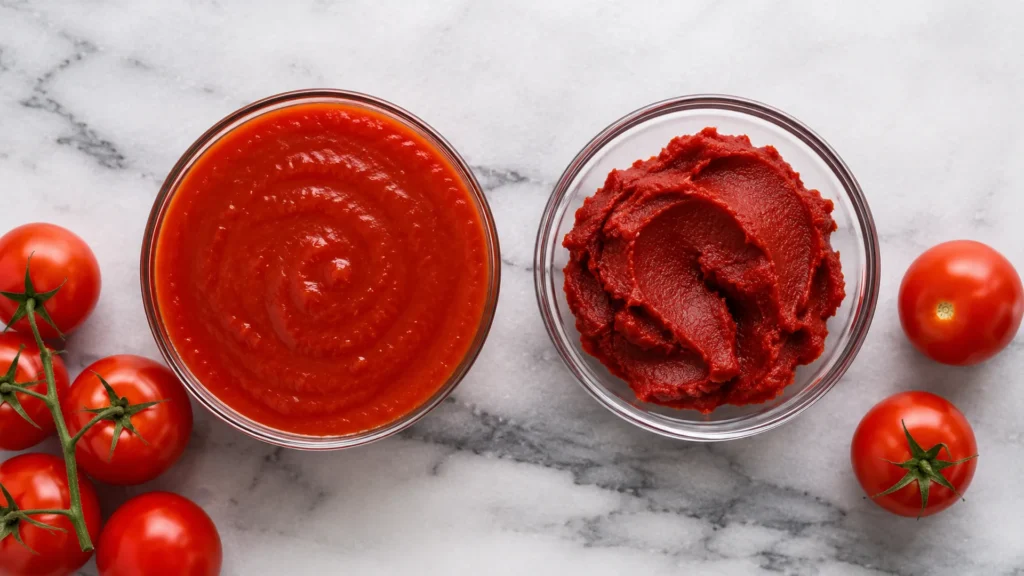
In the tomato sauce vs paste comparison, the difference comes down to concentration. Tomato paste is tomatoes cooked down until almost all the water is gone, leaving a thick, intensely flavored concentrate, while tomato sauce is more lightly cooked, much higher in water, and usually seasoned with things like garlic, onion, and herbs. That makes them two very different tools: paste is a flavor booster you add by the spoonful to deepen a dish, and sauce is a pourable base you can build on or use as is. They are not interchangeable straight from the can, but with a little water and seasoning, or a quick reduction, you can turn one into the other when you are in a pinch.
This guide explains exactly what tomato paste and tomato sauce are, how they differ in concentration, flavor, and seasoning, when to reach for each, how to substitute one for the other and in what ratio, and where the rest of the tomato products like puree and crushed tomatoes fit in. By the end you will know which can to open for any recipe.
The Short Answer
Tomato paste is a thick, deep red concentrate made by cooking tomatoes down and removing most of their water, giving an intense, pure tomato flavor in a small amount. Tomato sauce is a thinner, pourable product made from more gently cooked tomatoes with a much higher water content, often seasoned, that works as a base or a finished sauce. Paste, at around seventy-three percent water, is a concentrated booster; sauce, at around ninety-one percent water, is ready to pour. Use paste when you want to add a big hit of tomato flavor without adding liquid, and sauce when you want a tomato base to cook with or serve. The two are different in role, not just thickness.
What Is Tomato Paste?
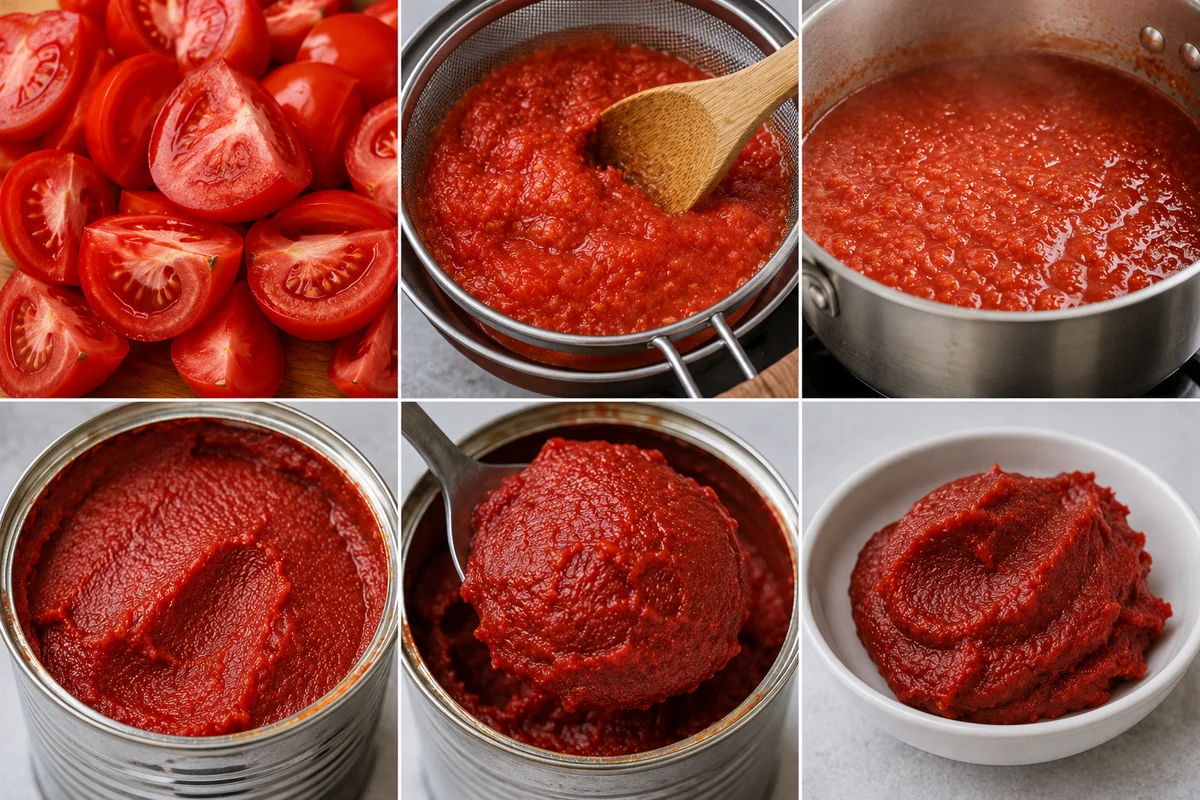
Tomato paste is the most concentrated tomato product, made by cooking tomatoes for a long time to drive off their water, then straining out the skins and seeds, leaving a thick, smooth, deeply colored paste of almost pure tomato. Because the flavor is concentrated, a tablespoon or two delivers a powerful umami punch, which is why paste is treated as a flavor booster rather than a sauce on its own. It is usually unseasoned, just tomato, so it adds depth without changing the other flavors of a dish. Paste is what gives a long-simmered ragu, a chili, or a braise its rich, savory tomato backbone, and a spoonful caramelized in the pan early in cooking adds a depth that nothing else quite matches.
What Is Tomato Sauce?
Tomato sauce is a thinner, pourable sauce made from tomatoes cooked more gently and kept high in water, frequently with added seasonings like garlic, onion, salt, and herbs that round it out. It is designed to be used as is or as a base, ready to coat pasta, top a pizza, or build into a more complex sauce. Where paste emphasizes the tomato alone, sauce is often a small celebration of complementary flavors joining the tomato, which is why a jar of tomato sauce tastes more finished and seasoned than plain paste. It is the everyday workhorse for dishes that need a tomato foundation with body and moisture, and a good homemade marinara sauce is essentially a fresh, well-seasoned tomato sauce.
The Key Differences
| Feature | Tomato paste | Tomato sauce |
|---|---|---|
| Texture | Thick, dense paste | Thin, pourable |
| Water content | About 73% | About 91% |
| Flavor | Intense, concentrated tomato | Milder, often seasoned |
| Seasoning | Usually plain tomato | Often garlic, onion, herbs |
| Main use | Flavor booster by the spoonful | Base or finished sauce |
When to Use Tomato Paste
Reach for paste whenever you want concentrated tomato flavor without adding liquid. It is the secret weapon for deepening sauces, stews, soups, chilis, curries, and braises, where a spoonful builds a rich, savory base. A key technique is to cook the paste in the pan with the aromatics for a minute or two before adding other liquids, which caramelizes it and unlocks an even deeper, sweeter umami flavor; this single step transforms a flat sauce into a complex one. Paste also thickens, since it adds body without water, so it doubles as a thickener for a thin tomato sauce, a use covered in our guide on how to thicken sauce. Because it is so concentrated, you rarely need much, and a little goes a long way.
When to Use Tomato Sauce
Use tomato sauce when you need a tomato base with body and moisture, or a sauce ready to serve. It is the foundation for pasta dishes, pizza, casseroles, and braises that need liquid as well as tomato flavor, and because it is often already seasoned, it can go straight onto pasta or be simmered briefly into a finished sauce. Sauce is what you pour, coat, and build with, where paste is what you stir in for depth. When a recipe calls for a cup or more of tomato in liquid form, sauce is the answer, whereas a recipe calling for a tablespoon or two of intense tomato flavor wants paste. A well-made spaghetti sauce typically starts from tomato sauce or crushed tomatoes, then gets a spoonful of paste stirred in for extra depth, which shows how the two work together.
How to Substitute One for the Other
You can convert between them in a pinch. To turn paste into sauce, dilute it with water at roughly a one-to-one ratio to bring the concentrate back to a pourable consistency, then season it with a little salt, garlic, onion, and herbs to approximate a basic tomato sauce. To go the other way and stand in for paste using sauce, use about three tablespoons of tomato sauce for every one tablespoon of paste called for, and simmer to reduce and concentrate it if the extra liquid would throw off the recipe. These swaps work well enough for everyday cooking, though a true paste has a depth that diluted-and-reduced sauce only approximates. Keeping both on hand is ideal, but knowing the conversions means a missing can never stops a recipe.
The Wider Tomato Family
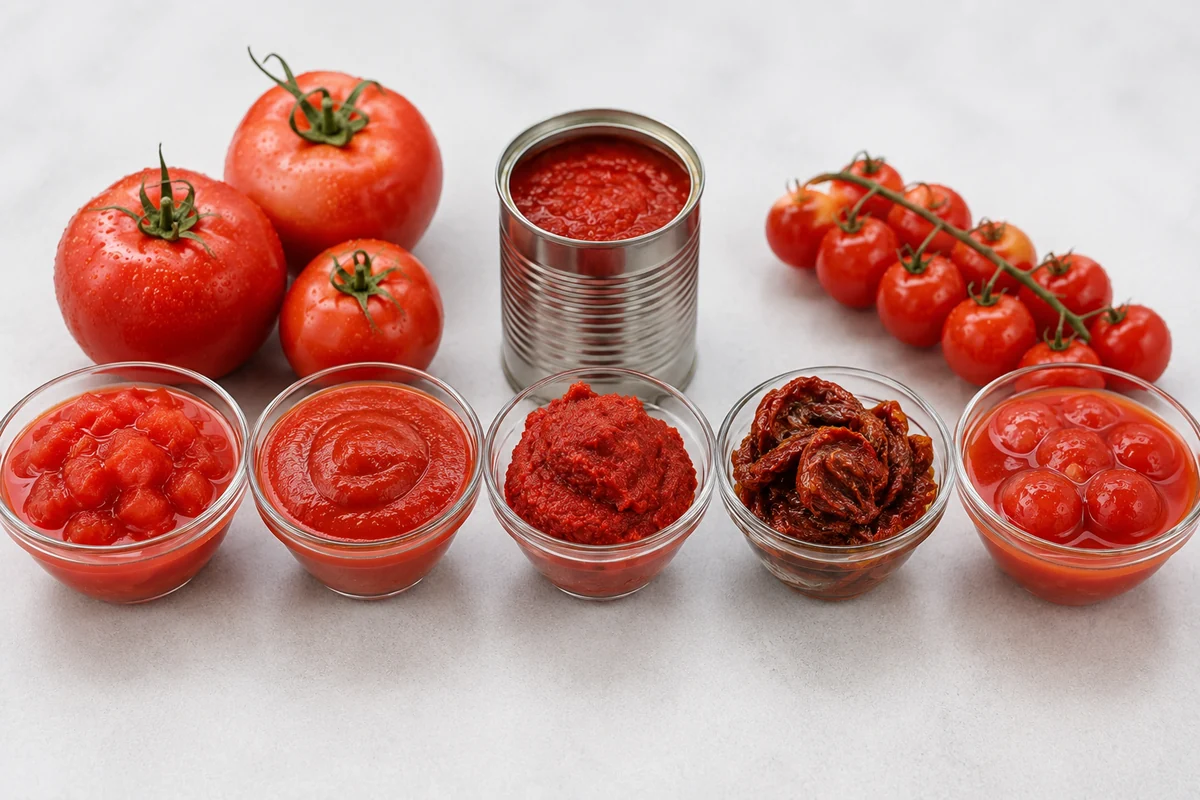
Paste and sauce are two points on a spectrum of canned tomato products, and knowing the others helps you choose. Tomato puree sits between sauce and paste, thicker and more concentrated than sauce but pourable and usually unseasoned, making it a good middle-ground base. Crushed tomatoes are chopped tomatoes in a thick puree, with more texture, ideal for chunky sauces. Tomato passata is a smooth, uncooked, strained tomato puree popular in Italian cooking as a clean base. Diced and whole tomatoes keep the most texture and are best when you want pieces of tomato in the finished dish. Understanding this family lets you pick the right product for the texture and concentration a recipe needs, rather than defaulting to whatever is in the cupboard, and many great tomato dishes combine two or three of them. For tested guidance on canned tomato products, America’s Test Kitchen and Cook’s Illustrated compare brands and types in detail.
A Tip for Leftover Tomato Paste
Since most recipes use only a tablespoon or two of paste from a can or tube, leftovers are a common problem worth solving. A tube of tomato paste is the easiest fix, since it reseals and keeps in the fridge for weeks, letting you squeeze out just what you need. If you have a half-used can, freeze the rest in measured spoonfuls, dropping tablespoons onto a lined tray, freezing them solid, then bagging them so you can grab one whenever a recipe calls for a little tomato depth. Frozen paste keeps for months and thaws almost instantly in a hot pan. This small habit means you never waste an opened can and always have a flavor booster ready, which is exactly the role paste plays best, deepening a sauce, soup, or stew one concentrated spoonful at a time. This same approach pairs naturally with a rotation of italian regional dishes, where a touch of paste sharpens the tomato backbone.
Why Tomato Paste Adds So Much Flavor
The reason a small spoonful of paste does so much comes down to concentration and the Maillard reaction. By cooking tomatoes down and removing most of their water, paste packs the natural sugars, acids, and savory glutamates of many tomatoes into a small amount, so it delivers intense flavor without diluting a dish. Glutamates are the compounds behind umami, the deep savory taste, and tomatoes are naturally rich in them, which is why paste reads as so satisfying and meaty even in a vegetarian dish. When you cook the paste in hot fat before adding liquid, its sugars caramelize and brown through the Maillard reaction, creating new layers of roasted, sweet, complex flavor on top of the concentrated tomato. That is why recipes specifically call for frying the paste rather than just stirring it in, and it is the single technique that most separates a flat tomato sauce from a deep, restaurant-quality one. Understanding this turns paste from an afterthought into a deliberate flavor tool.
Buying and Storing Tomato Products
A few buying and storage habits get the most from both products. For paste, a tube is the most practical format for home cooks who use a little at a time, since it reseals and keeps in the fridge for weeks without waste, while cans are more economical when you use a lot. For sauce, check the label, since many jarred tomato sauces are already seasoned and even sweetened, which matters if you plan to season the dish yourself. Store unopened cans and jars in a cool, dark pantry where they keep for a long time, and once opened, transfer any leftover from a can into a sealed container rather than leaving it in the metal can, refrigerating it for several days. Freeze leftovers of either to extend their life for months. Quality varies a lot between brands, especially for sauce, so it is worth finding a brand you like, and many cooks keep both a plain, unseasoned product for cooking and a seasoned one for convenience.
Common Mistakes With Tomato Products
- Skipping the caramelization step. Stirring paste straight into liquid wastes its biggest advantage. Cook it in fat first for a deeper flavor.
- Substituting one for the other without adjusting. Paste and sauce differ hugely in concentration, so swapping straight across throws off both texture and intensity. Dilute or reduce to match.
- Buying seasoned sauce when you wanted plain. Many jarred sauces are pre-seasoned, which clashes with your own seasoning. Read the label if you want a blank base.
- Leaving opened paste in the can. It picks up a metallic taste and dries out. Transfer it, refrigerate it, or freeze it in spoonfuls.
- Adding too much paste. Because it is so concentrated, a heavy hand makes a sauce taste raw and sharp. Add it gradually and let it cook in.
Frequently Asked Questions
What is the difference between tomato sauce and tomato paste?
Tomato paste is a thick, concentrated product made by cooking tomatoes down and removing most of the water, giving intense flavor in a small amount. Tomato sauce is thinner, much higher in water, and often seasoned, used as a pourable base or finished sauce. Paste is a booster; sauce is a base.
Can you substitute tomato paste for tomato sauce?
Yes. Dilute tomato paste with water at about a one-to-one ratio to reach a sauce-like consistency, then season with salt, garlic, onion, and herbs to approximate basic tomato sauce. It will not be quite as complex as a real sauce, but it works well for most recipes in a pinch.
How much tomato sauce equals tomato paste?
Use about three tablespoons of tomato sauce for every one tablespoon of tomato paste a recipe calls for. Because sauce is much thinner, you may want to simmer the dish a little longer to reduce the extra liquid and concentrate the flavor closer to what paste would provide.
Why do recipes cook tomato paste before adding liquid?
Cooking tomato paste in the pan for a minute or two caramelizes it, deepening and sweetening its flavor and adding a rich umami complexity to the finished dish. This simple step transforms a flat tomato sauce into a deeper one, which is why so many recipes call for it early in cooking.
Is tomato puree the same as sauce or paste?
Tomato puree sits between the two. It is thicker and more concentrated than tomato sauce but still pourable and usually unseasoned, unlike paste which is a dense concentrate. Puree makes a good unseasoned base when you want more body than sauce but not the intensity of paste.
Is tomato puree the same as passata?
They are similar but not identical. Tomato puree is usually a cooked, smooth, thick tomato product, while passata is a smooth, strained, uncooked tomato puree popular in Italian cooking as a clean, fresh-tasting base. Both are smoother than crushed tomatoes and thinner than paste, and either makes a good unseasoned base, though passata tends to taste brighter and less cooked.
What can I use instead of tomato sauce or paste?
Crushed tomatoes, tomato puree, or passata can stand in for tomato sauce, with a little seasoning. For paste, reduce any of those down to concentrate them, or use a smaller amount of a thicker product. In a pinch, even a few tablespoons of a good ketchup can mimic the sweet, concentrated tomato note of paste, though it adds sugar and vinegar.
Can you use tomato paste to thicken a sauce?
Yes. Because tomato paste adds concentrated tomato with very little water, stirring a spoonful into a thin tomato sauce both thickens it and deepens the flavor. It is one of the easiest ways to give a watery tomato sauce more body without watering down its taste.
Bottom Line
Tomato sauce and tomato paste are different tools for different jobs: paste is a thick, concentrated flavor booster you add by the spoonful to deepen a dish, while sauce is a lighter, often seasoned base you pour, coat, and build with. You can convert between them by diluting paste with water and seasoning it, or reducing sauce to concentrate it, using about three tablespoons of sauce per tablespoon of paste. Caramelize paste for depth, keep a tube on hand to avoid waste, and reach for sauce when you need a tomato base, and you will always use the right one for the recipe. Understanding the whole tomato family, from paste and sauce to puree, passata, and crushed tomatoes, turns the canned tomato aisle from a confusing wall of options into a set of precise tools, each suited to a particular texture and depth, and that small bit of knowledge quietly improves almost everything you cook with tomatoes, from a quick weeknight pasta to a slow Sunday ragu that tastes like it came from a restaurant kitchen, all because you reached for the right can at the right moment.