What is truffle sauce? At its simplest, truffle sauce is any sauce or spread built around the deep, earthy, almost garlicky aroma of the truffle, a prized underground fungus. But that one-line answer hides a lot of variety, because “truffle sauce” on a label can mean half a dozen genuinely different products. Some are chunky mushroom spreads with a whisper of real truffle. Some are silky cream sauces meant for pasta. And some, frankly, contain no actual truffle at all and lean entirely on synthetic aroma. If you have ever bought a jar expecting magic and ended up with something flat and oily, the gap between those versions is exactly why.
Truffle is the sauce people ask about with the most hope and the least information. So here it is, laid out clearly: the main types you will meet, what is actually inside each one, how to tell a quality jar from a gimmick, and how to use the stuff so its flavor actually lands on the plate instead of disappearing. By the end you will be able to read a truffle sauce label like someone who knows what they are paying for.
The Truffle Itself, in One Paragraph
A truffle is the fruiting body of a fungus that grows underground, usually tangled around the roots of certain trees like oak and hazel. They are hunted with trained dogs (and historically pigs) and they are expensive because they cannot be reliably farmed at scale and they spoil fast. The two headline types are the black truffle, more robust and able to take gentle heat, and the white truffle, wildly aromatic and used raw because heat destroys its perfume. That fragile, fleeting aroma is the whole reason truffle sauce exists: it is a way to capture and stretch a flavor that would otherwise vanish within days.
The Main Types of Truffle Sauce
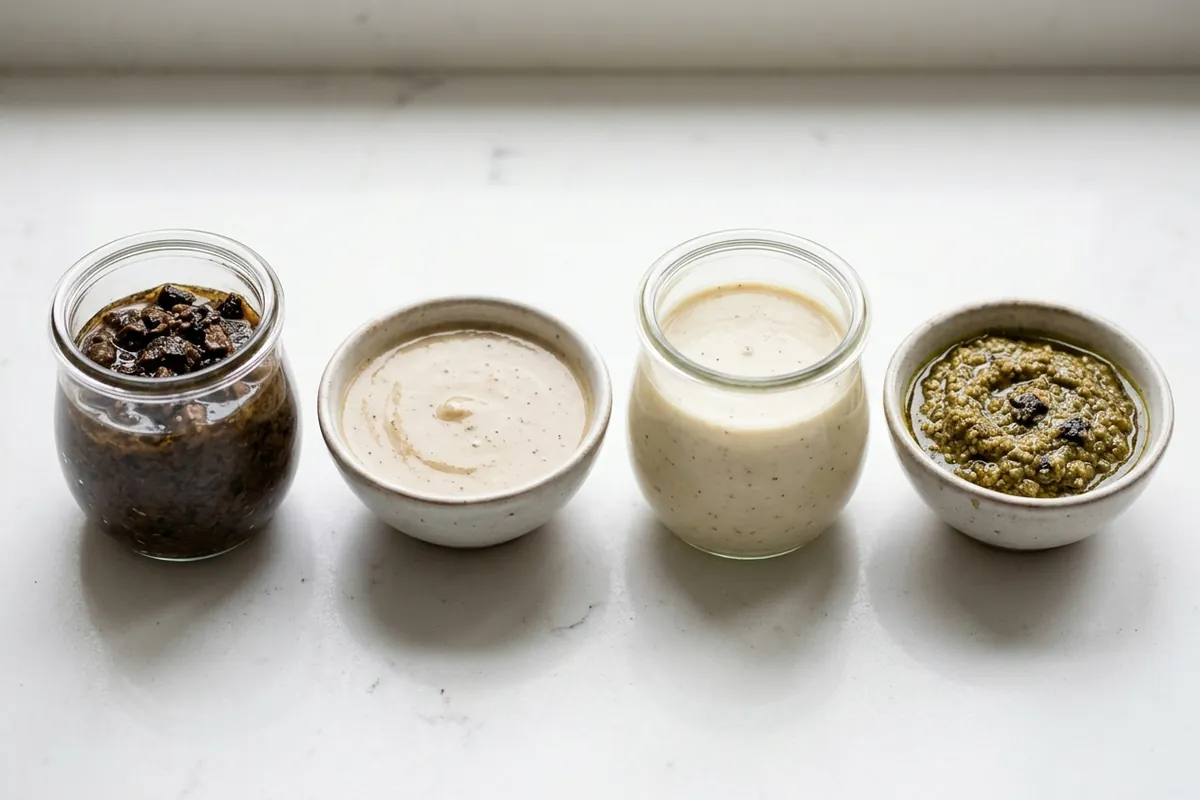
Here is where the confusion clears up. When a menu or a shelf says “truffle sauce,” it is almost always one of the following. Knowing which is which tells you how to use it and what to pay.
Tartufata, the Mushroom-Truffle Spread
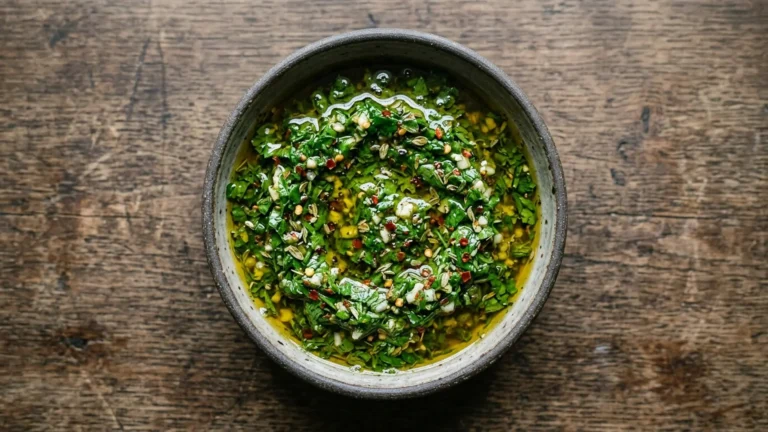
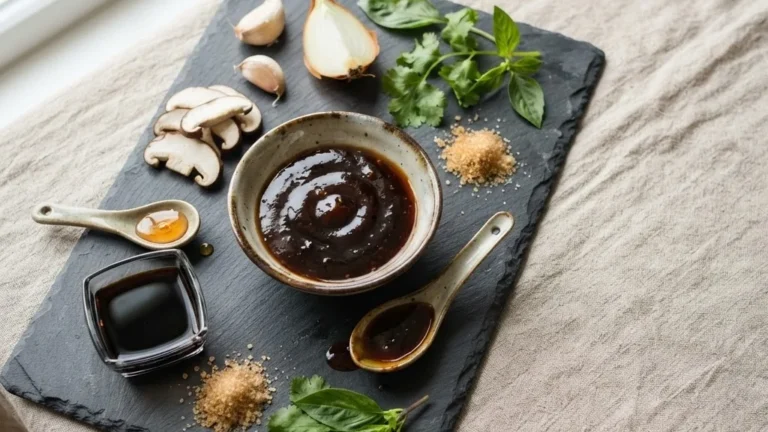
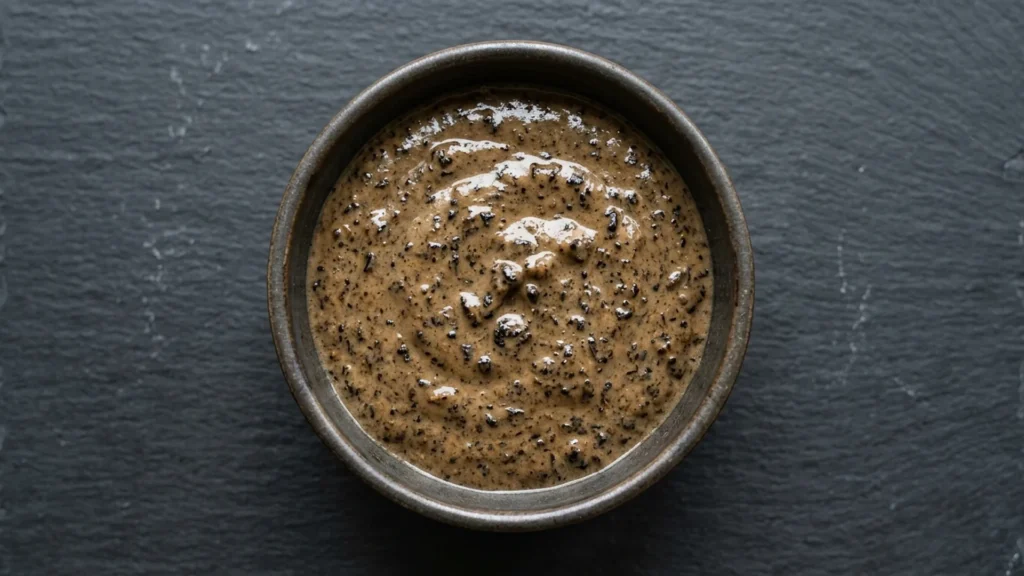
This is the classic Italian jarred “truffle sauce,” and it is the one most people actually buy. Tartufata is a dark, chunky paste made mostly from finely chopped mushrooms (often cremini or champignon), bound with olive oil, seasoned, and laced with a modest amount of real truffle plus truffle aroma. Think of it as a savory tapenade where mushrooms do the volume work and truffle supplies the perfume. It is more of a spread than a pourable sauce. The honest economics matter here: real truffle is so costly that even good tartufata contains only a small percentage of it, with mushrooms carrying the body. That is not a scam, it is just how the category works. A great jar tastes deeply of forest and earth; a poor one tastes of cheap oil and chemical funk.
Truffle Cream Sauce
This is the restaurant pasta sauce most people picture: a base of cream, butter, parmesan, and garlic, finished with truffle paste, truffle oil, or shaved fresh truffle. It is rich, glossy, and clingy, built to coat pasta, gnocchi, or risotto. Unlike jarred tartufata, this is usually made fresh and eaten hot. The truffle here is a finishing note layered onto a familiar creamy backbone, which is why it pairs so naturally with the kind of indulgent dishes people love. If you understand a basic cream-and-cheese sauce, you understand truffle cream sauce; it is that, plus aroma.
Truffle Hot Sauce
A newer arrival, popularized by a few US brands, truffle hot sauce blends chili peppers with black truffle and a touch of sweetener like agave. It is a condiment, not a cooking sauce, meant to be drizzled over eggs, pizza, or fries. It trades the subtle, brooding quality of traditional truffle sauce for a louder, sweet-heat-meets-earth profile. Whether you love it depends on whether you want truffle as a quiet luxury or a bold table sauce.
Truffle Oil and Truffle Butter (the Close Cousins)
Not sauces exactly, but they belong in the conversation because they deliver truffle flavor and people use them the same way. Here is the thing worth knowing: most commercial truffle oil contains no truffle at all. Its aroma comes from a lab-made compound that mimics one of the truffle’s many scent molecules. It smells intense but one-dimensional, and chefs are split on it. Truffle butter is often more honest, sometimes carrying real truffle bits. Knowing this saves you from thinking a strong-smelling oil equals a quality product; intensity is not the same as authenticity.
How to Tell a Quality Truffle Sauce From a Gimmick
This is the part that protects your wallet. The single most useful skill is reading the ingredient list, because that is where the truth lives. Below is a quick checklist to run through before buying any truffle product.
| Signal on the label | What it tells you |
|---|---|
| “Tuber melanosporum” or “Tuber magnatum” listed | Real truffle species named; good sign |
| Truffle high on the ingredient list | More actual truffle by weight; usually better |
| “Aroma,” “flavoring,” or “2,4-dithiapentane” | Synthetic truffle scent doing the heavy lifting |
| Mushrooms listed first | Normal for tartufata; body comes from mushroom |
| Very low price for “white truffle” | Almost certainly aroma, not real white truffle |
| Country and harvest detail | Producer transparency; often a quality marker |
The takeaway is not that synthetic aroma is evil; plenty of pleasant products use it and some people genuinely prefer the punch. The takeaway is that you should know what you are paying for. Paying a premium price for a jar whose flavor comes entirely from a single lab molecule is the trap to avoid.
How to Actually Use Truffle Sauce So the Flavor Lands
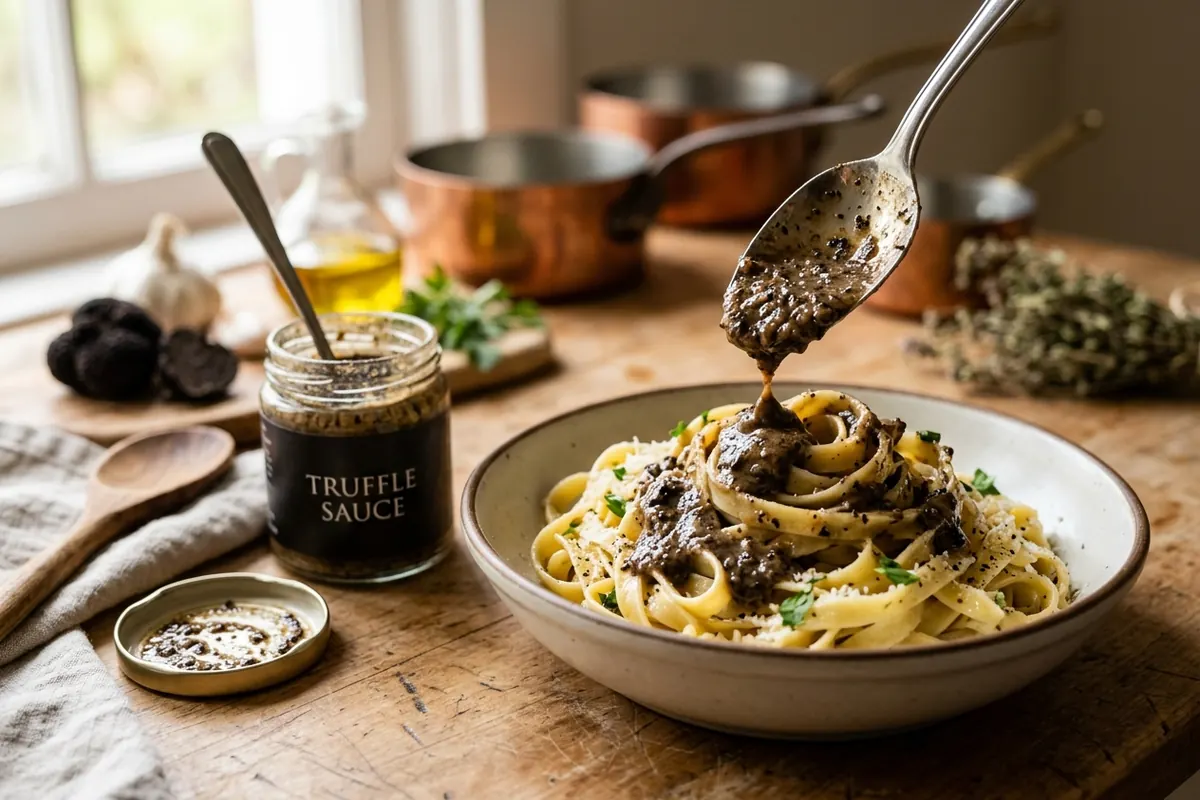
Truffle’s aroma is delicate and heat-sensitive, which means the most common mistake is cooking it too hard for too long. Treat it like a finishing ingredient, not a base. Here is how to use each type.
For tartufata, spread it cold or barely warmed. It is superb on grilled bread as a starter, stirred into hot pasta off the heat with a splash of the cooking water and a handful of parmesan, folded into a finished risotto at the very end, or smeared under a fried egg. A little goes a long way; start with a teaspoon per serving and taste.
For truffle cream sauce, build your cream base, then add the truffle element at the end so its aroma survives. Toss with hot pasta immediately and serve right away, because truffle perfume fades by the minute once plated. This is the same logic behind any great cream sauce, and the foundational technique overlaps heavily with the guide to homemade alfredo sauce; nail that creamy emulsion first, then the truffle is simply the luxury layer on top.
For truffle hot sauce, just drizzle it raw over finished food. No cooking needed. Eggs, pizza, popcorn, and fries are the natural homes.
Truffle Sauce Versus Other Earthy Sauces
People sometimes reach for truffle sauce expecting it to behave like a tomato or a brown sauce, and then feel let down. It does not work that way. A homemade tomato sauce is acidic, bright, and built to simmer for body; you can cook it hard and long. Truffle sauce is the opposite: aromatic, fragile, and best added late and lightly. Mushroom-based sauces without truffle, by contrast, can take heat and reduction. If you want a deep, savory, umami-rich sauce that holds up to cooking, a plain mushroom sauce is your workhorse; truffle is the special-occasion finish you add at the end.
That distinction also explains the price. You are not buying truffle sauce for everyday volume cooking. You are buying a concentrated hit of a rare aroma to improve something already good. Pour it over a plate of fresh pasta, the kind of indulgent dish you find among the richest pasta sauces, and a single spoonful transforms it. Use it to dress simple roasted potatoes or vegetables, similar in spirit to how a finishing fat lifts a tray of air fryer vegetables, and you turn a side into something memorable.
Black Truffle Versus White Truffle Sauce
Because the two main truffle types behave so differently, the sauces made from them do too, and knowing which you are buying changes how you cook with it. Black truffle is the workhorse. Its aroma is deep and earthy, more robust, and it can survive brief gentle warming, which is why most jarred tartufata and most cooked truffle sauces use black truffle. It is also more affordable and more widely available, so the majority of truffle sauce on shelves is black-truffle based.
White truffle is the diva. Its aroma is heady, garlicky, intensely perfumed, and extremely fragile; it is traditionally shaved raw over hot food at the table and never cooked, because heat obliterates it within seconds. Genuine white truffle is also astronomically expensive and seasonal. This is exactly why a cheap jar labeled “white truffle sauce” should make you suspicious: real white truffle in any meaningful quantity simply cannot be sold cheaply, so an inexpensive white truffle product is almost always carrying synthetic aroma. If you want real white truffle flavor, you generally buy the fresh truffle in season and shave it yourself, or accept that the jarred version is an aroma-driven approximation.
| Feature | Black truffle sauce | White truffle sauce |
|---|---|---|
| Aroma | Deep, earthy, robust | Heady, garlicky, intense |
| Heat tolerance | Survives gentle warming | Destroyed by heat; use raw |
| Typical price | Moderate to high | Very high |
| Best use | Cooked sauces, tartufata, pasta | Shaved raw, finishing only |
| If sold cheap | Possible but check label | Almost certainly synthetic |
Storing Truffle Sauce So It Lasts
Truffle products are an investment, so storing them well protects both the flavor and your money. An unopened jar of tartufata keeps in a cool, dark cupboard until its printed date, often a year or more, because the oil and processing preserve it. Once opened, refrigerate it, keep the surface covered with a thin film of its own oil to block air, and use it within a couple of weeks; the aroma fades steadily after opening, so sooner is better. Truffle cream sauce, being dairy-based and fresh, is far more perishable: refrigerate it and use it within a few days, and reheat it gently and briefly so you do not cook off the last of the aroma. Truffle hot sauce, acidic and shelf-stable, lasts a long time refrigerated after opening. The universal rule across all of them is that aroma is the first thing to go, so buy sizes you will finish while the perfume is still vivid rather than hoarding a giant jar that goes flat before you reach the bottom.
Common Mistakes People Make With Truffle Sauce
Most disappointment with truffle sauce traces back to a handful of avoidable, common errors. The first is cooking it too hard, which boils off the very aroma you paid for; always add it late and keep the heat gentle. The second is using too much, on the theory that more luxury equals more flavor. Truffle is assertive, and overdoing it turns elegant into acrid; a little restraint reads as more sophisticated, not less. The third is pairing it with loud, competing flavors. Truffle shines against quiet, fatty, neutral backdrops like eggs, butter, cream, potato, and plain pasta, where nothing fights it. Drown it in garlic, chili, and strong herbs and you have wasted it.
The fourth mistake is buying on price alone, in either direction: grabbing the cheapest jar and expecting magic, or assuming the most expensive one is automatically real. The label, not the price tag, is your evidence. And the fifth is storing an opened jar badly, letting air flatten the aroma over weeks. Cover the surface, refrigerate, and use it while it is bright. Avoid these five and even a modest jar will impress.
Is Truffle Sauce Worth the Money?
Honestly, it depends on the jar and how you use it. A genuine tartufata with real truffle, used as a finishing touch a teaspoon at a time, stretches across many meals and earns its price. A cheap “white truffle sauce” whose flavor is all synthetic aroma is a coin toss; you might enjoy it, but you are paying for marketing as much as flavor. My honest advice is to buy the smallest jar of a transparent brand first, taste it on plain bread or pasta so nothing competes, and decide for yourself before committing to the big bottle. Truffle is one of the few ingredients where a small, real amount beats a large, fake one every time.
Buying Your First Jar Without Getting Burned
If truffle sauce is new territory and you do not want to waste money, here is a sensible path for first-timers. Start with a tartufata from a transparent Italian producer rather than a flashy “white truffle” product, because tartufata gives you the most authentic, food-driven experience at a sane price. Buy the smallest jar available, even if the per-ounce cost is higher, so a disappointing purchase is a small loss and a good one tells you to size up next time. Before you cook with it, taste a little on a plain cracker or a piece of warm bread so the truffle flavor stands alone and you learn what you actually bought.
Pay attention to how the flavor behaves. A quality jar will smell complex and savory, with the earthiness lingering pleasantly; a synthetic-heavy product tends to hit hard and then vanish, leaving an almost chemical aftertaste. There is no shame in liking an aroma-driven product if you enjoy it, but tasting it solo first means you are choosing with your own palate instead of with marketing. Once you know what a jar delivers, you can decide exactly where it belongs: a finishing spoon on pasta, a smear under eggs, or a treat on toast.
The broader point is that truffle rewards patience and attention more than spending. A modest, real jar used thoughtfully will impress people far more than an expensive jar used carelessly. Treat it as the special finish it is, learn its limits, and it becomes one of the most quietly luxurious things in your pantry.
Frequently Asked Questions
What is truffle sauce made of?
It depends on the type. The most common jarred version, tartufata, is mostly finely chopped mushrooms bound in olive oil with a small amount of real truffle and truffle aroma. Truffle cream sauce is a cream, butter, and parmesan base finished with truffle. Truffle hot sauce blends chili peppers with black truffle. Always check the label to see how much actual truffle is present.
Does truffle sauce contain real truffle?
Sometimes, and sometimes only a little. Quality jars name a real truffle species and list truffle high on the ingredients. Many cheaper products get their smell mostly from synthetic aroma compounds rather than real truffle. Reading the ingredient list is the only reliable way to tell.
How do you use truffle sauce?
Treat it as a finishing ingredient, not a cooking base, because heat destroys its aroma. Spread tartufata on bread or stir it into hot pasta off the heat, add truffle cream sauce to pasta at the end, and drizzle truffle hot sauce raw over eggs, pizza, or fries. A teaspoon per serving is usually plenty.
Is truffle sauce the same as truffle oil?
No. Truffle sauce is a spread or pourable sauce with body from mushrooms or cream, while truffle oil is an infused oil. Importantly, most commercial truffle oil contains no actual truffle and gets its scent from a lab-made aroma compound, so a strong smell does not guarantee real truffle.