
Soy sauce vs liquid aminos comes down to how they are made and how loud they taste. Soy sauce is fermented from soybeans, wheat, and salt over months, which gives it a bold, complex, salty depth. Liquid aminos are made by breaking down soybeans with an acid instead of fermentation, so they taste milder, smoother, and a touch sweet, and they contain no wheat, which makes them gluten-free. They swap for each other 1:1 in most recipes, but they are not identical in the pan: soy sauce browns and deepens a dish, while liquid aminos keep things gentle.
Both bottles have a place in a regular rotation, and both work for seasoning. The health blogs treat this as a sodium contest and stop there. What matters most is what each one does to the food, so here is the kitchen version: how they are made, the real numbers, when to grab which, and how to swap them, including coconut aminos and tamari, which belong in this conversation too.
Key takeaways:
- Soy sauce is fermented and bold; liquid aminos are acid-processed, milder, gluten-free.
- Sodium is nearly identical, about 300 milligrams per teaspoon for both, so liquid aminos are not a low-salt choice.
- They swap 1:1 in most recipes; expect liquid aminos to taste a touch less deep.
- For gluten-free with real soy flavor, tamari beats liquid aminos.
- For genuinely lower sodium, coconut aminos is the only one that delivers.
How Each One Is Made, and Why It Matters
The production method is the root of every difference downstream. Soy sauce is brewed. Soybeans and roasted wheat are inoculated with a mold, then aged in a salt brine anywhere from one month to four years. That long fermentation builds hundreds of flavor compounds, the savory, slightly funky complexity that makes soy sauce taste like more than salt water. The wheat is also why standard soy sauce is not gluten-free.
Liquid aminos take a shortcut. Soybeans are broken down with an acidic solution that splits the soy protein into free amino acids, and the acid is then neutralized. No fermentation, no wheat, no alcohol. The result tastes cleaner and simpler, with the savory amino-acid backbone but without the layered depth that aging builds. Neither method is wrong; they just land in different places. If you want to go deeper on the fermentation side, the SauceGrove guide to a substitute for soy sauce walks through what that long brew actually contributes.
It helps to understand what fermentation gives you in flavor terms, because that is the whole reason these two taste different. During the months in the brine, the mold and yeast break proteins into glutamates, the savory umami compounds, and produce small amounts of esters and alcohols that read as fruity and complex on the palate. That is why a good aged soy sauce smells almost wine-like when you get close. Liquid aminos, made in a fraction of the time by a chemical reaction, capture the glutamate savoriness but miss most of those aromatic byproducts. You get the salt and the umami, not the perfume. In a dish where soy sauce is meant to be a quiet seasoning, you may never notice. In a dish where it is the headline flavor, you will.
There is also a color and body difference rooted in the process. Soy sauce, especially dark soy, develops a deep mahogany color from the long fermentation and any added molasses, which is why it lends a glossy brown coat to noodles and braises. Liquid aminos tend to run a touch lighter and thinner. If the visual of a richly browned stir-fry matters to you, soy sauce delivers it more reliably.
Soy Sauce vs Liquid Aminos: The Numbers
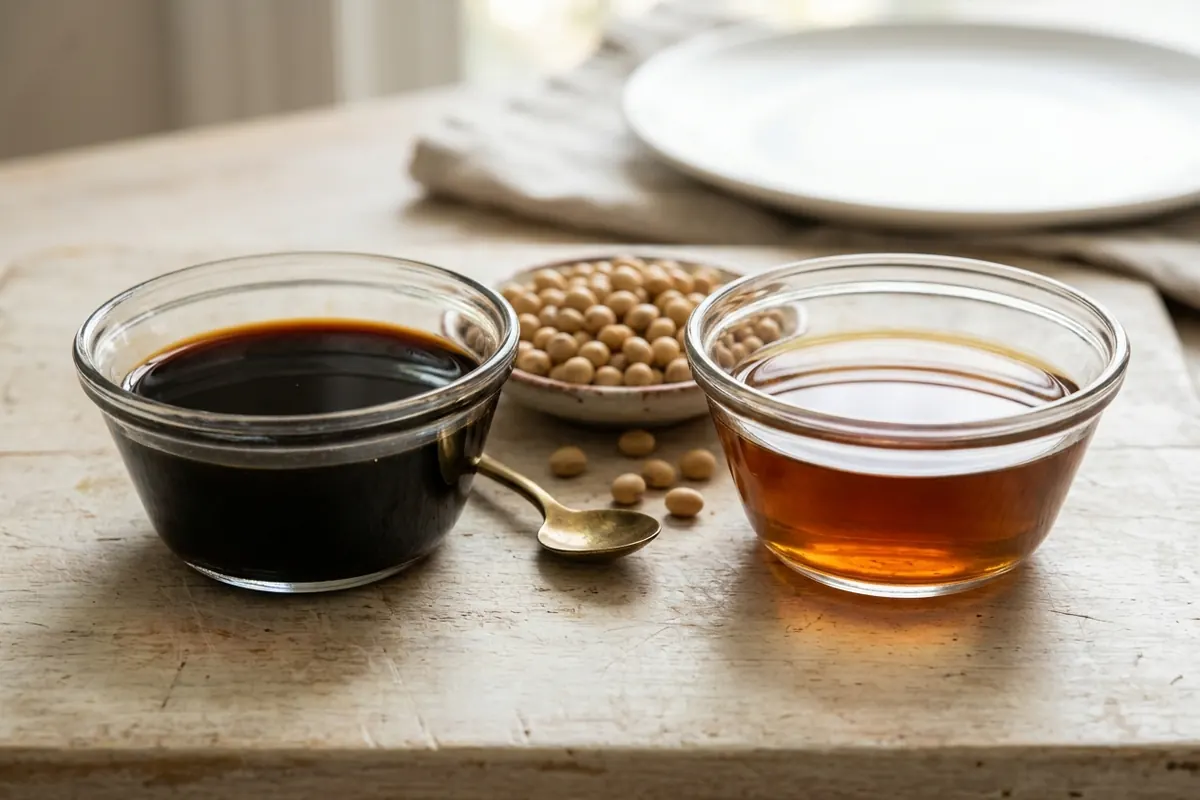
Here is where the marketing gets fuzzy and the labels tell the truth. Both are high in sodium. All the figures here and in the table below are per teaspoon, so they line up directly. Regular soy sauce runs roughly 300 to 320 milligrams of sodium per teaspoon. Liquid aminos are barely lower, around 310 milligrams per teaspoon, despite the health-food shelf placement. That difference is small enough that nobody should pick liquid aminos for a meaningful sodium cut. If sodium is the goal, coconut aminos is the real answer, often around 90 to 130 milligrams per teaspoon, a genuine reduction. Nutrition references like Healthline put the soy-sauce and liquid-aminos sodium figures within a hair of each other, which lines up with what the labels show.
Price is the other gap. Liquid aminos, usually the Bragg brand, can cost up to three times what a bottle of standard soy sauce costs. You are paying for the gluten-free, non-fermented profile, not for less salt. So the honest summary: liquid aminos are worth it for gluten-free cooks and people who prefer the milder taste, not for anyone chasing a lower-sodium number.
The Full Map: Soy, Liquid Aminos, Tamari, and Coconut Aminos
Most articles compare only two of these at a time, which leaves you guessing about the other two on the shelf. Here is the whole field in one table.
| Sauce | Gluten-free? | Sodium (per tsp) | Flavor |
|---|---|---|---|
| Soy sauce | No (has wheat) | ~300 mg | Bold, salty, fermented |
| Liquid aminos | Yes | ~310 mg | Mild, smooth, lightly sweet |
| Tamari | Usually (check label) | ~230 mg | Rich, deep, less sharp |
| Coconut aminos | Yes (soy-free too) | ~90 to 130 mg | Sweet, mild, low salt |
Tamari deserves a callout. It is essentially soy sauce made with little or no wheat, so it is usually gluten-free and tastes richer and rounder than standard soy sauce, with less of the sharp edge. For a gluten-free cook who wants real soy-sauce flavor, tamari beats liquid aminos in the pan most of the time. Coconut aminos is the outlier: made from fermented coconut sap, soy-free, much lower in salt, and noticeably sweet, so it is a swap that changes the dish rather than matching it.
One more shelf distinction worth knowing: light versus dark soy sauce, which often confuses people staring at an Asian-grocery aisle. Light soy sauce, sometimes labeled thin, is saltier and thinner and does most of the seasoning work in Chinese cooking. Dark soy sauce is aged longer, often with added molasses, so it is thicker, sweeter, less salty, and used mainly for color, the deep brown you see on braised pork or lo mein. Liquid aminos sit closer to a light soy in body but milder in flavor, which is another reason they cannot fully stand in for dark soy when you want that glossy color. If a recipe calls specifically for dark soy and all you have is liquid aminos, the dish will taste fine but look pale.
When to Reach for Which
This is the part the comparison posts skip, and it is the only part that matters once you are actually cooking. Each one has dishes where it shines.
The wok-hei point is easy to miss. Beef and broccoli cooked entirely with liquid aminos can taste like it is missing something even when the salt is right. Side by side the next night with regular soy sauce, the difference was obvious: the soy-sauce version had a roasty, browned depth along the edges of the meat that the liquid aminos version simply did not. That browning is a real chemical event, and liquid aminos, with fewer sugars and reaction compounds, do not produce it the same way. That difference decides which bottle goes where.
For a stir-fry, soy sauce is the right choice. The high heat of a wok caramelizes the sugars in soy sauce and builds that browned, savory edge cooks call wok-hei. Liquid aminos, being milder and less complex, give you saltiness without that deep browning, so a stir-fry made with them tastes flatter. For a marinade where you want color and a salty backbone, soy sauce again, or tamari if you need it gluten-free. For a dipping sauce or a light finishing drizzle where you do not want to overpower delicate food, liquid aminos work nicely because they are gentle. And for anything where you want sweetness and low salt, a teriyaki-style glaze for example, coconut aminos earns its place. For a soup or a broth where the soy is one note among many, liquid aminos disappear cleanly into the background, which is sometimes exactly what you want. The same matching logic shows up in the SauceGrove guide to how to make teriyaki sauce, where the choice of soy base sets the entire flavor, and in the best meatball sauce breakdown, where a savory backbone holds a rich sauce together.
How to Actually Swap Them
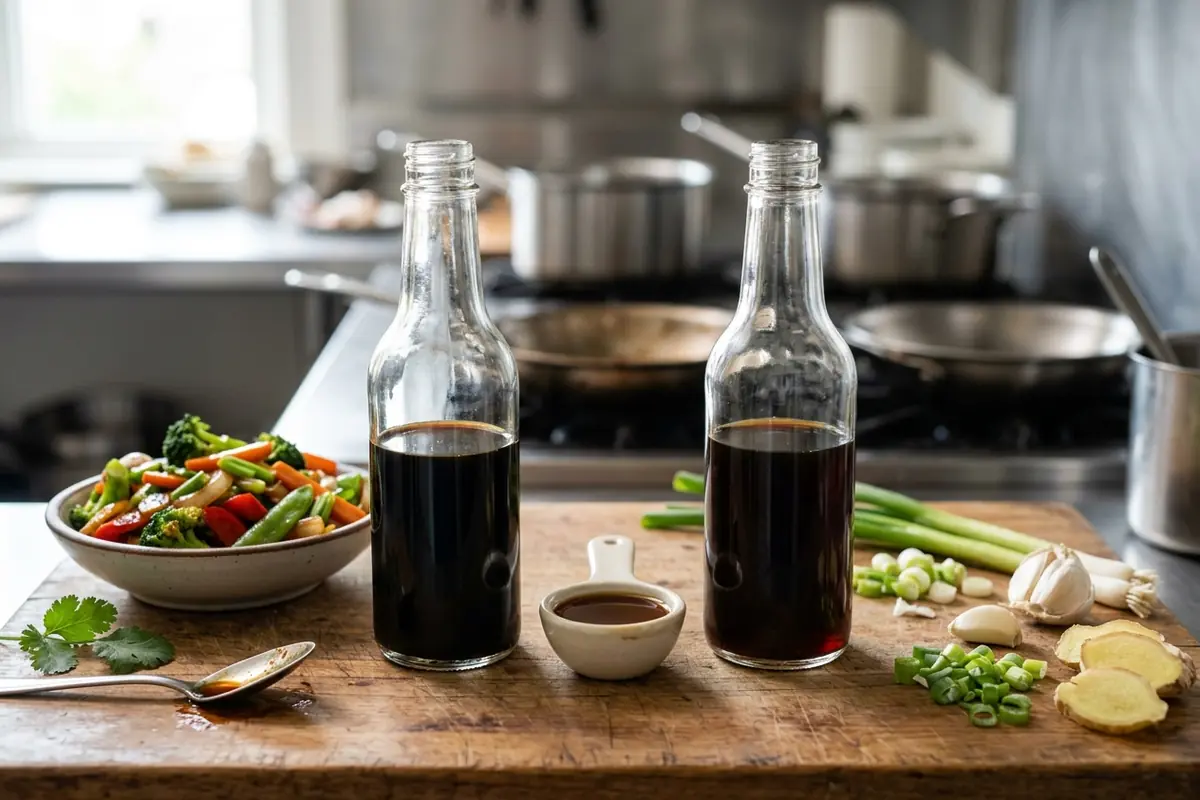
The good news is that soy sauce and liquid aminos substitute 1:1 in nearly every recipe. Start there and adjust by taste. The two adjustments worth knowing: if you swap liquid aminos into a dish that needs soy sauce’s depth, like a braise or a stir-fry, you may want to add a tiny splash of something else savory to make up for the lost complexity, a dab of miso or a few drops of fish sauce. And if you swap coconut aminos in for soy sauce, expect the dish to come out sweeter and less salty, so cut any added sugar and add a pinch of salt to balance.
Tamari swaps 1:1 for soy sauce with almost no adjustment; it is the cleanest substitute of the bunch for flavor. A big batch of stir-fried noodles made gluten-free with liquid aminos can taste strangely pale, missing its usual savory punch. The fix was a few drops of fish sauce stirred in at the end, which pushed the savory depth right back up without making the noodles taste fishy. Reach for tamari first when you need gluten-free, and keep liquid aminos for milder uses.
A practical note on measuring when you swap toward the sweeter end. Coconut aminos carries real sweetness, so if you pour it into a marinade that already has honey, brown sugar, or mirin, the dish can tip cloying fast. My habit is to taste the marinade before it goes on the protein and pull back the added sugar by about half when coconut aminos is doing part of the job. The same caution applies in reverse: when swapping a sweet sauce out for plain soy, add a small pinch of sugar to keep the balance the recipe intended. Seasoning is always a system, and changing one element ripples through the rest.
Salt is the other variable to ride. Because soy sauce and liquid aminos are both salty, any recipe written around one of them already accounts for that salt. If you switch to lower-sodium coconut aminos, the dish will taste underseasoned unless you add salt back. Add it a pinch at a time at the end, tasting as you go, rather than guessing up front. That slow approach has saved more dishes than any single ingredient swap ever has.
Which Is Healthier, Honestly
Strip away the health-food halo and the picture is plain. On sodium, soy sauce and liquid aminos are nearly tied, both high, so neither is a low-sodium choice. Liquid aminos win clearly on one front: they are gluten-free and wheat-free, which matters if you have celiac disease or a wheat allergy. Beyond that, the protein and amino-acid content is similar enough that no one should pick one over the other for nutrition alone. If your real goal is less sodium, coconut aminos is the genuine winner, and tamari is the move for gluten-free cooks who refuse to give up real soy-sauce flavor. America’s Test Kitchen has tasted across these categories in its condiment testing, and the practical advice lines up: buy for flavor and dietary need, not for a sodium difference that barely exists. For a hands-on way to put your chosen soy base to work, the SauceGrove guide to a stir-fry sauce shows how the bottle you pick shapes the finished dish.
Pricing and product availability noted here are current as of 2026 and can shift by region and brand.
If there is one rule to keep, it is this: keep soy sauce as your everyday workhorse, add tamari if you need gluten-free without losing flavor, and reach for coconut aminos only when low salt or a touch of sweetness is the actual goal. Liquid aminos earn a spot for gluten-free cooks who prefer a milder taste, but they are not the health upgrade the marketing implies. Buy for flavor and your own dietary needs, taste as you cook, and you will never be steered wrong by a label promise.
Buying and Storing Each One
A few buying notes save money and frustration. For soy sauce, a naturally brewed bottle, look for the word brewed or fermented on the label, tastes far better than the cheap chemically hydrolyzed versions sold as soy sauce in some discount aisles. Those budget bottles are made by the same acid process as liquid aminos but marketed as soy sauce, and they taste harsh and one-dimensional. Spend a couple of extra dollars on a brewed bottle and you will taste the difference in every dish. Kikkoman and similar naturally brewed brands are a safe default, a point Cook’s Illustrated has confirmed in its soy-sauce tastings.
Liquid aminos come almost exclusively from Bragg, which is why the price is what it is. There is little competition on that shelf. Coconut aminos has more brands now, and they vary in sweetness and salt, so check the label and taste before committing to a recipe. Tamari is widely available wherever soy sauce is sold, often right next to it, and San-J is a common naturally brewed option.
Storage is easy across the board. All of these keep for a long time thanks to their salt content. An opened bottle of soy sauce or liquid aminos stays good for months at room temperature, though refrigerating it after opening preserves the fresh flavor longer and slows any color darkening. Coconut aminos, being lower in salt, benefits most from refrigeration after opening. None of them truly spoil quickly, but flavor fades over time, so buy a size you will actually finish within a year rather than the jumbo bottle that sits half-used.
Frequently Asked Questions
Can I substitute liquid aminos for soy sauce 1:1?
Yes, in most recipes you can swap liquid aminos for soy sauce in a 1:1 ratio. Just keep in mind that liquid aminos taste milder and slightly sweet, so in dishes that rely on soy sauce’s deep, fermented flavor, you may want to add a small amount of miso or fish sauce to make up the difference.
Are liquid aminos healthier than soy sauce?
Not by much. Both contain similar high sodium, around 300 milligrams per teaspoon, so liquid aminos are not a meaningful low-sodium choice. Their real advantage is being gluten-free and wheat-free, which matters for people avoiding gluten. For lower sodium, coconut aminos is the better pick.
What is the difference in taste between soy sauce and liquid aminos?
Soy sauce is bold, salty, and complex from months of fermentation. Liquid aminos are milder, smoother, and a little sweet, with the savory backbone but without the deep, layered flavor that aging gives soy sauce. Soy sauce also browns better under high heat.
Is liquid aminos gluten-free?
Yes, liquid aminos are made without wheat and contain no gluten, which is why they are popular with people who have celiac disease or a wheat allergy. Standard soy sauce is brewed with wheat and is not gluten-free, though tamari is a gluten-free soy-sauce alternative.
Where do coconut aminos fit in?
Coconut aminos are made from fermented coconut sap, are soy-free and gluten-free, and have much less sodium, often around 90 to 130 milligrams per teaspoon. They taste noticeably sweeter and milder, so they change a dish rather than matching soy sauce exactly. They are the best swap if your goal is lower salt.
Which is better for stir-fry, soy sauce or liquid aminos?
Soy sauce is better for stir-fry because high wok heat caramelizes its sugars and builds a browned, savory depth. Liquid aminos give saltiness without that browning, so a stir-fry made with them tastes flatter. If you need gluten-free, tamari is the closest match to soy sauce in a stir-fry.
Why are liquid aminos more expensive than soy sauce?
Liquid aminos, usually the Bragg brand, can cost up to three times what standard soy sauce costs. You are paying for the gluten-free, non-fermented, wheat-free profile and the brand positioning, not for any meaningful reduction in sodium.