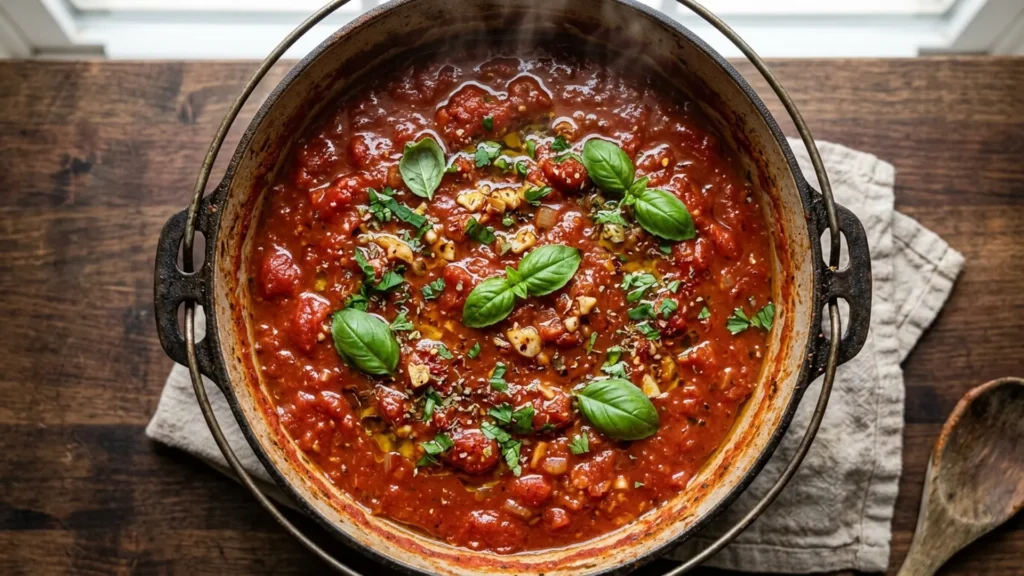
Homemade spaghetti sauce beats anything from a jar because you control the tomatoes, the seasoning, the texture, and the depth of flavor, and the method is far simpler than the long ingredient lists make it look. At its core it is browned aromatics, good tomatoes, a few seasonings, and time over low heat. You can have a quick weeknight version ready in about thirty minutes or build a deep, slow-simmered sauce over a couple of hours, and both come from the same handful of techniques: build a flavor base, choose the right tomato products, season in layers, and let it reduce until it tastes rich rather than watery.
This guide covers the full method for both a fast and a long-simmered sauce, how to pick and combine tomato products for the body you want, the meat options and how to brown them properly, the seasoning order that builds depth, and how to fix the three most common problems: a sauce that is too acidic, too thin, or too bland. There is a tomato comparison table and a complete FAQ at the end.
Spaghetti Sauce, Marinara, and Meat Sauce
People use these terms loosely, so it helps to set them straight. Marinara is a simple, quick tomato sauce, usually just tomatoes, garlic, olive oil, and herbs, simmered briefly. Spaghetti sauce, as most American home cooks mean it, is a more developed sauce often built with onion, sometimes meat, a longer simmer, and a fuller seasoning profile. A meat sauce, or a sauce in the spirit of a Bolognese, leans heavily on browned ground meat for richness and body. This guide treats spaghetti sauce as the flexible middle ground: you can make it meatless or with meat, fast or slow, and all the same principles apply.
Building the Flavor Base
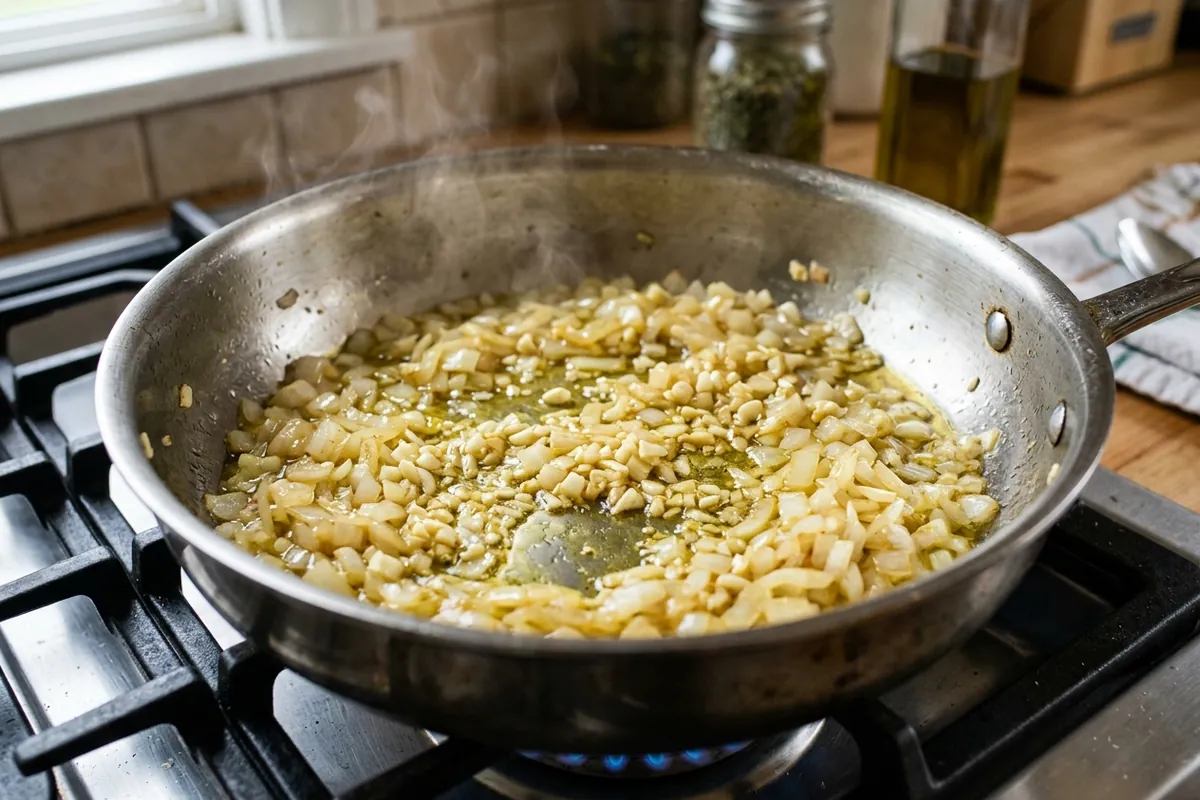
Every good spaghetti sauce starts with an aromatic base, and skipping or rushing this step is why a lot of homemade sauce tastes flat. Heat a few tablespoons of olive oil in a wide, heavy pot over medium heat and cook a finely chopped onion until soft and translucent, about five to seven minutes. Do not brown it hard; you want it sweet and soft. Then add minced garlic, several cloves, and cook just thirty seconds to a minute until fragrant, because garlic burns fast and turns bitter. If you like, a finely diced carrot cooked with the onion adds natural sweetness that takes the edge off acidic tomatoes, a trick that works better than dumping in sugar.
If you are making a meat sauce, brown the meat before or alongside the aromatics. Get the pan hot, break the meat into pieces, and let it develop real color rather than just steaming gray. That browning, the Maillard reaction, is a major source of savory depth. Drain excess grease after browning so the sauce does not turn oily, but leave the browned bits, since those are flavor. A common move is to brown the meat, remove it, soften the aromatics in the rendered fat, then return the meat to the pot.
Choosing Your Tomatoes
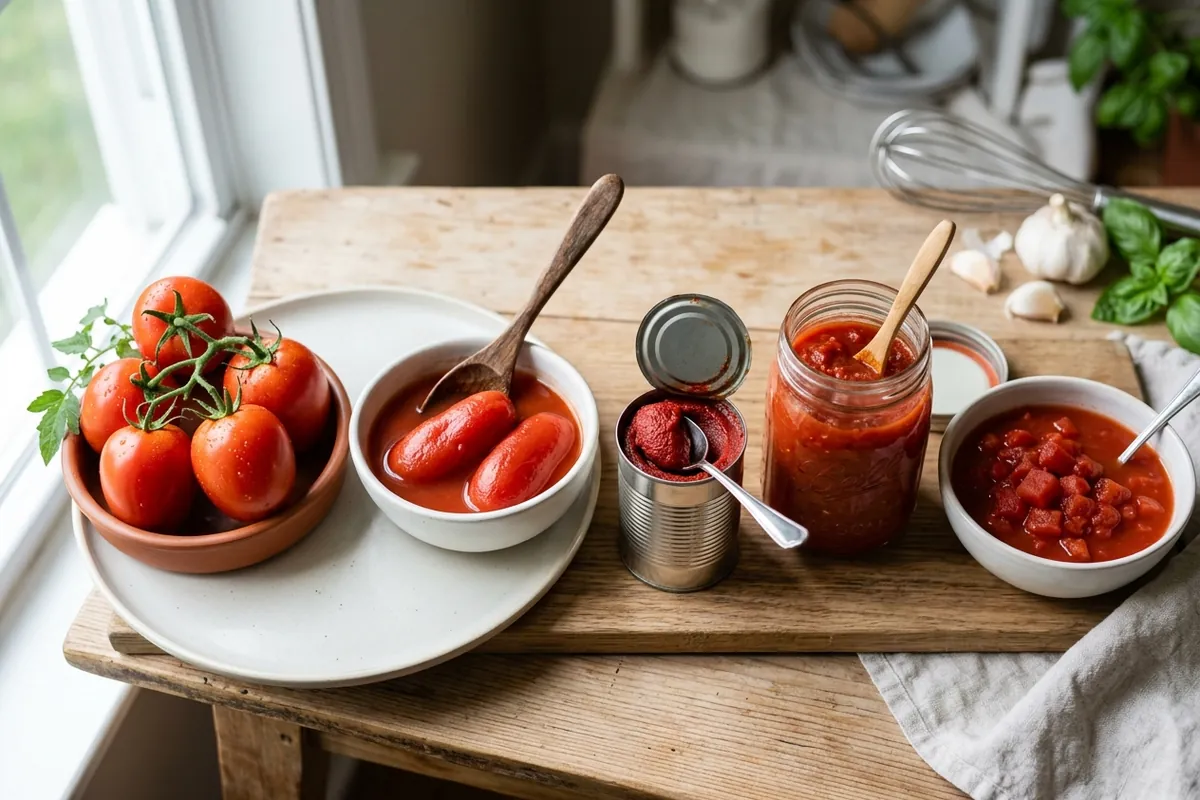
The tomatoes are the sauce, so this is the most important ingredient decision. You have several products to combine, and the best sauces usually use more than one. Crushed tomatoes give a thick, pulpy base. Tomato sauce is smooth and pourable. Diced tomatoes add texture and chunks. And tomato paste is the concentrated, deeply flavored backbone that adds body and a cooked, almost sweet depth. A spoonful or two of paste, cooked briefly in the oil with the aromatics before the other tomatoes go in, transforms the sauce by deepening its color and flavor.
Knowing how these products differ is worth a few minutes, because using paste when you needed sauce, or vice versa, changes the whole texture. Our guide on tomato sauce versus paste breaks down exactly how each one behaves and when to reach for which, which makes it much easier to dial in the body you want. For the brightest flavor, look for canned tomatoes with no added flavorings, ideally a good San Marzano-style whole or crushed tomato, and crush whole ones by hand for a more rustic texture.
Seasoning in Layers
Seasoning a sauce is not a single step at the end; it happens in stages. Salt the aromatics as they cook to draw out their flavor. Add dried herbs, oregano and basil are the classics, early in the simmer so they have time to rehydrate and infuse the sauce, while reserving fresh basil for the last few minutes so it stays bright. A pinch of red pepper flakes adds a warm background heat. Many recipes add a tablespoon of Worcestershire sauce for a savory, umami depth, and a small amount of sugar, a teaspoon or so, to balance the acidity of the tomatoes if they taste sharp.
The single most useful seasoning habit is to taste and adjust near the end, after the sauce has simmered and concentrated. That is when you can tell if it needs more salt, a little more sugar to soften the acid, or another pinch of herbs. Black pepper goes in late, since it loses its bite over a long simmer. A splash of red wine added early cooks down and adds a subtle richness if you want to go further.
The Simmer: Where Flavor Develops
Once the base, tomatoes, and seasonings are in, the simmer is what turns a collection of ingredients into a sauce. Bring it to a gentle bubble, then reduce the heat to low and let it cook uncovered or partly covered. A quick sauce simmers for about twenty-five to thirty minutes, enough to meld the flavors and cook off the raw tomato taste. A long-simmered sauce cooks for one to four hours over very low heat, which concentrates the tomatoes, deepens the color, and develops a rounder, sweeter, more complex flavor that you simply cannot rush.
Stir occasionally to keep the bottom from scorching, and if the sauce spits, partly cover it. As it simmers it reduces and thickens; if it gets too thick, loosen it with a little water, pasta water, or stock. If it is too thin even after a good simmer, you have options beyond just cooking it longer. Our guide on how to thicken sauce walks through reduction, tomato paste, and other methods that work for tomato sauces without dulling the flavor. Reduction and a spoonful of paste are usually the right answers here, since starch thickeners can mute a bright tomato sauce.
Meat, Meatless, and Add-Ins
The protein is flexible. Ground beef is the standard, giving a hearty, familiar meat sauce. A blend of beef and Italian sausage adds fat, fennel, and seasoning that deepens the flavor considerably, and many cooks swear by the combination. For a lighter version, ground turkey works but benefits from extra seasoning and a little olive oil since it is leaner. You can leave meat out entirely for a meatless sauce that is still rich if you build the base well and simmer it long enough.
Beyond meat, a few add-ins earn their place. A Parmesan rind dropped into the simmering sauce melts slowly and adds savory depth, then is fished out before serving. Mushrooms, finely chopped and browned, add umami and body. A handful of grated carrot, as mentioned, tempers acidity naturally. Just avoid overloading the sauce with too many competing additions; a focused sauce with three or four well-handled elements beats a crowded one.
Fixing the Three Common Problems
Most homemade spaghetti sauce complaints fall into three buckets. If the sauce is too acidic or sharp, the fix is a small amount of sugar, a teaspoon at a time, or grated carrot, or a longer simmer, which all soften the bright acidity of the tomatoes. A small pat of butter stirred in at the end also rounds out acid. If the sauce is too thin or watery, simmer it longer uncovered to reduce, or stir in a spoonful of tomato paste, which thickens and deepens at once.
If the sauce tastes bland or flat, it usually needs salt first, then a savory boost like a splash of Worcestershire, a Parmesan rind, or simply more time to develop. Under-browned aromatics and meat are a common hidden cause of blandness, so the fix for next time is to build a deeper base. Tasting and correcting near the end of the simmer is what separates a good sauce from a flat one.
Tomato Product Comparison
| Product | Texture | Best Role |
|---|---|---|
| Crushed tomatoes | Thick and pulpy | Main body of the sauce |
| Tomato sauce | Smooth and pourable | Loosening and smoothing |
| Diced tomatoes | Chunky | Added texture and bite |
| Tomato paste | Thick concentrate | Depth, body, and color |
| Whole peeled tomatoes | Whole, hand-crushed | Rustic, bright base |
The Quick Weeknight Version
You do not always have hours, and a good thirty-minute sauce is a weeknight workhorse worth having in your back pocket. Heat olive oil in a saucepan over medium heat, add a few cloves of minced garlic, and cook just thirty seconds until fragrant. Pour in a can of crushed tomatoes and a small can of tomato sauce, then season with dried oregano, dried basil, a pinch of red pepper flakes, salt, and black pepper. Bring it to a gentle simmer and let it cook for twenty to twenty-five minutes, stirring now and then, until it thickens and the raw tomato taste cooks off.
This stripped-down version skips the onion and meat but still tastes far better than jarred sauce because you control the seasoning and freshness. A spoonful of tomato paste stirred in early deepens it, a pinch of sugar balances the acid if the tomatoes are sharp, and a handful of fresh basil torn in at the end brightens the whole pot. It is enough for a weeknight pasta, a quick baked ziti, or a fast pizza sauce, and it proves that a real homemade sauce does not have to be an all-afternoon project to be worth making.
Fresh vs Canned Tomatoes
You can make spaghetti sauce from fresh tomatoes or canned, and for most of the year canned is actually the better choice. Good canned tomatoes are picked and packed at peak ripeness, so they are more consistent and often more flavorful than the underripe fresh tomatoes available in winter. They also save the labor of peeling and seeding. A quality canned whole or crushed tomato, ideally a San Marzano-style one with no added flavorings, gives you a reliable, bright base any time of year.
Fresh tomatoes are worth it only in late summer when they are truly ripe, and they take more work. You need to peel them, which is easiest by scoring an X on the bottom, blanching them in boiling water for thirty seconds, then dunking them in ice water so the skins slip off. Then seed and chop them, and expect a longer simmer, because fresh tomatoes carry a lot of water that has to cook off before the sauce thickens. The reward is a fresh, summery flavor, but for an everyday sauce, good canned tomatoes give you most of the quality with a fraction of the effort.
Matching the Sauce to the Pasta
A sauce this hearty deserves the right pasta. Spaghetti is the default and works well, but the texture of the sauce should guide the shape. A smooth, meatless sauce clings nicely to long strands like spaghetti or linguine. A chunky meat sauce pairs better with shapes that catch and hold the bits: rigatoni, penne, and other tube shapes trap meat and sauce in their hollows, while wider ribbons like pappardelle stand up to a rich ragu. The general rule is that heavier, chunkier sauces want sturdier, ridged, or tubular shapes, and lighter sauces want thinner strands.
However you serve it, finish the pasta in the sauce rather than just ladling sauce on top. Cook the pasta to just short of al dente, reserve a cup of the starchy cooking water, then toss the drained pasta in the sauce over low heat for a minute or two, adding splashes of pasta water as needed. The starch helps the sauce cling to every piece and brings the dish together far better than sauce sitting on a plain pile of noodles. Finish with grated Parmesan and a little fresh basil.
Storage, Freezing, and Make-Ahead
Spaghetti sauce is one of the best make-ahead foods there is, because it actually improves overnight as the flavors continue to meld in the refrigerator. Cooled sauce keeps three to four days in an airtight container. It also freezes beautifully, since a cooked tomato sauce holds its texture and flavor well in the freezer for four to six months. Freeze it flat in labeled bags or in portioned containers so you can thaw exactly what you need. Thaw in the refrigerator overnight and reheat gently on the stove, adding a splash of water if it has thickened too much. Making a double batch and freezing half is one of the most useful things you can do with an afternoon. For deeper technique reading on tomato sauces and browning, America’s Test Kitchen at americastestkitchen.com and Cook’s Illustrated at cooksillustrated.com are both reliable references.
Frequently Asked Questions
How do I make spaghetti sauce less acidic?
Add a small amount of sugar, a teaspoon at a time, to balance the tartness, or stir in grated carrot, which sweetens naturally. A longer simmer also mellows acidity, and a pat of butter stirred in at the end rounds out the sharp edge. Choosing a good canned tomato with no added citric acid helps from the start.
How long should I simmer spaghetti sauce?
A quick sauce needs about twenty-five to thirty minutes to meld and lose the raw tomato taste. For a deeper, richer flavor, simmer it low for one to four hours, which concentrates the tomatoes and rounds out the sauce. Longer simmering develops complexity you cannot get any faster.
Should I use tomato paste in spaghetti sauce?
Yes, a spoonful or two of tomato paste adds body, color, and a deep, cooked sweetness that crushed tomatoes alone do not provide. Cook the paste briefly in the oil with the aromatics before adding the other tomatoes so it caramelizes slightly and develops its full flavor.
Can I make spaghetti sauce without meat?
Absolutely. A meatless sauce can be just as rich if you build a strong aromatic base, use a mix of crushed tomatoes and paste, and simmer it long enough. Browned mushrooms, a Parmesan rind, and a good dose of olive oil add the savory depth that meat would otherwise contribute.
Why does my spaghetti sauce taste bland?
Blandness usually means it needs more salt, then a savory boost. Under-browned onions and meat are a common hidden cause, so build a deeper base next time. A splash of Worcestershire, a Parmesan rind, or simply more simmering time all add depth. Always taste and adjust near the end.
How long does homemade spaghetti sauce last?
Refrigerated in an airtight container, it keeps three to four days and often tastes better the next day. Frozen, it holds four to six months. Freeze it flat in bags or in portions, thaw overnight in the refrigerator, and reheat gently with a splash of water if it has thickened.
Bottom Line
Homemade spaghetti sauce is built, not just mixed: brown a real aromatic base, combine the right tomato products for the body you want, season in layers, and give it enough time over low heat to develop. Use tomato paste for depth, balance acidity with a little sugar or carrot, and always taste and correct near the end of the simmer. Whether you make a thirty-minute weeknight version or a three-hour Sunday sauce, those same habits turn cans of tomatoes into a sauce worth cooking a big pot of and freezing for later.