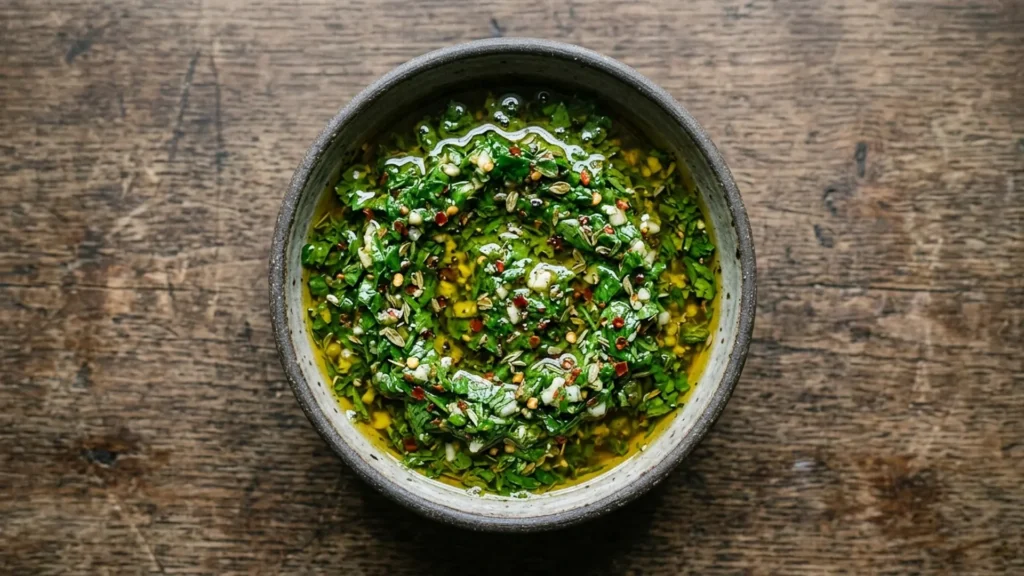
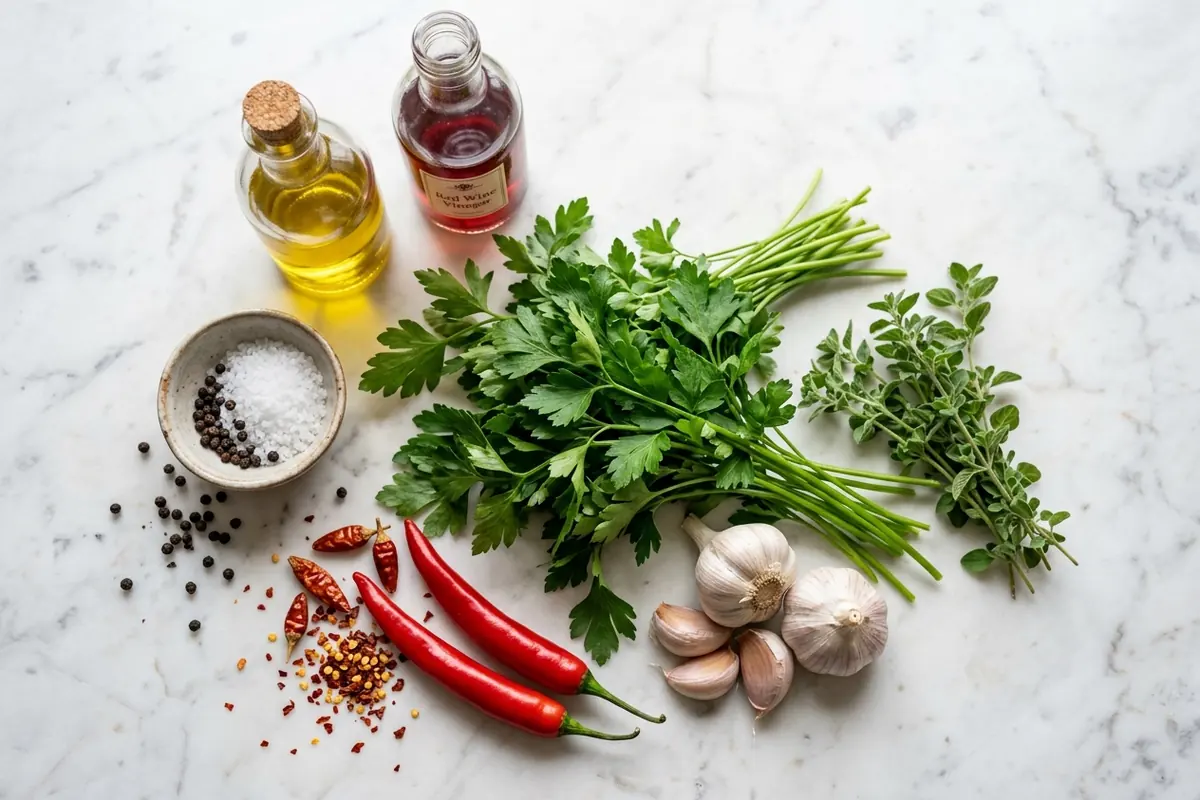
What’s in chimichurri sauce comes down to four building blocks that any good version respects: fresh herbs, an acid, an aromatic, and oil. The classic Argentine green version, chimichurri verde, is built on finely chopped flat-leaf parsley, red wine vinegar, garlic, dried oregano, red pepper flakes, salt, and a generous pour of olive oil. That is the whole sauce. Everything else you see, from cilantro to smoked paprika to lemon, is a regional or modern variation on those four pillars, and once you understand the role each component plays you can balance and adjust the sauce to your own taste with confidence.
This guide breaks down every ingredient and what it contributes, covers the difference between Argentine and Uruguayan styles and between verde and rojo, explains how the texture and chopping method change the result, and shows how to balance the sauce when it tastes too sharp, too flat, or too oily. There is an ingredient table, a section on what to serve it with, and a full FAQ at the end.
The Four Building Blocks
Every chimichurri, no matter the region, is an emulsion-style sauce built from four categories, and the proportions between them are what define the style. The herbs are the bulk and the identity of the sauce, traditionally flat-leaf parsley, which gives the bright, grassy backbone. The acid cuts the richness and preserves the green color, and in the authentic version that acid is red wine vinegar. The aromatic is garlic, raw and pungent, which gives the sauce its bite. And the fat is olive oil, which carries the flavors, softens the sharp edges, and turns chopped herbs into a spoonable sauce.
Get the balance of those four right and the rest is detail. Too much oil and the sauce tastes flat and greasy. Too much vinegar and it is harsh. Not enough garlic and it is bland. The traditional ratio leans heavily on parsley with enough vinegar to make it lively, enough garlic to make it punchy, and just enough oil to bind it without drowning the herbs.
The Herbs: Parsley First
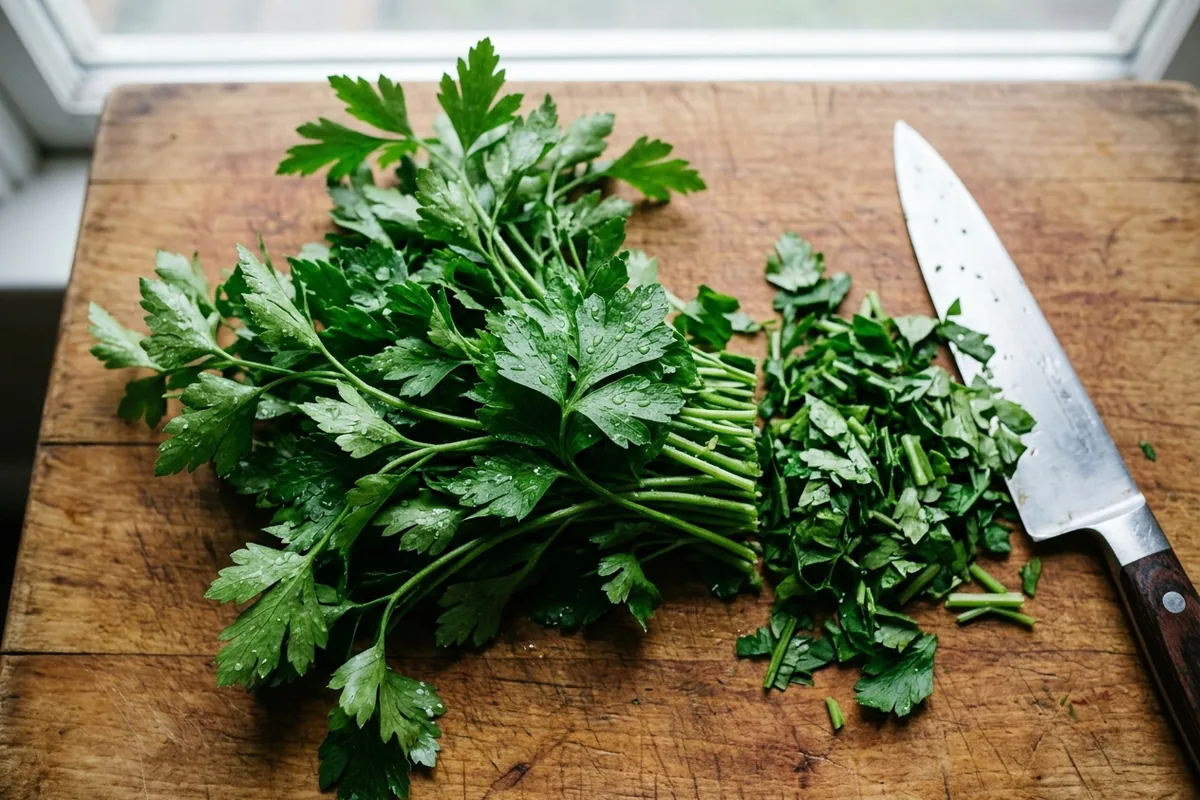
Flat-leaf parsley, also called Italian parsley, is the foundation of authentic chimichurri verde. It has a cleaner, more robust flavor than curly parsley and chops into a finer texture. Use the leaves and the tender upper stems, which carry plenty of flavor. The amount is generous, often a full cup or more of packed chopped leaves for a batch, because the herbs are the body of the sauce, not a garnish.
Oregano is the second herb, and here there is a real regional split. Traditional Argentine recipes most often use dried oregano, which has a more concentrated, almost medicinal depth that stands up to the vinegar and garlic. Many modern recipes use fresh oregano for a brighter note, which is fine but tastes different. Cilantro is not traditional in the classic Argentine sauce, but it appears in plenty of modern and cross-cultural versions and adds a distinct citrusy, slightly soapy-to-some flavor. If you want the authentic taste, stick to parsley and dried oregano and leave cilantro out.
The Acid: Red Wine Vinegar
Red wine vinegar is the traditional and best acid for chimichurri. It brings a fruity sharpness that complements the parsley and stands up to garlic without tasting flat. Some recipes substitute white wine vinegar, which is milder and cleaner but loses a little of the depth, and others add a squeeze of lemon for brightness, which is a modern touch rather than a classic one. The acid does two jobs: it balances the richness of the oil and the punch of the garlic, and it helps keep the parsley from oxidizing to a dull brown too quickly.
The amount matters. A common starting point is roughly one part vinegar to three parts oil, but chimichurri is meant to be tangy, so do not be shy. Many Argentine cooks let the vinegar, garlic, and oregano sit together for a few minutes before adding the oil and parsley, which mellows the raw garlic edge slightly and lets the flavors marry.
The Aromatic and the Heat
Garlic is non-negotiable, and it goes in raw and finely minced. Raw garlic is what gives chimichurri its characteristic sharp, pungent bite. Mince it as fine as you can, or grate it on a microplane if you want it to disappear into the sauce rather than hit in chunks. The quantity is up to your tolerance, but two to four cloves for a standard batch is typical. Letting the minced garlic sit in the vinegar for a few minutes before building the rest of the sauce takes a little of the raw harshness off.
Heat comes from red pepper flakes, or in Argentina from aji molido, a dried red chili flake that is the regional standard. The heat is meant to be present but not overwhelming, a warm background hum rather than a fiery kick. Start with a quarter to a half teaspoon and adjust. Some versions add a pinch of smoked paprika for color and a smoky note, though purists consider that a departure from the classic profile.
The Oil and the Salt
Extra-virgin olive oil is the carrier and the binder. It coats the herbs, mellows the vinegar and garlic, and turns a pile of chopped parsley into a sauce you can spoon over meat. Use a good but not necessarily top-shelf oil, since the strong herbs and vinegar will dominate anyway. The oil is added last in most methods, stirred in after the herbs, vinegar, garlic, and spices are combined, so you can see the texture come together and adjust. The sauce should be loose and spoonable, not a thick paste and not a thin vinaigrette.
Salt is the final adjustment and it matters more than people expect. Chimichurri needs enough salt to wake up the herbs and balance the acid; under-salted, it tastes green and flat. Add it gradually and taste as you go. Because the sauce sits and the flavors develop, it is worth tasting again after it has rested for fifteen to twenty minutes and correcting the salt and acid then.
Verde vs Rojo, Argentina vs Uruguay
The green sauce most people know is chimichurri verde. There is also chimichurri rojo, a red version that adds tomato, red bell pepper, or extra paprika for color and a sweeter, milder profile. If you are exploring the red version and need to understand how concentrated tomato products behave in a sauce, our guide on tomato sauce versus paste explains the difference and how to use each, which is useful when a recipe calls for a spoonful of paste to deepen a rojo without thinning it.
Regionally, the Argentine and Uruguayan versions are close cousins with small differences. Argentine chimichurri tends to lean on parsley, dried oregano, and red wine vinegar with aji molido for heat. The Uruguayan style is often similar but can include more herbs in the mix and sometimes a touch more of certain spices. Both are served the same way, primarily with grilled meat. The differences are real but subtle, and either approach makes an excellent sauce. What unites them is the insistence on fresh herbs, raw garlic, real vinegar, and good oil, chopped by hand rather than blitzed to a puree.
Texture: Why You Should Chop, Not Blend
The traditional texture of chimichurri is chopped, not pureed. Finely mincing the parsley and garlic by hand keeps the sauce slightly rustic, with distinct flecks of herb suspended in the oil and vinegar, and it holds that texture as it sits. A food processor is faster, but it tends to bruise the herbs, release more chlorophyll, and turn the sauce into a darker, more uniform paste with a different mouthfeel and a tendency to oxidize faster. If you use a processor, pulse it just a few times and stop while you can still see distinct pieces.
A mortar and pestle is the most traditional tool of all and gives a beautiful result, gently crushing the garlic and herbs to release flavor without shredding them. Whichever method you choose, the goal is the same: a sauce that is chunky and loose, where you can taste each component, not a smooth green paste. If your sauce ever turns out thicker or oilier than you want and the oil starts to separate as it sits, a quick stir usually brings it back; for sauces that genuinely split, our walkthrough on how to fix a broken sauce covers the rescue steps.
Ingredient Summary
| Ingredient | Role | Traditional? |
|---|---|---|
| Flat-leaf parsley | The herb base and bulk of the sauce | Yes, essential |
| Dried oregano | Earthy, concentrated herb depth | Yes, classic |
| Red wine vinegar | Acid that brightens and balances | Yes |
| Raw garlic | Sharp, pungent aromatic bite | Yes |
| Red pepper flakes / aji molido | Background heat | Yes |
| Extra-virgin olive oil | Binder and carrier of flavor | Yes |
| Cilantro | Citrusy note in modern versions | No, modern |
| Smoked paprika / lemon | Color, smoke, or extra brightness | No, modern |
What to Serve Chimichurri With
Chimichurri was born as a sauce for grilled meat, and that is still where it shines brightest. Spoon it over a grilled steak, especially skirt or flank, where the bright acid cuts the richness of the beef. It is excellent on grilled chicken, lamb, and pork, and it works beautifully on grilled or roasted vegetables, where the herb and garlic punch lifts something simple like charred zucchini or asparagus. Beyond the grill, use it as a marinade before cooking, a topping for roasted potatoes, a stir-in for grains and beans, or a dressing for a hearty salad. A thin drizzle even improves grilled bread or a fried egg. Because it is oil-based and assertive, a little goes a long way.
Storage and Make-Ahead
Chimichurri actually improves after a short rest, since the flavors meld as the garlic and oregano infuse the oil. Made fifteen to thirty minutes ahead, it tastes better than it does the second you finish chopping. Stored in an airtight container in the refrigerator, it keeps for about four to five days, though the parsley slowly dulls in color over time. The oil will solidify and cloud in the cold, which is normal; just let it come to room temperature and give it a stir before serving. For longer storage, freeze it in an ice cube tray, then pop the cubes into a bag, where it holds for up to three months and thaws quickly for a single serving. For technique-driven background on sauces and emulsions in general, America’s Test Kitchen at americastestkitchen.com and Bon Appetit at bonappetit.com both have solid coverage.
How to Balance a Chimichurri That Tastes Off
Because chimichurri is made from a handful of strong components, it is easy to knock it out of balance, but it is just as easy to correct once you know what each fix does. If the sauce tastes harsh or sharp, it usually has too much raw garlic or vinegar for the amount of oil and parsley. Stir in a little more olive oil to soften it, or add another handful of chopped parsley to dilute the punch. Letting it rest for fifteen minutes also tames raw garlic considerably, so harshness often solves itself with time.
If the sauce tastes flat or dull, it almost always needs salt, which wakes up the herbs and pulls the whole thing into focus, or a little more vinegar for brightness. If it tastes greasy or heavy, you have too much oil relative to the herbs and acid, so add more parsley and a splash of vinegar to rebalance. And if it tastes too vinegary, a pinch of sugar or a little more oil rounds it off. The discipline that makes chimichurri reliably good is tasting it after it has rested, then adjusting salt and acid in small steps until the herbs, garlic, tang, and richness all read clearly without any one of them shouting over the others.
Common Mistakes to Avoid
A few habits separate a bright, lively chimichurri from a dull or muddy one. The first is over-processing in a blender or food processor, which bruises the parsley, turns the sauce a dark olive color, and gives it a pesto-like paste texture instead of the loose, flecked sauce it should be. Chop by hand or pulse only briefly. The second is using curly parsley instead of flat-leaf; curly parsley is tougher, less flavorful, and harder to chop fine, so the sauce loses its clean herbal backbone.
The third common mistake is skimping on salt, which leaves the sauce tasting green and flat no matter how good the ingredients are. The fourth is serving it the instant it is made; chimichurri genuinely needs fifteen to thirty minutes for the flavors to marry and the garlic to mellow, so make it first and let it sit while you cook. The last is using stale dried oregano or old garlic, since both fade fast and leave the sauce hollow. Fresh parsley, fresh garlic, good vinegar, and decent olive oil, treated with a light hand and a little patience, are all it takes to get a sauce that tastes vivid every time.
Frequently Asked Questions
What is the main ingredient in chimichurri?
Fresh flat-leaf parsley is the main ingredient and the backbone of classic chimichurri verde. It makes up the bulk of the sauce, far more than a garnish, and gives the bright, grassy flavor that defines it. Everything else, garlic, vinegar, oregano, pepper, and oil, supports the parsley.
Is there cilantro in authentic chimichurri?
No. Authentic Argentine chimichurri is built on parsley and dried oregano, not cilantro. Cilantro shows up in modern and cross-cultural versions and adds a citrusy note, but if you want the traditional taste, leave it out and stick with parsley.
What kind of vinegar goes in chimichurri?
Red wine vinegar is the traditional choice. It has a fruity sharpness that balances the oil and garlic and stands up to the strong herbs. White wine vinegar is a milder substitute, and some modern recipes add lemon juice for extra brightness, though that is not classic.
Should I use a blender or chop by hand?
Chop by hand for the best texture. Hand-chopping keeps the herbs distinct and the sauce rustic and loose, the way it is meant to be. A food processor bruises the herbs and turns it into a darker paste. If you use one, pulse just a few times and stop while you can still see pieces.
What is the difference between chimichurri verde and rojo?
Verde is the classic green sauce built on parsley. Rojo is a red version that adds tomato, red bell pepper, or extra paprika, giving it a sweeter, milder, smokier profile. Both share the same garlic, vinegar, and oil base; the rojo simply leans on red ingredients for color and a different flavor.
How long does chimichurri last?
Stored airtight in the refrigerator, chimichurri keeps about four to five days, improving in the first day or two as the flavors meld. The oil will solidify when cold, so let it warm to room temperature and stir before serving. For longer storage, freeze it in ice cube trays for up to three months.
Bottom Line
What’s in chimichurri sauce is simple, and that simplicity is the point: parsley, dried oregano, red wine vinegar, raw garlic, red pepper flakes, salt, and olive oil, chopped by hand and left to rest. Understanding the role of each, herbs for body, acid for brightness, garlic for bite, oil to bind, lets you balance any batch and adapt it without losing the soul of the sauce. Keep the texture chunky, taste and adjust the salt and vinegar after it rests, and you will have a bright, punchy sauce that makes grilled meat and vegetables taste far better than they did plain.