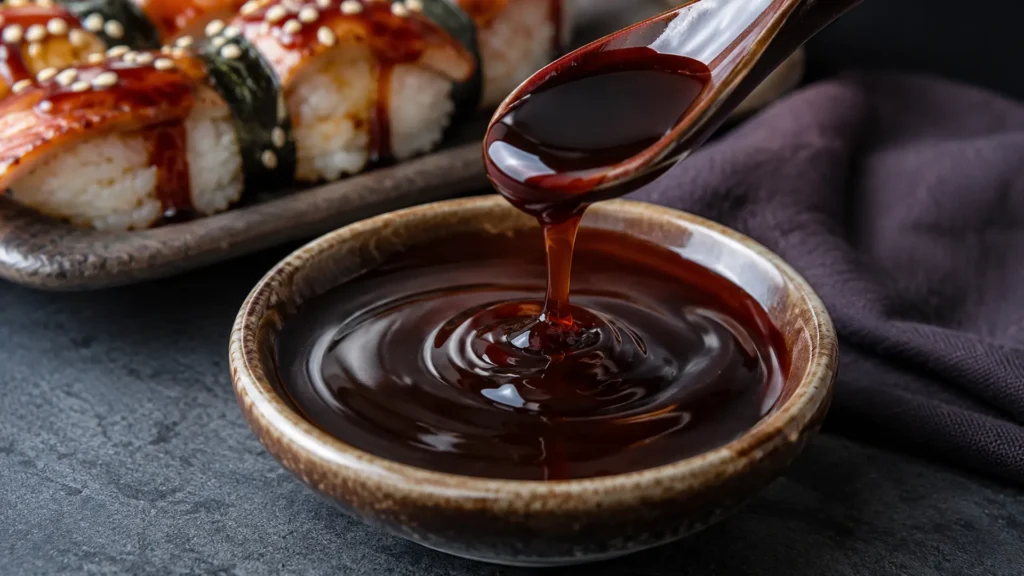
What is eel sauce? Eel sauce, known in Japanese as unagi sauce or kabayaki sauce, is a thick, sweet, and savory glaze made by simmering soy sauce, mirin, and sugar until it reduces to a glossy syrup. Despite the name, it contains no eel at all. It is called eel sauce because it is the traditional glaze brushed over grilled eel, not because eel is an ingredient. The flavor is deeply caramel-like and umami-rich, sweeter and thicker than teriyaki, and it has become a favorite far beyond eel, showing up on sushi rolls, rice bowls, chicken, tofu, and more.
Eel sauce is one of the most misunderstood bottles on the sushi-bar shelf, mostly because of its name, so this guide clears that up and goes deeper than the usual recipe page. Below is exactly what it is made of, why it carries a name that scares some people off, how it differs from teriyaki and hoisin, how to make and store it, and the substitutes that work when you are missing an ingredient.
Key takeaways:
- Eel sauce (unagi sauce) is a reduction of soy sauce, mirin, and sugar into a sweet, glossy glaze.
- It contains no eel; it is named for the grilled eel it traditionally glazes.
- It tastes like a sweeter, thicker, more caramel-like teriyaki.
- You can make it at home in about 15 minutes with three pantry ingredients.
- It works on far more than eel, from sushi and rice bowls to chicken, tofu, and vegetables.
What Is Eel Sauce Made Of
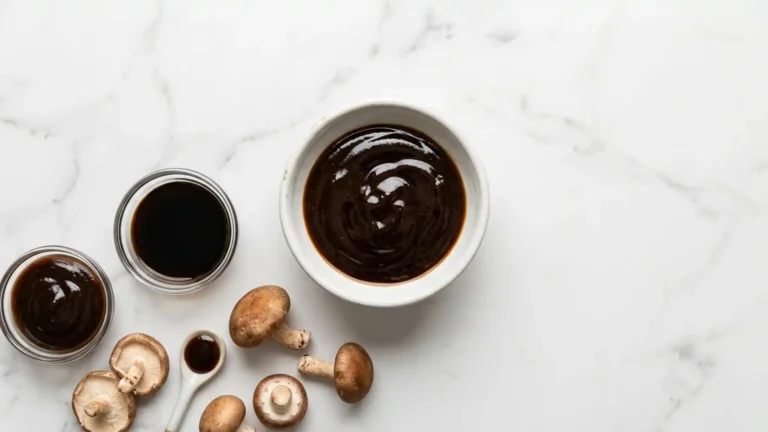
At its core, eel sauce is one of the simplest sauces in Japanese cooking, built from just three ingredients in roughly equal parts: soy sauce, mirin, and sugar. Some versions add a splash of sake for extra depth. That is the entire base. The magic is not in the ingredient list but in what happens when you simmer them together, because reducing the mixture concentrates the flavors and thickens the liquid into a syrup that clings to food.
Each ingredient plays a clear role. Soy sauce brings the salt and the savory, fermented umami backbone. Mirin, a sweet Japanese rice wine, adds a gentle, complex sweetness along with a glossy sheen and a subtle tang. Sugar deepens that sweetness and helps the sauce reduce into a thick, lacquer-like glaze. When sake is included, it lends an extra layer of aroma and rounds the flavor, though the sauce is excellent without it. The result is dark, shiny, and intensely flavored, the kind of sauce where a thin brushstroke does a lot of work.
It is worth understanding the reduction itself, because it separates real eel sauce from cheap imitations. Authentic eel sauce thickens purely by simmering, which evaporates water and concentrates the sugars and salts until the sauce coats a spoon. Mass-market bottles sometimes shortcut this with cornstarch or other thickeners, which gives a thick texture without the concentrated, caramelized flavor that long reduction builds. If you make it yourself, you get the real thing, and the difference in depth is obvious. That same soy-and-sweetener logic underpins a good homemade teriyaki sauce, which is eel sauce’s close cousin.
Why Is It Called Eel Sauce If There Is No Eel
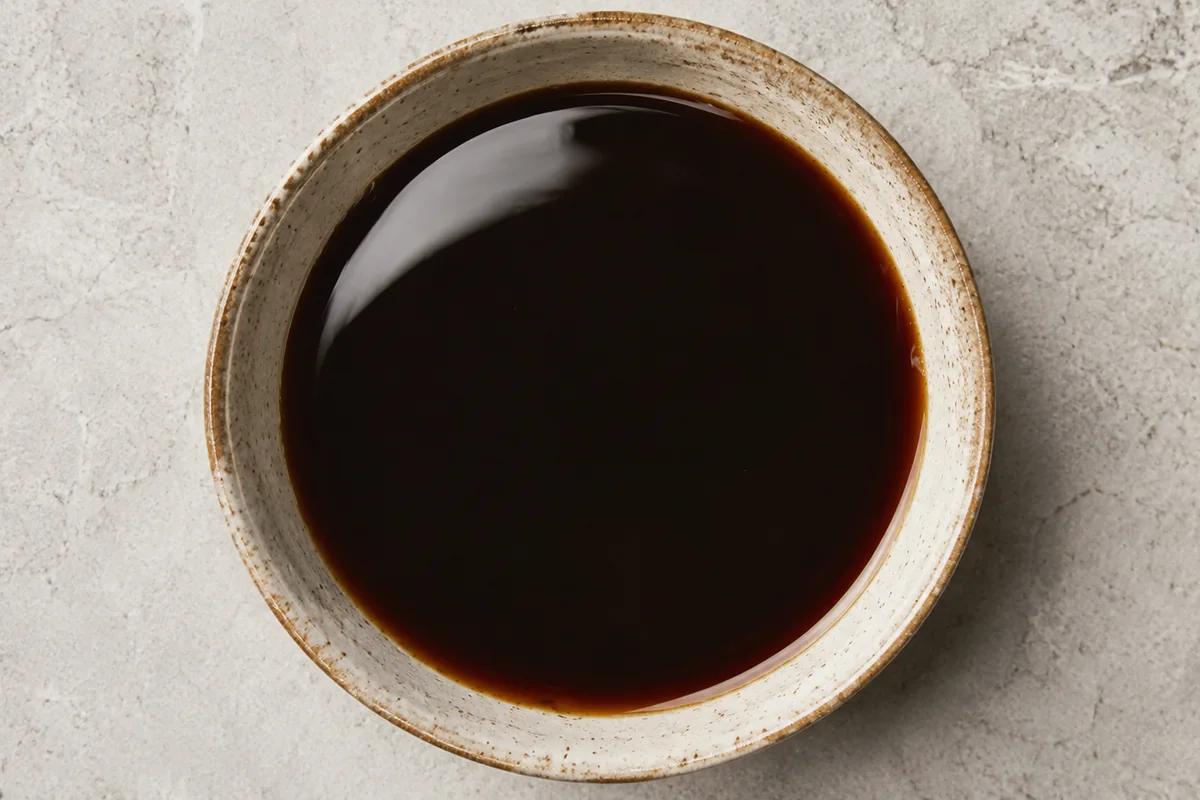
This is the question that trips up almost everyone the first time they see it on a menu or a bottle, and the answer is reassuringly simple. Eel sauce is named for what it is used on, not what it is made from. In Japan it is the traditional glaze for unagi, or grilled freshwater eel, brushed on during cooking to build the sweet, lacquered coating that defines dishes like unadon, a bowl of grilled eel over rice. The sauce took the name of the dish it serves.
This naming pattern is common in the sauce world, and it is more charming than confusing once you see it. Hoisin sauce translates roughly to seafood sauce yet contains no seafood; it was simply served alongside seafood. Eel sauce follows the same logic. The practical upside is important for a lot of people: because there is no eel and no seafood in it, eel sauce is generally suitable for those avoiding fish, and a careful reader of the label will usually find only soy, mirin, sugar, and sometimes sake. Anyone with a shellfish or fish allergy should still check the specific bottle, but the sauce itself is not made from eel.
So if a menu lists eel sauce on a vegetable roll or a chicken dish, there is no mistake and nothing fishy going on. The kitchen is using the sweet soy glaze that happens to share its name with the eel dish it was invented for. Understanding that frees you to enjoy it on anything, which is exactly how most American sushi bars now use it.
What Does Eel Sauce Taste Like
Eel sauce tastes like a richer, sweeter, more concentrated version of teriyaki, with a pronounced caramel quality from the reduced sugar and a savory soy backbone underneath. The first impression is sweetness, then a deep, salty umami, then a faint tang from the mirin on the finish. Because it is reduced to a syrup, it is thick and glossy and coats whatever you put it on, so the flavor lingers rather than washing away. It is intense, which is why it is used as a drizzle or a glaze, not poured on like a thin sauce.
The closest familiar reference points are teriyaki and a light caramel. If you imagine teriyaki sauce cooked down until it is thicker and sweeter, with the garlic and ginger left out, you are very close to eel sauce. That sweetness and gloss are what make it so good on grilled and fried foods, where it adds a sticky, lacquered finish and a hit of sweet-savory contrast. It is a finishing sauce more than a cooking sauce, designed to go on at the end and shine.
Eel Sauce vs Teriyaki vs Hoisin
Because eel sauce sits among several dark, sweet Asian sauces, people constantly mix it up with teriyaki and hoisin. They are related but distinct, and the table below sorts them out so you can grab the right one.
| Sauce | Base | Sweetness | Body | Best use |
|---|---|---|---|---|
| Eel sauce | Soy, mirin, sugar | High | Thick syrup | Glaze for eel, sushi, rice bowls |
| Teriyaki | Soy, mirin, sugar, often ginger and garlic | Medium | Thinner | Glaze and marinade for meat |
| Hoisin | Fermented soybean, sugar, spice | High | Thick | Chinese glaze, dip, stir-fry |
Eel sauce and teriyaki are the closest pair, since they share the soy-mirin-sugar base. The differences are that eel sauce is reduced thicker and sweeter, and it usually leaves out the garlic and ginger that give teriyaki its more aromatic, savory edge. Eel sauce is a pure sweet-soy glaze; teriyaki is that plus aromatics and is often used as a marinade as well as a glaze. If you have one and need the other, you can nudge teriyaki toward eel sauce by reducing it further with a little extra sugar.
Hoisin is the outlier of the three. It is Chinese rather than Japanese and is built on fermented soybean paste with garlic and five spice, giving it a funkier, more complex savory flavor rather than the clean sweet-soy profile of eel sauce. They look similar in the bottle, both dark and thick, but they taste quite different, and they are not interchangeable in a dish where the sauce is prominent. Knowing which lane each sauce is in keeps you from grabbing the wrong dark bottle, the same way comparing tamari vs soy sauce helps you pick the right base for a recipe.
How to Make Eel Sauce at Home
Making eel sauce yourself takes about 15 minutes and gives you a fresher, deeper result than most bottles, with full control over the sweetness. The base ratio is simple: equal parts soy sauce and mirin, plus a smaller amount of sugar, with an optional splash of sake.
Combine half a cup of soy sauce, half a cup of mirin, and a third of a cup of sugar in a small saucepan over medium heat, adding two tablespoons of sake if you have it. Stir until the sugar dissolves, then bring it to a gentle simmer. Let it bubble, stirring occasionally, for about 10 to 15 minutes, until it has reduced by roughly half and coats the back of a spoon. Keep an eye on it toward the end, because it thickens fast once the water cooks off, and it will thicken further as it cools.
The single most important point is to undershoot rather than overshoot the reduction. The sauce looks thinner when hot than it will be once cooled, so pull it off the heat when it just coats a spoon, not when it is already syrupy in the pan, or you will end up with a stiff, candy-like glaze once it cools. If that happens, you can whisk in a little water or mirin over low heat to loosen it back up. Let the finished sauce cool completely before transferring it to a jar, and it is ready to drizzle. The reduction technique here is the same one behind a well-made thickened sauce of any kind, where patience beats shortcuts. Food authorities like Food Network describe the same soy-mirin-sugar method, and the science of reduction is covered well by Serious Eats if you want to go deeper.
Substitutes and Dietary Notes
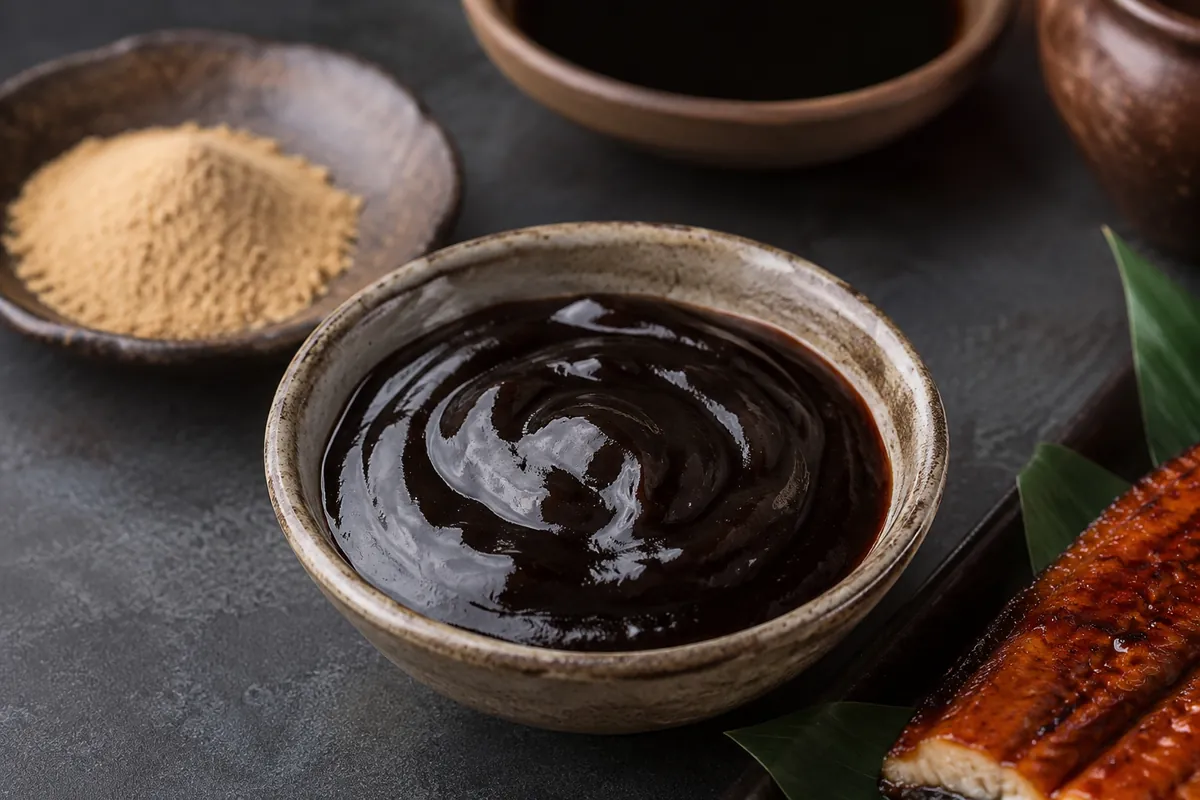
If you are missing mirin, the most common gap, you can approximate it with a mix of a dry white wine or rice vinegar plus a little extra sugar, since mirin is essentially a sweet rice wine. A quick stand-in is to combine soy sauce, sugar, and a small splash of rice vinegar and water, then reduce as usual; it will not be identical but lands in the right sweet-savory territory. In a real pinch, reduced teriyaki sauce with extra sugar is the closest store-bought shortcut to eel sauce.
On dietary notes, eel sauce is naturally free of eel and seafood, but it is not automatically gluten-free or vegan. The soy sauce usually contains wheat, so for a gluten-free version, swap in tamari or a certified gluten-free soy sauce. Most eel sauce is plant-based since the ingredients are soy, mirin, and sugar, but traditional mirin contains alcohol, which matters for some diets, and a few commercial bottles add other flavorings, so check the label if that is a concern. For anyone avoiding alcohol, there are alcohol-free mirin-style seasonings that work in the recipe.
When buying rather than making, look for a bottle whose ingredients lead with soy sauce, mirin, and sugar rather than corn syrup and cornstarch, which signal a cheaper, less concentrated product. A good store-bought eel sauce is convenient and keeps well, but a homemade batch costs pennies and tastes noticeably richer, so it is worth making once to know the difference.
How to Use Eel Sauce
Eel sauce is far more versatile than its name suggests, and a bottle in the fridge quickly becomes a go-to finishing drizzle. The traditional use is brushed over grilled eel for unadon and unagi nigiri, but American kitchens have run with it. It is the dark, sweet drizzle you see zigzagged over sushi rolls, especially anything with eel or tempura, and it is a natural finish for rice bowls of all kinds.
Beyond sushi, it glazes beautifully on grilled or pan-fried chicken, salmon, and pork, brushed on in the last minute so the sugar lacquers without burning. It is excellent on tofu, roasted or fried, where its sweet-savory punch makes a plain block of tofu very good. A drizzle lifts roasted vegetables, fried rice, noodles, dumplings, and even a humble rice ball. Because it is sweet and concentrated, use it as an accent: a light drizzle or a thin brushed coat, not a flood. Treat it like the finishing glaze it is, and it makes simple food taste like it came from a restaurant.
The Bottom Line on Eel Sauce
So, what is eel sauce? It is a thick, sweet, glossy reduction of soy sauce, mirin, and sugar, named for the grilled eel it traditionally glazes rather than for any eel inside it. Think of it as teriyaki’s sweeter, thicker cousin, a finishing sauce built to lacquer grilled and fried food with a caramel-soy shine. It contains no eel or seafood, comes together at home in about 15 minutes, and works on far more than its name implies, from sushi and rice bowls to chicken, tofu, and vegetables. Once you understand that the name describes a job, not an ingredient, eel sauce stops being mysterious and becomes one of the most useful sweet glazes you can keep on hand.
Frequently Asked Questions
What is eel sauce made of?
Eel sauce is made of soy sauce, mirin, and sugar simmered together until reduced into a thick, glossy syrup, sometimes with a splash of sake added for depth. There is no eel in it. The soy provides salty umami, the mirin adds sweetness and sheen, and the sugar deepens the flavor and helps it thicken into a glaze.
Does eel sauce contain eel?
No, eel sauce contains no eel. It is named for the grilled eel dishes, like unadon and unagi nigiri, that it traditionally glazes, not for any ingredient. The sauce is made from soy sauce, mirin, and sugar, so it is generally suitable for people avoiding fish and seafood, though anyone with an allergy should check the specific bottle’s label.
What does eel sauce taste like?
Eel sauce tastes like a sweeter, thicker, more caramel-like teriyaki, with a strong sweetness up front, a deep savory soy backbone, and a faint tang from the mirin. Because it is reduced to a syrup, it is glossy and clings to food, making it a concentrated finishing glaze rather than a thin pourable sauce.
Is eel sauce the same as teriyaki?
No, but they are close cousins. Both share a soy, mirin, and sugar base, but eel sauce is reduced thicker and sweeter and usually leaves out the garlic and ginger that give teriyaki its aromatic edge. Eel sauce is a pure sweet-soy glaze, while teriyaki is more savory and is often used as a marinade as well as a glaze.
How do you make eel sauce at home?
Simmer half a cup of soy sauce, half a cup of mirin, and a third of a cup of sugar (plus optional sake) over medium heat for 10 to 15 minutes, until it reduces by half and coats a spoon. Pull it off the heat while it is still slightly loose, since it thickens as it cools, then let it cool fully before storing.
Is eel sauce gluten-free or vegan?
Eel sauce is usually vegan because it is made from soy, mirin, and sugar, but it is not automatically gluten-free, since most soy sauce contains wheat. For a gluten-free version, use tamari or certified gluten-free soy sauce. Note that traditional mirin contains alcohol, so check the label if you avoid it, and use an alcohol-free mirin-style seasoning if needed.
What can I use eel sauce on?
Eel sauce works as a finishing drizzle on sushi rolls, rice bowls, grilled or pan-fried chicken, salmon, and pork, tofu, roasted vegetables, fried rice, noodles, and dumplings. Brush it on grilled foods in the last minute so the sugar lacquers without burning, and use it as a light accent rather than a heavy pour, since it is sweet and concentrated.