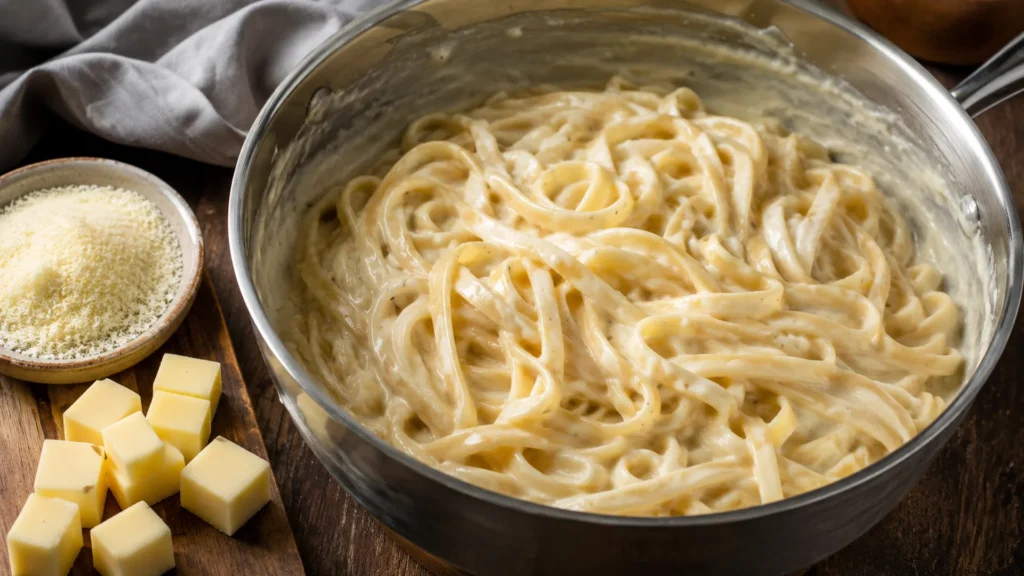
If you want to learn how to make alfredo sauce that clings to noodles like silk instead of sliding off in a greasy puddle, you have to forget almost everything the back of a jar taught you. The good news is that real alfredo is one of the simplest sauces in the kitchen. The original version, the one served in Rome, has three ingredients: butter, pasta water, and finely grated Parmigiano-Reggiano. No cream. No flour. No garlic powder. The trick is not the recipe. The trick is understanding why cheese and fat decide to either melt into a glossy coat or seize into a grainy clump.
This guide walks through both the classic Roman style and the American cream-based version most people picture, because both are valid and both have a place. Below are ratios, temperatures, the chemistry of why it breaks, and a list of the mistakes that ruin it. By the end you will be able to build the sauce by feel, adjust it on the fly, and fix it when it goes wrong at the table.
The Two Alfredos and Why They Are Different Sauces
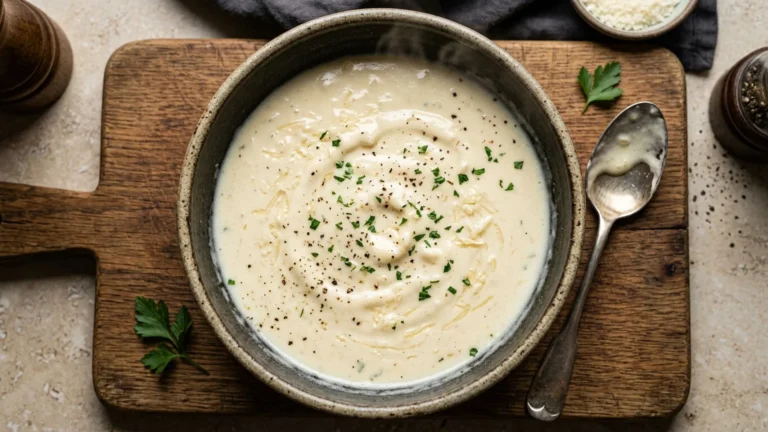
People argue about alfredo because they are arguing about two different things. The Roman original, fettuccine al burro, is an emulsion. Hot starchy pasta water, melted butter, and aged Parmesan are tossed together so violently that the fat, the water, and the cheese proteins suspend into a creamy coat. There is no dairy cream at all. The creaminess is an illusion built from emulsified fat and dissolved cheese.
The American version, the one you get at a chain restaurant, leans on heavy cream and often a little butter and garlic. The cream does the heavy lifting, so the sauce is more forgiving and stays stable longer. It is richer, heavier, and frankly easier to hold on a buffet line, which is exactly why restaurants adopted it. You see the same cream-forward style across a lot of creamy pasta dishes, where the cream does the stabilizing work that careful technique does in the Roman version. Neither is wrong. But you cook them differently. The Roman method demands speed and heat control. The cream method demands patience and reduction. Pick your target before you turn on the burner.
Ingredients That Actually Matter
Cheese is the whole game. Use a real wedge of Parmigiano-Reggiano or a good Grana Padano and grate it yourself on the fine holes. Pre-shredded cheese is coated with cellulose and anti-caking powder that stop it from melting smoothly, and those coatings are the number one cause of a gritty sauce. The difference between a fresh-grated wedge and a bag of shreds is the difference between glossy and grainy.
Butter should be unsalted so you control the salt yourself, because Parmesan is already salty. For the cream version, use heavy cream with at least 36 percent fat. Light cream and half-and-half have too much water and too little fat, so they will not reduce into a coating and they curdle faster under heat and acid. If you want a lighter sauce that still works, there is a full method for building it with milk instead of cream, which leans on a small roux to make up for the missing fat. You can read that in the guide to making alfredo sauce with milk.
Pasta water is not optional. The cloudy, salty water left from boiling your noodles carries dissolved starch, and that starch is what stabilizes the emulsion. Skip it and you are working without a net.
The Classic Roman Method, Step by Step
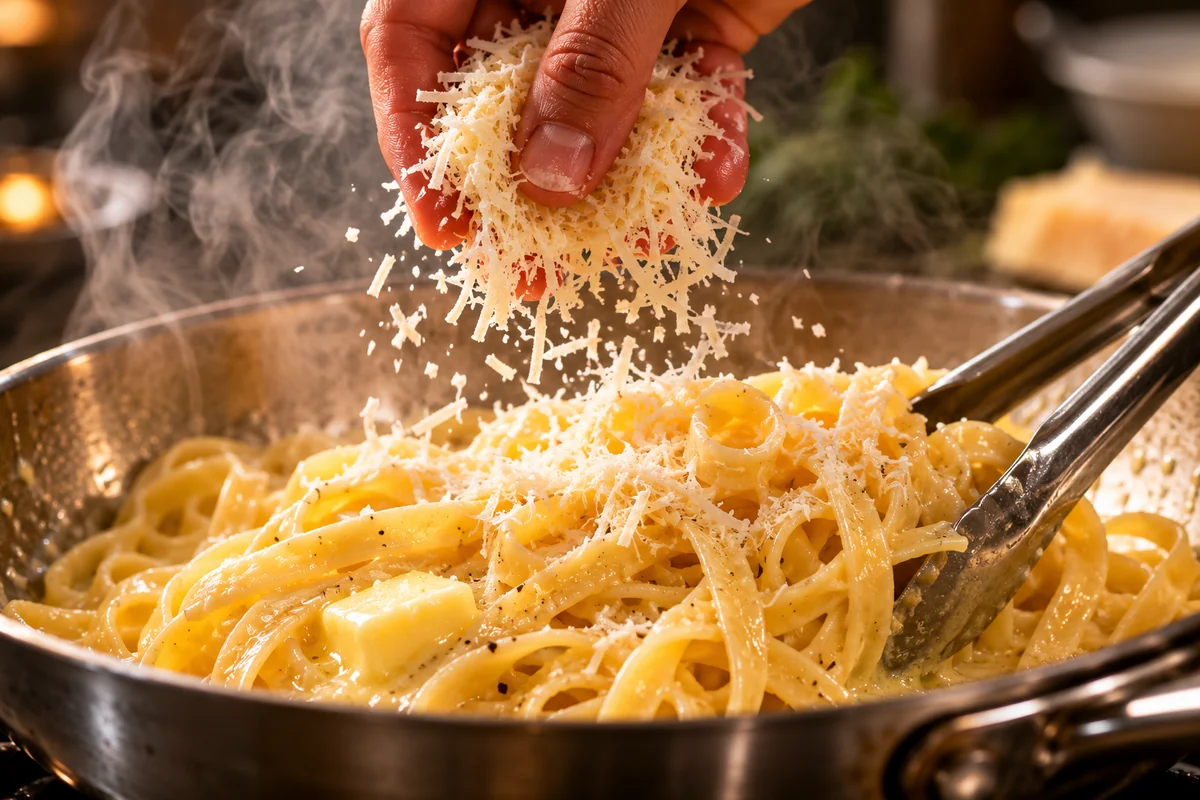
Boil your fettuccine in water that tastes like a mild broth, salted properly, and pull it about a minute before the box says. Reserve at least a cup and a half of the cooking water before you drain. Now move fast. Off the heat, in a warm wide pan, combine the just-drained pasta with cold cubed butter and a splash of the hot pasta water. Toss until the butter melts and coats every strand.
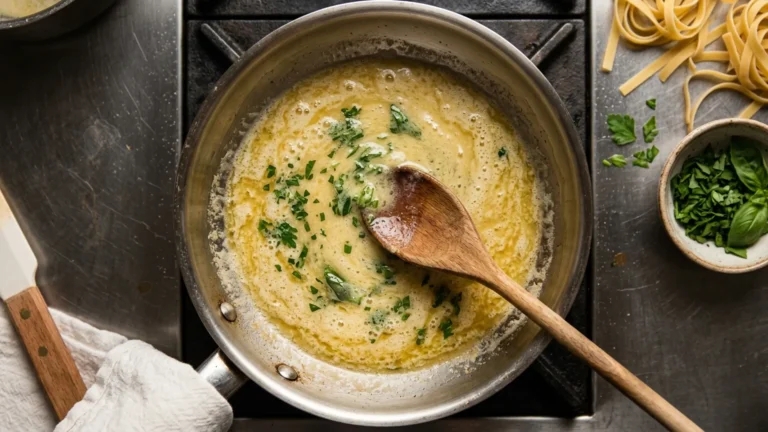
Here is the part most people botch. Take the pan off direct heat, or keep it on the lowest possible flame, and add the grated Parmesan in three handfuls. Toss and swirl constantly, adding small splashes of pasta water as you go. The motion matters as much as the heat. You are physically beating fat and water into suspension while the cheese proteins dissolve. If the cheese hits a screaming hot pan all at once, the proteins tighten and squeeze out the fat, and you get clumps in an oil slick. Low heat, constant motion, gradual cheese. Within ninety seconds you should have a sauce that looks like it has cream in it, even though it does not.
The Cream Version, Done Right
For the American style, melt two tablespoons of butter over medium-low heat. If you want garlic, bloom one minced clove in the butter for thirty seconds, but do not brown it. Pour in one cup of heavy cream and bring it to a bare simmer, never a rolling boil. Let it reduce gently for three to five minutes until it coats the back of a spoon. Then kill the heat and stir in three quarters of a cup of grated Parmesan in stages. Finish with a few cracks of black pepper and a pinch of nutmeg if you like the old-school touch.
The reason you reduce the cream first is that you are concentrating its fat and proteins so the finished sauce has body without needing flour. The reason you add cheese off the heat is the same as the Roman method: protect the cheese proteins from seizing. A cream sauce is more stable than the Roman one, but it can still break if you boil it hard after the cheese goes in.
| Style | Fat base | Cheese | Liquid | Difficulty |
|---|---|---|---|---|
| Roman classic | Butter | Parmigiano, fine grate | Starchy pasta water | Hard, fast |
| American cream | Butter + heavy cream | Parmesan | Reduced cream | Forgiving |
| Milk-based light | Butter + flour roux | Parmesan | Whole milk | Medium |
The Science of Why Alfredo Breaks
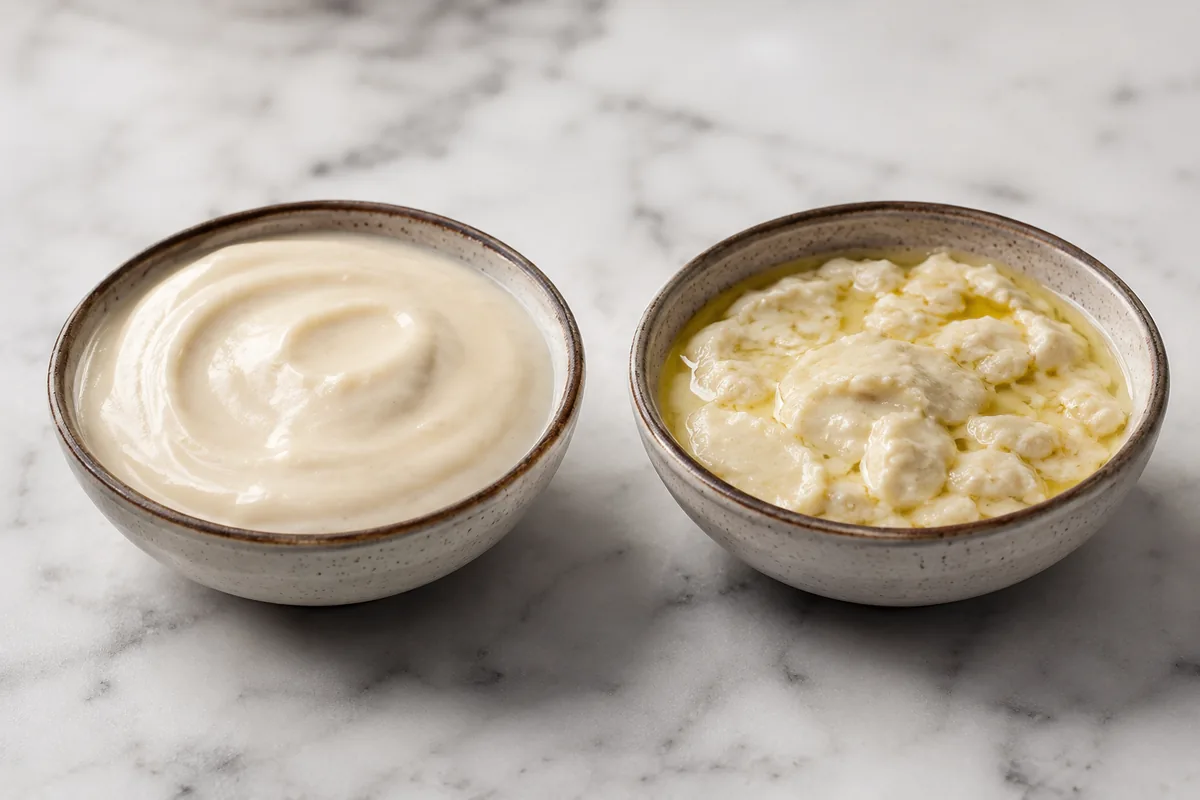
An emulsion is fat and water held together where they would normally separate. In alfredo, the casein proteins from the cheese and the starch from the pasta water act as the glue, surrounding fat droplets and keeping them suspended. Heat is the enemy of that glue. When the temperature climbs too high, casein proteins denature and bond tightly to each other, contracting and wringing the fat out. That is the grainy, oily mess you have seen. It is the same reason a cheese sauce splits if you crank the burner.
Three things prevent the break. First, temperature: keep the pan below a hard simmer once cheese is involved, ideally off direct heat. Second, starch: the pasta water gives you a buffer of dissolved starch that physically separates fat droplets and slows the proteins from clumping. Third, motion: constant tossing keeps droplets small and evenly coated. Get all three right and the sauce stays glossy. Miss one and you are racing the clock.
Acid is a hidden saboteur too. A squeeze of lemon sounds nice, but acid pulls casein proteins out of suspension and curdles dairy. If you want brightness, add it in tiny amounts at the very end and taste as you go. This is the same dynamic that governs every dairy sauce, explored further in the broader rundown of cream sauces and how they hold together.
Ratios You Can Actually Remember
Cooking by feel is better than cooking by recipe, but you need a starting frame. For the Roman style serving two, think roughly four tablespoons of butter to one cup of finely grated Parmesan to enough pasta water to loosen, usually a half cup added in splashes. For the cream version serving two, one cup of heavy cream, two tablespoons of butter, and three quarters of a cup of Parmesan. Adjust cheese up for body and pasta water or cream down if it gets too loose.
| Serving | Butter | Heavy cream | Grated Parmesan | Pasta water |
|---|---|---|---|---|
| 2 (Roman) | 4 tbsp | none | 1 cup | 1/2 cup, as needed |
| 2 (cream) | 2 tbsp | 1 cup | 3/4 cup | splash to loosen |
| 4 (cream) | 3 tbsp | 2 cups | 1 1/2 cups | splash to loosen |
Notice the cheese-to-fat ratio stays high. Alfredo is a cheese sauce that uses fat as a carrier, not a butter sauce with cheese sprinkled in. If yours tastes flat, the answer is almost always more good Parmesan, not more cream. If you want to understand how fat and starch interact in a pure butter-and-pasta-water context, the walkthrough of butter sauce for pasta covers the same emulsion in a simpler setting.
The most common failure is grittiness from pre-shredded cheese. There is no fix once it happens beyond starting over with fresh-grated cheese, so prevent it. The second most common is a broken, oily sauce from too much heat. If you catch it early, pull the pan off the burner, add a splash of cold pasta water or a tablespoon of cold cream, and whisk hard. The cold liquid drops the temperature and the extra starch or fat can re-grab the loose oil. Sometimes a stick blender will bring a broken sauce back together if you add a little warm water first.
A sauce that is too thick has lost too much water, so add hot pasta water a spoon at a time and toss. A sauce that is too thin needs either more cheese off the heat or, in the cream version, a few more minutes of gentle reduction before the cheese goes in. Sauce that tastes dull is usually under-salted or short on cheese. Sauce that tastes harsh has too much raw garlic, so bloom it gently next time.
The last mistake is timing. Alfredo waits for no one. It is meant to be eaten the moment it comes together, because as it cools the fat firms and the emulsion tightens into a paste. Have the pasta cooked, the cheese grated, the water reserved, and the bowls warmed before you start the sauce. Sauce the pasta directly in the pan and serve immediately. If you want a dairy-free take on the same glossy texture, the plant-based crowd has worked out clever cashew and starch emulsions, and you can see that thinking in these vegan pasta approaches that mimic a cream coat without any dairy at all.
Storing and Reheating Without Wrecking It
Cream-based alfredo keeps in the fridge for three to four days in a sealed container. The Roman version does not store well at all because the emulsion sets hard and there is no cream to revive it. To reheat the cream version, use low heat and add a splash of milk or cream, stirring gently. Never microwave it on full power, because the uneven heating will boil pockets of the sauce and split it. For food safety on dairy sauces and leftovers, the FDA’s plain-language guidance on safe food handling is worth a read, and for the saturated fat side of a rich sauce like this, the NIH overview of dietary fats gives honest context without scare tactics.
Choosing and Prepping Your Cheese
The cheese point decides everything, so it deserves its own space. Parmigiano-Reggiano is the gold standard for a reason. It is aged at least twelve months, often longer, and that aging breaks proteins down into the free glutamates that read as deep savory flavor on your tongue. It also dries the cheese out, which concentrates that flavor and helps it melt cleanly. Grana Padano is a close cousin, slightly milder and cheaper, and it works beautifully. Pecorino Romano is sharper and saltier from sheep milk, and you can blend a little in for bite, but used alone it can overpower and turn the sauce too salty.
Grate it fine. The finer the grate, the faster the cheese dissolves and the less time it spends near heat, which is exactly what you want. A microplane or the small holes on a box grater are ideal. Grate it just before you cook so it stays slightly moist, because bone-dry cheese clumps faster. And bring it to room temperature if you can, since cold cheese hitting a warm pan creates a bigger temperature shock. None of this is fussy once it becomes habit. It is the difference between a sauce you are proud of and one you apologize for. One more note on quantity. People consistently under-cheese their alfredo because a cup of grated Parmesan looks like a lot in the bowl, then it melts down to almost nothing. Trust the ratio. The cheese is the flavor, the body, and half the creaminess. If your first attempt tastes thin, the fix is almost never more cream or butter. It is more good cheese, grated fine, added off the heat.
Alfredo is a blank, rich canvas, which is both its strength and its trap. On its own it is luxurious for about four bites, then the richness flattens out. A squeeze of brightness rescues it. A little lemon zest, a scatter of chopped parsley, or a few cracks of black pepper cut the fat and keep each bite interesting. Finishing a plate with pepper and a tiny grating of fresh nutmeg sounds old-fashioned but does real work against the richness.
For protein, grilled or pan-seared chicken is the classic partner, and shrimp is excellent because its sweetness plays against the salty cheese. Sauteed mushrooms add an earthy, savory layer that echoes the cheese. Peas or blanched broccoli add color and a vegetal snap that the sauce badly needs. If you are adding a watery vegetable, dry it well first, because extra water thins the emulsion and can tip a perfectly balanced sauce into a loose one.
The fettuccine shape matters too. Wide flat noodles hold a clinging sauce better than thin round ones, which is why this sauce married fettuccine in the first place. If you only have spaghetti, it still works, but reserve a little extra pasta water to help the thinner strands carry the coat. Whatever the shape, undercook the pasta slightly and finish it in the sauce for the last thirty seconds so the starch the noodle releases tightens the emulsion right on the plate.
Frequently Asked Questions
Why is my alfredo sauce grainy?
Almost always because of pre-shredded cheese, which is coated in cellulose and anti-caking agents that block smooth melting, or because the pan was too hot when the cheese went in. Use a fresh-grated wedge of Parmigiano-Reggiano and add it off direct heat while tossing constantly.
Can I make alfredo sauce without heavy cream?
Yes. The original Roman version uses no cream at all, only butter, finely grated Parmesan, and starchy pasta water emulsified together. You can also build a lighter version with whole milk and a small roux, which holds together well and tastes far less heavy than the cream style.
How do I fix a broken alfredo sauce?
Pull the pan off the heat immediately and whisk in a splash of cold pasta water or a tablespoon of cold cream. The cold liquid lowers the temperature and reintroduces starch or fat that can re-emulsify the loose oil. A quick blitz with a stick blender can also bring it back.
Does real alfredo sauce have garlic?
The authentic Roman version has no garlic, only butter, cheese, and pasta water. The American cream version often includes a clove of garlic gently bloomed in the butter. Both are legitimate, but if you want the traditional taste, leave the garlic out and let the aged Parmesan carry the flavor.