A good worcestershire sauce substitute has to do three jobs at once, because that one bottle is doing three jobs at once. Worcestershire is a fermented sauce built on anchovies, vinegar, molasses, tamarind, onion, garlic, and a stack of spices. It delivers salt, sourness, sweetness, and a deep savory hit called umami all in one splash. Replace only one of those and your dish tastes hollow.
The right swap depends on what you are cooking and what you have on hand. A marinade for steak needs different things than a Bloody Mary or a pot of chili. Below are the best single-bottle stand-ins, a couple of mix-it-yourself blends that get genuinely close, the exact ratios, and the dietary swaps for vegetarians and gluten-free cooks. The swaps that look right but fall flat are flagged too, so you do not waste a good cut of meat learning the hard way.
What Worcestershire Sauce Actually Brings
Before you can replace it, name what it does. Worcestershire is a flavor concentrate. The anchovies and the long ferment give it glutamates, the same savory compounds that make aged cheese and soy sauce taste deep. The vinegar and tamarind bring tang. Molasses brings a dark, slightly bitter sweetness. Onion, garlic, clove, and other spices round it out. So any honest substitute has to cover four bases: umami, acid, sweet, and salt. If your replacement nails three and misses one, add the missing piece separately. That single idea will save you every time.
The brand most people picture is also aged, which is why it tastes mellow rather than sharp. You cannot fully fake months of fermentation in thirty seconds, but you can get surprisingly close by combining ingredients that each carry one of those four notes. The best homemade blends below are built on exactly that logic.
It also helps to know roughly how worcestershire is built so you can mimic its proportions. The fermented anchovy and the long aging supply the savory depth, the vinegar and tamarind supply a tang that is sharp but not harsh, and the molasses supplies a dark sweetness that keeps the acid from biting too hard. The spices, clove and allspice and a little onion and garlic, sit in the background and tie the whole thing together. When you build a substitute, that same hierarchy should hold: lead with salt and umami, support it with a moderate amount of acid, soften it with a small amount of sweetness, and finish with just a whisper of warm spice. Get the proportions in that order and your stand-in will read as worcestershire rather than as a random brown sauce.
The Best Single Ingredient Swaps
Soy sauce is the most common rescue and a solid one. It brings salt and umami in spades, which is the backbone of worcestershire. What it lacks is the sweetness and the tang. Use it one to one as a starting point, then add a small pinch of sugar and a few drops of vinegar to round it out. For a cleaner soy flavor profile, the full rundown on a substitute for soy sauce doubles as a guide to which soy-style sauces carry the most depth.
Fish sauce is the dark horse and, frankly, one of the best emergency swaps. Worcestershire is built on fermented anchovies, and so is fish sauce, so the funky savory core matches almost exactly. It is more pungent and saltier, so use about half as much and add a touch of sweetness. If you keep fish sauce in the pantry, you are closer to real worcestershire than you think. The guide to a fish sauce substitute goes deep on the fermented-anchovy family and explains why these sauces taste the way they do.
Soy plus ketchup is a classic two-ingredient cheat. Ketchup supplies the tomato sweetness, the vinegar, and a little body, while soy carries the salt and savory weight. Mixed roughly two parts soy to one part ketchup, it lands in the right neighborhood for stews and burgers. Steak sauce, if you have it, is another near-relative, since many steak sauces are themselves built on worcestershire. Read the label and you will often find worcestershire listed outright, along with tomato, vinegar, and raisin or date concentrate for sweetness, which is why it slots in so cleanly.
Balsamic vinegar deserves a mention here too, because it is more than a one-note acid. A good aged balsamic carries sweetness and a syrupy body alongside the tang, so it covers three of the four bases on its own and only needs a pinch of salt to round it out. Use about two thirds as much as the worcestershire called for, since balsamic is more assertive, and you will get a surprisingly faithful stand-in for dishes where a little fruity depth is welcome. It shines in marinades and pan sauces and falls flat only where you specifically need the funky anchovy character, in which case fish sauce is still your best friend.
Homemade Blends That Get Close
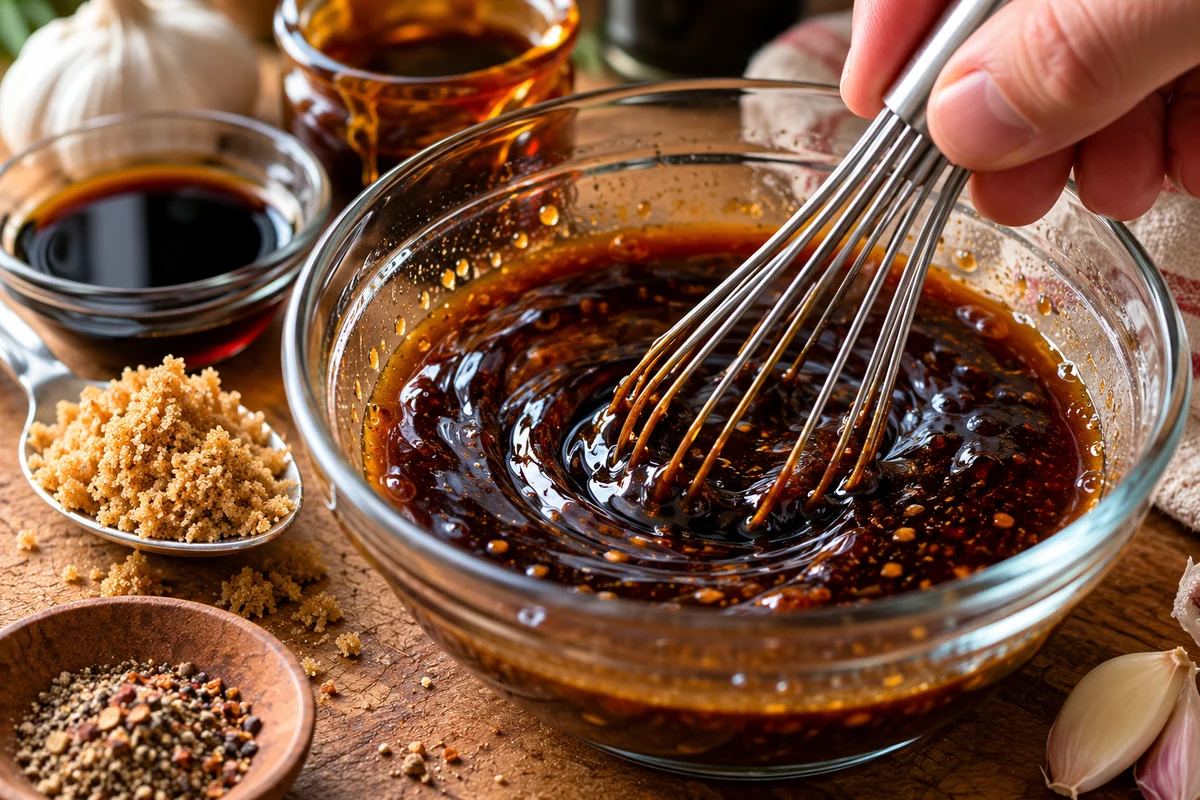
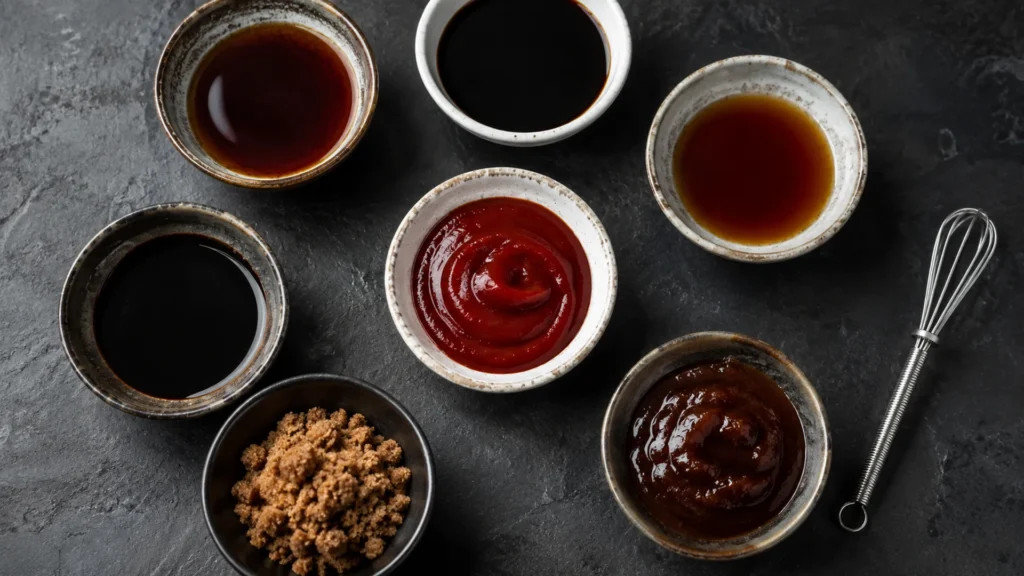
When the dish really leans on worcestershire, mix a blend. The point is to hit all four notes at once. Here is the formula for when you want it to taste right rather than just passable. Start with soy sauce for salt and umami, add a little apple cider vinegar or tamarind paste for tang, a small amount of brown sugar or molasses for the dark sweetness, and a pinch of garlic powder, onion powder, and a single clove’s worth of ground clove or allspice. Whisk and taste. Adjust the sugar and vinegar until it bites and rounds at the same time.
| Blend | Base | Acid | Sweet | Extra |
|---|---|---|---|---|
| Quick fix | 1 tbsp soy sauce | 1/2 tsp vinegar | 1/4 tsp sugar | pinch garlic powder |
| Closer match | 1 tbsp soy sauce | 1/2 tsp tamarind paste | 1/4 tsp molasses | pinch clove + onion powder |
| Fish-sauce base | 1/2 tbsp fish sauce | 1/2 tsp lemon juice | 1/4 tsp brown sugar | pinch garlic powder |
Each of these makes roughly the equivalent of one tablespoon of worcestershire, so scale up by the spoonful for bigger batches. Taste before you commit, because the salt level of your soy or fish sauce changes everything. Start under-seasoned and build.
Substitution Ratios at a Glance
Ratios matter more than people think, because a one to one swap of something saltier or sweeter will throw the whole dish. Here is the cheat sheet. Treat these as starting points, taste, and adjust.
| Replacement | Use this much for 1 tbsp worcestershire | Then add |
|---|---|---|
| Soy sauce | 1 tbsp | pinch sugar + few drops vinegar |
| Fish sauce | 1/2 tbsp | 1/4 tsp sugar |
| Soy + ketchup | 2 tsp soy + 1 tsp ketchup | nothing usually |
| Steak sauce | 1 tbsp | nothing usually |
| Coconut aminos | 1 tbsp | few drops vinegar + pinch salt |
| Balsamic vinegar | 2 tsp | pinch salt + pinch sugar |
Vegetarian, Vegan, and Gluten-Free Swaps
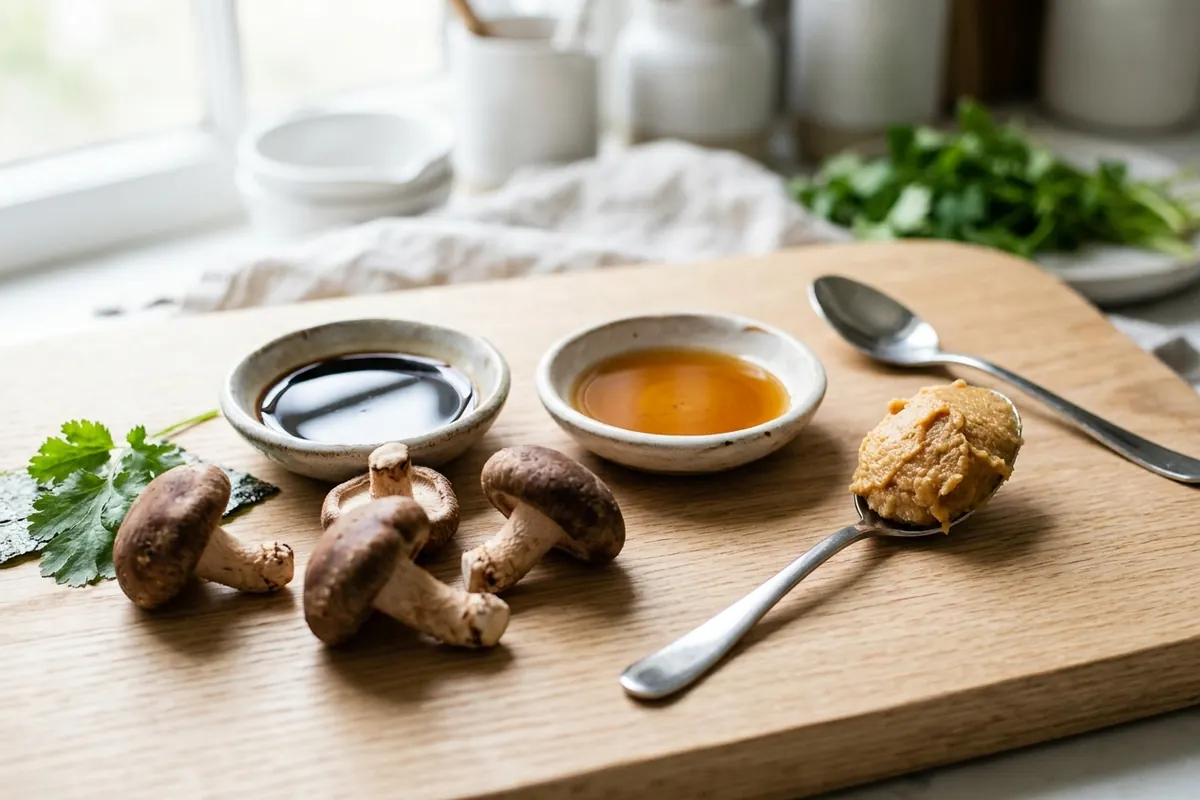
Standard worcestershire contains anchovies, so it is not vegetarian, which catches a lot of people off guard. For a plant-based swap, soy sauce plus a little tamarind, sugar, and a splash of vinegar gets you most of the way, and a dab of miso paste or a few drops of mushroom-based seasoning fills in the savory depth the anchovies would have brought. Mushrooms and miso are loaded with the same glutamates, so they carry real umami without any fish. This plant-based approach is the same logic behind a lot of meatless cooking, and you can see it at work across these vegan pasta dishes that build savory depth without animal products.
For gluten-free cooks, the wrinkle is that many worcestershire bottles and most regular soy sauces contain wheat. Reach for tamari or coconut aminos as your base instead. Coconut aminos run sweeter and milder, so add a pinch of salt and a few drops of vinegar to sharpen it. Tamari is closer to soy sauce in strength, so treat it like soy in the ratios above. Always check the label, because formulas vary by brand.
Swaps That Disappoint and Why
Plain vinegar alone is the most common mistake. It brings the acid but none of the salt, sweetness, or savory depth, so the dish tastes sour and thin. Vinegar is a teammate, not a substitute. Balsamic is the exception because it carries sweetness and body along with the tang, which is why it earns a spot in the ratio table above.
Liquid smoke is another trap. It adds a smoky note that worcestershire does not really have, so it pushes the flavor in the wrong direction. Use it only if your recipe specifically wants smoke. And straight molasses on its own gives you the dark sweetness with none of the salt or savory backbone, so it tastes like a flat dessert glaze in a savory dish. The lesson is the same as always: cover all four notes, not just the one that is easiest to grab.
Steak sauce poured in by the half cup is another quiet error, not because it is a bad swap but because it is a strong one. Many bottled steak sauces are sweeter and more concentrated than worcestershire, so a one to one pour can overwhelm a delicate dish with tomato and sugar. Start with the same amount the recipe asks for, taste, and pull back if it reads too sweet. The same caution applies to barbecue sauce, which people sometimes reach for in a pinch. It carries smoke, sugar, and tomato in quantities that can hijack a savory braise, so treat it as a last resort and use a light hand.
If you want to see how these principles play out in a full recipe context, the piece on building the best meatball sauce shows how a small splash of worcestershire or its stand-in deepens a tomato base, and how to compensate when you leave it out.
Matching the Swap to the Dish
The right substitute depends on the job. In a beef stew, chili, or meat marinade, you want depth, so soy plus a little sweetness or a fish-sauce blend works beautifully, which is exactly the kind of savory backbone that carries hearty keto dinners built around beef and pork. In a Bloody Mary or a Caesar dressing, where worcestershire is doing sharp, bright, savory work, fish sauce or a soy-and-vinegar blend tracks closest. In a delicate pan sauce, go lighter and lean on coconut aminos or a mild soy so you do not overpower the dish.
The broader point is that worcestershire is a seasoning, not a main flavor, so your substitute only needs to disappear into the dish and pull its weight. Get the salt, acid, sweet, and umami balanced and almost no one at the table will notice the bottle was empty. For more on how fermented sauces carry that savory depth, the encyclopedia entry on worcestershire sauce lays out the history and the ingredient logic, and the NIH overview of sodium in your diet is a useful reminder that most of these swaps are salt-forward, so taste before you add more.
How to Taste and Adjust a Substitute
The single skill that makes every swap work is tasting and correcting in small steps. Worcestershire is forgiving in a dish because it is used in small amounts, but a substitute that is too salty or too sour announces itself fast. So treat the first addition as a draft. Add about three quarters of what the recipe calls for, stir it into the dish, taste, and then decide what is missing. If it tastes flat, you are short on umami or salt, so add a few drops more soy or fish sauce. If it tastes one-dimensional and harsh, you are short on sweetness, so add a tiny pinch of sugar. If it tastes dull and heavy, you are short on acid, so add a few drops of vinegar.
This is the same loop a good cook runs on any sauce. Salt, acid, sweet, and savory are dials, not switches, and the goal is balance rather than any single big flavor. Worcestershire happens to come pre-balanced in a bottle, which is why it is so handy. When you build the balance yourself you have more control, not less, once you get comfortable with the loop. The mistake is dumping the full substitute in at once and hoping, because then your only fix is to dilute the whole dish.
Temperature matters too. Flavors read differently hot than cold, so if you are seasoning a sauce that will be served warm, taste it warm. A blend that seems perfectly balanced off a cold spoon can taste under-salted once it hits a hot plate, and a marinade that tastes sharp cold will mellow as it cooks into the meat. Account for where the dish is going before you make your final call on the seasoning.
If you cook often, the smartest move is to keep a small set of building blocks on hand so you never get stuck. A bottle of soy sauce or tamari covers salt and umami. A bottle of fish sauce covers deep fermented savor for the times you want the real anchovy character. A jar of tomato paste or a squeeze bottle of ketchup covers tomato sweetness and body. A bottle of apple cider or balsamic vinegar covers acid. Brown sugar or molasses covers the dark sweetness. With those five categories stocked, you can build a convincing worcestershire stand-in in under a minute, any day, without a special trip.
That same pantry doubles as the backbone of countless other sauces, which is the real payoff. The ingredients that fake worcestershire are the same ones that build teriyaki, barbecue glazes, marinades, and pan sauces. Learning to combine salt, acid, sweet, and umami by feel is worth far more than memorizing any single recipe, because it frees you from the bottle entirely. Once you internalize that, a missing ingredient stops being a crisis and becomes a small puzzle you already know how to solve.
Keep your blends fresh, though. A homemade substitute does not have the preservatives or the long ferment that gives bottled worcestershire its shelf life, so mix what you need for the dish rather than batching a big jar to sit in the fridge. A quick stir of soy, vinegar, sugar, and a pinch of spice takes thirty seconds and tastes brighter than anything that has been sitting around. Make it to order and it will always pull its weight.
Frequently Asked Questions
What is the best worcestershire sauce substitute?
For most savory dishes, a mix of two parts soy sauce to one part ketchup is the easiest close match, since it covers salt, umami, sweetness, and tang at once. If you keep fish sauce on hand, use half as much plus a pinch of sugar for an even more authentic fermented depth.
Can I use soy sauce instead of worcestershire sauce?
Yes, soy sauce works as a one to one starting point because it delivers the salt and savory umami that form the backbone of worcestershire. It lacks the sweetness and tang, so round it out with a small pinch of sugar and a few drops of vinegar.
Is there a vegetarian worcestershire sauce substitute?
Yes. Standard worcestershire contains anchovies, so for a vegetarian or vegan version, combine soy sauce with a little tamarind or vinegar, a touch of sugar, and a dab of miso or mushroom seasoning to replace the savory depth the anchovies would have provided.
What is a gluten-free substitute for worcestershire sauce?
Use tamari or coconut aminos as the base instead of regular soy sauce, since both are typically gluten-free. Coconut aminos are sweeter and milder, so add a pinch of salt and a few drops of vinegar to bring it in line. Always check the label to confirm.