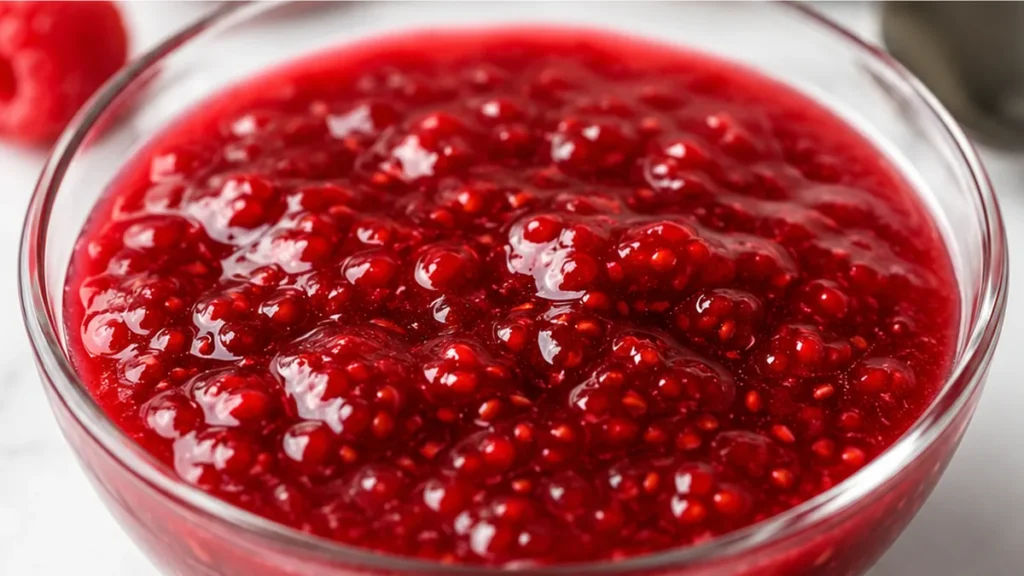
Raspberry sauce can transform any dessert into something special. This homemade version is easy to prepare, using just a few pantry staples and fresh or frozen raspberries. Unlike store-bought options, this sauce allows you to control the sweetness and tang, ensuring a perfect balance that complements rather than overpowers your favorite sweets. Ideal for beginners and seasoned bakers alike, it transforms ordinary treats into extraordinary experiences.
Key takeaways
- Use cornstarch to thicken the sauce effectively.
- Fresh raspberries provide the best flavor, but frozen can work if thawed.
- Lemon juice and vanilla enhance the sauce’s overall taste.
- Adjust consistency by simmering longer or adding water if too thick.
Raspberry Sauce for Desserts
Ingredients
- 1 tablespoon water
- 2 teaspoons cornstarch
- 3 cups fresh or frozen raspberries
- 1/4 cup granulated sugar
- 1 teaspoon fresh lemon juice
- 1/2 teaspoon vanilla extract
Instructions
- Whisk the cornstarch and water together until dissolved.
- Combine the mixture with raspberries, sugar, and lemon juice in a saucepan over medium heat.
- Bring to a boil and let it boil for 3 minutes, stirring occasionally.
- Remove from heat and stir in vanilla extract if desired.
- Press the sauce through a fine mesh strainer to remove seeds.
- Serve warm or cool completely for a thicker sauce.
Video
Notes
Understanding the Role of Cornstarch in Raspberry Sauce
Cornstarch is crucial for achieving the ideal thickness in raspberry sauce. When mixed with water, it forms a slurry that, when heated, activates its thickening properties. For this recipe, use 2 teaspoons of cornstarch mixed with 1 tablespoon of water. Heat the mixture with the raspberries and sugar until it reaches a simmer at around 100°C (212°F). This process allows the cornstarch to gelatinize, resulting in a smooth and pourable sauce.
Addressing Common Problems with Consistency
If your raspberry sauce turns out too thin, it may be due to insufficient cooking time or not enough cornstarch. To fix this, return the sauce to heat and let it simmer for an additional 2-3 minutes while stirring. If it’s too thick, add a small amount of water or lemon juice to adjust the consistency to your liking.
Choosing the Right Raspberries for Optimal Flavor
Fresh raspberries are preferred for their vibrant flavor and texture, but frozen raspberries can also be used. If using frozen, allow them to thaw completely and drain excess liquid before adding them to the sauce. This will prevent the sauce from becoming overly watery. Fresh raspberries should be firm and bright red, indicating ripeness and sweetness.
Enhancing Flavor with Lemon Juice and Vanilla
The addition of 1 teaspoon of fresh lemon juice brightens the flavor of the raspberry sauce, balancing the sweetness from the sugar. Vanilla extract, at 1/2 teaspoon, adds depth and complexity to the sauce. Both ingredients should be added towards the end of cooking to preserve their aromatic qualities. This combination is relatively unique to raspberry sauce, enhancing its fruity profile without overshadowing it.
Exploring Substitutions and Their Effects
If you find yourself without cornstarch, you can substitute it with an equal amount of arrowroot powder for a similar thickening effect. However, arrowroot may yield a slightly clearer sauce. For a sugar substitute, consider using honey or agave syrup, but keep in mind that these alternatives will impart their own distinct flavors. If you’re looking for a lower-calorie option, a sugar substitute like stevia can be used, but it may affect the sauce’s sweetness and texture.
Understanding the Impact of Fresh vs. Frozen Raspberries
Choosing between fresh and frozen raspberries can significantly affect the flavor and texture of your raspberry sauce. Fresh raspberries typically have a brighter flavor and firmer texture, which can lead to a more vibrant sauce. On the other hand, frozen raspberries are often harvested at peak ripeness and can be more convenient. However, they may yield more liquid, requiring adjustments in cooking time and cornstarch to achieve the desired thickness. When using frozen raspberries, expect a softer sauce with a more pronounced tartness, as freezing can break down cell walls, releasing more juice.
Scaling the Recipe for Larger Gatherings
This raspberry sauce recipe is easily scalable, making it perfect for gatherings or meal prep. To scale, maintain the same ratios of ingredients. For example, if doubling the recipe, use 6 cups of raspberries, 1/2 cup of sugar, and adjust the cornstarch accordingly to maintain the sauce’s thickness. Keep in mind that cooking time may increase slightly as the volume of the sauce grows. A larger batch may require a bigger pot to ensure even heat distribution, preventing burning or uneven cooking.
Choosing the Right Equipment for Optimal Results
The equipment you use can influence the outcome of your raspberry sauce. A heavy-bottomed saucepan is ideal as it distributes heat evenly, reducing the risk of scorching. If you prefer a smoother sauce, consider using an immersion blender or a fine mesh strainer to puree the sauce after cooking. For those who enjoy a chunky texture, a potato masher can help break down the raspberries while still leaving some pieces intact. Additionally, using a non-stick pot can help prevent sticking and make cleanup easier.
Serving Suggestions for Enhanced Enjoyment
Raspberry sauce is incredibly versatile and can elevate a variety of desserts. It pairs beautifully with cheesecake, panna cotta, or vanilla ice cream, adding a bright contrast to rich flavors. Drizzling it over pancakes or waffles can transform a simple breakfast into a gourmet experience. For a sophisticated touch, consider serving it with a sprinkle of fresh mint or alongside a dollop of whipped cream. The acidity of the sauce can also balance out sweeter desserts, enhancing the overall flavor profile.
Understanding the Shelf Life and Storage of Raspberry Sauce
Raspberry sauce can be made ahead of time, which is ideal for busy cooks. Once prepared, allow the sauce to cool completely before transferring it to an airtight container. It can be stored in the refrigerator for up to one week. For longer storage, consider freezing the sauce. In a freezer-safe container, raspberry sauce can last up to six months. When ready to use, thaw it in the refrigerator overnight. Note that the texture may change slightly after freezing, but the flavor will remain intact. If the sauce appears too thick after thawing, simply stir in a small amount of water to achieve the desired consistency.
Adapting Raspberry Sauce for Different Serving Sizes
This raspberry sauce recipe is easily scalable, making it perfect for various occasions. To double the recipe, simply multiply each ingredient by two, maintaining the same ratios. For smaller gatherings, you can halve the recipe without affecting the end result. When scaling, keep in mind that cooking time may vary slightly; monitor the sauce closely to avoid overcooking. If you are preparing the sauce for a large event, consider making multiple batches simultaneously to ensure consistency in flavor and texture. Always taste the sauce after scaling to adjust sweetness or acidity as needed.
Choosing the Right Equipment for Making Raspberry Sauce
The equipment you use can significantly impact the quality of your raspberry sauce. A heavy-bottomed saucepan is recommended for even heat distribution, preventing scorching. A fine-mesh sieve is essential for straining the sauce, ensuring a smooth texture by removing the seeds. If you prefer a chunkier sauce, you can skip this step. A whisk is useful for combining the cornstarch with water, creating a smooth slurry before adding it to the raspberries. For those who enjoy a more rustic sauce, consider using a potato masher to break down the raspberries instead of blending, which allows for a more textured finish.
Understanding the Impact of Cooking Time on Raspberry Sauce Consistency
The cooking time is crucial in achieving the desired consistency of raspberry sauce. Typically, you should simmer the mixture for about 10-15 minutes. This allows the raspberries to break down and release their natural pectin, which helps thicken the sauce. If you cook it for too long, the sauce may become overly thick and lose its fresh flavor. Conversely, undercooking can result in a runny sauce that lacks body. Aim for a temperature of around 210°F (99°C) during simmering to ensure proper thickening without overcooking the fruit.
Why Using Fresh vs. Frozen Raspberries Affects Your Sauce
Choosing between fresh and frozen raspberries can significantly influence the flavor and texture of your raspberry sauce. Fresh raspberries, when in season, typically offer a brighter flavor and firmer texture, ideal for a vibrant sauce. Frozen raspberries, while convenient, often release more liquid when thawed, which can lead to a thinner sauce. If using frozen berries, consider reducing the amount of water slightly to compensate for the extra moisture. Additionally, frozen raspberries may require a longer cooking time to achieve the same consistency as fresh ones. Always taste and adjust the sugar level accordingly, as frozen raspberries can be more tart.
Understanding the Make-Ahead Potential of Raspberry Sauce
Raspberry sauce can be made ahead of time, which is a great advantage for meal planning. Once prepared, the sauce can be stored in an airtight container in the refrigerator for up to one week. For longer storage, consider freezing the sauce. When freezing, pour the cooled sauce into ice cube trays or freezer-safe containers, allowing for easy portioning. The sauce can be stored in the freezer for up to six months. When ready to use, thaw overnight in the refrigerator or gently reheat in a saucepan over low heat. Be aware that freezing may slightly alter the texture, making it a bit thinner due to the breakdown of fruit fibers. However, this can be easily remedied by simmering the sauce briefly to reduce it back to the desired consistency.
Choosing the Right Equipment for Making Raspberry Sauce
The equipment you use can significantly influence the outcome of your raspberry sauce. A medium-sized saucepan is ideal for cooking the sauce, allowing for even heat distribution. A fine-mesh sieve is essential for straining the sauce if you prefer a smooth texture, removing the seeds and pulp. If you enjoy a chunkier sauce, you can skip this step. A whisk is useful for combining the cornstarch and water, ensuring there are no lumps before adding it to the fruit mixture. Using a heatproof spatula can help you scrape down the sides of the pan and incorporate all ingredients thoroughly. If you have a food processor, it can be used to purée the raspberries before cooking, but this step is optional if you prefer to cook the whole fruit directly.
Pro tips
- Use fresh or frozen raspberries interchangeably. Frozen berries tend to break down more easily when cooked.
- For a smoother sauce, press through a fine-mesh sieve to remove seeds. If you don’t mind the seeds, you can skip this step.
- Taste and adjust sugar and lemon juice to your preference. Some raspberries are sweeter than others.
- Store the sauce in an airtight container in the refrigerator for up to a week.
Enjoy this versatile raspberry sauce over your favorite desserts or use it as a bright addition to drinks and breakfast treats.
Frequently asked questions
Can I use frozen raspberries for this sauce?
Yes, frozen raspberries can be used. Make sure to thaw them completely and drain any excess liquid before cooking to avoid a watery sauce.
How do I know when the sauce is thick enough?
The sauce should coat the back of a spoon and have a glossy appearance. If it drips off too quickly, it may need more cooking time to thicken properly.
Can I make this sauce ahead of time?
Absolutely! Raspberry sauce can be made ahead of time and stored in the refrigerator for up to a week. Just reheat gently before serving.
What desserts pair well with raspberry sauce?
Raspberry sauce is versatile and pairs excellently with cheesecakes, ice creams, pancakes, and yogurt. Its tartness complements rich desserts beautifully.
More from Sweet & Dessert Sauces →